 I have been noticing how popular natural dying is at the moment. I would even say it is undergoing yet another renaissance! So many craft podcasters and yarn dyer tutorials, its hard to resist trying it out. Yet I have wanted to do this very thing with the indigenous madrone around our house long since before the new dying trend reminded me. In fact, I have wanted to make a colorway of yarn dyed from the materials I find nearby, and had at one time entertained the dream of being a yarn-dyer on a slightly larger scale. But I realize very sanely that it is best in keeping things within my means, having a very quiet impact on my surroundings. Only so much madrone bark can be shed. It is plentiful outside presently, and being so happy with the results of this “quiet yarn” I am going to go out and collect enough for one more dye pot, a little more generous amount, and strive for a slightly more saturated affect. I think that the madrone has created perhaps, my personal signature color . . .

♣ ♣ ♣
The Tech Stuff. . .
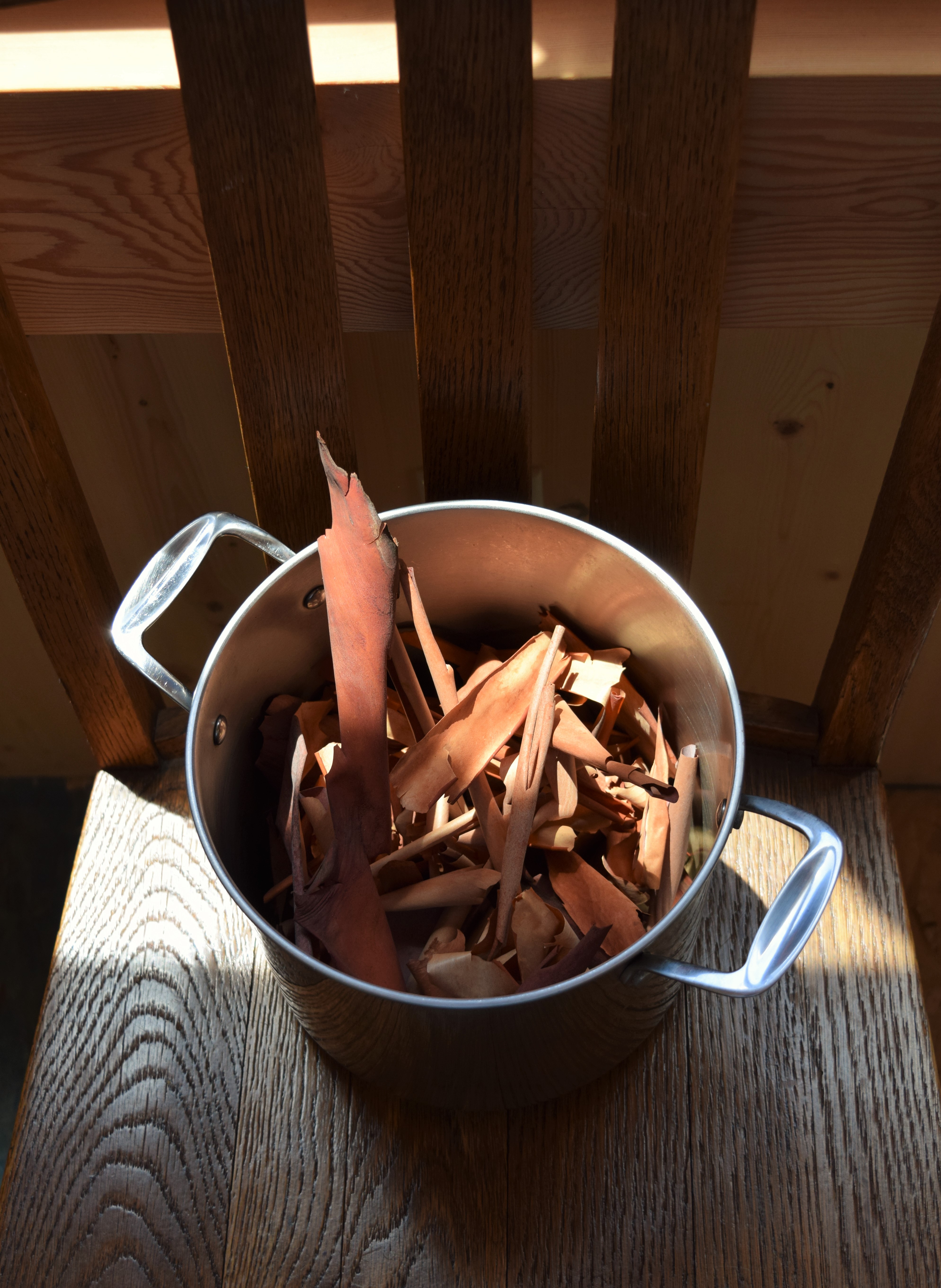
In Part-1 Out on a walk I notice the bark is shedding, and can’t help myself to collect some bark, fill the pot loosely a little over half, and set the series in motion. This is Part 2, where I dye some sock yarn! My natural dye experiment is all I could have expected or hoped for with the limitations of using only a splash of vinegar and water in a stainless steel stock pot. I am not worried in the least about contaminating my cookware because the abundant madrone peels of bark underfoot everywhere are not toxic or odorous in the least.
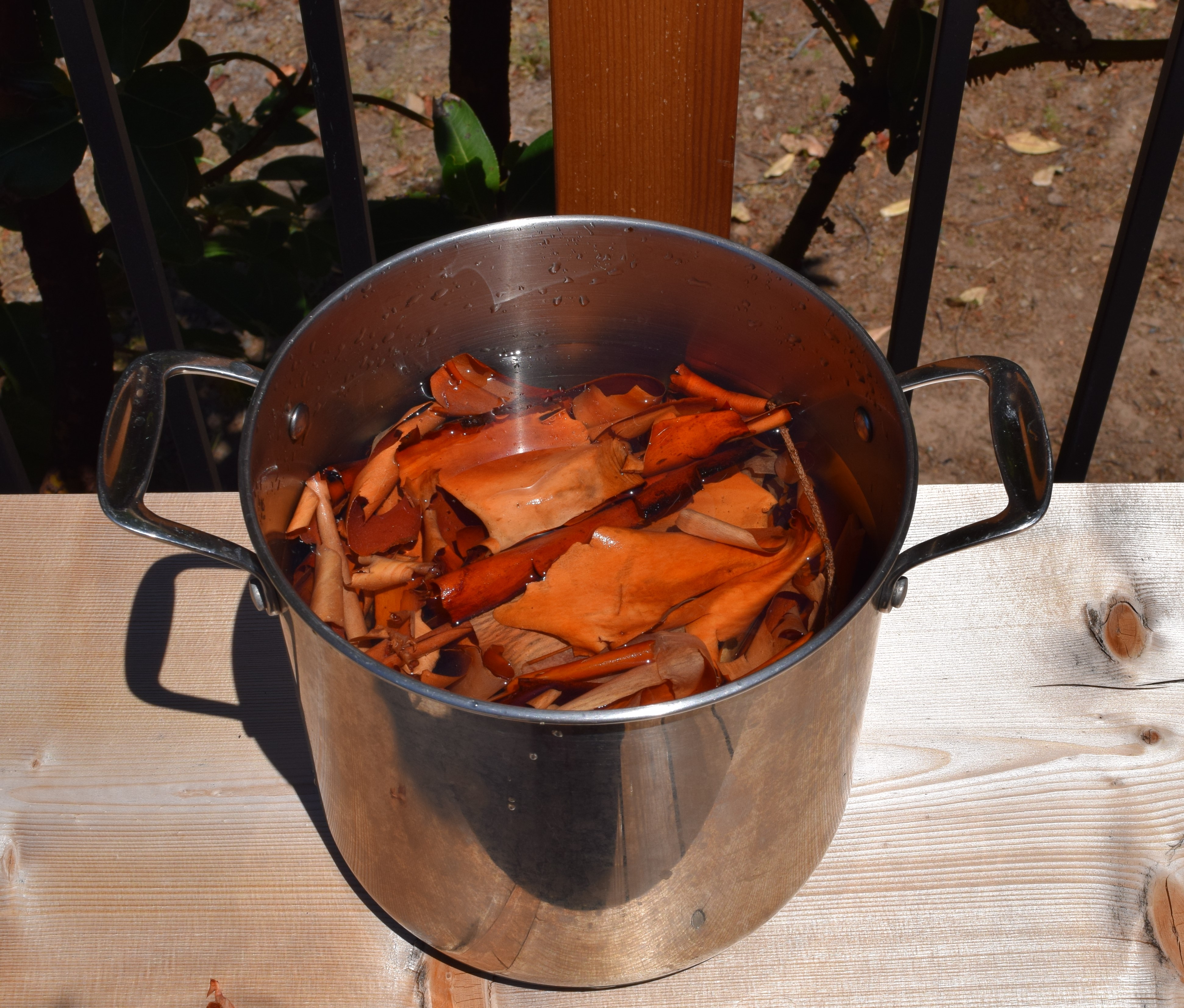
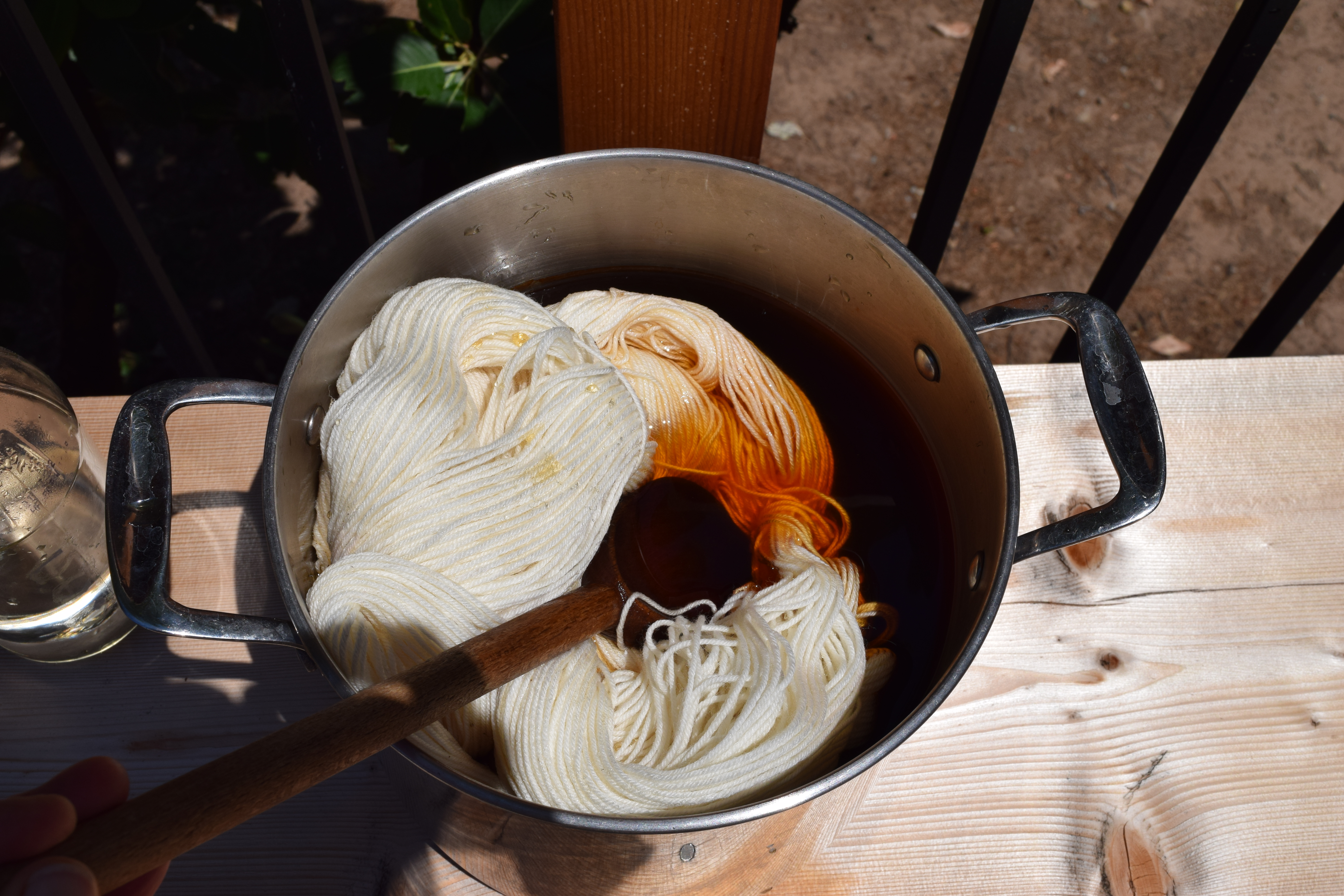
Here’s what I did: First I let a half-full pot of peels soak in water for one week, out in the hot summer sun. The water evaporated significantly, and I topped off with the hose when I filled the little bird bath. The color of the water was rich and deep orange-brown, and so very much like the actual bark.
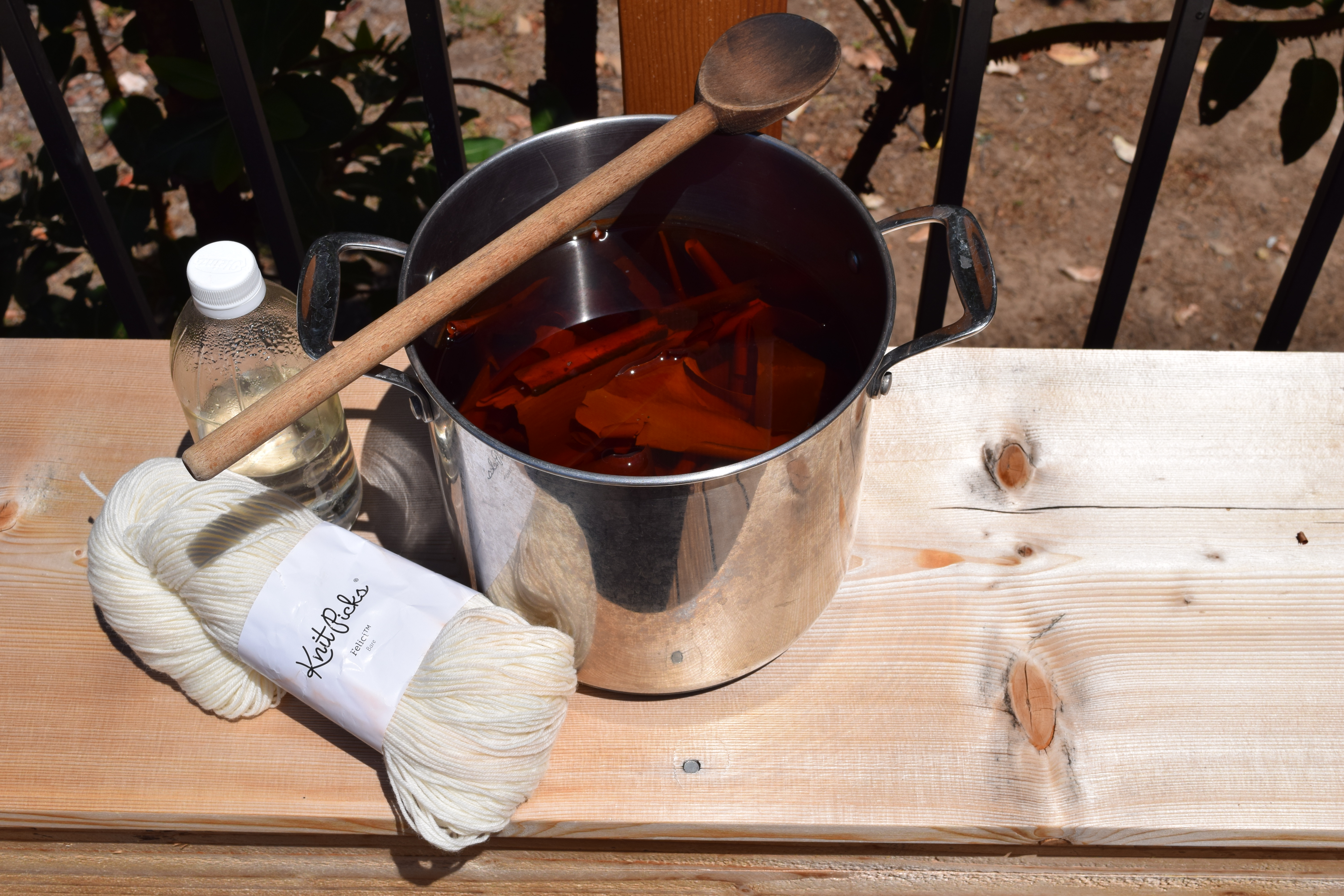
After a week had gone by, I looked in my yarn drawers, and decided that the 100g skein of Knit Picks Felici (75% Superwash Merino, 25% nylon) sock yarn would be perfect. Then I merely lifted the peels of bark out, as I don’t have another large pot to pour into through a sieve, poured a splash of white vinegar in and pushed the skein in dry. The rest is up to temperature, so I simmered slowly for about 40 minutes, the dye exhausted in the water as much as it could, and into the yarn.
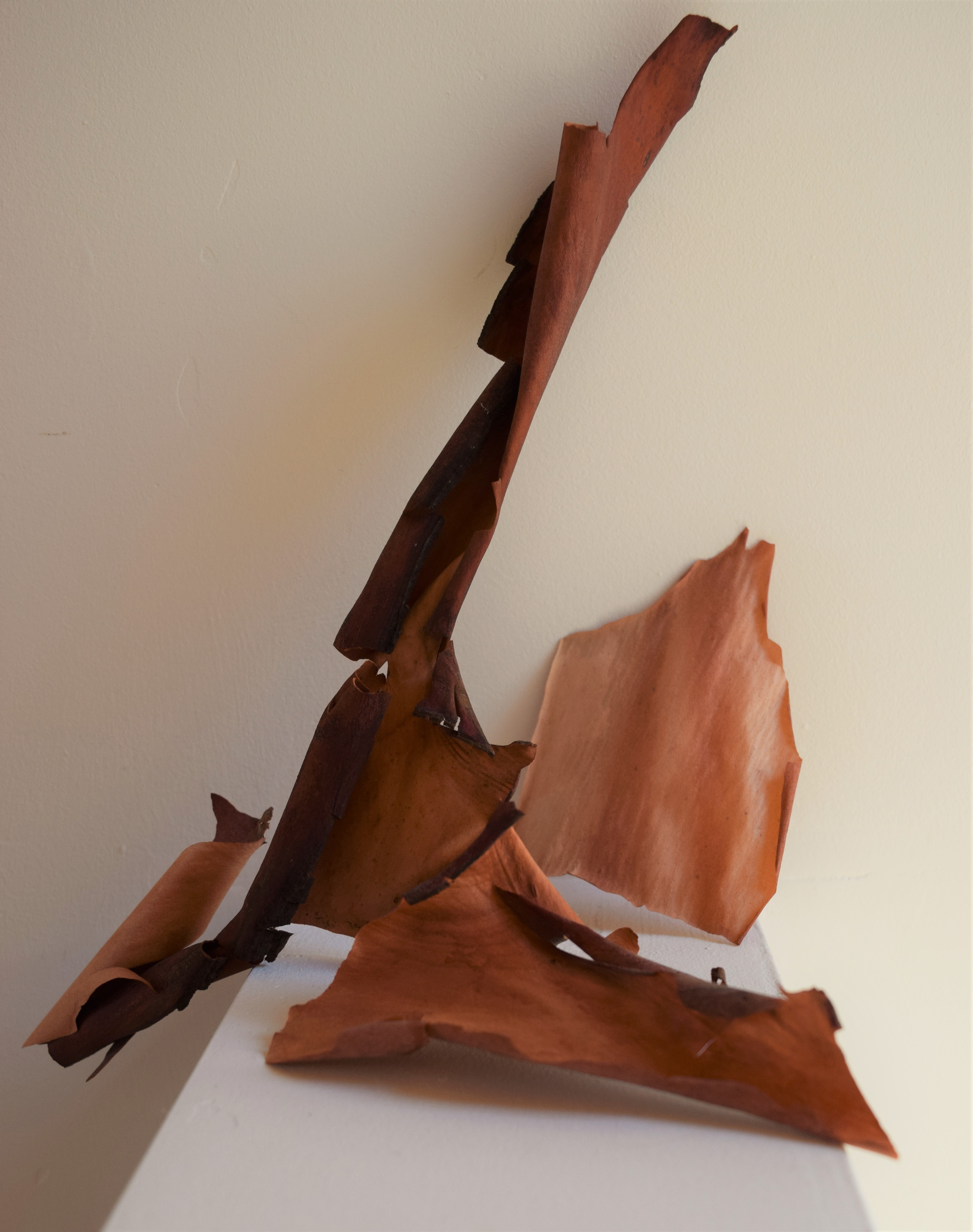
The camera never can describe a color as well as words: It is beautiful pale warm shade, just like the varied colors of terra cotta as the madrone leaves everywhere, which honestly has been a favorite nature shade of mine since I can remember. Wet, the color of brick fired clay. Dry, it is nearly indescribable… a very light clay. Pinker than beige, or more orange. Oh well, the camera is going to have to do the job. Satisfied with the tone and hue of the yarn, I’ve decided to try another dye bath of this now, only foraging a full stock pot of madrone bark (and weighing the bark!) actually simmering it after it has steeped for a week in the sun, before dying, that might be Part 3 (Click first image and see slide show of the process) .

Please see my post