consigned to oblivion

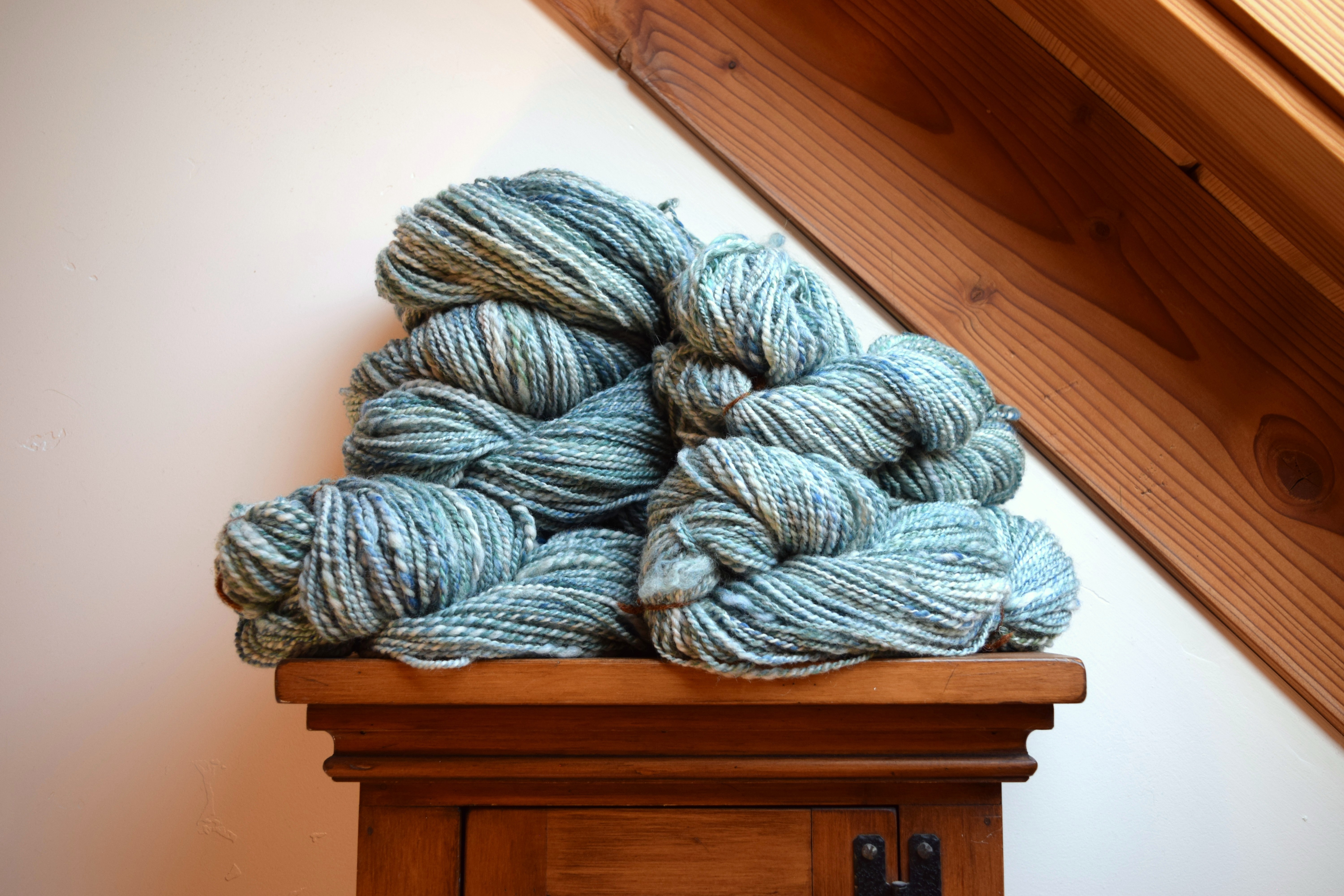
I just opened a drawer and it was there, 600 grams of fluffy washed handspun wool, tucked in the back of a drawer of other unaccounted for handspun skeins, and completely forgotten. When did I spin this? Sometime last winter I think. Right, I checked my photo files and apparently, I was a carding maniac last January blending up huge batts of different wools from my bins, in vain hope to downsize, but more honestly attempting to rid myself of the evidence of a long spell of wool gathering. I was making big random batts, not concerned about the results. What is so interesting is how this yarn looks different in varied light, sometimes denim blue, sometimes sea foam blue; a lot of white, different tones of greens and blues; turquoise, mallard green, grass green sky blue, but I think it is the navy blue which greys it down, and the amount is enough wool for a big wool sweater. This is what life looks like when one is a process spinner; one spins the yarn, and then forgets about it.

Wool, cotton, and silk.

Wool and silk are winners . . . cotton and wool are winners . . . and cotton and silk are winners . . . so wouldn’t it go without saying that wool, silk, and cotton would be amazing? Ever since studying the Longthread Media instruction video Spinning Wild & Unusual Silk I’ve just been unleashed into new territory.

♣ Blending Notes ♣ 

Flax, silk, and wool.

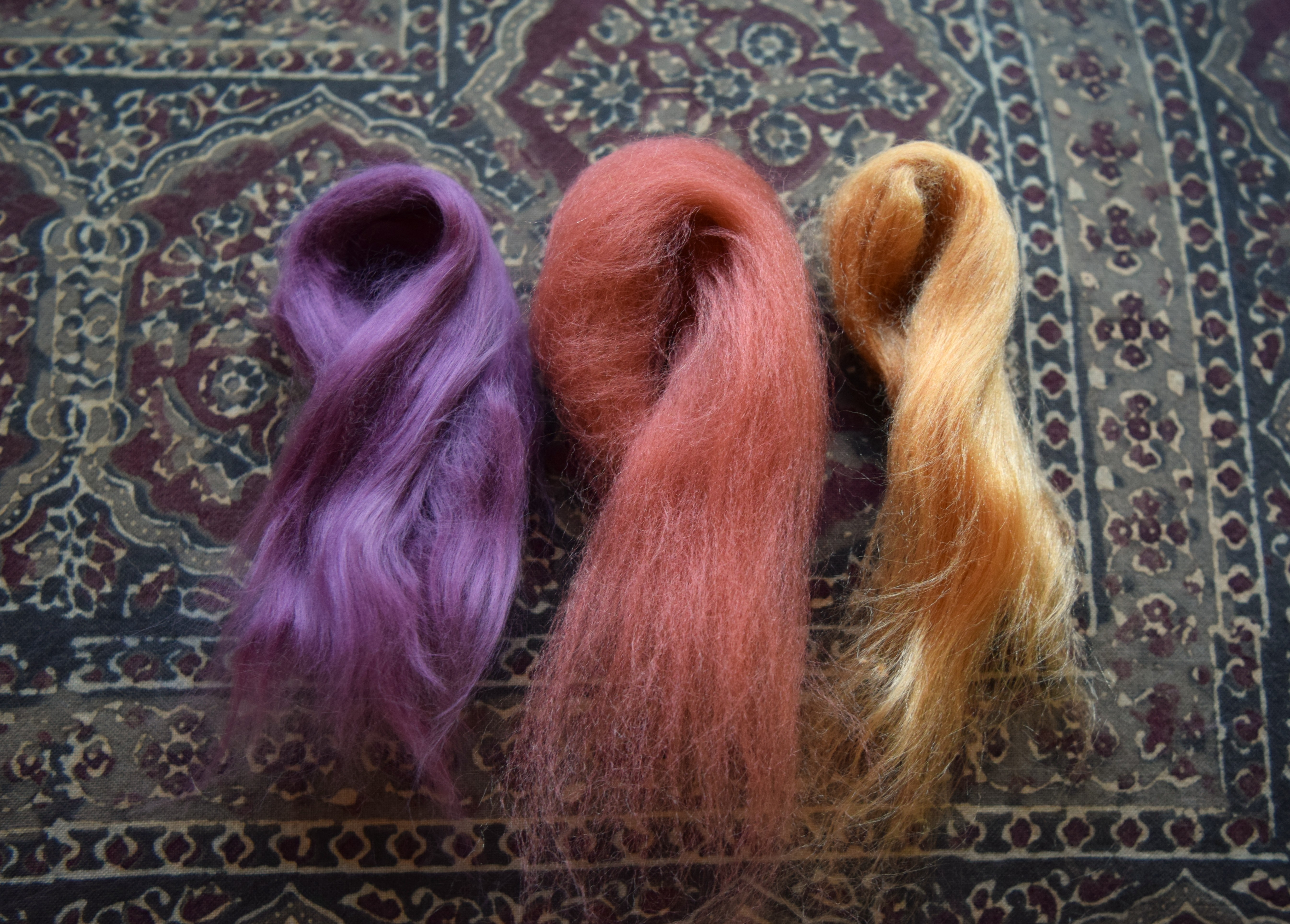
Moving swiftly over the calendar days of Summer, one by one I have been pairing up combinations, and have settled on some favorites, but now I’m on to blends of three different fibers & colors. As for the blends with the flax short fibers, I will have to further experiment, because although they create a rustic feel, there is a scratchiness, almost like guard hairs, occasionally a stray stiff flax fiber will not spin into the single but stick out and assert itself. The question is; how will this be after washing, and maybe it is fine for some things, which of course, I will have to explore. The other question is; how is it with all of the different colors I’m using (which the camera is just not picking up) the allover effect that I keep creating is variations of terracotta color in the finish?

♣ Blending Notes ♣ 

Eri Silk and Cotton

Would never have guessed it, but here I am suddenly a cotton and silk spinning fanatic, and now that I’ve discovered great sources for both dyed cotton roving and Eri (peace) silk. I learned from a Long Thread Media instructional video Spinning Exotic Blends that spinning silk sometimes is easier to spin and gives uniformity to the single, when the silk fibers are cut to the length of the other fibers in the blend, so I tried again snipping off the silk into pieces the same length as the cotton, then blended the two together on the carders. This plied yarn was extremely soft but has no spring, completely slack, bringing out the best of both fibers.

♣ Blending Notes ♣ 

Mulberry Silk and cotton.

In June I explored colorful wool tweeds and now sampling an array of non-wool spinning fibers … carding a few grams, spinning, plying, photographing, with more yet to come. I am already narrowing, already thinking about what is coming next; spinning whole skeins instead of a few grams, writing the recipes carefully so that I can replicate, then at last, knitting the yarn into something to showcase the best of the best.

Cotton is one of those things that I’ve put off learning to spin, for it is such a short staple, and in my experience extremely difficult to spin with a suspended spindle. I did try before and gave up, and so I’m trying it in a blend and am feeling encouraged that this time it will work. This sample is dyed cotton roving blended with mulberry silk, a little difficult to spin with a suspended spindle, but what a great pairing, and so soft.

♣ Blending Notes ♣