Inescapable Spring (Scarf No.11)

Hi, its me Abelene.

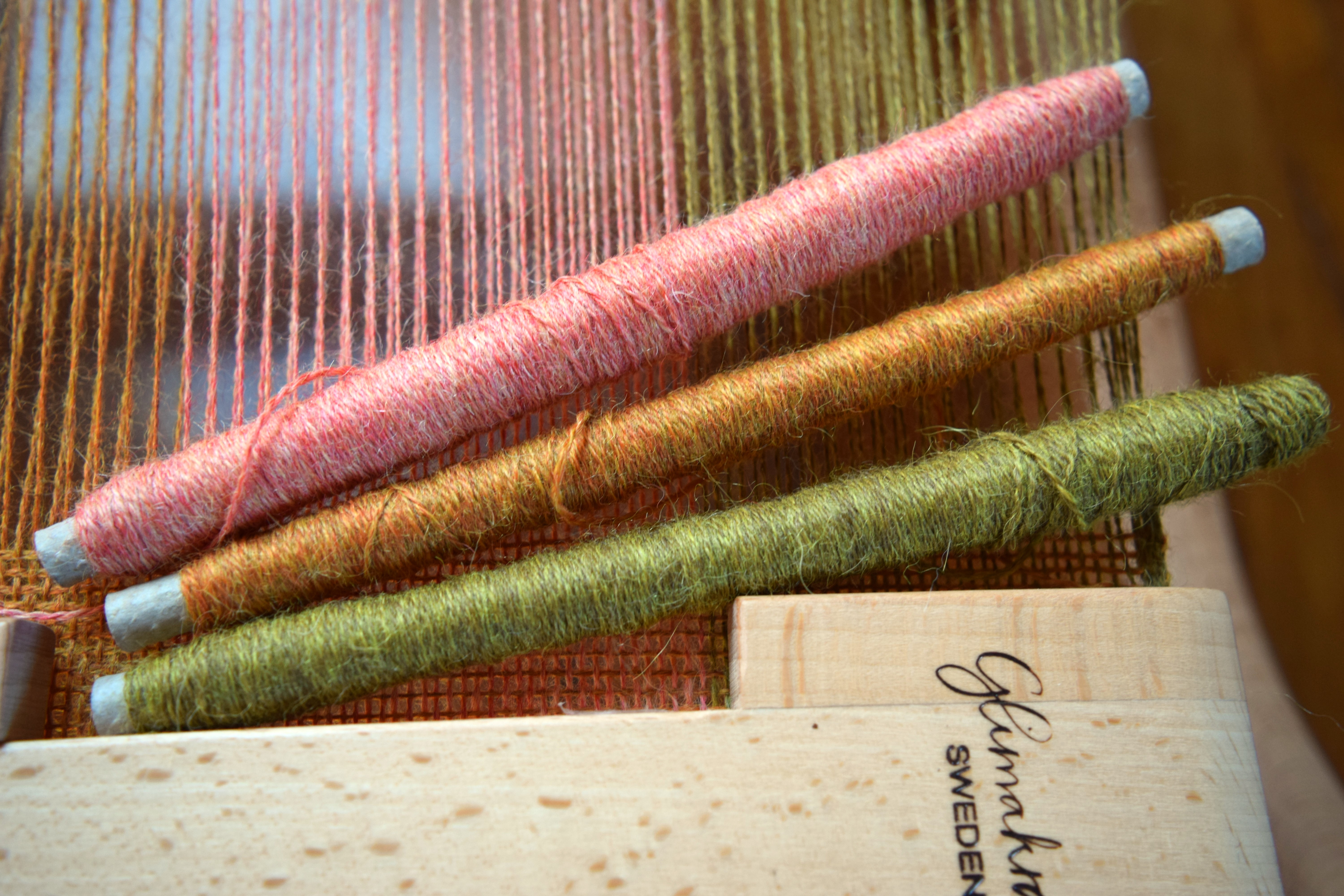
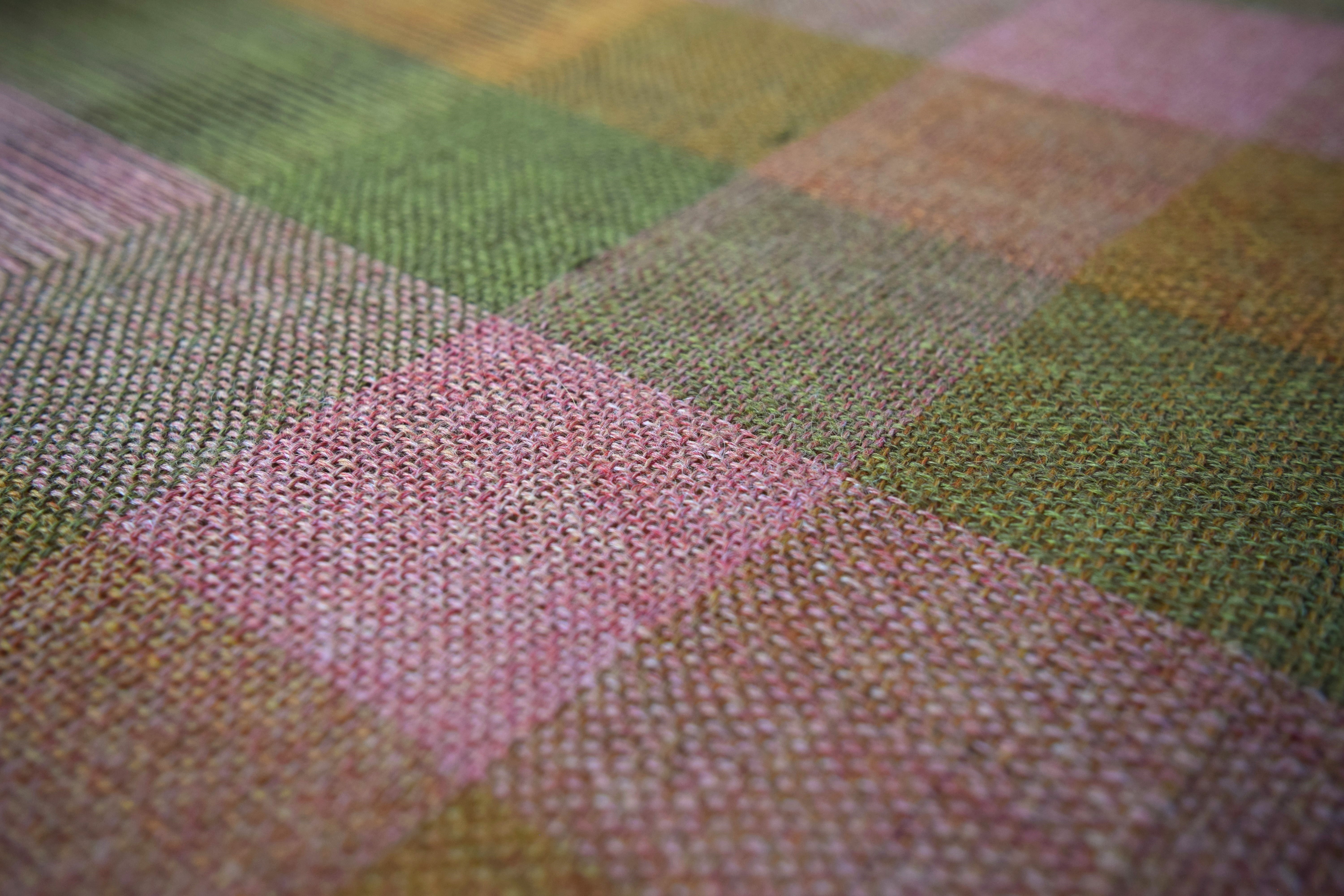
The Inescapable Spring is upon us, and breaking through the rain clouds are streaming in colors of the most vibrantly rich tones imaginable, the colors of apricots ripening on the tree, the gold sun kissed fruits soon to ripen to perfection before being plucked and bitten into. Señor Mirando and I think the Inescapable Spring weaving is definitely speaking of apricots. March has come in like a lion, and with cool breezy days full of beautiful weather still blowing through, Jen says she is going to warp another in the alpaca scarf series, because the mood is still on!

Abelene & The Crew

♣   Weaving Notes  ♣

Note from Jen: What I love most about this piece is that the colors melt into each other, with low contrast on the grey scale. I want to repeat this , the colors really surprised me in the end, I thought it was going to be too much color, but it all gets toned down in the intersection of the colors. This time I was careful to set the loom up correctly for direct warping, and it was easy, and it was the perfect length. The second alpaca lace-weight I have woven on the 16″ rigid heddle loom, and I just love the balanced plain weave, the sett, the drape, and the light buoyancy to the fabric, I still absolutely am loving weaving this series.

  • Yarn: Knit Picks Alpaca Cloud lace weight, in Zadie (deep gold), Bernice (warm pink to apricot), and Amos (moss green), 440 y = 50g
  • Loom: Ashford 16″ rigid heddle loom
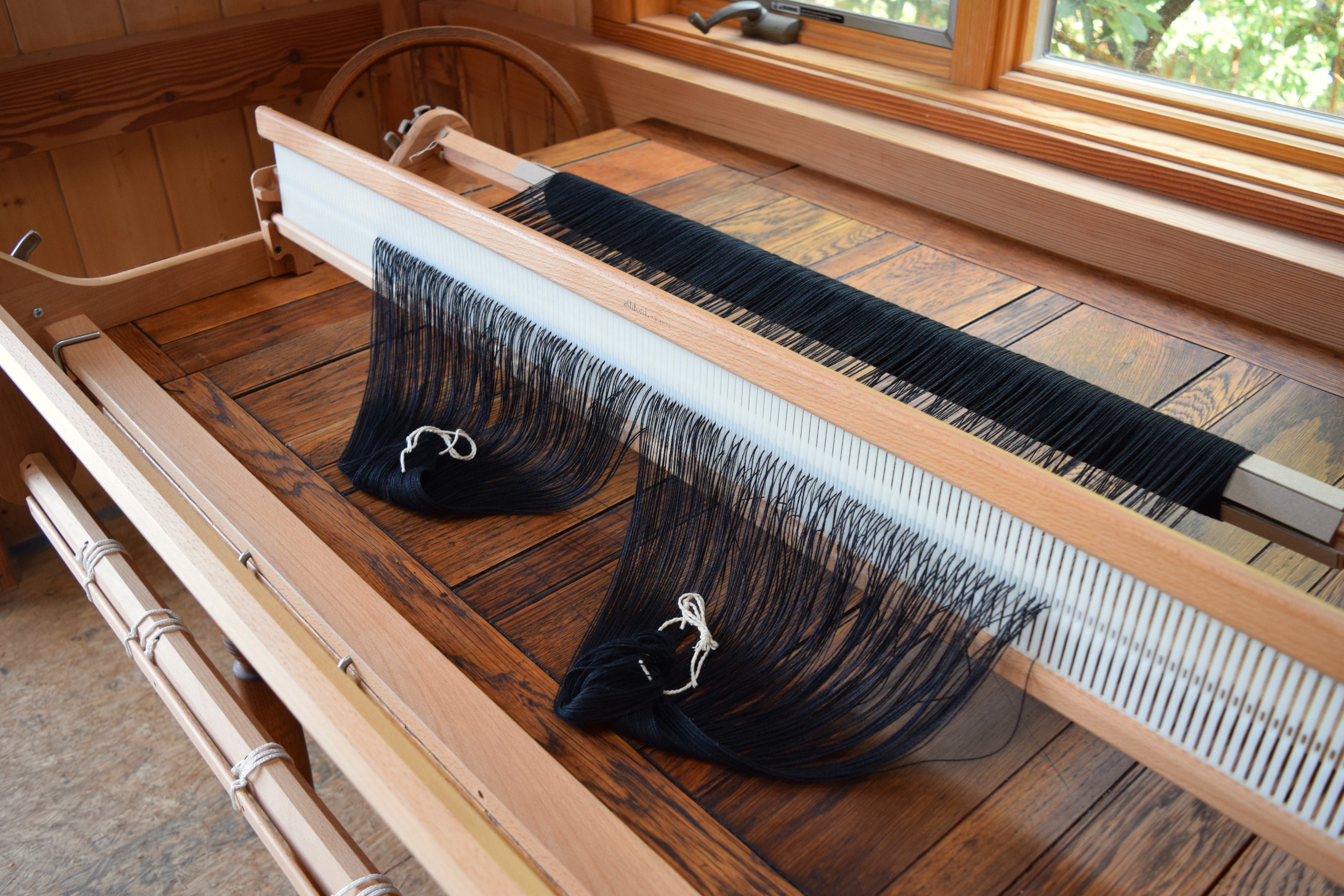
  • Warping method:  Easy direct warp method for rigid heddle, 1 end in hole and 1 end in slot.
  • Number of warp ends: 240
  • Reed: 15 dent rigid heddle reed.
  • Width in reed: 15.5″
  • Selvedges: I did not add extra ends to the selvedges, but did use a temple.
  • Sett after finishing: Warp 16 epi, and weft 16 ppi.
  • Color Pattern Warp: [40 ends Zadie, 40 ends Bernice, 40 ends Amos] x 2
  • Pattern Weft: [2.5″ Zadie, 2.5″ Bernice, 2.5″ Amos] repeated length in sequence.
  • Finished: 3″ hand-twisted fringe, then washed and air-dried hanging, and lightly steam pressed. Measures 76″ long (not including 3″ fringe) and 15″ wide, and weighs 121g. 
  • Yardage:  Total yardage used for finished piece = 1065y, figured from weight of finished piece and not including loom waste.

vernal influences

Number two in my alpaca scarf series, warped and started to weave the first few color changes, just enough that I could photograph the color sequence before March arrives, and obviously in a colorway that is very typical for springtime. The color choice was difficult for me; I was considering gold and green , gold and apricot (it looks pink, but it is more like apricot), or even green and apricot… but all three together? Possibly too frolicsome and feminine. I mean, where’s the calming and staid neutral in the mix? My reason is that I figured I would never improve as a weaver if I didn’t start getting outside my comfort zone and make bolder choices, and so I did. It is evident there is a vernal influence going on here, as I’ve noticed all the wild plum trees have exploded in blossoms, and the intense fragrance of it all is amazing. Weather is high drama this time of year; one day the bees come out and everything is all abuzz with temperature in the 70’s, and the next day it could snow and bring everything to a frigid halt. I absolutely love March, and the last stretch of winter.

Scarf No.10

Hi, its me Abelene.

I’m wearing the first finished weave in Jen’s latest series of alpaca scarves; she apparently got a lot of lace-weight alpaca yarn to weave a pile of them, in various colors and patterns, so obviously she’s feeling optimistic for a new adventure. Believe me when I tell you that this weave is so sheer and light and lovely to wear, the alpaca creates a depth of richness that cotton, linen, or even wool, simply cannot, and Jen thinks this is because of the natural luster of the ‘hair’ structure of alpaca, and the color saturation of dyed protein fibers. Hopefully there are still a couple of weeks left of winter in Paris, because that is where this alpaca scarf is heading next, as Jen wants to rush this off to her sister-in-law as soon as she photographs it … on moi!

Ta ta, Abelene

♣   Weaving Notes  ♣

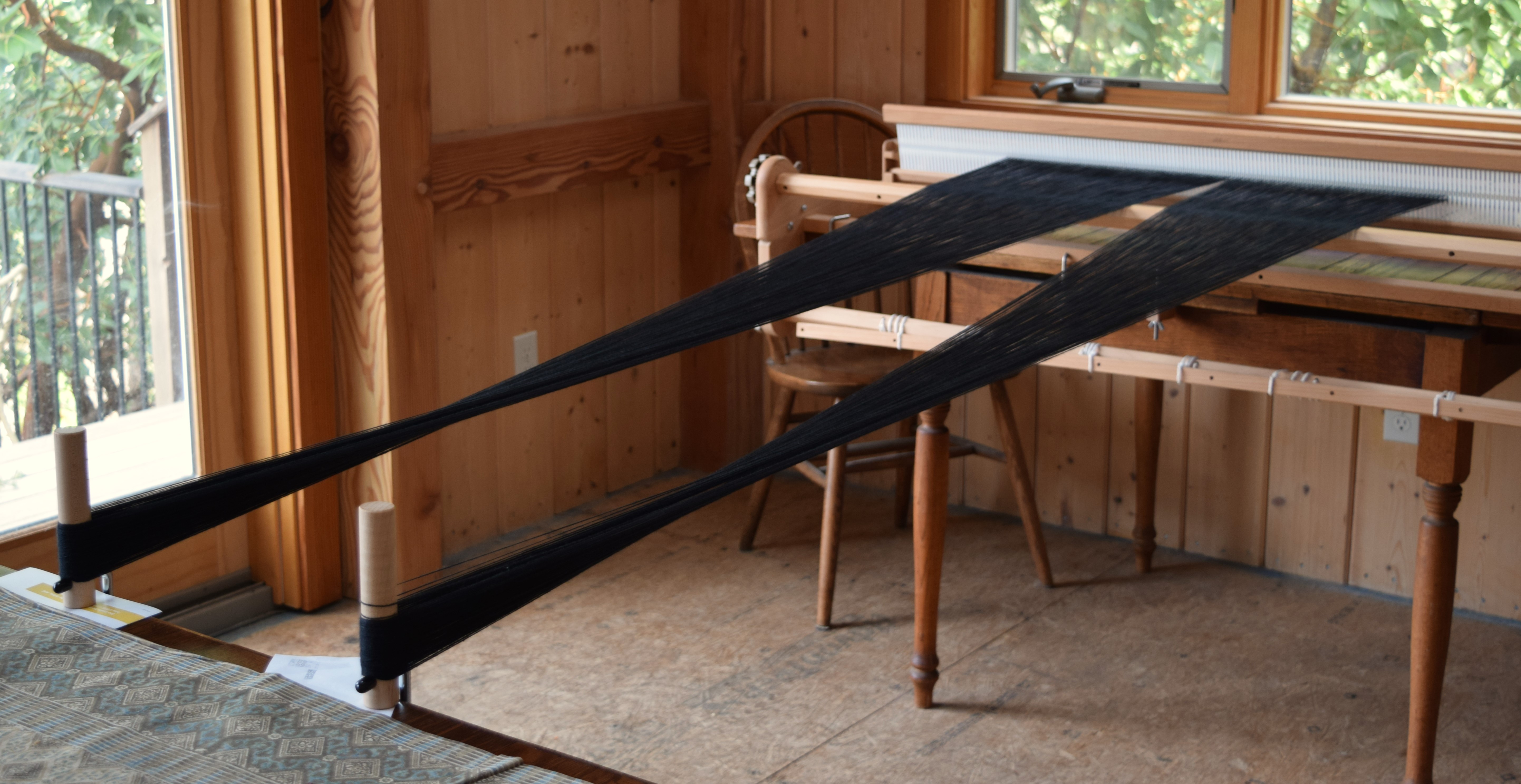
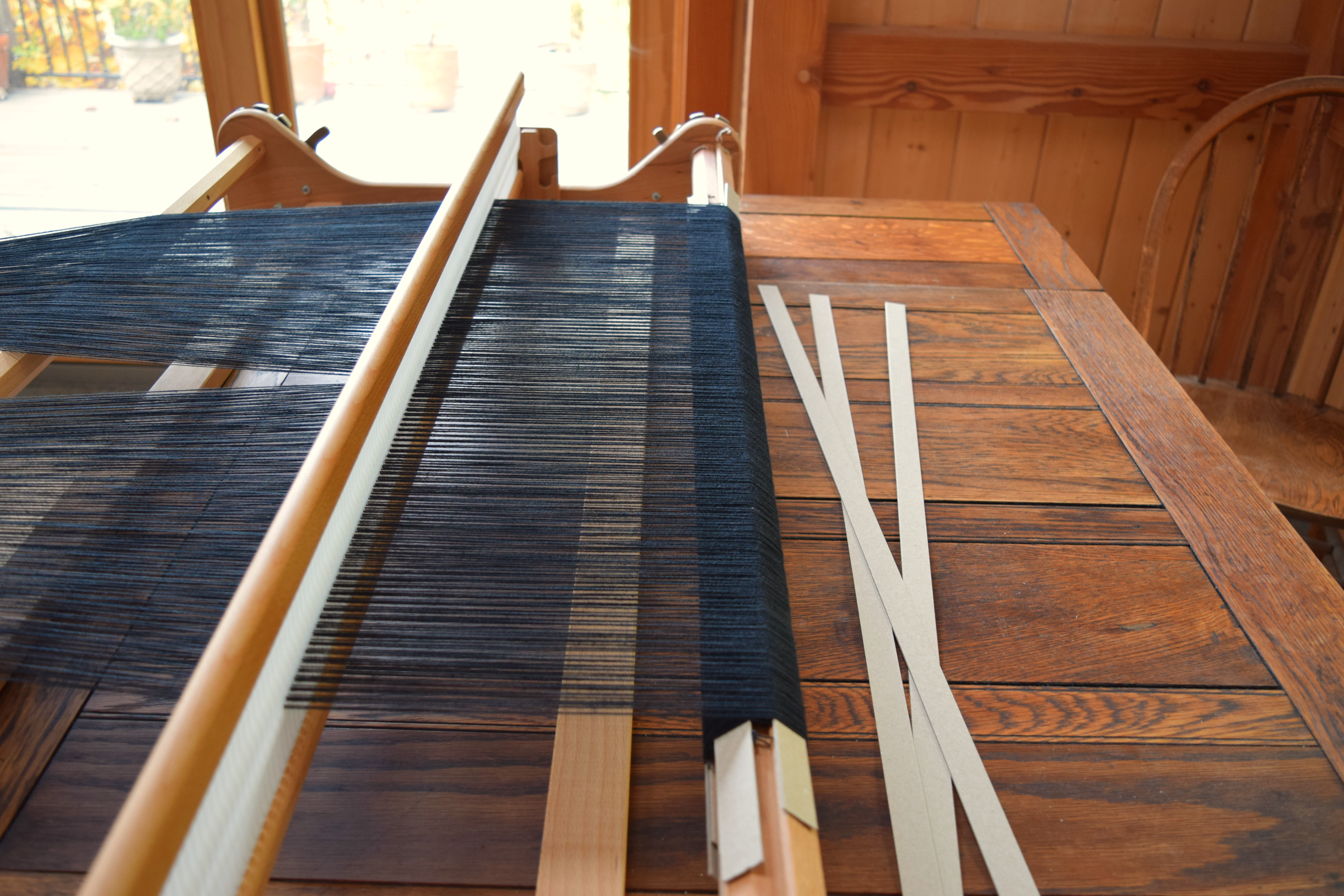
Note from Jen: This time I tried placing pegs around the table, so I didn’t have the warp taking up the whole room, which turned the table into a warping board! I believe I could improvise this way for any amount of warp length within reason. As it was, without having the reference of warping this way before, I accidentally made the warp a little too long … oh well, I’ll do better next time. The very fine lace-weight knitting yarn weaves up into a beautiful light and buoyant draping fabric, I absolutely love it!

  • Yarn: Knit Picks Alpaca Cloud lace weight, in Elizabeth (deep red) and Lydia (brick), 440 y = 50g
  • Loom: Ashford 16″ rigid heddle loom
  • Warping method:  Easy direct warp method for rigid heddle, back to front, double threading from back apron rod through reed, then around pegs on table (a warping board). Wound on to back beam and finally tied off on to front for weaving. Rethreaded to have 1 end in hole and 1 end in slot. I forgot to measure the warp…oops!
  • Number of warp ends: 240
  • Reed: 15 dent rigid heddle reed.
  • Width in reed: 15.5″
  • Selvedges: I did not add extra ends to the selvedges, but did use a temple.
  • Sett after finishing: Warp 16 epi, and weft 16 ppi.
  • Color Pattern Warp: [40 ends red , 40 ends brick] x 3
  • Pattern Weft: 5″ red, 2.5″ of brick, repeated length in sequence.
  • Finished: 3″ hand-twisted fringe, then washed and air dried hanging, and lightly steam pressed. Measures 98″ long and 15″ wide, and weighs 140g. 
  • Yardage:  Total yardage used for finished piece = 1232y, figured from weight of finished piece and not including loom waste.

Rug No.1

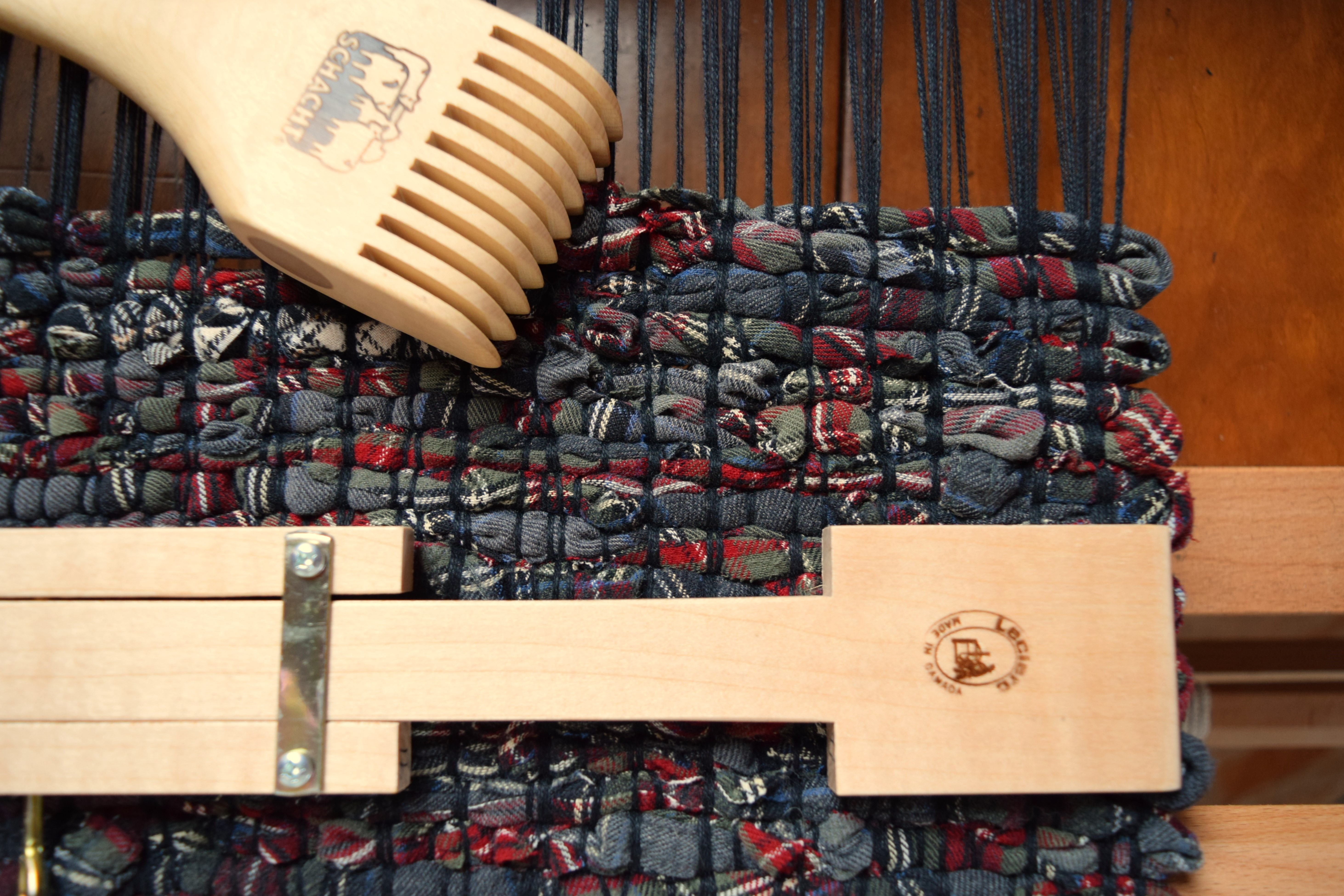
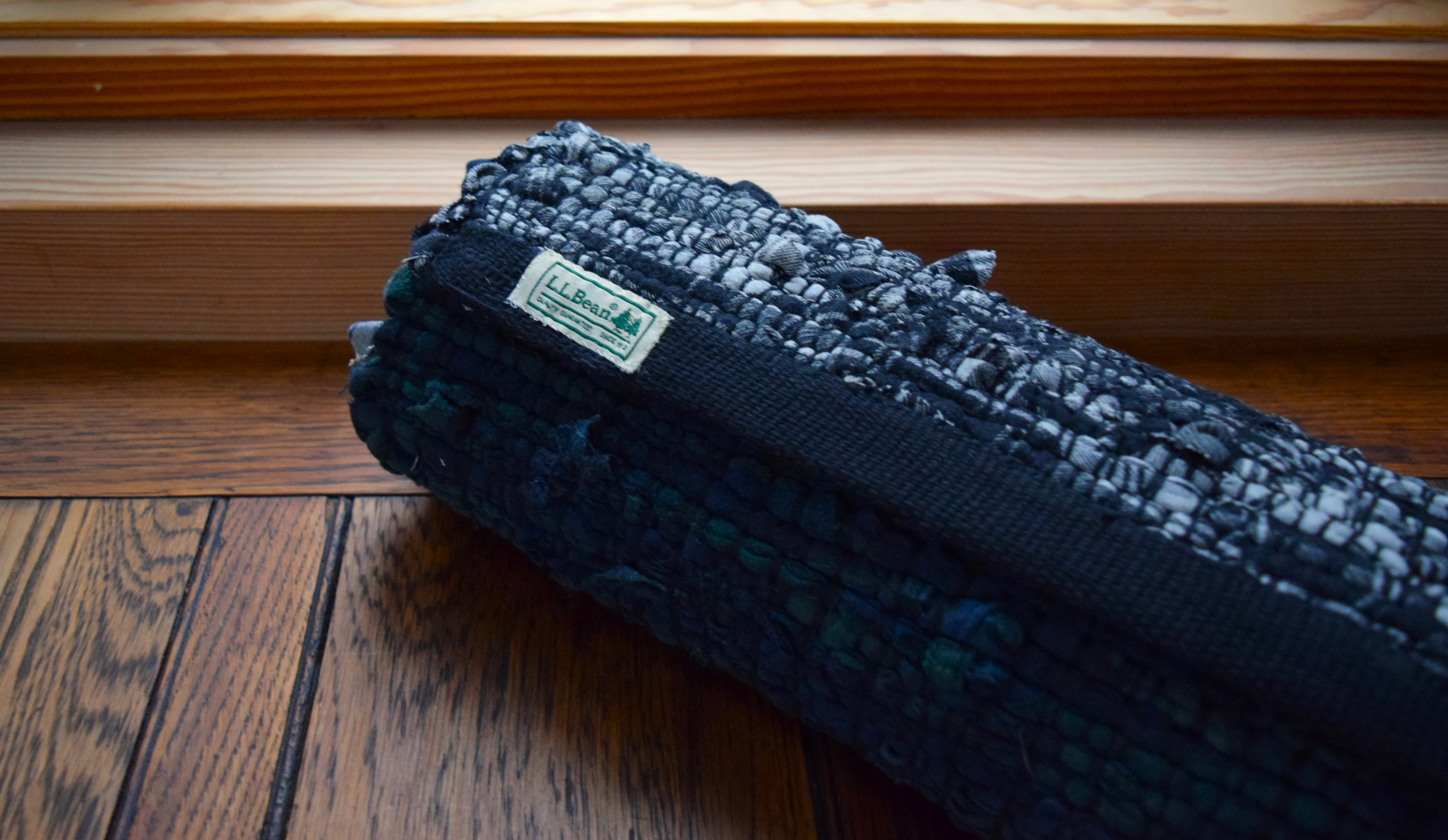
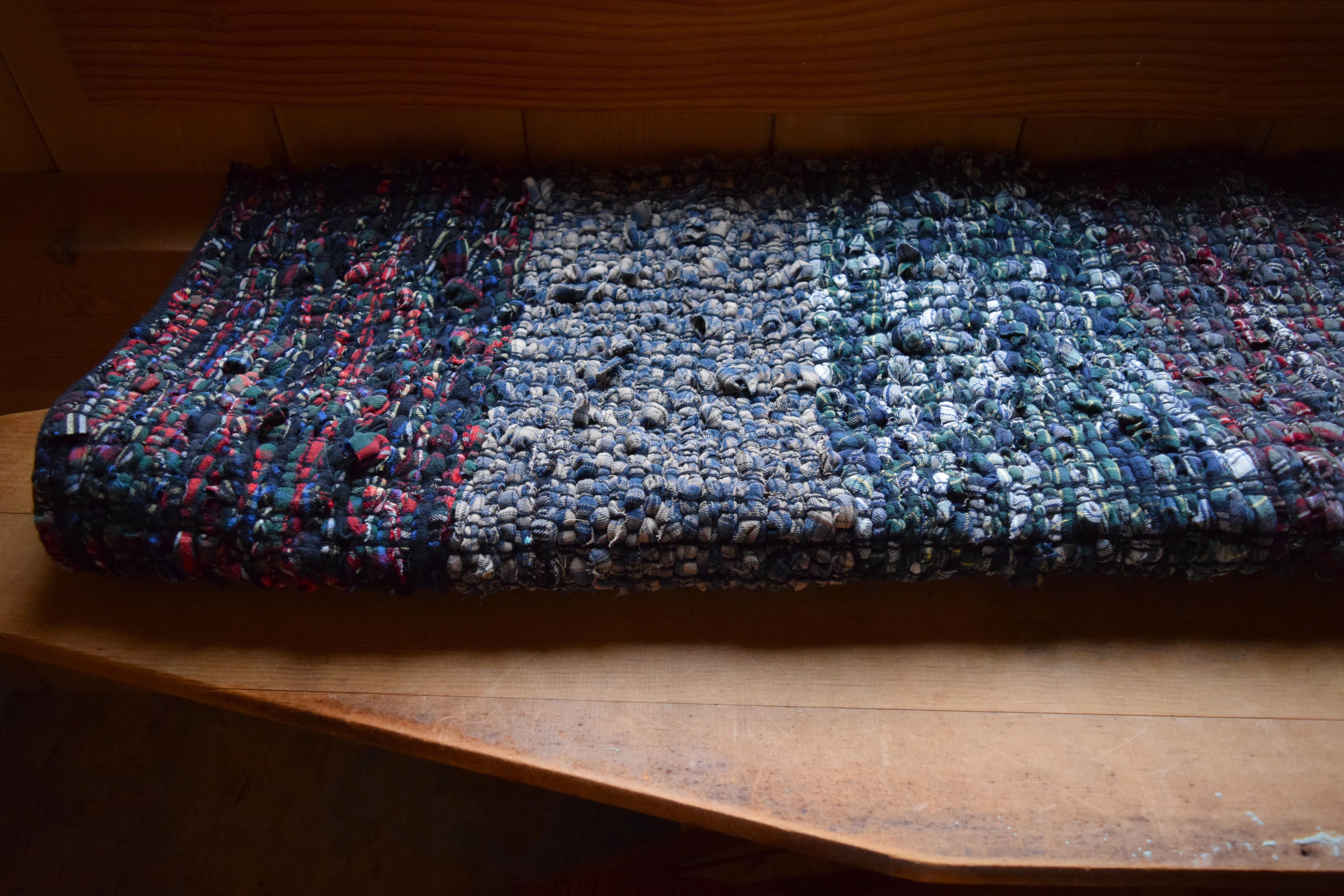
My first woven rug came together rather fast, from six old shirts of Jeff’s (one which I made for him years ago, and five LLBean shirts) made custom for a space in our bedroom in front of an old dresser which was given to us by a weaver (hi B!). The rug was woven on my 48″ rigid heddle loom, with the Freedom Roller attached, and I used a temple but kept it back a few inches from the fell so I didn’t whack it with the Schacht weighted beater.

Its been raining steadily for a few days, and I hemmed the rug sitting at the window, in the low light of the afternoon, admiring the Autumn color outside with the black oaks that have completely turned gold.

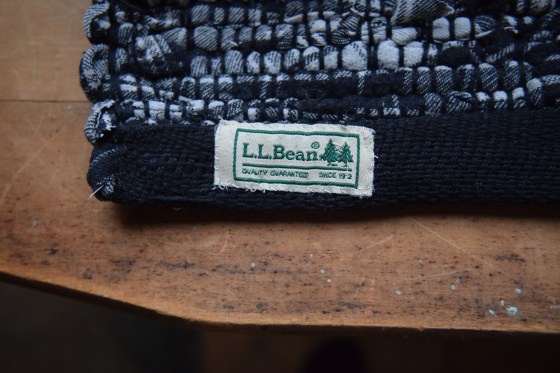
I am really surprised I could weave an *actual* rug on a rigid heddle loom! The rug is 28×50 inches, and I figure I could have had double the length with the Freedom Roller attachment; I reckon I could warp up to 48″ wide, so in theory, I could make a monster rug of 4×8 feet. After I finished weaving it I hemmed the edges to the under side, and carefully took the labels off and chose one to sew on the hem for a little artful whimsy . . .

Juno was the warping and cutting supervisor!

♣   Weaving Notes  ♣

General Notes: I had to get around the fact that the rug is not made with a proper floor loom, with a heavy swinging beating reed, and so I had to beat hard along each weft with the Schacht weighted beater, but the end result was good enough. I thought of a clever way of cutting long strips; figured since the strips of cut fabric are getting scrunched into the warp anyway, it does not matter if they are on the bias or on the grain, I cut about 2″ wide strips, starting at the bottom, between button bands, following the shape of the shirt tails, zig-zag cutting back and forth, using up as much of the shirt as possible, and very little was cut on the grain. The sleeves were mostly spiral cut. When about 1.5″ from the button band I stopped, then from beneath cut a wide turn back the other direction over of the previous cut, snipping across side seams as they come. I was not particularly neat with the cutting either. I cut all the ends angled, and overlapped the beveled ends instead of sewing edges together, which would be way more work.  I wove one shirt completely before starting the next, in segments rather than stripes, so we could recognize the old beloved shirts in their sequence.

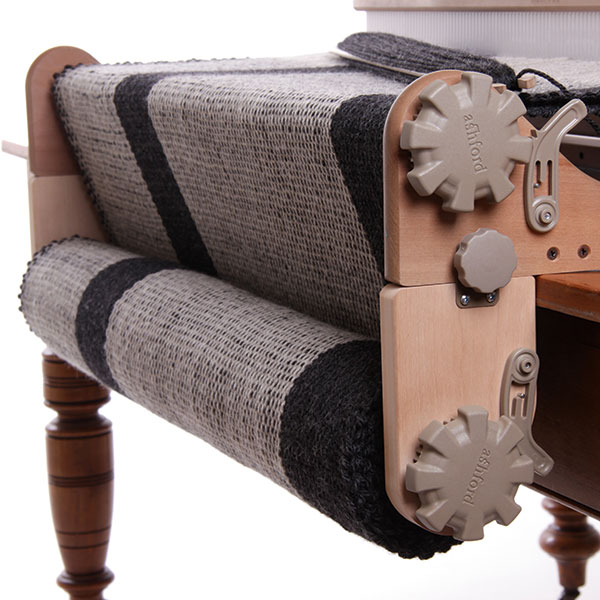
Additionally, the rug is fairly sturdy and thick and the woven “cloth” builds up fast on the cloth beam, so the Freedom Roller (Ashford’s add-on cloth beam for their rigid heddle looms) is absolutely essential in my opinion to weave a rag rug that is thick and substantial, as is the weighted beater. But perhaps the most essential thing that I overlooked (never again!) is the importance of using warping yarn that can withstand the punishment of the hard beating. 

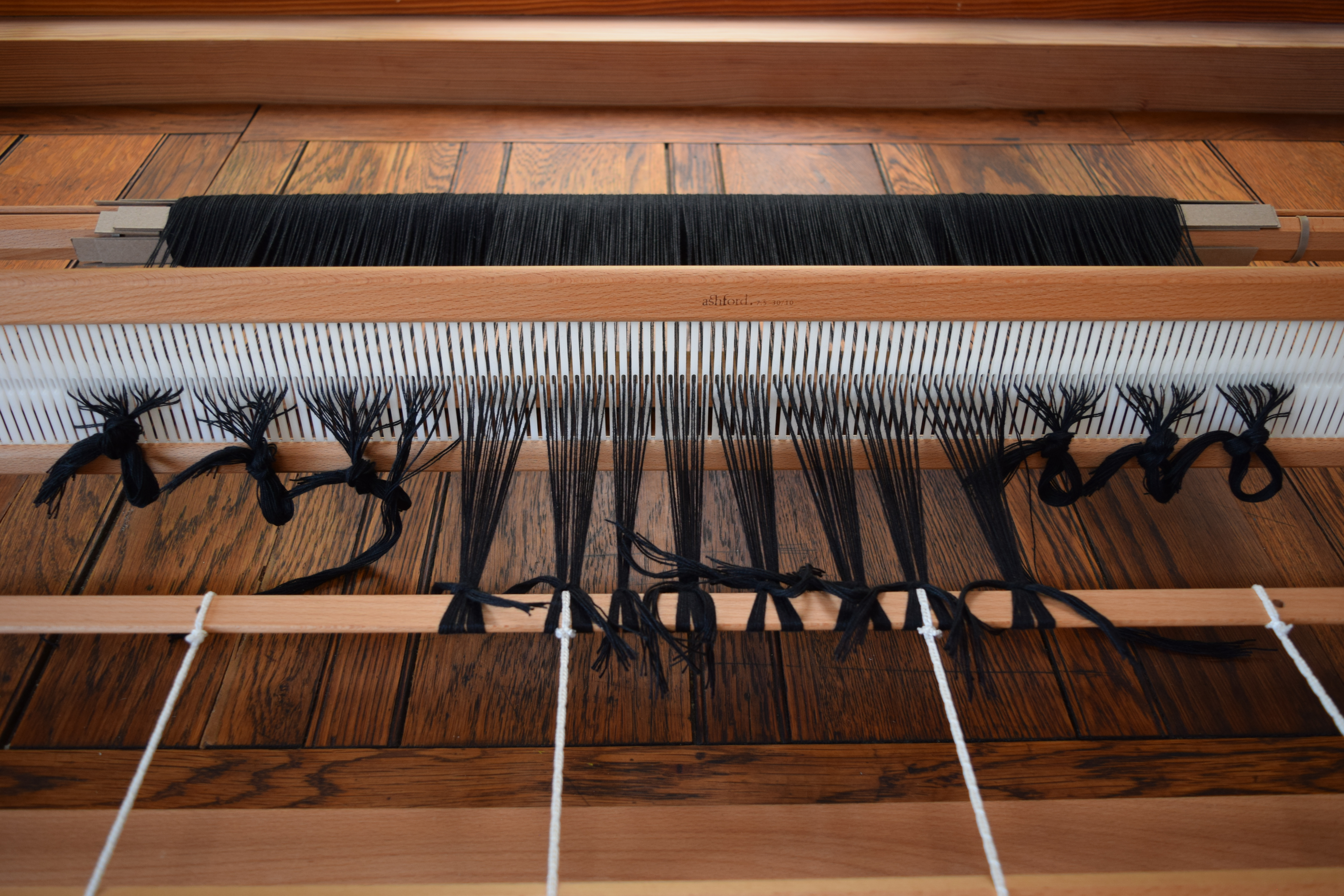
  • Yarn: Maurice Brassard 8/2 cotton, double threaded (2 in hole, and 2 in slot) emulating 8/4 warp yarn. Approx 80″ from apron rod to pegs. Should have bought heavier warp yarn and waited for it to arrive before starting the rug! 
  • Weft: Cotton flannel strips, about 2″ wide, taken from old shirts. Beginning and end 3″ same as warp, woven wide enough to make a turned hem below the rug. 
  • Loom: Ashford 48″ Rigid Heddle Loom (the beast!) with Freedom Roller attachment
  • Number of warp ends: 210, double threaded = 420.
  • Reed: 7.5 dpi (30/10cm) dent rigid heddle reed, about 28″ width in reed.
  • Finished: 1 inch turned hem, sewn against the underside of the rug. No washing/drying. Measurements finished are 28″ x 50″. I planned for 60″ length but made a mistake when measuring warp distance and somehow didn’t factor in the correct amount of loom waste! Gaw!!!  
  • Yardage: Who knows…. 6 shirts using as much as I possibly could. 

Scarf No.9

Hi, its me Abelene.

In the end, it was impossible to photograph, the colors could not be grasped by the camera. Even after trying a hundred shots, in different areas of lighting, only these few worked out. But Jen told me how amazing this one was to be weaving freely with no measured blocks of color, just changing quill bobbins randomly, and she has a lot to say about the whole project in the weaving notes below, so I’ll just smile and wave. I personally think the Marigold Scarf (no.9) is so beautiful, in its deep and rich gold tones, and I wish you could see the colors as they really are, but this photo out of all the many, captures the colors best . . .

♣   Weaving Notes  ♣

Note from Jen: Yes, this project was difficult, and I must confess I am not all that encouraged about dyeing cotton but am gaining perspective in the concept of “slow cloth”. After the many steps of scouring, mordanting, dyeing, then finally washing and rinsing, the actual yarn, and that is before the loom is even warped. I must ask myself is it worth it? I ponder this because I really love weaving, but maybe the added overwhelm from dyeing the cotton yarns first did add a new level of complexity. I have tried indigo, madder, pomegranate and marigold, and in every yarn the results were dull and almost unappealing as the sheen of the undyed mercerized cotton was lost after all the processing through the steps, the luster was gone. I will not give up, I just need a small break, in order to be fresh for learning again. You can see all posts for this project here.

  • Yarn: Yellow , dark gold , green gold overdyed 10/2 yarn (see this post. )
  • Loom: Ashford 16″ rigid heddle loom.
  • Additional tools: I used a temple and the board I rest against the cloth beam to stabilize and lengthen the weaving surface.
  • Warp:  Direct warp set-up, 1 end in every heddle/hole, and 1 in every dent/slot –drawing out from apron rod to peg is approx 110 inches from apron rod to warping peg.
  • Number of warp ends: 239.
  • Reed: 15 dent rigid heddle 15.5″ in reed. (The loom says 16″ weaving width, but there is only the capacity in the reed for 15.5″ .
  • Sett on loom: Warp = 15 epi,  weft = 15 ppi
  • Sett after finishing: Warp 16 epi, and weft 16-18 ppi.
  • Color Pattern: Warp =  random pattern.
  • Finished: 3 inch twisted fringe, then washed and dried in machine, then pressed. Measures 78″ long (not including fringe) and 14″ wide, and weighs 135 g. 
  • Yardage:  Total yardage used is approx 1250 y, figured from weight of finished piece and not including loom waste.
  • Note to self, recipient was eventually Camille, although it was intended for Nina.