twill

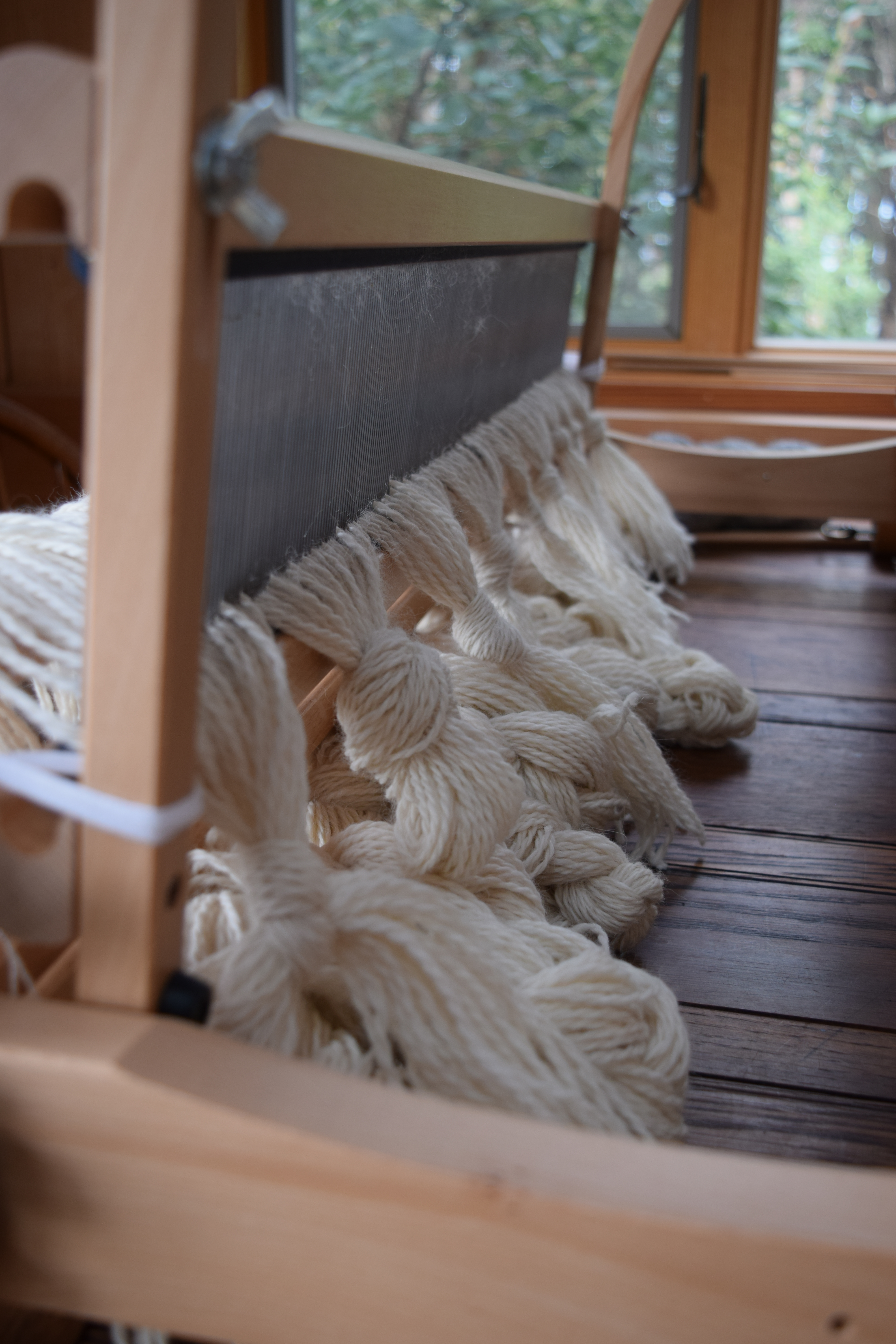
I have to confess mild disappointment, as I thought I could do better on my first twill project than I have. I planned it to be full width of 32″ and at least 72″ long. I planned it to be soft and fluffy and light, a lap blanket or shawl, whichever it wanted to be. But there was a double learning curve within this piece as not only have I not yet woven alpaca, which I realize now this particular superfine two ply worsted weight is quite slippery, but neither have I woven twill, or anything on multiple shaft loom. This was to be the first piece on the new table loom, a test run, using alpaca yarn that I happened to have the exact amount of in my yarn drawers, and meticulously planned to use up every yard of my light grey and cream that I had.

I set off with things going nearly right, having been lucky with the warping and keeping it organized, I had to improvise a front-to-back method. The work of sleying the reed and threading heddles entailed so much fussing I bore down under the yoke of determination and eventually, miraculously, got it done. Threading through the texsolv heddles in a straight draw, and finally with Jeff’s help I got it wound on to the warp beam nicely and firmly, with a lot of cardboard warp separators. Then there was testing the shed and fixing crossed threads for quite some time, not knowing what I was doing really, I really was at my limit. Presently, my first impression is that I don’t really love texsolv heddles, oh, yes, they’re quiet, and ultimately lightweight, just that threading them is a chore! I don’t know what wire heddles are like either, but they must be easier to thread.

After I started my first few inches of weft, just about everything went wrong that could go wrong; warp threads started to break within the first 12 inches of weaving, as well as the floating selvedge, and I noticed how uneven the twill angle was, all over the place, beating so inconsistently as I am not use to a beater at all, it seemed I was barely pressing the weft into place. In retrospect I suspect that it is because the warp was too spread out, and I should have used at least one size smaller reed, if not two, and being so spread out, the weft just sunk heavily into place practically covering the warp, in some places almost like tapestry weaving. I did not and could not predict this weft-heavy twill because of my complete lack of experience. So now I know, especially for this alpaca that is slick, pack the warp in double that I have, and then I will have some choice about how the weft beats down.

I should be laughing, I knew so well that I’d make hash of the twill thing, but I also knew I’d learn a lot, and I most certainly did. The good news is that it was a lovely cold snowy morning yesterday when I brought this hand-made gift of goodwill over to my dearest friend (who agreed ahead of time to accept it as the learning curve it is), that I had finished it in time before it became hot as it does often in mid March, and who wants a heavy alpaca thing then? I am hopeful the alpaca will most certainly bloom and soften and become a perfect accessory in her rustic mountain cabin where it will now live, strewn over the back of some truly antique leather chair next to an old stone fireplace hearth, and even though it is lumpy, bumpy, and unintentionally striped with uneven twill angle, it will bloom out and fit in wonderfully.

Anyway, the list of Next Times are long and detailed and for documenting purposes, I have included them in my weaving notes below, and I shall find them useful in the future.

Special thanks to Ruth, the chat help at The Woolery, who has taught me more than any books or class!

♣   Weaving Notes  ♣

  • Yarn: Simply Alpaca by Knit Picks. Superfine alpaca, approx 12 wraps per inch, 247 yds = 100g. Color for warp is natural “Alaina”, and color for weft is light grey “Alfie”. 
  • Loom: Ashford 8-shaft Table Loom, 32″.
  • Warping method: Traditional warping peg with cross, improvised back to front, but I forgot to measure the warp before winding on beam.
  • Weft pattern: 2/2 twill.
  • Selvedges: 1 end of floating selvedge each side.
  • Number of warp ends: I ended up improvising adding some, doubling up some dents to try to use up all the warping yarn, and never counted. 
  • Reed: 8 dent.
  • Sett after finishing: Warp 10 epi, and weft between 5 – 7 ppi.
  • Finished: 30″ wide by 60″ long, plus a 5″ knotted fringe. I did not wash but steamed well.
  • Yardage:  Total yardage used = 1654 y, figured from weight (670g) of finished piece and not including loom waste.
  • What I will do differently the next time I weave this alpaca:
    • Start with way more than enough yarn, nearly double the amount I need for warp, so that being frugal doesn’t affect my planning! 
    • For this alpaca I will use a sett of 12 epi for plain weave, and perhaps 14 or 16 epi for twill. doubling ends through the 8 dent reed for twill. I do suspect the reason the twill is so weft heavy and at such a shallow angle is because of the warp being too spaced out, I don’t know actually, only a guess. Setting up the warp erring on too close probably better than too far apart, for the weaving would not stand up to even a light beat, as if it just wanted to squish together and the warp hardly visible. 
    • Originally I wanted to use my 10 dent reed that it came with, but didn’t think I could get the 72″ length full width of the loom, and I wanted it to be as wide as possible. So, I recalculated an epi of 9, and got an 8 dent reed, so I improvised 2 ends through one dent every 11 dents, it was crazy doing this, and I think it actually caused a vertical stripe in the warp !  As it ended up, I ran out of weft and had to cut the piece off the warp with another 12-18″ that could be woven –frugality backfired into waste!  That was wasted warp that could have been reconfigured into a 10 or 12 dent reed for the warp I ended up using in the end.  In future, it has got to be easier, a simple rule of start with plenty, and warp evenly 1 or 2 ends in the dent, every dent the same number of ends, all the way across the warp, with exception of the selvedges being more if reinforcing the edges. 
    • Not use the full width of the reed, this must be a universal thing, for one needs room for floating selvedges, and to add a couple of warps if necessary.  Leave at least an inch on either side of the warp for fixes, at least until I know for sure, at least until I know what I’m doing. 
    • Add more twist to this alpaca if I can, before warping! The weft can be fluffy and barely twisted, that’s okay, but I would have had far fewer breaks had I run the balls through the spinning wheel giving them a couple of turns more. 
    • Warp it in even bundles of say, four inches on the reed, and sley/thread one bundle at a time rather than overwhelming myself with all of them at once. After all the threads are gone through the front, it is easy to untangle the warp with this slick alpaca, just a few shakes and the strands magically align, to wind on to the warping beam. 
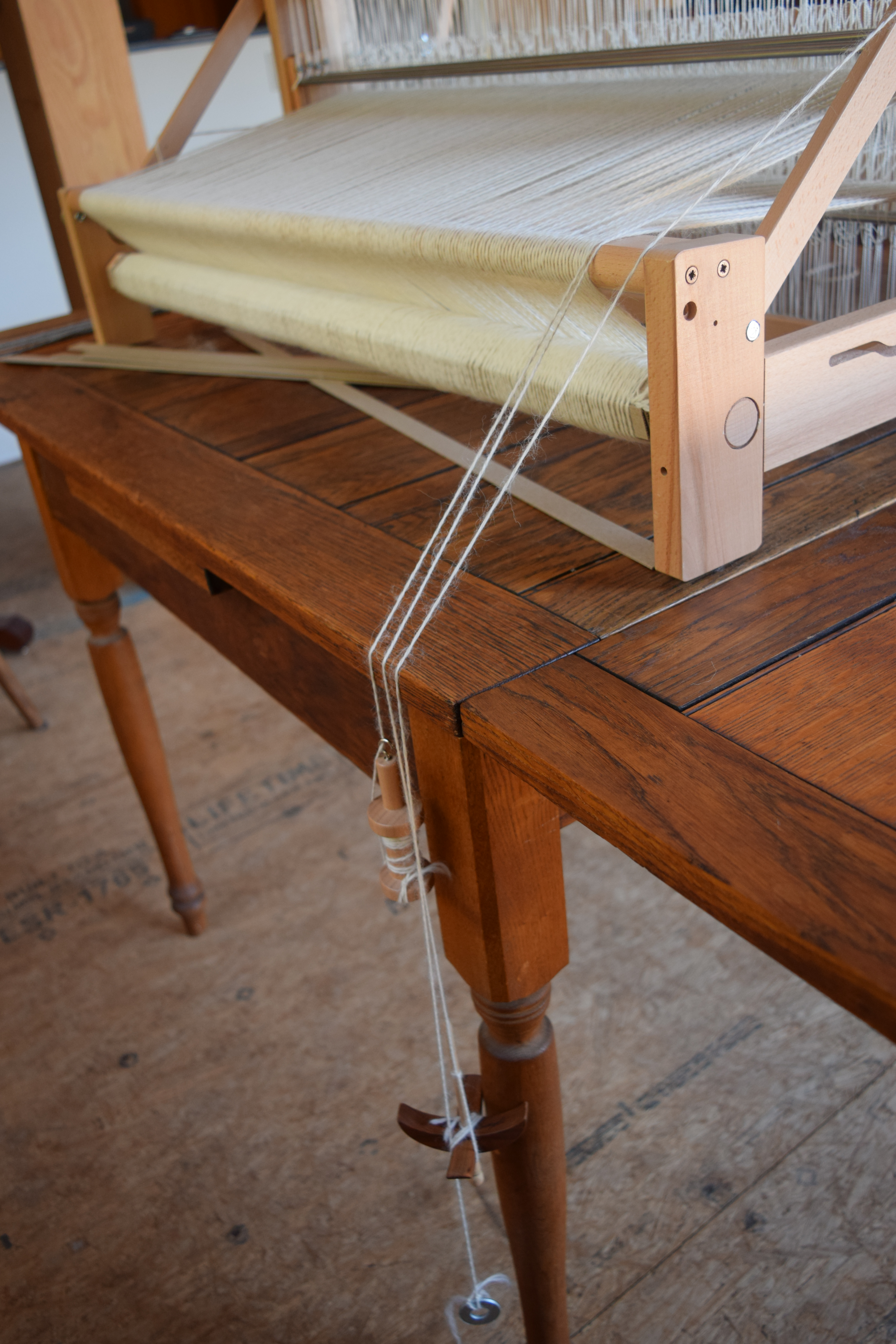
    • As I was breaking warp threads, I was looking for things in the house I could wind and weight down as a floating weight. I discovered my tiny drop spindle to be the perfect warp weight!!! I loved it so much because I could actually spin and increase the twist of the yarn that was breaking because it was too loosely plied. So, bought another just like it, and plan to have two of these tiny less-than-an-ounce spindles to be my official floating selvedge weights, perhaps twisting two selvedge strands together rather tightly and “parking” it on the table, as those turkish style spindles do so well. 
Scarf No.2

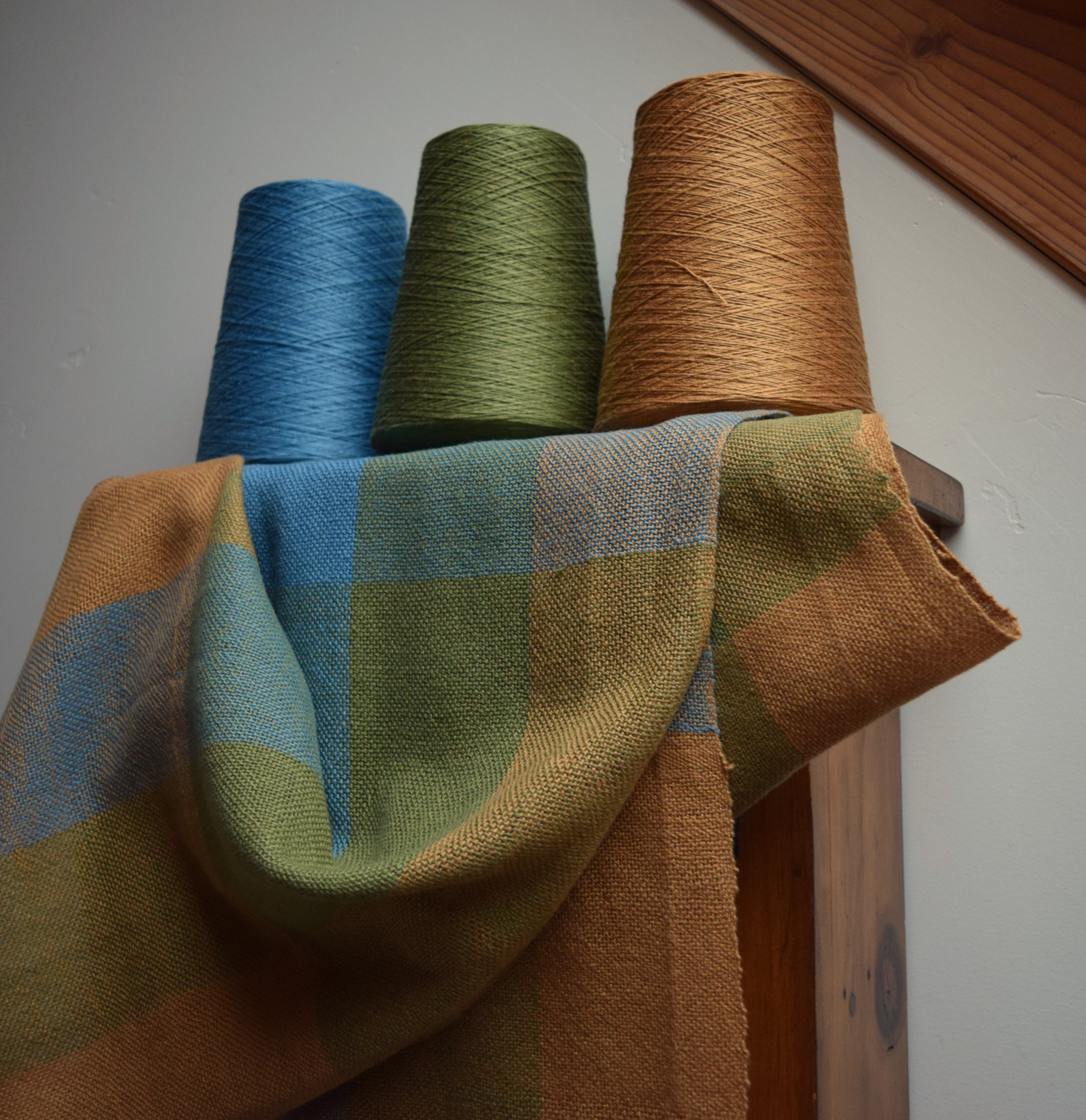
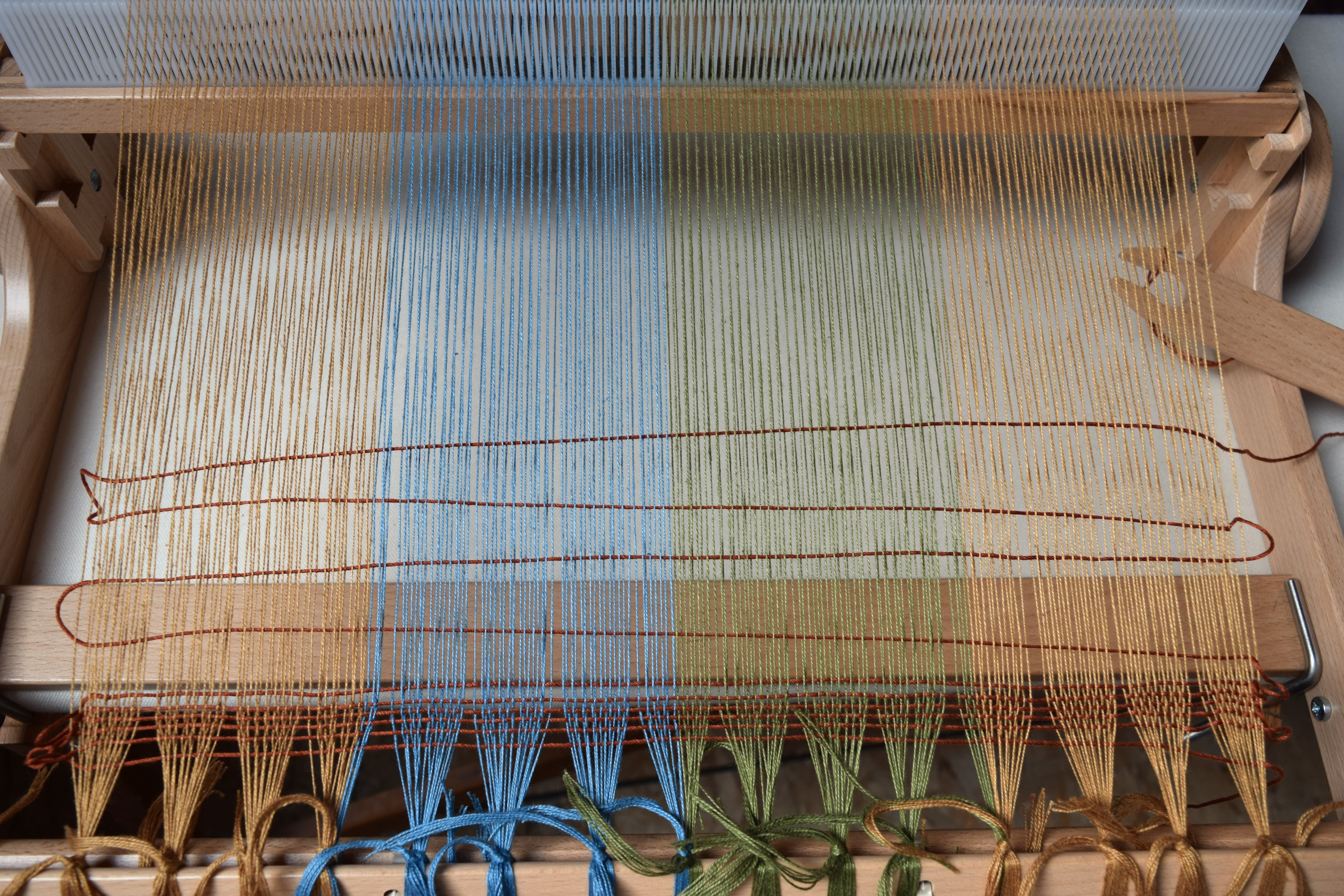
Another simple check with three big blocks of color shows so well how shades interact and colors multiply, intersections creating new colors and keeps the interest going through the arduous task of managing even edges. Something so basic as three colors can give a lot of gratification when first learning the basics of weaving. I am still a massive fan of check!

In my recent weavings I’ve been reinforcing the selvedges with extra threads and using a temple, which at this early stage of becoming a weaver, I have already come to rely upon. I think every once in a while weaving something without extra selvedge threads or temple, would give me practice keeping the selvedges from drawing inward by keeping the tension even but not too tight, and the weavers’ angle generous. There are many weaving notes and photos left below, in the event that anybody might find them useful, and I am happy to talk about the details further in the comments as well.
♣   Weaving Notes  ♣

  • Yarn:  10/2 cotton, 4200yds / 1 lb, Valley Yarns Mercerized in colors; Golden Ochre (7129), Moss Tone (5997), and Mediterranean Blue (2448). This is the first time I used mercerized cotton, having no idea how much I would like it, I really do! 
  • Loom: Ashford Knitters Loom 20″.
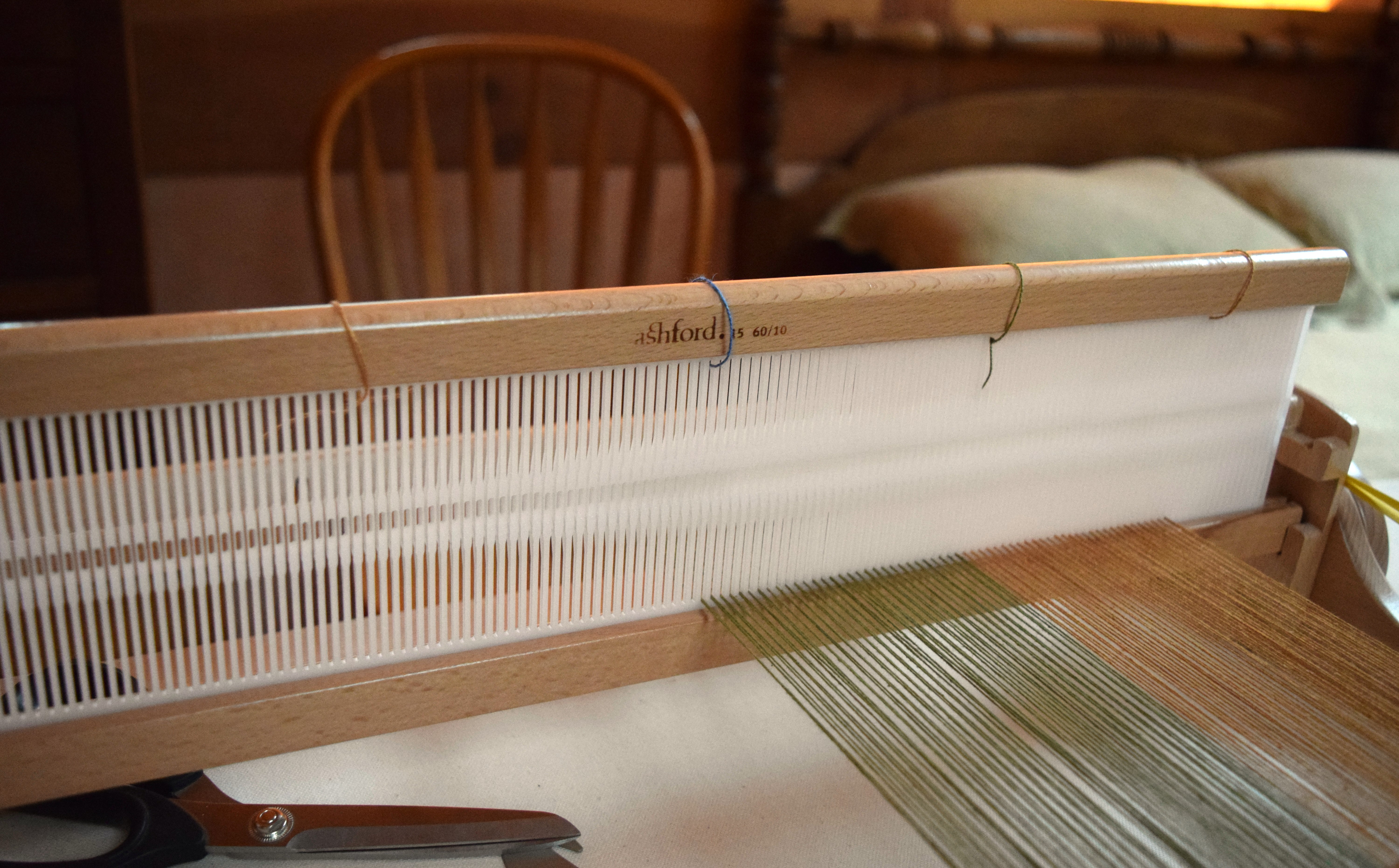
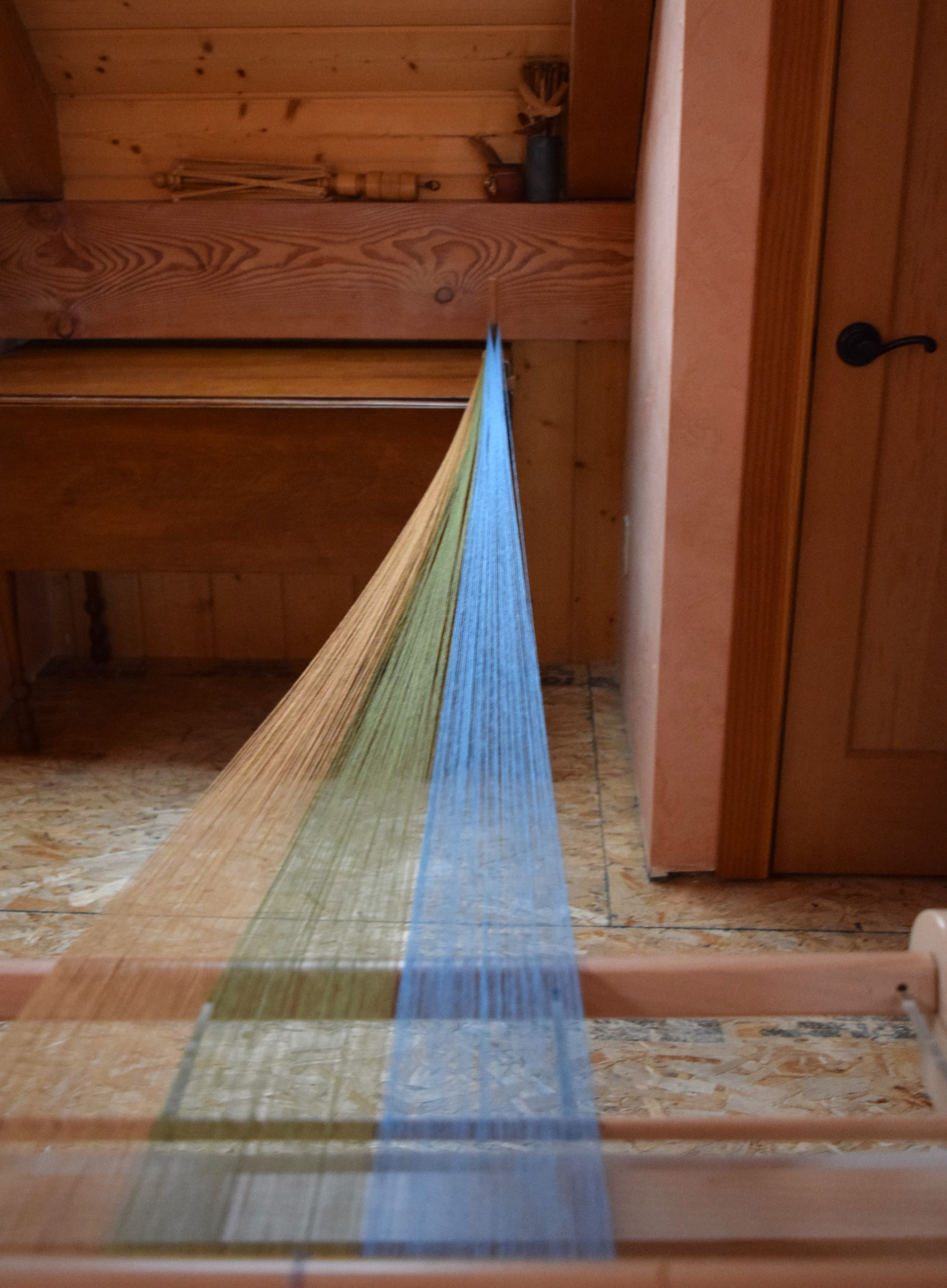
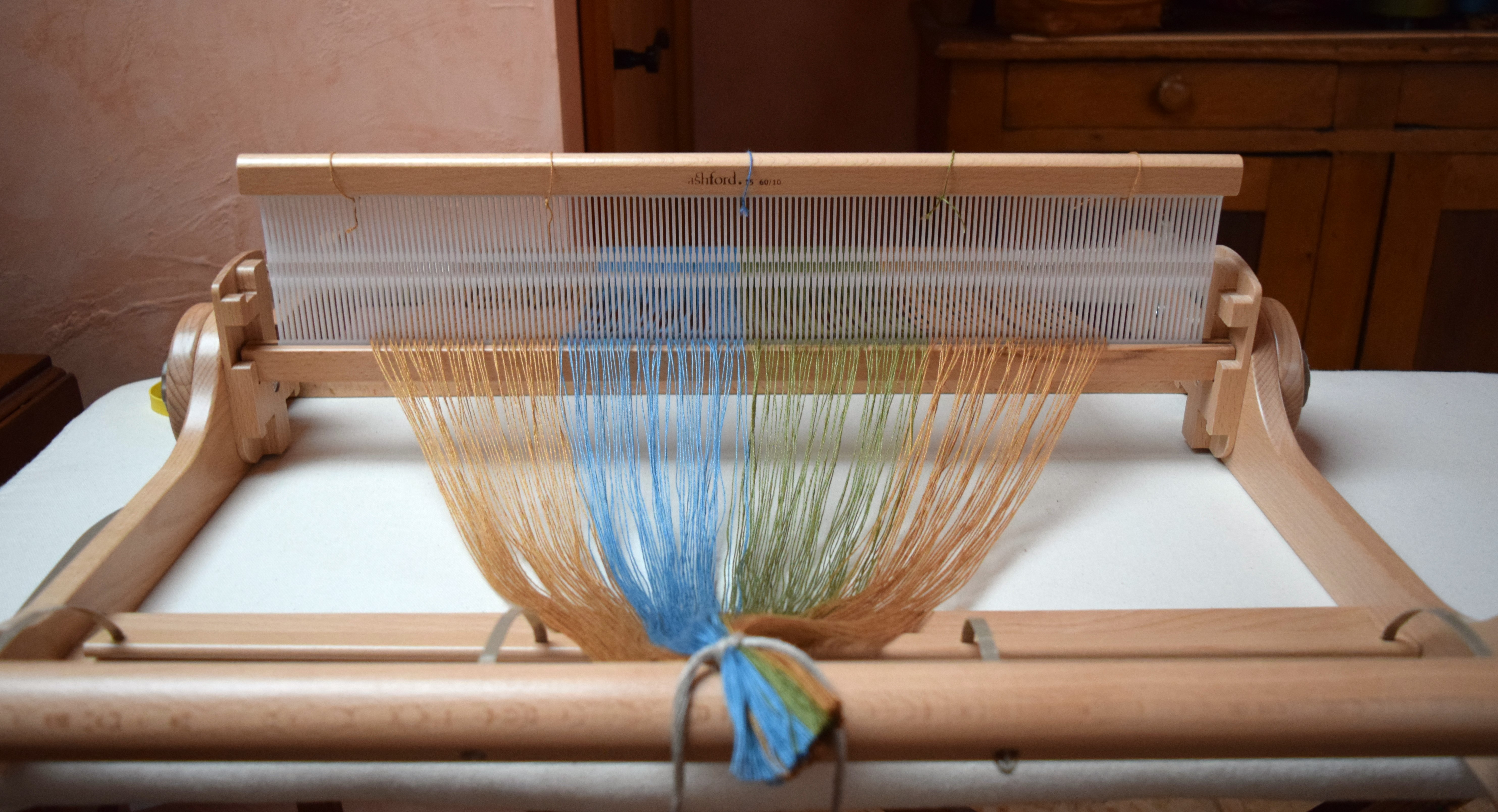
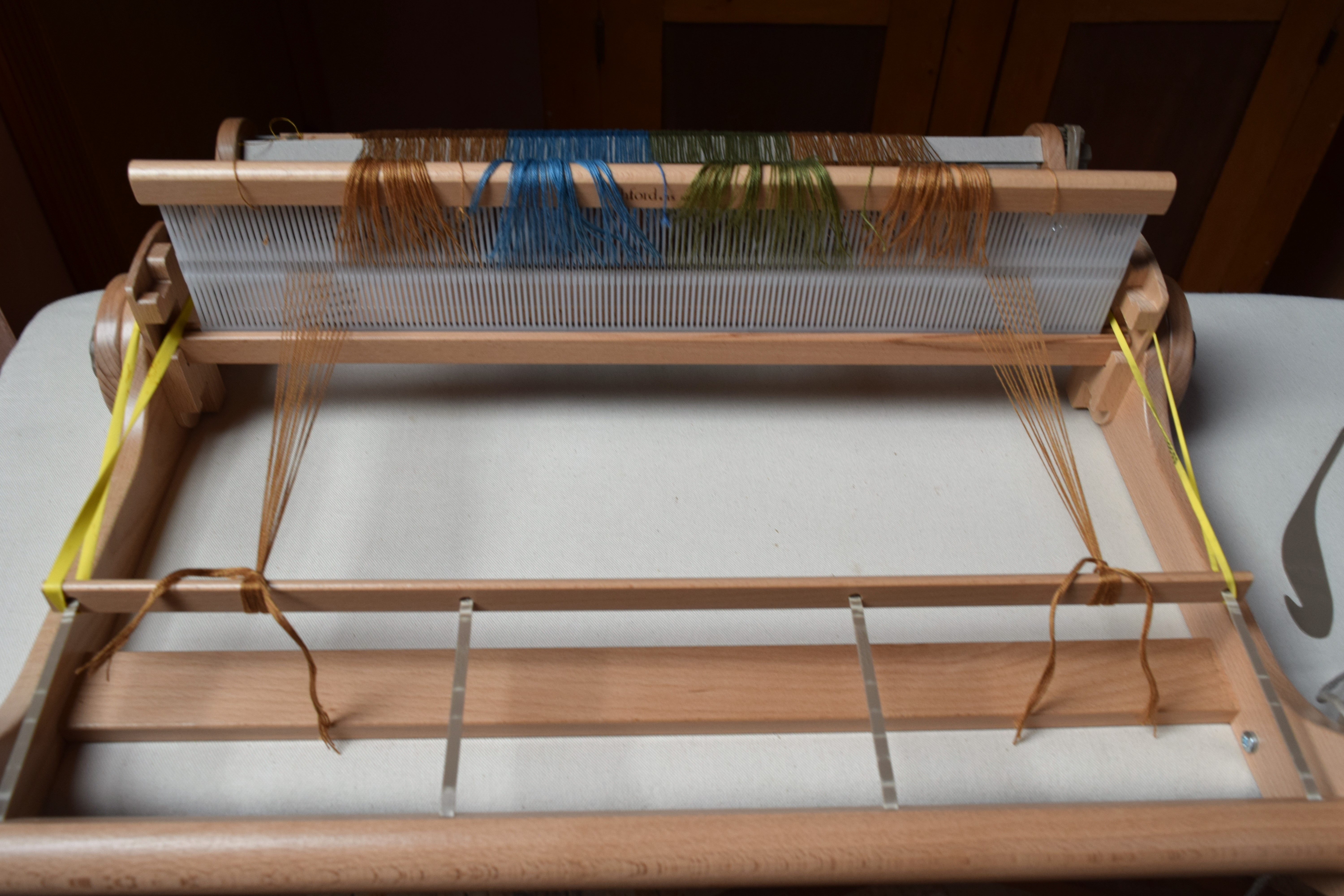
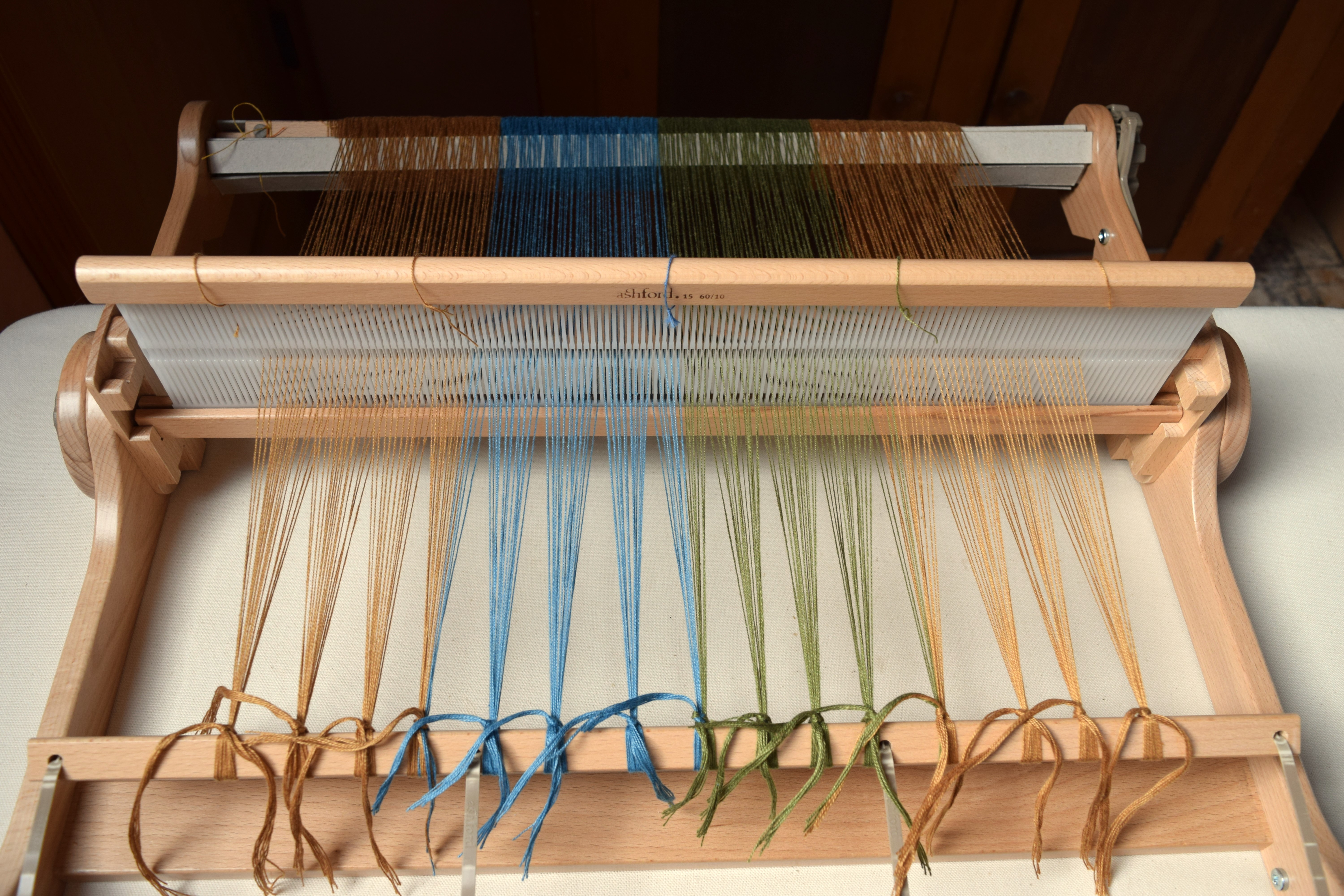
  • Warping method:  Direct warp set-up, 1 end in every heddle/hole, and 1 in every dent/slot –drawing out from apron rod through each dent to peg is 2 ends = each color 30 dents = 60 ends.  Approx 100 inches from apron rod to warping peg.
  • Number of warp ends: 240
  • Reed: 15 dent rigid heddle 20″ reed, and width in reed = 15.5″.
  • Sett on loom: Warp = 15 epi (threads or “ends” per inch),  weft = 15 ppi (passes or “picks” per inch).
  • Sett after finishing: Warp 16 epi, and weft 16 ppi.
  • Color Pattern: Warp =  60 ends gold, 60 ends green, 60 ends blue, 60 ends gold.  Weft = wound 60 full wraps on to the stick shuttle for each color, in repeating sequence gold, green, and blue. 
  • Finished: 1/4 inch turned hem, then washed and dried in machine, then pressed, measuring 68″ long and 14″ wide, and weighs 117g. 
  • Yardage:  Total yardage used = 1083 y, figured from weight of finished piece and not including loom waste.

It was inevitable.

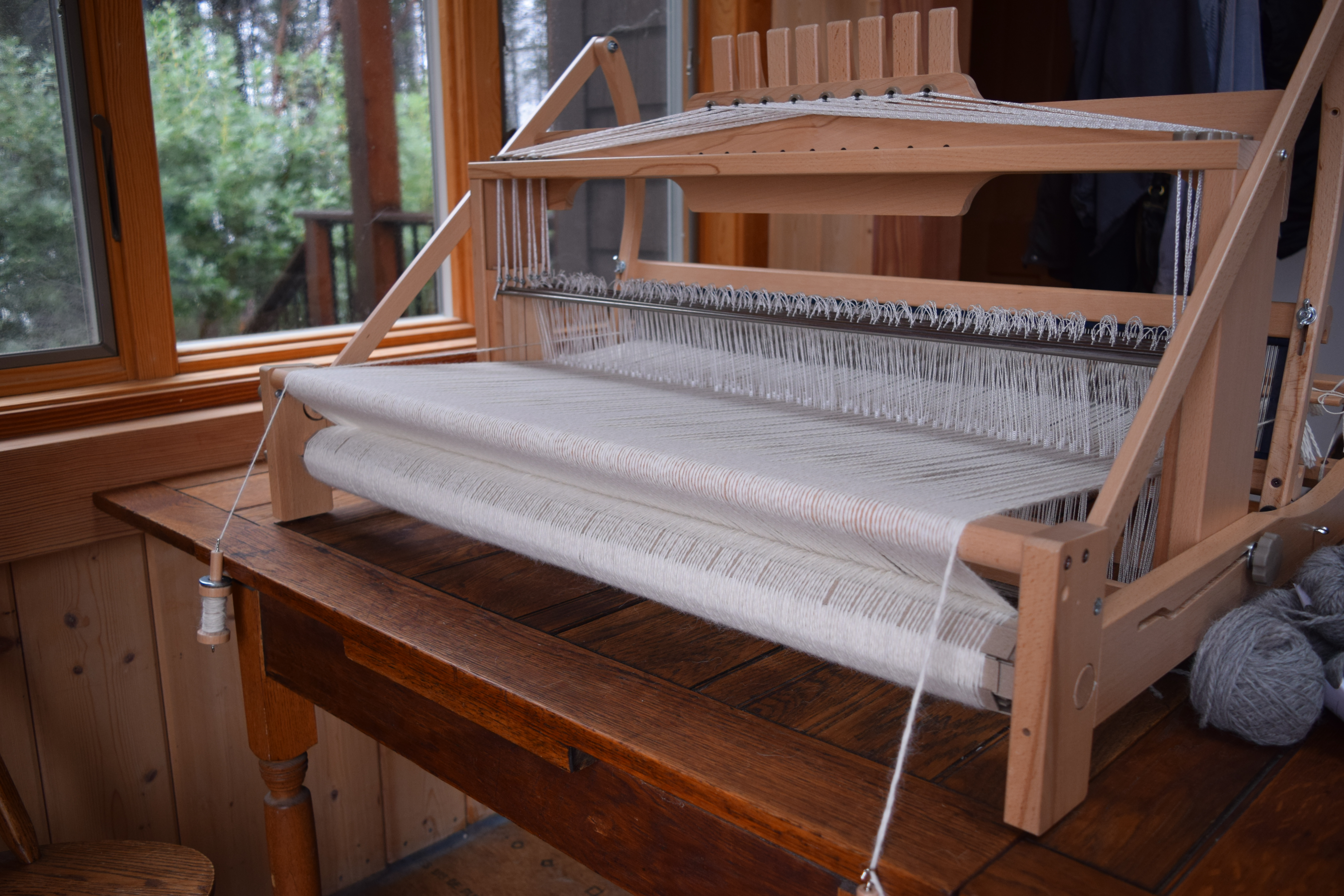
How could I have escaped the inevitable? The fate that I would want to operate multiple shafts was almost necessary to learn to be a weaver, and so I surrendered to fate. It took me about three days to put together, and it was not without near catastrophic moments, and in the end, it all worked out just fine. It is the largest model, with a 32″ weaving width capacity, and 8 shafts, although I don’t plan on using more than 4 for quite some time. I’ll admit to you though, I am a little afraid of it, for it surely will elevate me beyond mere simple plain weave to perhaps twill, and perhaps with a few hundred more texsolv heddles, I could weave very fine linen. We will see. For now, it is just an inanimate object that needs to have the pulse of creativity brought into it, and so today I intend to begin its very first project, I have made the calculations, with four skeins of alpaca for the warp, it is waiting for the spark of life. Wish the two of us luck.

Scarf No.1

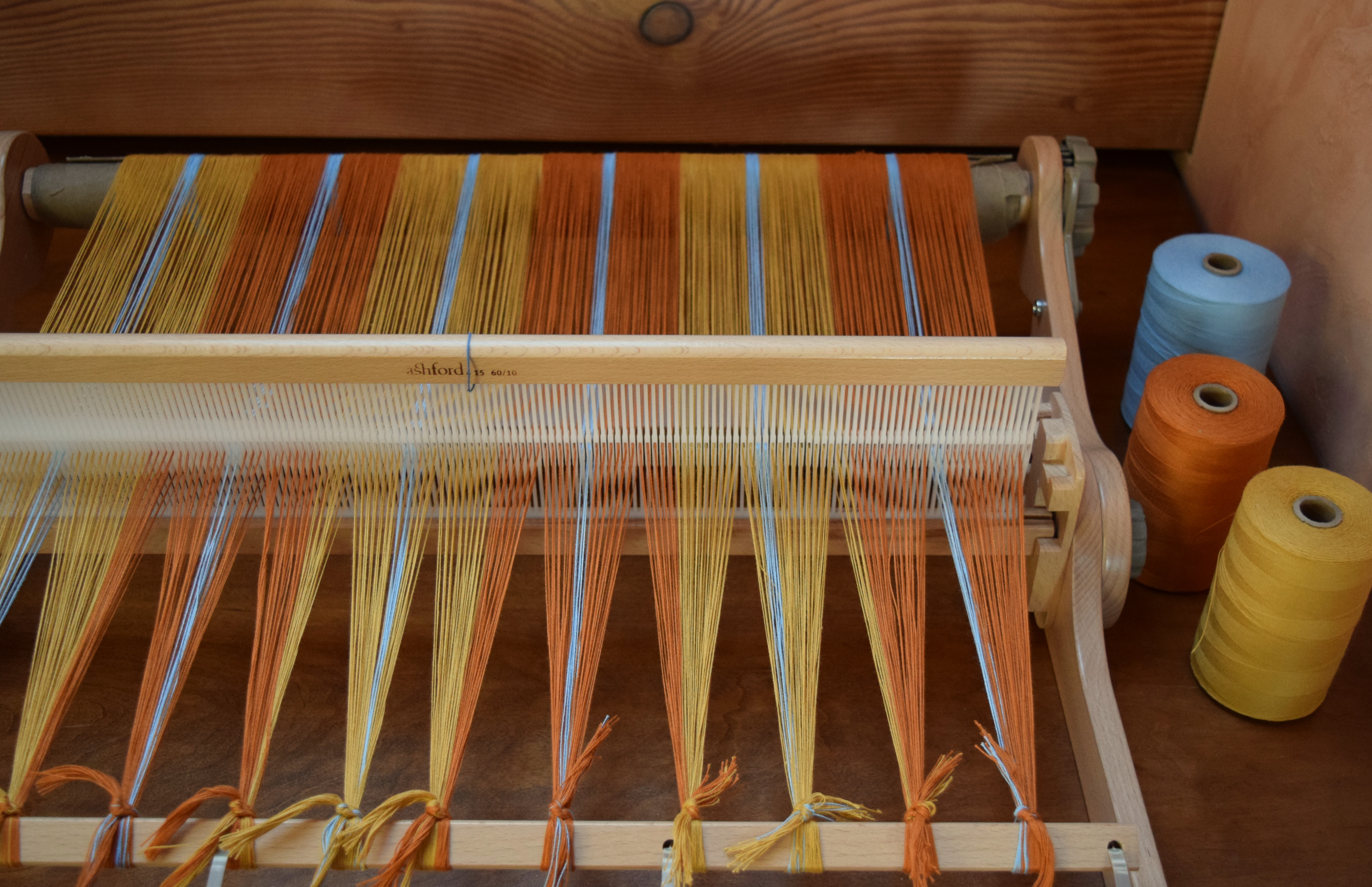
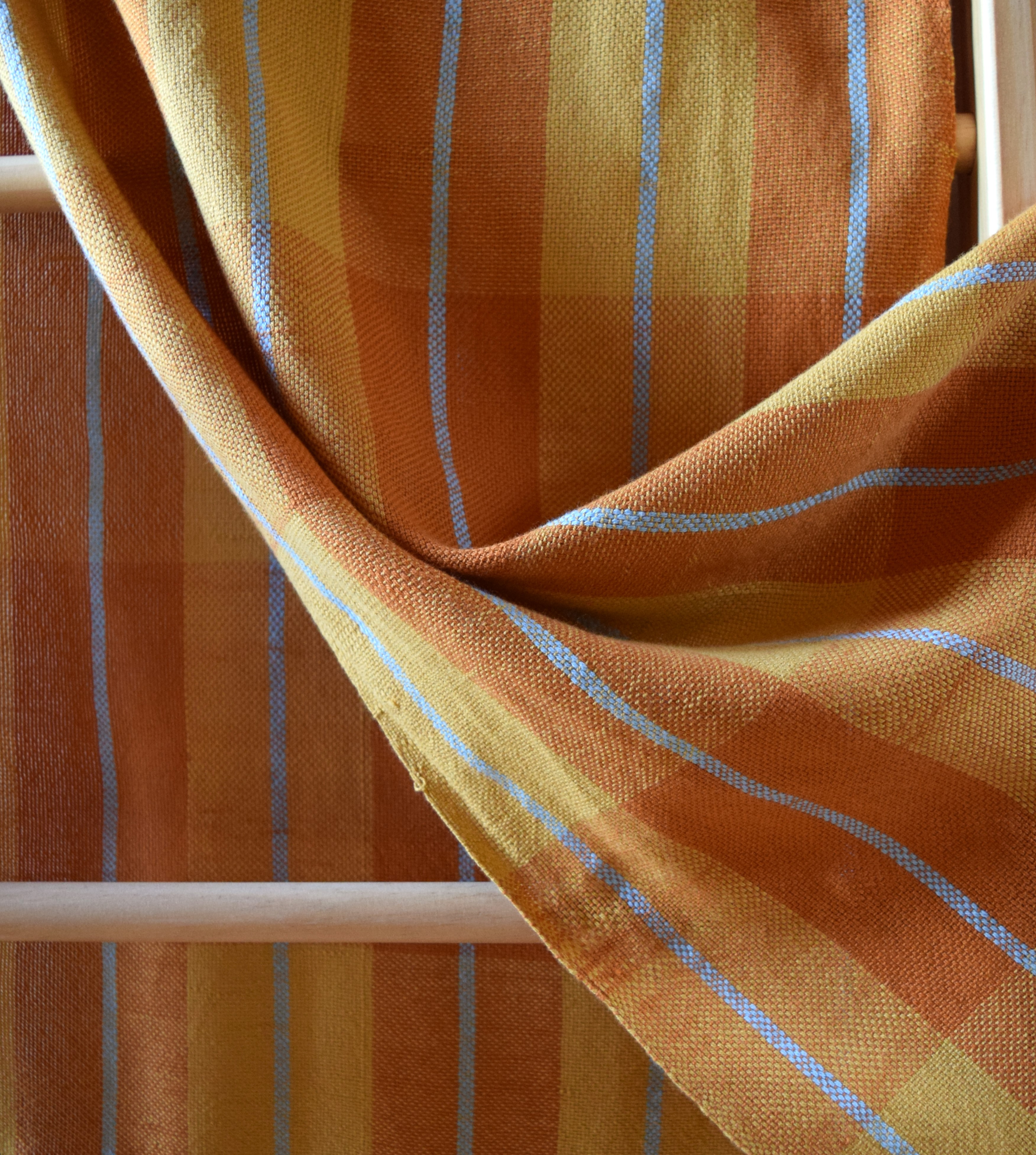
Calling this one Sunny Skies, as it radiates sun rays and with a little cool stripe of sky blue . . . to be sent off to my youngest niece who is at university in sunny Santa Barbara, a vernal emissary to cheer her up.

Warp stripes of burnt orange, golden yellow, and sky blue, against weft strips of burnt orange and golden yellow; the pattern makes an interesting, elongated check pattern with a thin strip of pale compliment color contrast. A beautiful check improvisation if I may say so, and definitely plan to explore this same pattern again per weaving notes below, the checks are so subtle as is the contrast stripe, that the possibilities are many. Exciting!

♣   Weaving Notes  ♣

  • Yarn: Maurice Brassard 16/2 unmercerized cotton, 6720 yds / lb.
  • Loom: Ashford Knitters Loom 20″.
  • Warping method:  Direct warp set-up, doubling up epi — 2 threads in every heddle/hole, and 2 in every dent/slot. Approx 100 inches from apron rod to warping peg, which is a guess as I seemed to have forgotten to take notes on that measurement.
  • Sett on loom: Warp = 30 epi (doubled) and weft = 15 ppi (single).
  • Sett after finishing: Warp 32 epi (doubled) and weft 16 ppi.
  • Reed: 15 dent.
  • Color Pattern: Warp = 22 ends Rouille, 4 ends Bleu Pale, 22 ends Rouille, 22 ends Veil, 4 ends Bleu Pale, 22 ends Veil; repeat.  Weft = 96 picks Rouille, 96 picks Veil; repeat.
  • Total number of warp ends = 296.
  • Selvedge: Doubled up two outer most selvedge warp yarns (4 ends hole & slot), and used a temple to try to keep even.
  • Finished: Twisted fringe by hand, then washed and dried in machine, then pressed.
  • Weaving edge to edge measures 72″ long x 17″ wide, including 3″ fringe.
  • Finished Weight: 130g. Total yardage of finished piece is 1924 yds.
  • Other notes: This was the first weaving in *such* fine cotton, and it proved difficult to keep weaving even. Next time I’ll go lighter on the beating. Also, even after choosing the most subdued colors available, I am feeling like the overall affect is much too bright. How to soften colors? There’s always the easy trick of simmering yarn in a dye bath of tea — before — weaving with it.

Tablecloth No.1

I finished weaving on Christmas eve, cut off the loom on Christmas day and in a chocolate induced moment of bravery I tossed it in the washing machine to wash, dry, and shrink. The day after Christmas I pressed, cut all the loose ends, hemmed it by hand, and am very pleased with my first tablecloth. I have been working on this cotton-linen table cloth since warping in November, at first not very often, as I had not developed a regular habit of weaving, but then as the weeks went by, and spending half hour of focused weaving several times a day in between chores. I even explored weaving spaces with the loom, having carried it up and down stairs several times, as well as back and forth from the tiny house a couple of times, and even hid it away in a closet out of sight with weaving in progress, while I cleaned up for guests on Thanksgiving Day. Sure a floor loom would be faster, but however slow this big rigid heddle loom is, slow and steady wins the race. I’ve learned how to handle the long stick shuttle while keeping the sheds relatively neat and clear, and to boast, there is less than 16″ of warp waste including tie-on and header,  I think amazing given that I calculated perfectly for the fit on the table. All in all, I’m very pleased with this first serious piece of cloth. I really LOVE the simplicity of this loom, and believe its colossal 48″ weaving width is manageable because I’ve learned to weave while standing.

♣   Weaving Notes  ♣

  • Yarn: 22/2 cottolin (mostly Venne?) 60% cotton & 40% linen, 3360 yds / lb
  • Loom: Ashford Rigid Heddle Loom 48″
  • Direct warp method, 110 inches from apron rod to warp pegs, warping 2 threads in every heddle/hole, and dent/slot.  See the post where I am warping this project.
  • Sett on loom: Warp = 25 epi and weft = 12.5 ppi / or, threads per inch
  • Sett after finishing (shrinking) : Warp 28 epi and weft 14 ppi
  • Reed: 12.5 dent
  • Color Pattern: 20 threads alternating with 4 threads = warp, 48 picks alternating with 12 picks = weft
  • Selvedge: Doubled up two outer most selvedge warp yarns, and used a temple to try to keep even.
  • Finished: Machine washed and dried, hemmed by hand, hem to hem measures 80″ long x 42″ wide.
  • Finished Weight: 540g, or 1.19 lbs. Total yardage of finished piece is 4000 yds.
  • Note about loom waste : I weighed the left over cut yarns after all finished, which weighed 55g, and that would be about 403 y, so total yardage on the loom 4400 yds, and 600g before cutting off.