Tweed Chronicles: Quick Mix

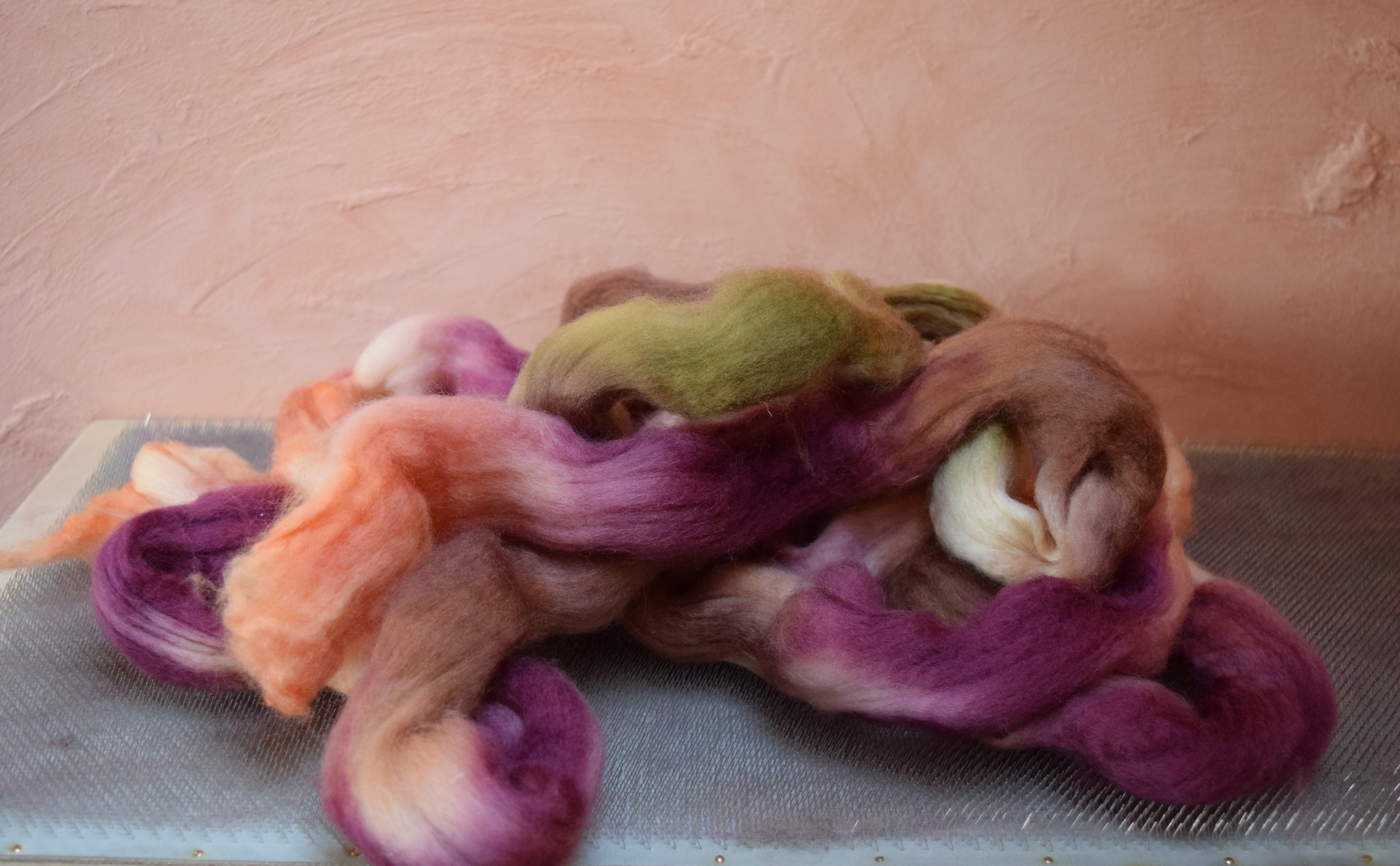
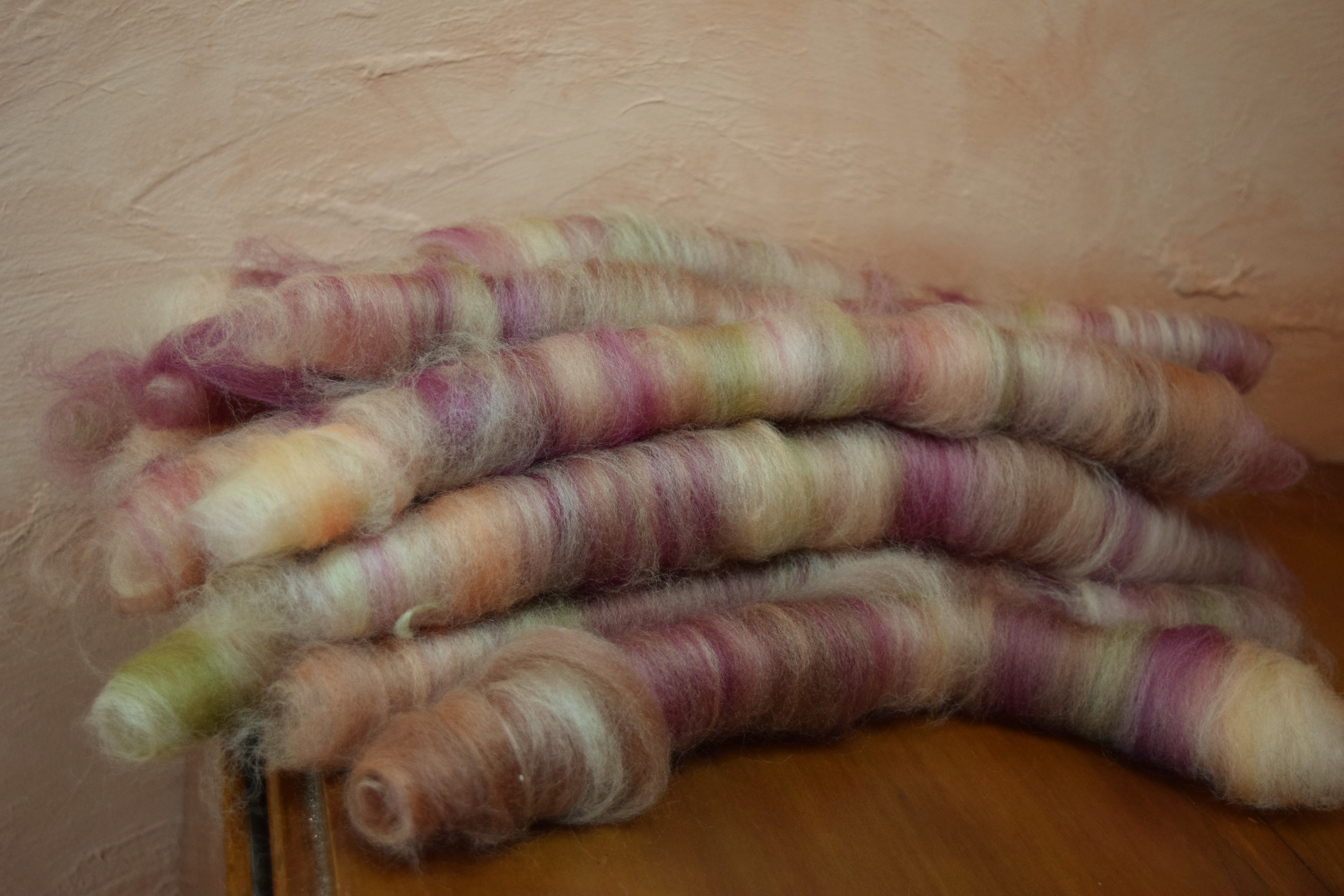
I wanted to try spinning my first ever sock yarn, so I looked in my basket of gifted fiber, and chose some lovely hand-dyed superwash Blue-faced Leicester fiber in beautiful Autumn tones. I wanted to spin this fiber without the barber-pole affect that one often gets when spinning straight from the dyed roving, but a softer and slightly more homogenized result. So you know what that means, I have an excuse to pull out my blending board and do some carding!

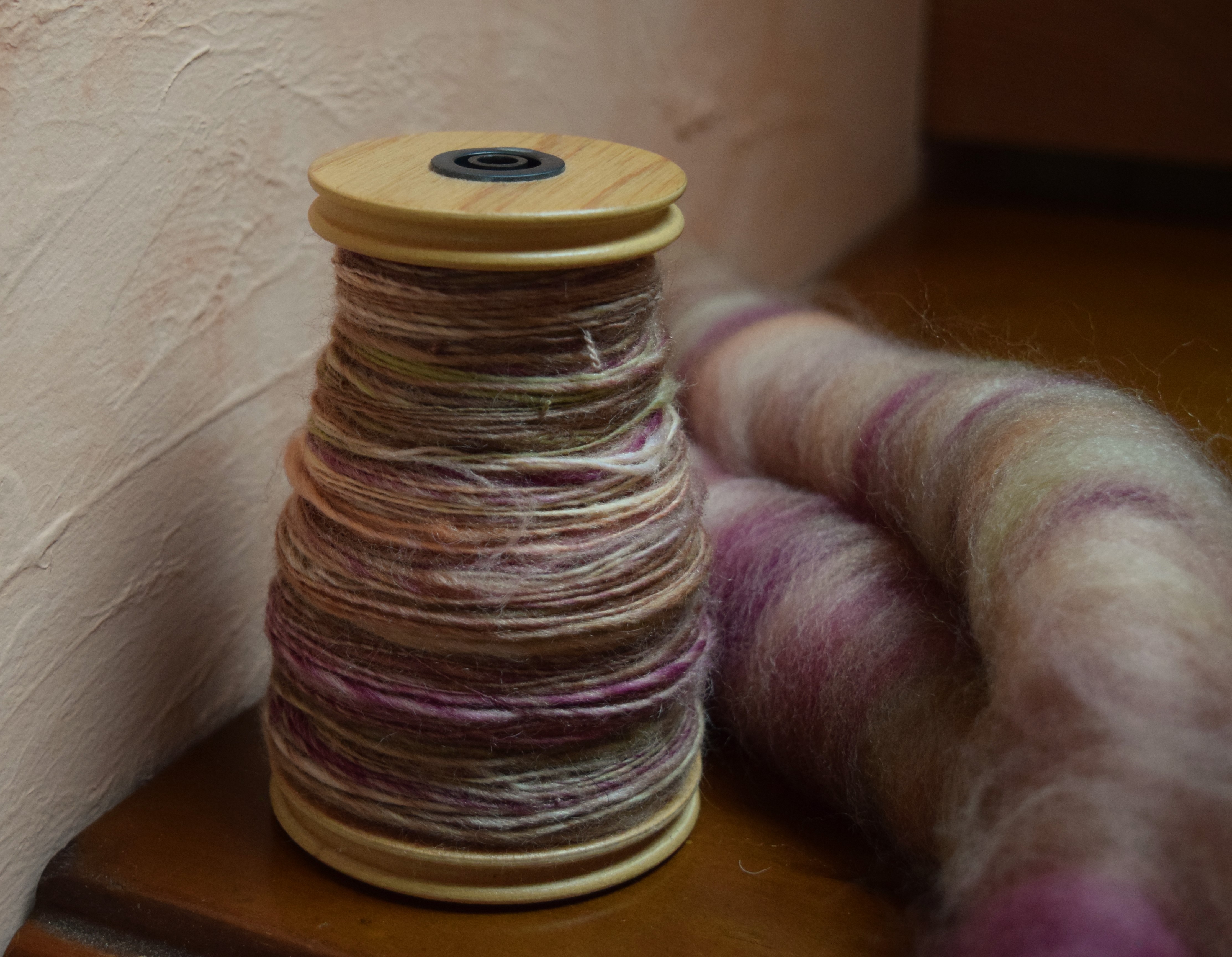
It is much easier to do a quick mix from a dyed braid, than to haul out all my separately dyed colors, and although it is a little less controlled, offers a bit of an element of surprise, and is really just fun, as the colors are all there in the braid. But one must choose the braid wisely, for each time I card the fiber from the braid out on to the teeth of the blending board, the colors fuse more, sometimes dramatically. Sometimes very quickly can depart from vibrant splashes of color into a muddied neutral appearance of one shade, especially if there are any complimentary colors in the braid. Also the colors will blend even more after plying the singles. So this time I am only going to fill up the teeth on the board just once, and draw off the rolags to spin. And here is what I did …

(click 1st image to go to slideshow)

♣     ♣     ♣

Techy stuff …

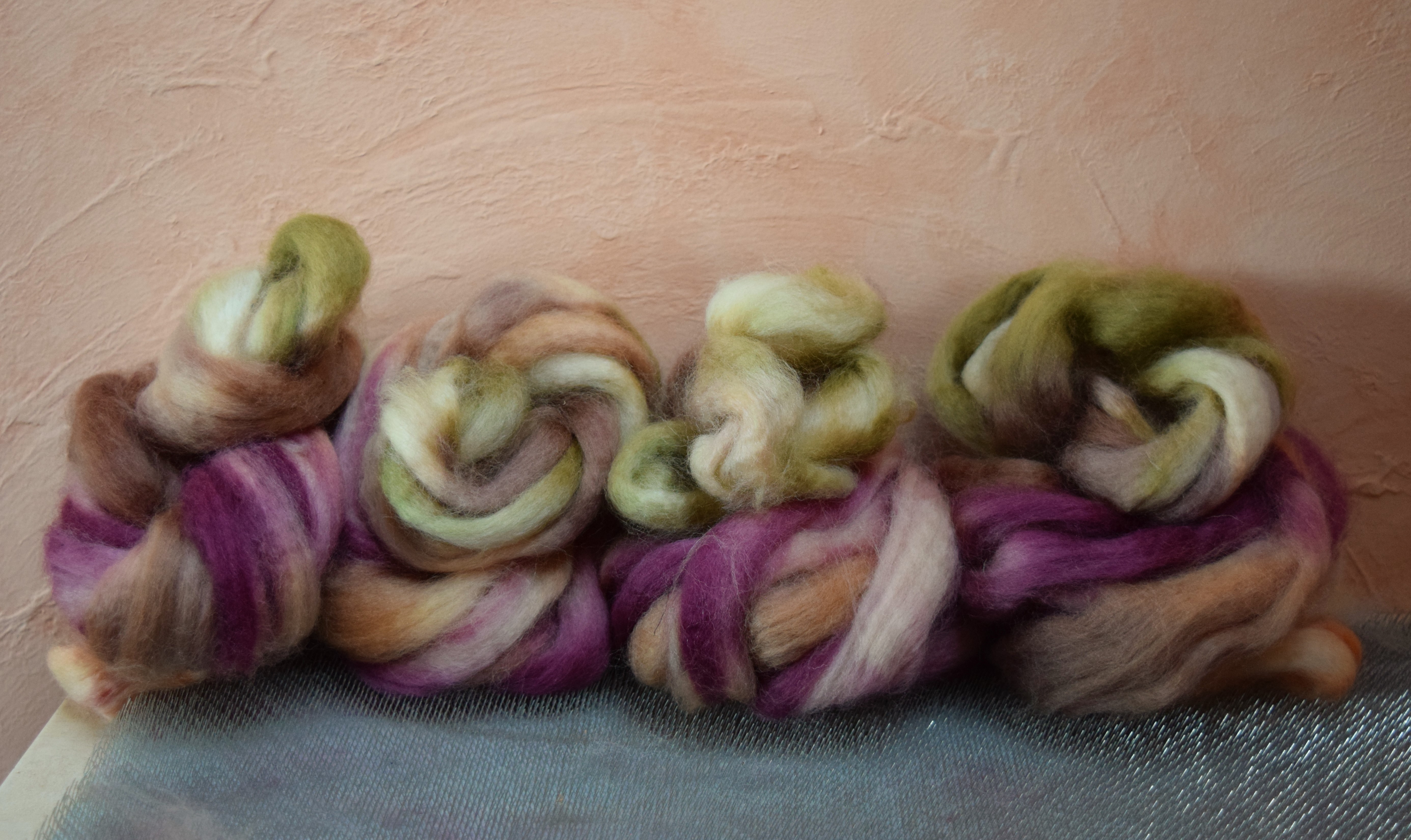
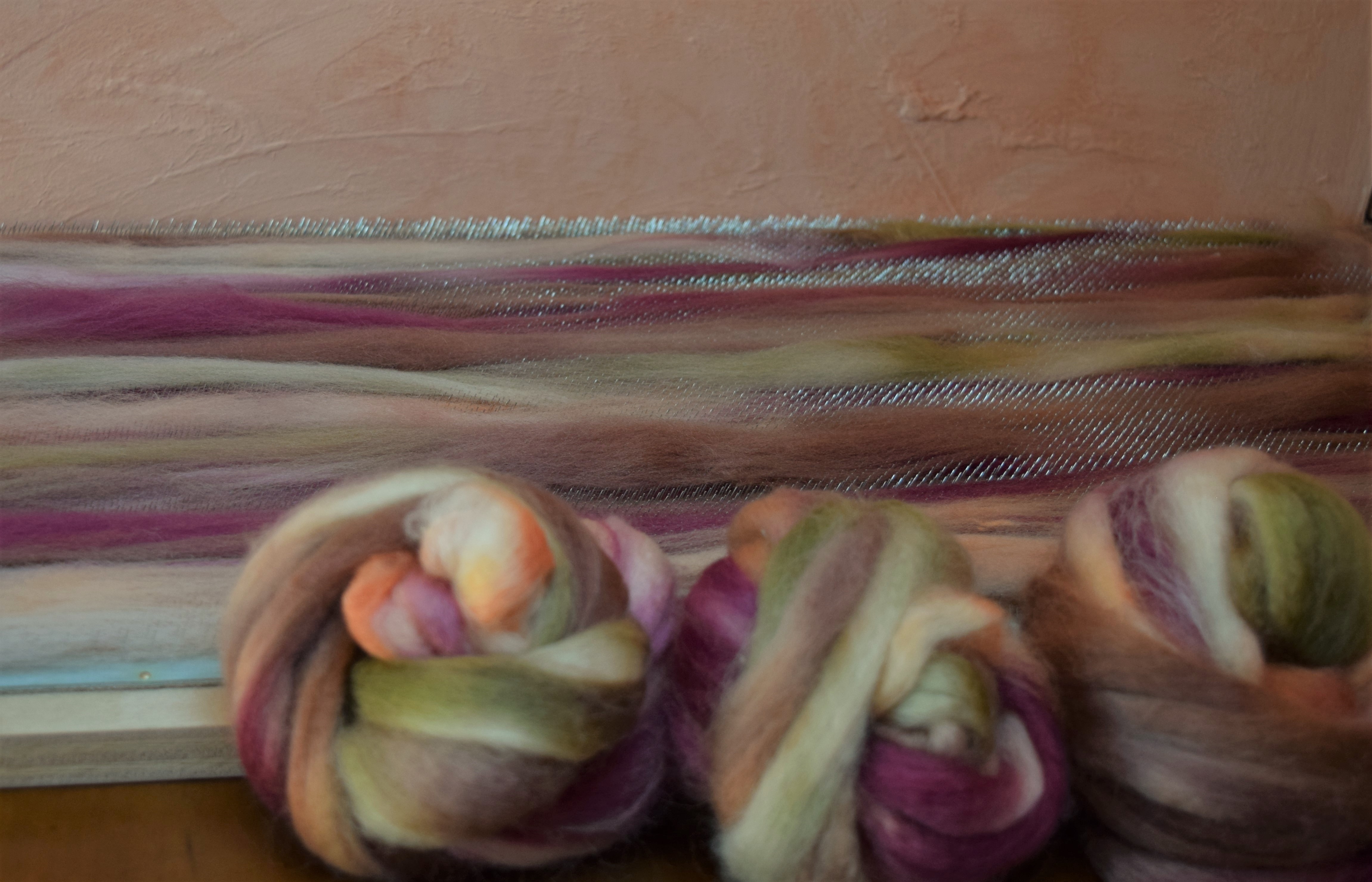
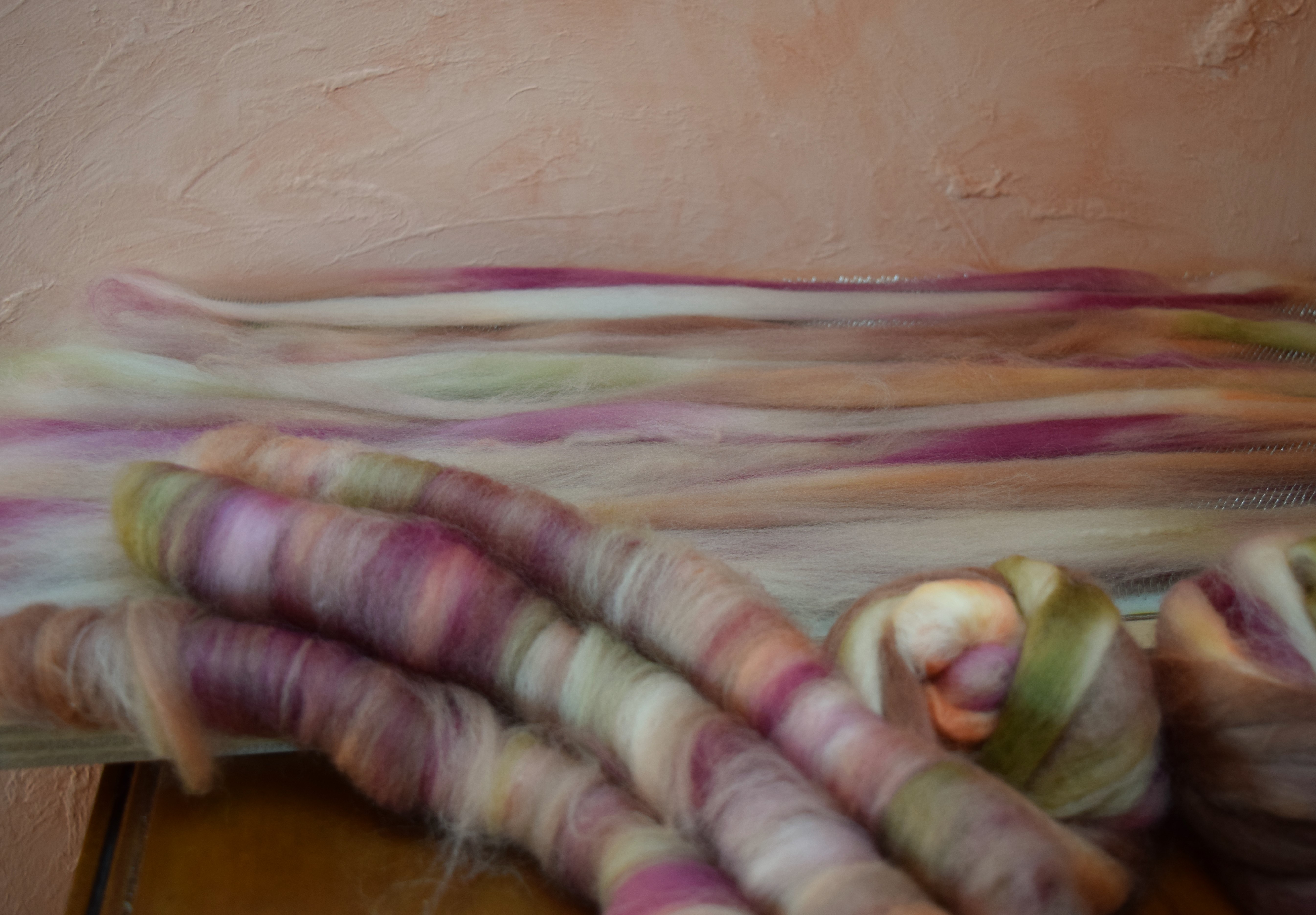
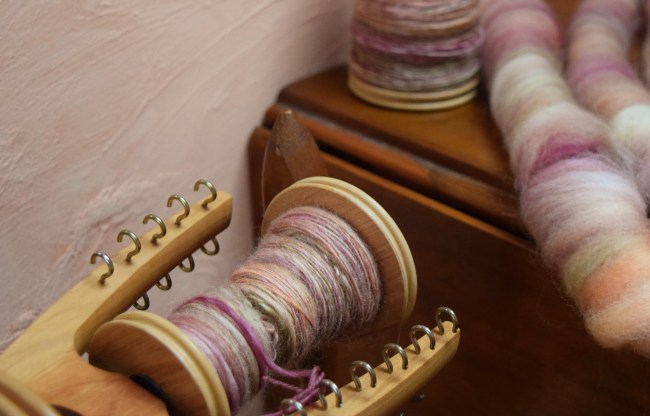
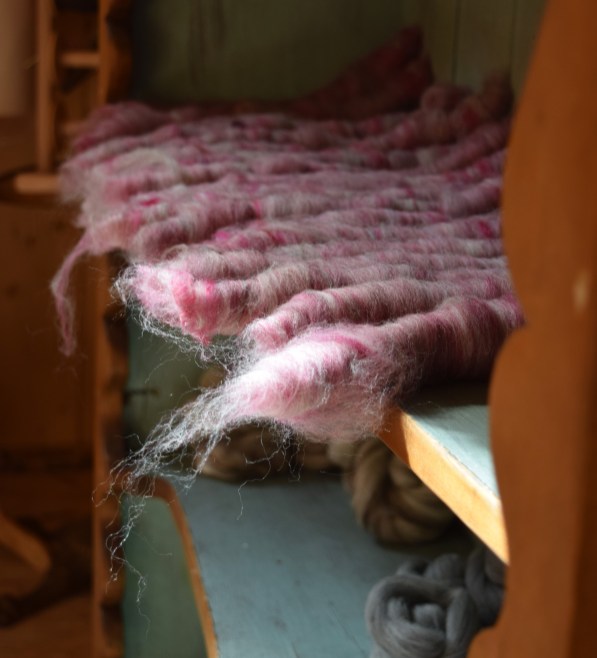
  • My extra long blending board holds a lot of fiber, but to play it safe, I made 4 batts approx. the same. I have 100 grams of fiber, and I want to get four 25 gram batts, drawing off 3 fluffy rolags each to spin.
  • First I divided the braid length-wize into half, then each half into half, so I can get 4 lengths in the same dyed sequence.
  • When layering on the board, I started all four batts with the same end, and layer up in the same way, basically repeating every motion four times.
  • Then I drew off the rolags.
  • See Blending For Tweed Simplified for my basic blending board slideshow how-to.

Watch this space for my plied finished yarn and sock project, which I am guessing will end up a rather muted colorway, close to a shade of terra cotta. See all posts in Tweed Chronicles

What I would do differently next time:

Given that one 100g braid could be done in two batts on my extra long blending board (24″ x 12″) which can hold comfortably 50 grams of fiber I would have not bothered to split the the braid into four lengths, but only two, and fill the teeth closer to capacity twice, drawing off more rolags each time. This would have had the same affect but much faster, and when I think of the whole theme of this post ” the Quick Mix” it makes more sense. However, with a conventional smaller blending board 12″ x 12″ to 18″ , four times would probably be better, as I’ve demonstrated above.

Edit in: See spun and plied yarn in Quick Mix Spun
Many years retrospect . . .

I want to set some goals for myself. I’ve always struggled with goals, but it shouldn’t be difficult if something is a only a certain win, involving no sacrifice, only focus. One of my goals is spinning intentionally. This is actually a trend I’ve heard about a lot lately, a buzz phrase so to speak. I know how to spin, I know how to knit, but decades have passed where I have done so little to bring the two together. So now its time to bring the two together as they are meant to be . . . to spin for a project in mind. . . to me, that is what is spinning with intention. My secondary goal is to purchase far less yarn, and to use up what I have, so that eventually I will be reliant on spinning for projects. Stopping the addictive yarn buying, and making do, will involve a serious concentrated effort, and in future recreational yarn purchases will be a much rarer event.

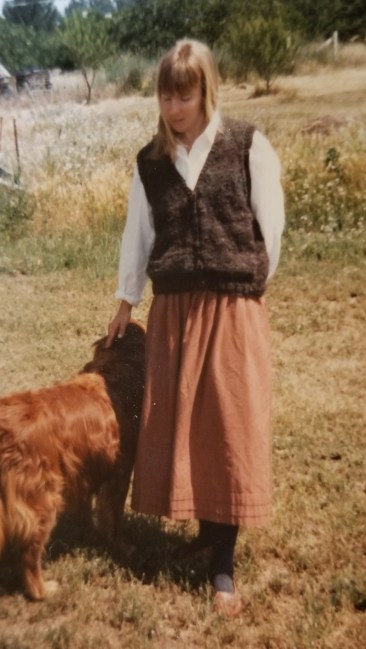
Backstory: I learned to spin in the Autumn of 1987, when I joined a spinning group which I attended for many years, and which I posted about way back in my blog archives, and the first thing I spun on a borrowed spinning wheel, was about a pound of washed uncarded Lincoln-Corriedale locks from Joanie. She helped me dye the locks of fleece in a pot with splotches of different colors of Rit Dye, then steamed gently. I then spun directly from the dyed locks. Then learned to ply. Then last, my mother taught me how to knit my first vest with my new hand-spun, during the last spring season she was alive. It was a simple improvised pieced thing with two fronts and a back, bands picked up and worked at finish. I don’t think I even blocked the vest after I finished, having been the first thing I ever knit, but just put it on and hardly took it off. Back then about 1989 . . .

Decades pass. A few years ago, having gotten somewhat decent at knitting I designed my Calidez Vest pattern, inspired from that very vest of old days, a connection to my mother.

Another backstory: Shortly after the wildfire of Oct 2017, Lynette who lived on the other side of the Bay, brought up to me and gave her Ashford Traditional spinning wheel along with many bobbins and even fiber! Also happening at this time; all kinds of fiber was sent to me from an Upper Napa Valley spinning group, (which I attended only once) and ashamedly I didn’t keep track and lost those contacts through my horribly unsettled transient months. If any of you reading this are or were a part of that generous Calistoga group in Autumn 2017, you know who you are, and I’m sending you hugs of gratitude! Its been several years now, but I finally feel I am back into my feet. I am dedicating this whole new focus of Spinning With Intention to everybody who has been nudging me along, and I realize only now how much :to tears: that I miss spinning, like I use to, way back in that decade before I knit much, when I spun just to spin beautiful hopeful skeins. After revisiting the blending board project of summer of 2019 . . .

jenjoycedesign© Rose Blend 1

and then moving into our house and promptly forgetting about it most of the year, I have finally finished the spinning . . .

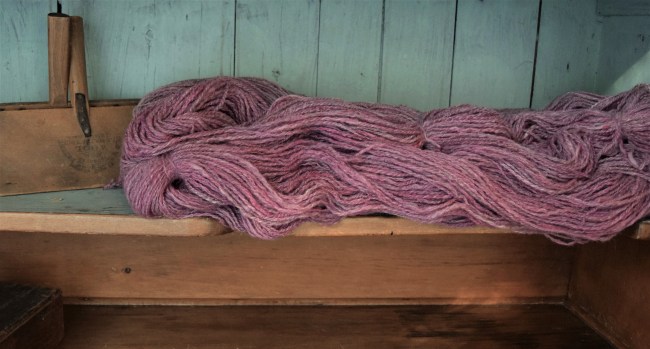
Finished result is a homogenized dusty rose pink. The color of Love.

Almost 500 grams of my own tweed blend hand-spun yarn. What a lot of work! You wouldn’t know it by looking at the photos, but what I have been doing for ultra soft and fluffy yarn lately is scouring the skeins right off the plying bobbin. I guess the effect is similar to a felted tweed sort of thing, but I don’t let the yarns stick to each other, am just careful enough in the scouring to felt only a tiny bit. Moz taught me the “thwacking” trick; grabbing the skein and sailing it through the air, and whacking it really hard against a smooth surface, like on the inside of the bathtub, at 1 o’clock, 2 o’clock, etc, which straightens out all the strands just before hanging out to dry so nothing is crumpled. Of course, when fully dry I must re-skein everything to get all the partially stuck fibers dislodged, and then to let it rest without even the tension of a ball, just a nice relaxed skein for a few days, before starting to knit it. Super lovely yarn if you ask me.

Scoured tweed is my thing, and since I’m not making yarn for anybody but myself, I think this way the yarn gets a head start in the world of hard wear, and like I mentioned, it really ends up terrifically fluffy, soft, and airy. Just like they do with the waulking of the wool in the woven tweed. Soon I will be casting on my first intentionally spun-to-knit project since that time over thirty years ago, with a Calidez Vest with my own tweedy handspun!

Thank you with a heart burst of gratitude to Lynette who brought me the best spinning wheel I could have imagined for myself, Lori-Go-Lightly (who broadcast my wildfire tragedy on a Ravelry spinning group and through her efforts I was recipient of so much generosity via Ravelry pattern buyers and her Upvalley Spinners who sent me a big box of fiber, Adele for sending me her Ashford Blending Board to use as well as a gift of a lovely drop spindle to keep me going, and of course, and last but not at all least, thanks to Bernard & Joanie for sending me the above photo recently and reminding me who I was & what mattered, and for helping me span the decades. I am coming full-circle now, into my roots.

jenjoycedesign© spinning in a room 2
Spinning in newly rebuilt loft room , September 2019

Walktober

I am pushing myself to walk every day this October, so therefore I am naming this month Walktober. And while most days I’m perfectly happy to walk solitarily along with the scenery , there are times when I find it hard to put down things I want to get done, especially so of all things having to do with wool. I guess I am a compulsive fiberist. Not long ago, in my series Gifts From The Sun, particularly Part 5,  I talk on about spinning like the Peruvian herders do, and I just had not found the focus to do it until this morning. This little bit I’ve spun is a good amount for a short mile and a half walk I think, in a fine lace-weight single of Wool Of The Andes in Dove Heather roving. My default spinning is surprisingly fine on this drop spindle, with this fiber.

Truth be told, I have been experiencing a resurgence in spinning lately, mostly with my Ashford Traditional wheel and Tweed Chronicles ideas, but now adding this spin-walking thing, so watch this space for more spinning posts inevitably on the way.

Gifts From The Sun: part 5

trajestipicos100216-64969-2-e1418997226288-1400x902
Mario Testino – Alta Moda Exhibition

Mario Testino, a renowned Peruvian fashion photographer, in his Alta Moda series seems to carry the theme of his native homeland into a remarkable modernized, carnival like image from his camera, depicting typical things men and women of the regions around Cusco do in the work of their days. It is everyday life to meet the herd in the early morning with a days worth of spinning to do, walking from pasture to pasture, walking while spinning, as quite possibly these women are doing . . .

13.Peru-Machu-Picchu-for-Women

I am excited and anticipating a nice long post-designing break after my forthcoming, to shake off stress from deadlines and the pandemic and just try to enjoy the remaining months of summer. I am hoping to practice walking and spinning in the technique as has been done for centuries in the Andes (sans herd).  But I need to make a little shopping list first, to get prepared.

First I thought I’d get started by finding a sensible wooden drop spindle like I use to have before the wildfire, similar to those used in the Andes, so I am considering either a very inexpensive unfinished Kromski spindle, or a basic sturdy Schacht spindle , both rugged wood that can withstand being dropped on the rocky soil time and time again . . .

il_794xN.1987121626_dn8o
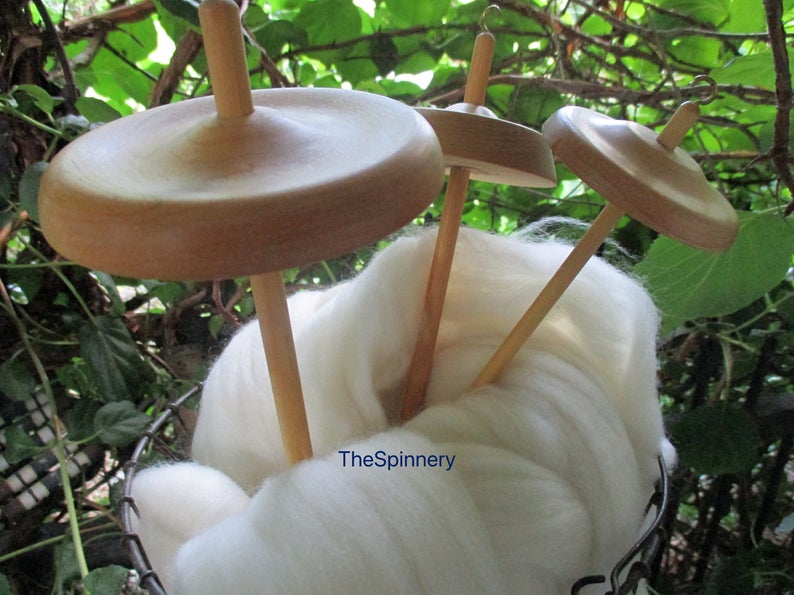
Schacht Hi-Lo Spindle at The Spinnery

A few months ago, when conceiving of the Gifts From The Sun series, I had gotten some Wool Of The Andes roving, which is Peruvian Highland wool. I am wondering now, that I might need or at least want just a few more of these beautiful colors, and Knit Picks has really got it going on!  Be forewarned, although the supplies they carry are exquisite and inexpensive, often they get low on supply and you simply must wait for them to replenish.

54202121011
Wool Of The Andes Roving for spinning by Knit Picks

Now, as my Peruvian Wool Of The Andes roving and spindle will soon be on their way,  I will be readying to spin around the time my upcoming design is finished. Hoping by mid-August to be celebrating summer solstice belatedly, as well as finished and promoting my upcoming pattern, while studying the lessons from Nilda’s “Andean Spinning” below.  I actually bought the download about a year ago and posted about here , although never really committed myself to spindle spinning.   If anybody out there in the world reading this and wishes to do a little Andean technique in spinning along with me,  I really want to encourage the sale of Nilda’s dvd/books/work and there is no better source to purchase it than from the “Center Of Traditional Textiles of Cusco” …

9781620334331-2__35992.1520564549
Andean Spinning by Nilda Callañaupa Alvarez

Lastly, how could I close this post about Andean Spinning without including this little video of a Quechua speaking woman spinning out with her herd up in the high pastures of the Andes.

See all posts in series “Gifts From The Sun”

Gifts From The Sun: part 3

sheep-peru_1024x1024
Threads Of Peru

In previous posts I’ve been going on about the camelids ~~ llamas, alpacas guanaco & vicuna of the ancient Inca empire ~~ but sheep are equally a part of herding, spinning, weaving, and living in the Andes of today.   I have been looking for videos of Andean women spinning while out on the grassy slopes with their herds, and I just tripped over this beautifully filmed very short little treasure!

See all posts in series “Gifts From The Sun”