Tweed Test: Ajrakh

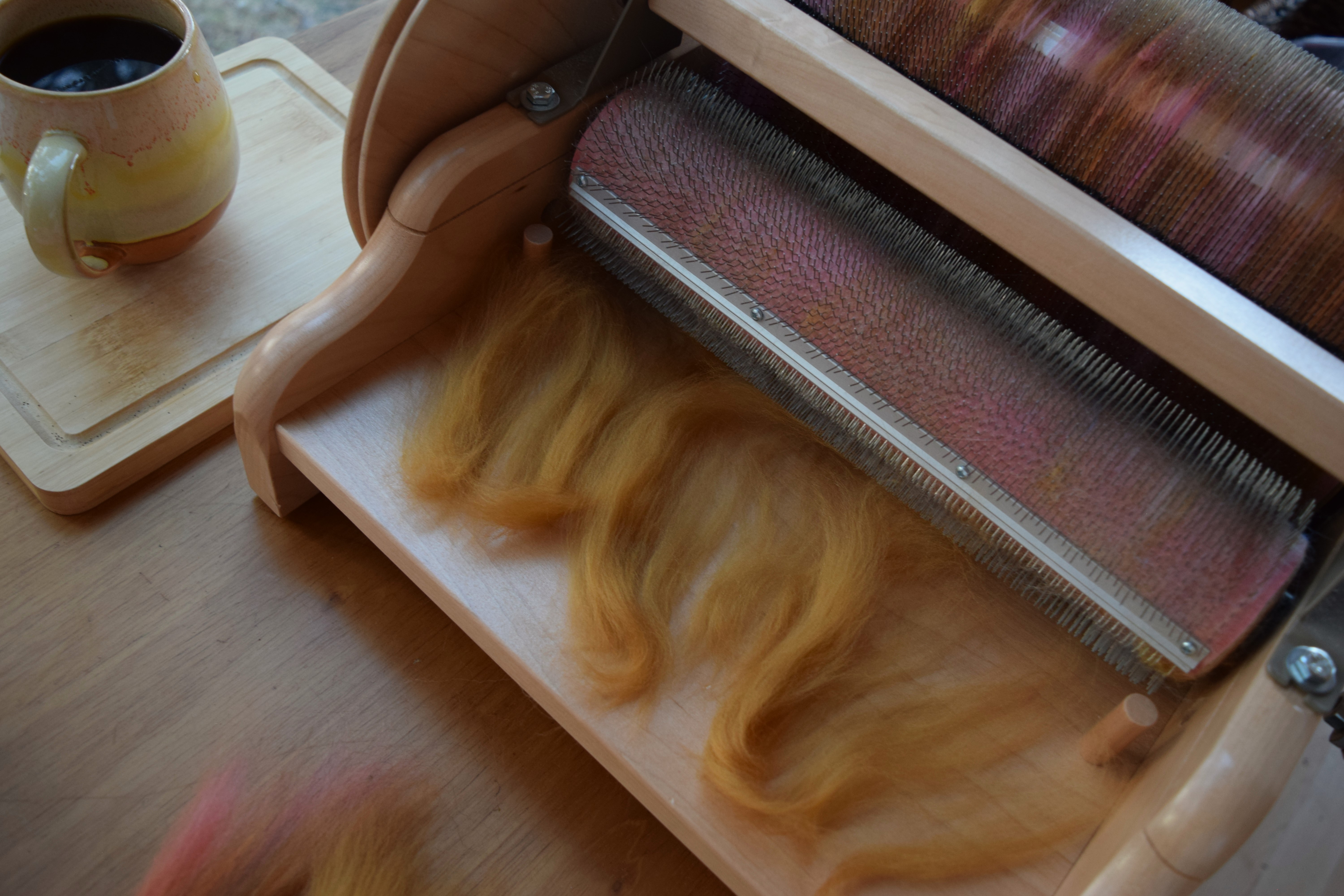
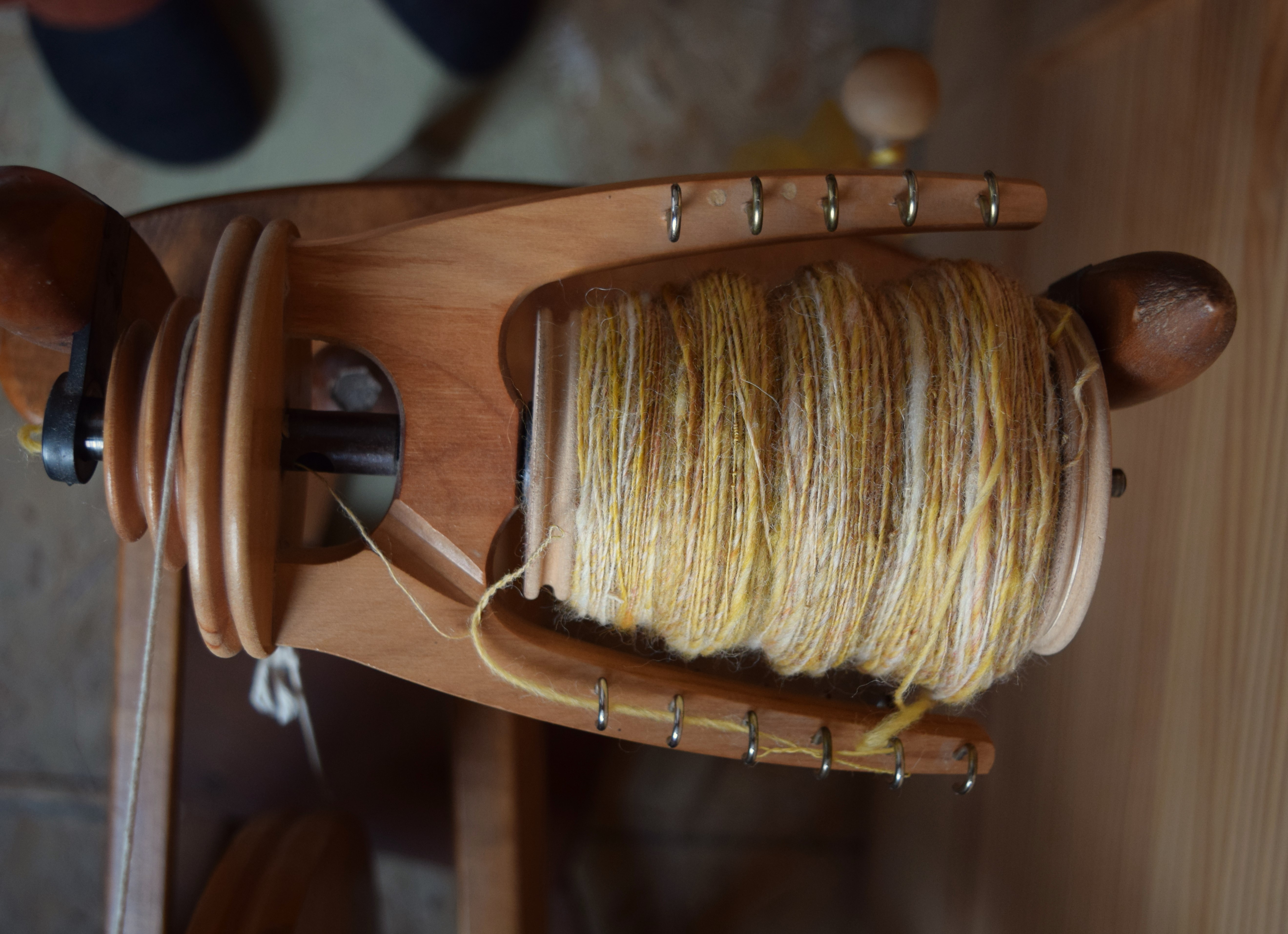
Ajrakh cloth, a timeless textile art originating from the Sindh region, is one of those artful things that I love. I brought it down to make a beautiful & cozy space to spend a lot of time in, a place I am now calling The Tweed House ( previously known as the tiny house , repurposed for a place to dye and card wool ), but I wasn’t expecting it to be such a beautiful backdrop with the afternoon light streaming in, making short light for a photographic effect I love most. Just sitting on the Ajrakh covered futon, with drop spindle and carders in hand, listening to the dye pot rattle, and sipping a tasty cup of coffee, in the woods … well, it just doesn’t get any cozier than that!

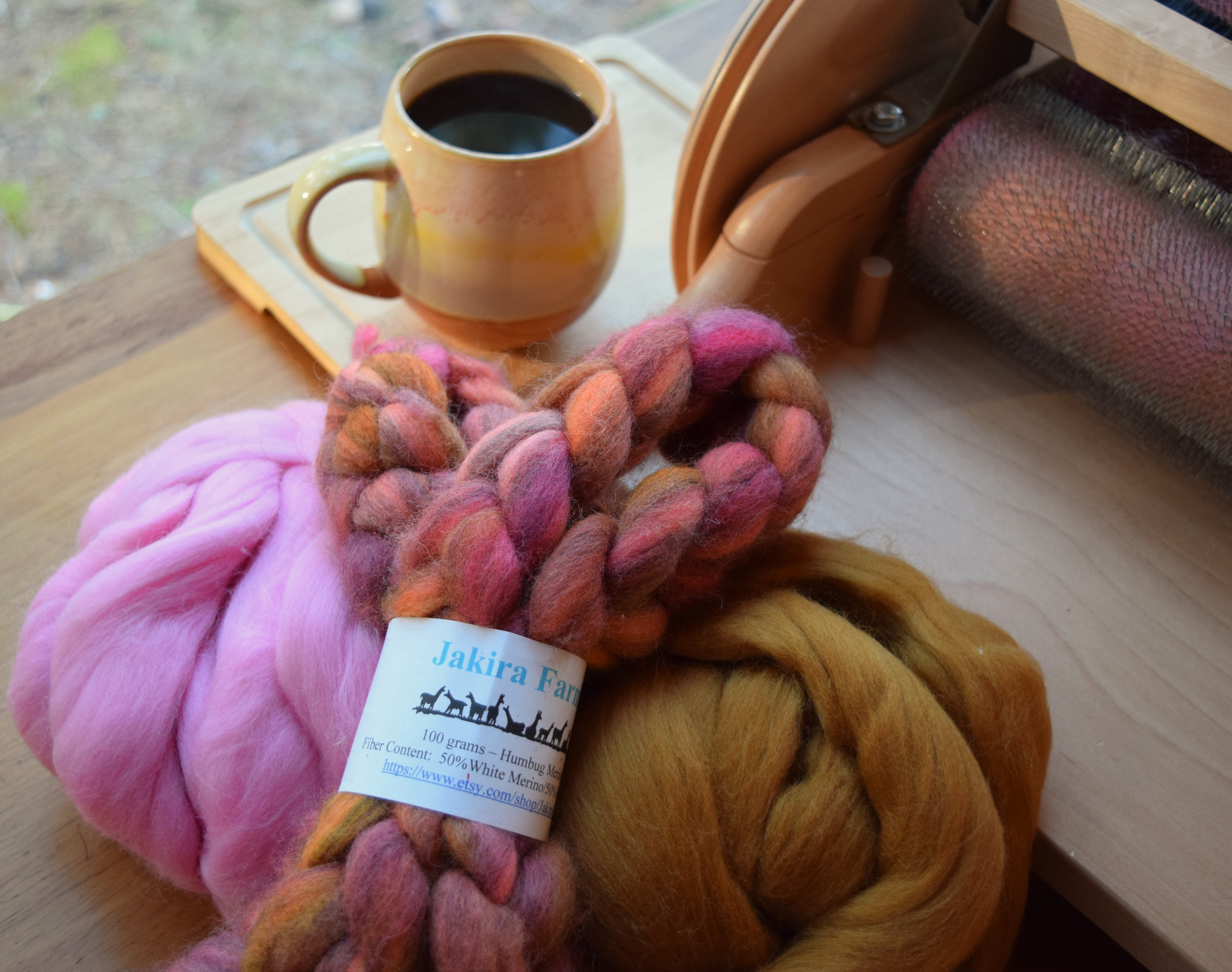
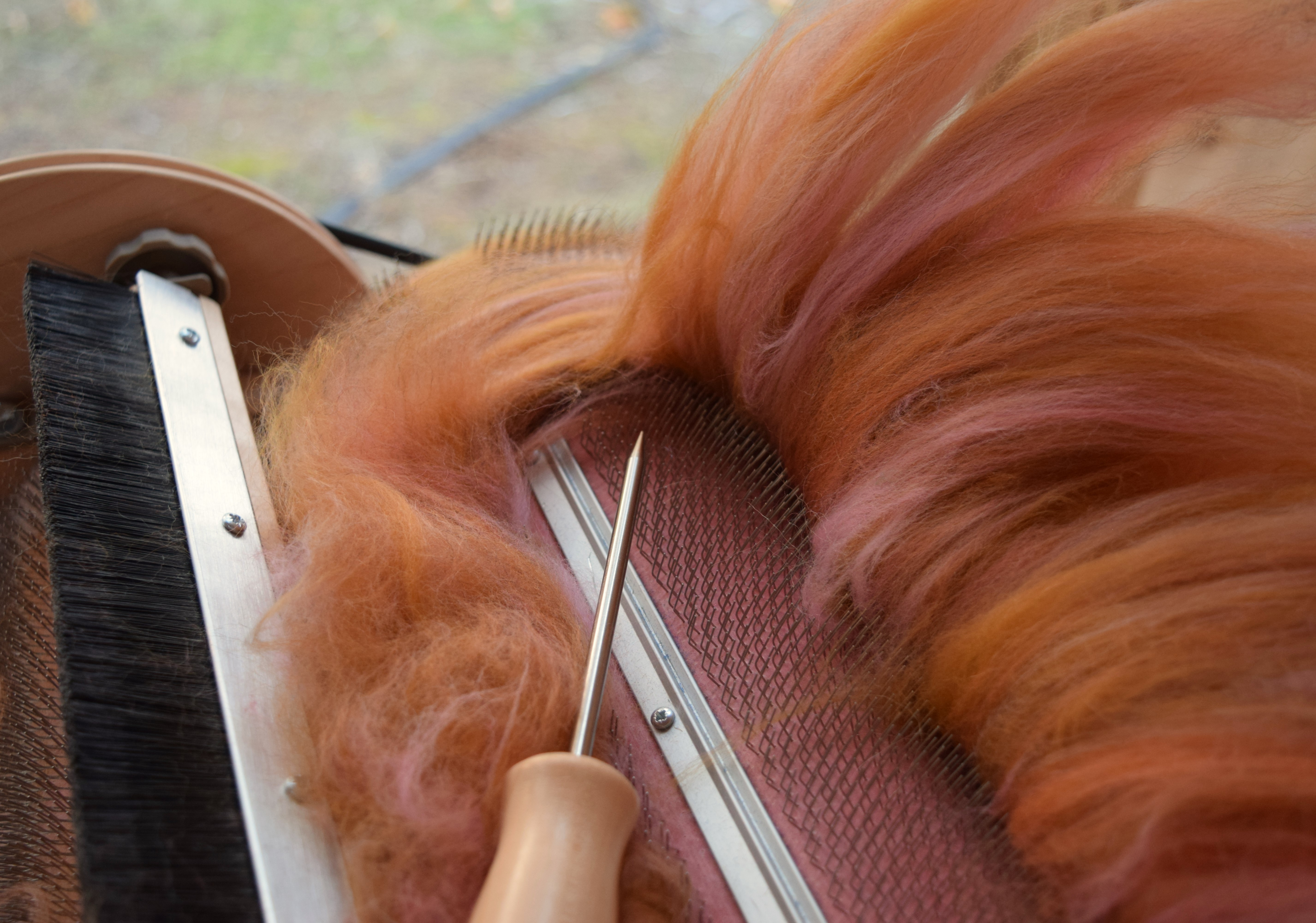
This particular blend is inspired by the traditional madder red and blue of Ajrakh, but also rich browns and golds too, a blend of three colors in equal amounts, which when combined together create more beautiful depth of colors, attempting to blend together the colors of the block prints I love. The trick I am finding is not to blend too much, so that the individual colors are still present and not too fused into each other, so the little bumps of color show in the spinning. I kept track of the dye amounts to get the deep madder red wool, and surprised myself, and the deep gold color does just seem to belong, then finally the turquoise is the gem color that pops, tones it all down and brings all the colors together, and this one is so far my favorite. But there needs to be some refinements before I write the recipe, and you can see Tweed Notes below.

♣   Tweed Notes  ♣

  • Fiber: Dyed Merino wool (dye recipes are not yet decided).
  • Measured: 1g my own “Madder Red”, 1g my own “Ajrakh Gold” (in Sindh region is achieved from pomegranate peel and/or turmeric), 1g Turquoise Blue.
  • What I will do differently next time: I will experiment on achieving a truer yet still bright indigo blue mixing different powdered dyes, but the red and the gold are spot on, because although the individual colors are maybe too bright and not exactly the same as the natural dye used in block printing ajrakh , the combination creates a perfect mixture which, in my opinion, tones all the colors down and gives the feel of the ajrakh.

Inevitable Spring

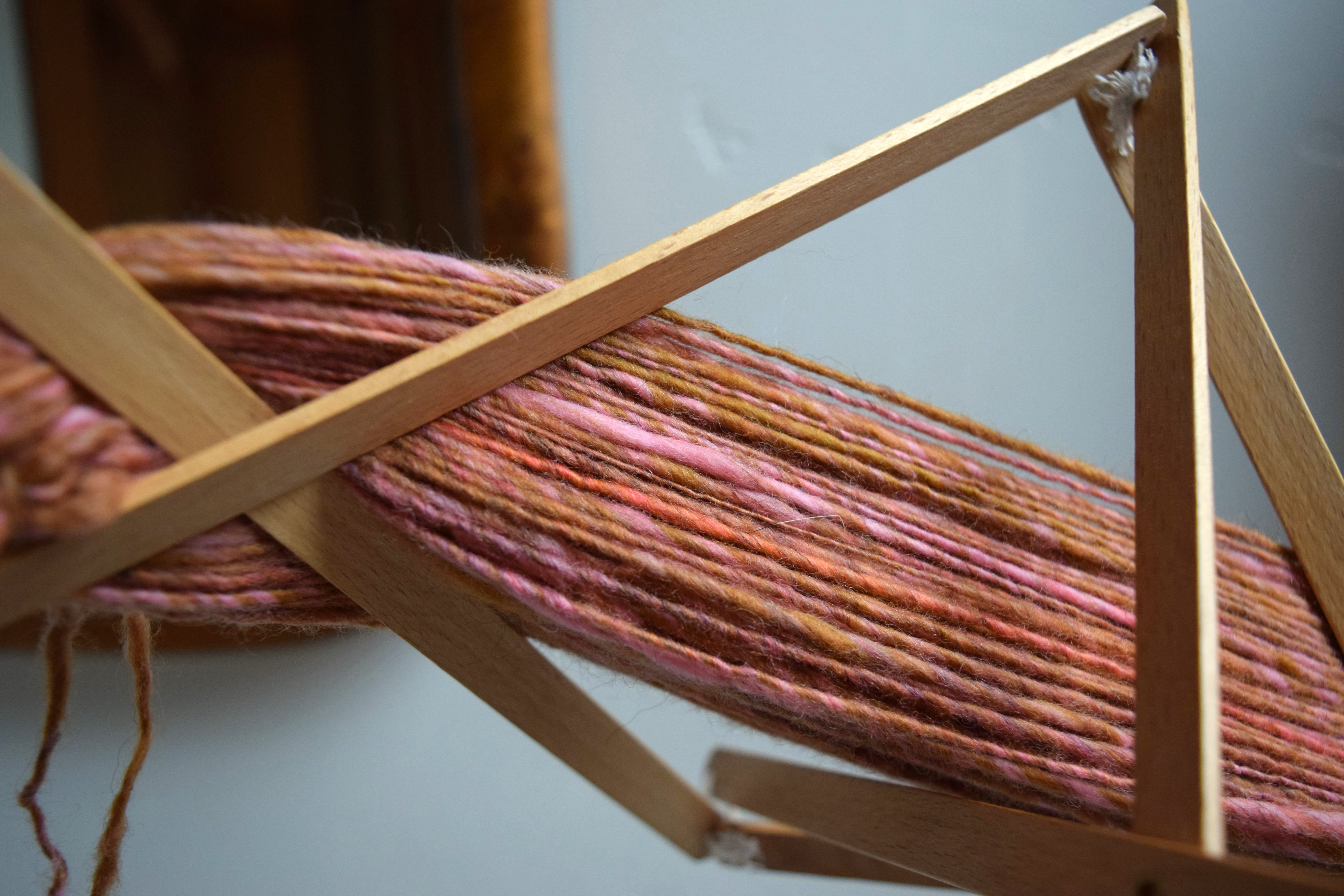
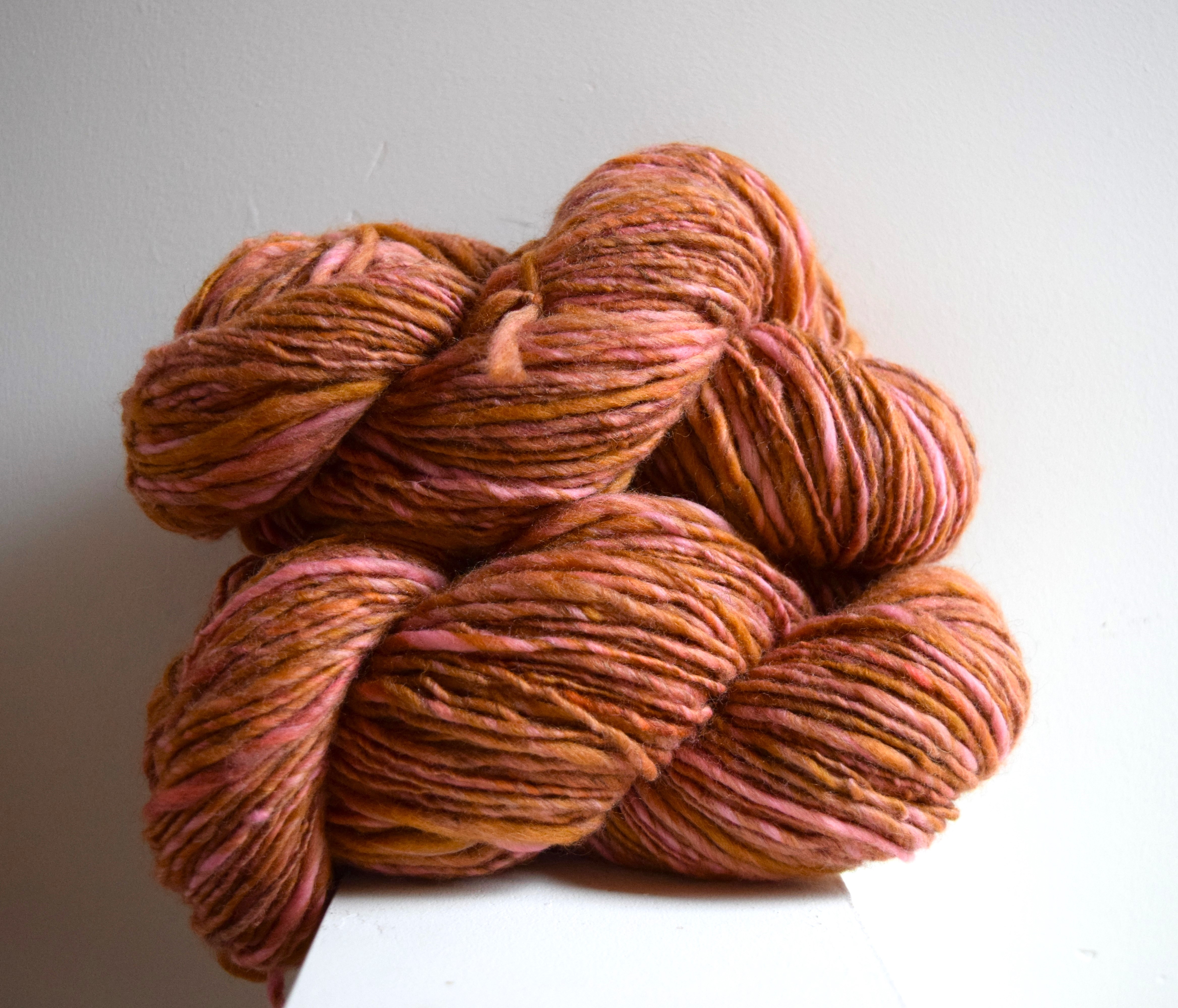
The vernal equinox has arrived, and the days are now racing by. Over the long reluctant winter, I’ve been spinning quite a bit, and these finished skeins are my favorite of them all, a colorway I want to spin again and again, this apricot & gold wooly confection. The dominant color mood is like the inevitable spring, through the grey of vernal rain clouds, bursts of amber, gold, and pink, create a rich deep apricot color all mixed together, and seems to define my coloring. Photographing was, as usual, a disappointment, impossible to grasp all the colors uniquely. The skeins have a little bit of a story behind them, and to get the spinning notes right I had to do some guessing, but managed to write them out so I can repeat this in the future. The sky is greying again, we’re expecting rain again, I am so in the mood to knit another sweater, but there is likely not quite enough yardage from this experimental batch, so will do another Apricot Tweed soon.

♣     â™£     â™£

Techy stuff for Apricot Tweed

  • See Speed Tweed #2 recipe carded December of 2023. The mix of pinks and amber created a deep apricot or terracotta color.
  • After I spun two skeins from the batch, I thought it was too bright for my liking so I put the rest of the unspun wool in the closet for a few months.
  • Eventually I re-carded the remaining wool, cut in with Wool Of The Andes Mink Heather Roving– the color of sand, about 100g I think, as well as some other colors I did not keep track of, but definitely some topaz bamboo, which I will do more of next time, for it creates streaks of shimmering gold!
  • Yarn is 2ply bulky weight, 400g total.

Speed Tweed #2 spun.

The batts were simply lifted off of the carder and split into strips, wrapped into nests, and then photographed. They spun up perfectly, and I think I have arrived at my method of methods for a fast and uniquely interesting way to make yarn. In this color mix I chose solid tones that were already dominant in the hand-dyed braid, which end up creating a very subtle contrast of tweedy colors, if any at all, more like enhancing the hand-dyed braid. From the camera’s eye, the presence of color changes from the dyed braid are practically unnoticeable. I spun up as close to worsted/aran weight as I could, short draw and single ply, calming the twist energy with a scalding finish bath, thwack, and hang dry. This spinning method absolutely is the easiest I’ve ever done, and I was hanging the spun skeins dry before I could even blink. For the quick and easy way I prepared the wool, see tech notes in Tweed Chronicles: Speed Tweed #2 , and stay tuned, there will be more of the speed tweed experiments in the territory ahead!

Tweed Chronicles: Speed Tweed #2

In a recent post I began my Speed Tweed experiments, combining an earthy mossy sage toned dyed braid along with undyed wool rovings, attempting to simplify the steps in creating a varied tweedy yarn (which is spun by the way, more on that project is forthcoming). I’m loving the drum carder and speed tweed so much I am racing on to Speed Tweed #2, blending hand pulled tufts off the end of three roving in equal amounts, placed into the carder, and I really love this color combination so much! Its gotten to the point where I just walk down to the tiny (wool) house, make coffee, and get to blending on the new drum carder, for no other reason than I’m in a wool carding mood. I’ll show off these blended batts in another separate photo wool nests and the spun yarn in another post.

♣     ♣     ♣

Techy stuff for Speed Tweed #2:

My Summer Fields Spun

Spinning finally finished, a few weeks ago, and My Summer Fields project has thus far taken me through the summer well into autumn since the resident drum carder arrived. All that work messing with raw fleece, then giving up on it because I couldn’t get the strong smell of sheep out of it (and imbedded into my new drum carder) then changing course and instead using yards of undyed merino-corriedale Wool Of The Andes roving I had in my stash, I finally worked out the batts, and I drafted almost 600g of rolags ready to spin. On and on I spun a little here and there, then as I ended up spinning it a little too fine (my new default it seems), I decided to try a 3ply yarn. But the more one cards, drafts, spins, and plies the careful color variegations in the wool, the more the colors all diffuse! Unfortunately, a lot of work for that sad reality. However, I am pleased enough with it, but it is slow tweed for sure. I wanted to knit a sweater out of this, but am distracted by the looms in my life, and the holidays are now upon us with the new year coming just around the corner. So perhaps this would best be knit up in the calm mid-winter months. Oh, and I’ve had a chance to gauge the weight: 135y = 100g. I am thinking a bulky weight which will probably be 14-16 sts = 4 inches with US9-10 [5.5-6mm] needles.