Tweed Chronicles: A fiber blending color trick….

031

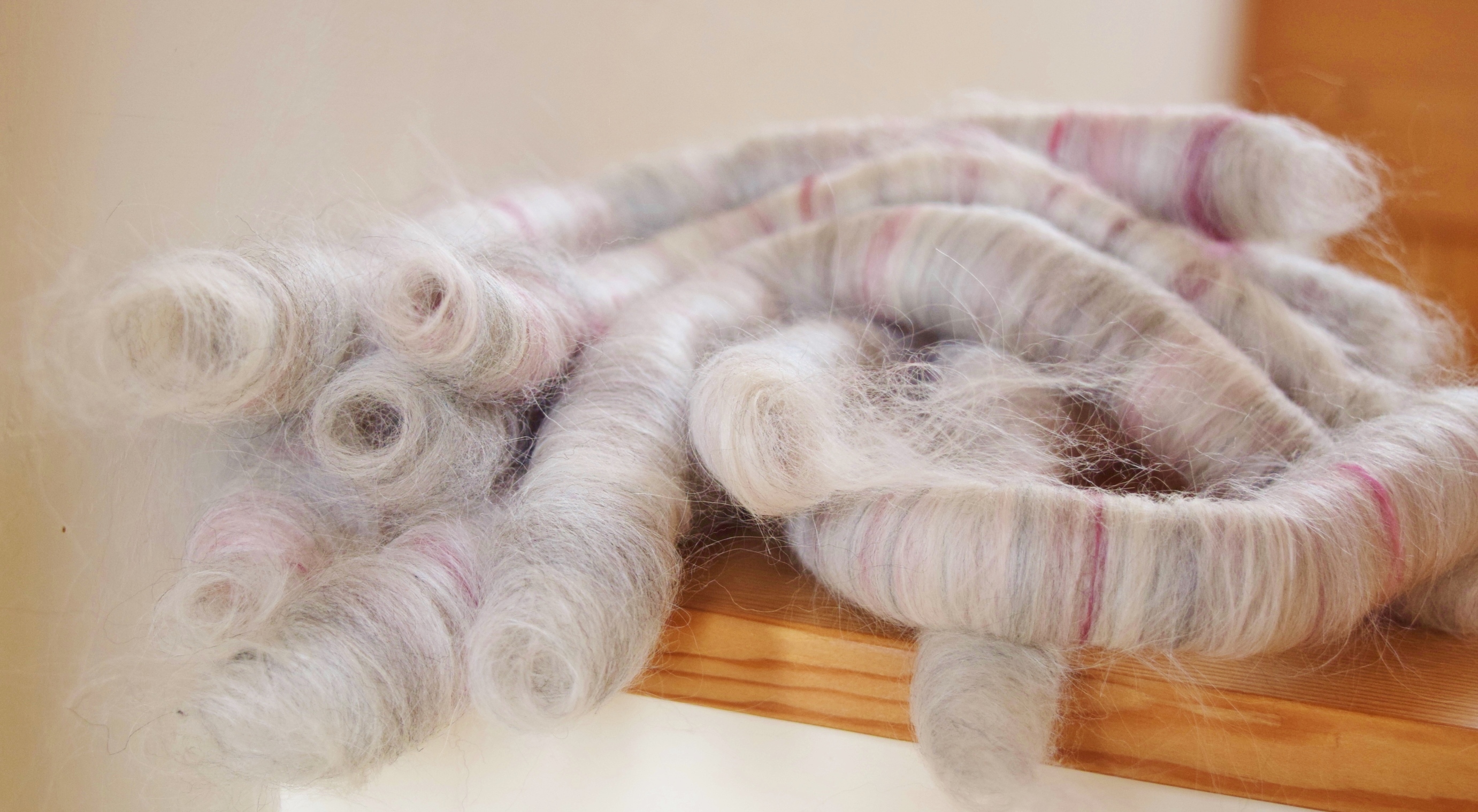
Gorgeous pearlescence like beach shells…

jenjoycedesign© pearlescence.JPG

Made from nice combed top roving,  so there’ll be no bumps and slubby bits in this batch, and the amazing thing is that all the color in these rolags are from combing tips of stash yarn!

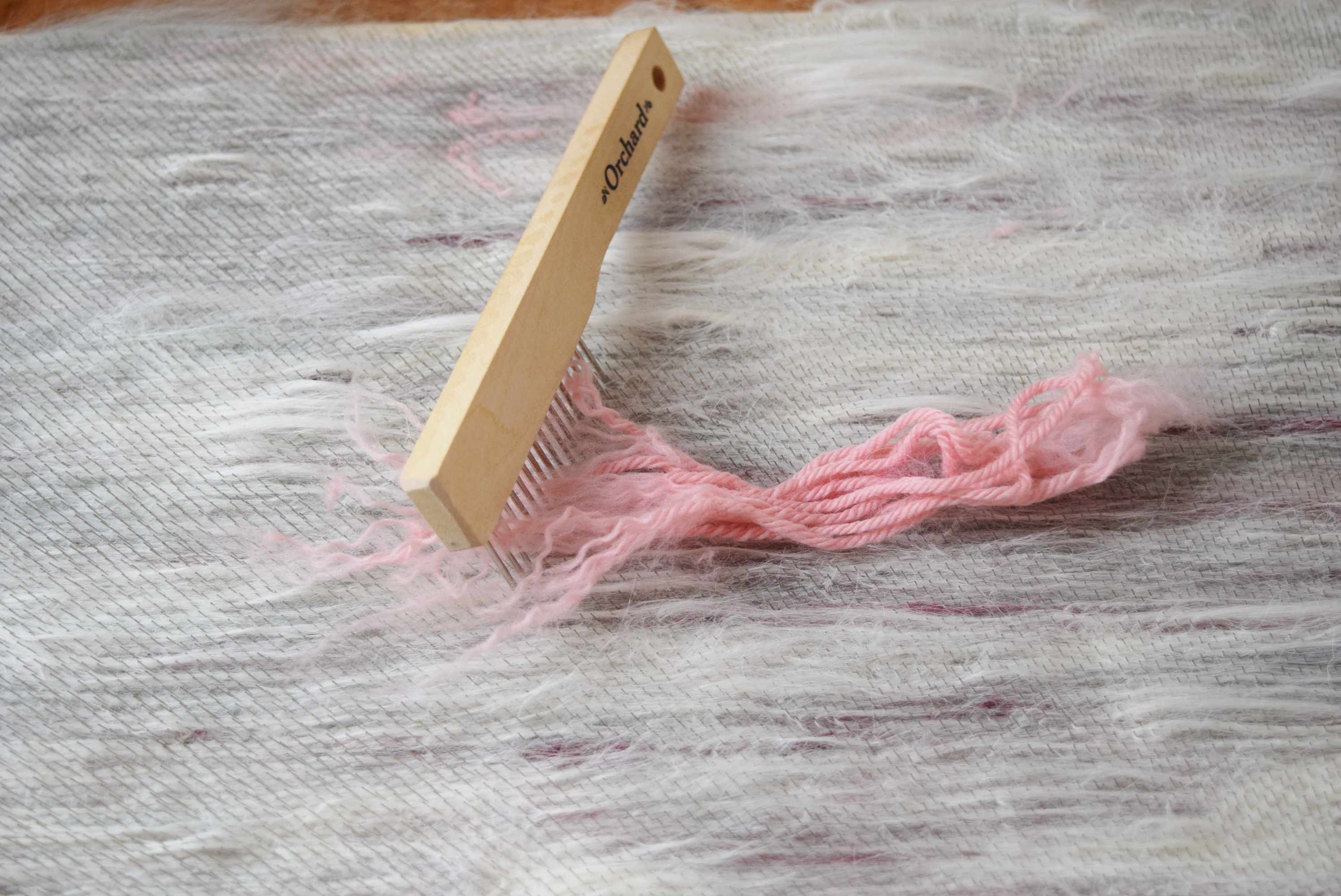
During my last blending post, I discovered a “yarn brush” technique, and having invented this for myself, I feel like I should explain how I do it.  From doing a few times I think it is easiest to to cut a handful of the yarn, in lengths about 4 to 6 inches, loop around and hold the ‘brush’ firmly in the middle. I am using my paintbrush comb, but you can use hand carders or a fine tooth comb, and comb the ends of the yarn to loosen up and fray the plies, which then you can then push into the carding teeth…

jenjoycedesign© yarn combing

I’ve found that most of the looser plied fluffy yarns, like some Berocco  Inca Tweed I had handy, work best, and certainly any of the single ply yarns work beautifully without the combing the tip, they just brush off into the carding cloth easily.  In the slideshow, if you hold your mouse over the images, the text will explain what I’m doing.

jenjoycedesign© tweed 3

Okay,  here’s the show!


This slideshow requires JavaScript.

Voila!

jenjoycedesign© blending 2

Voila!

jenjoycedesign© blending 4

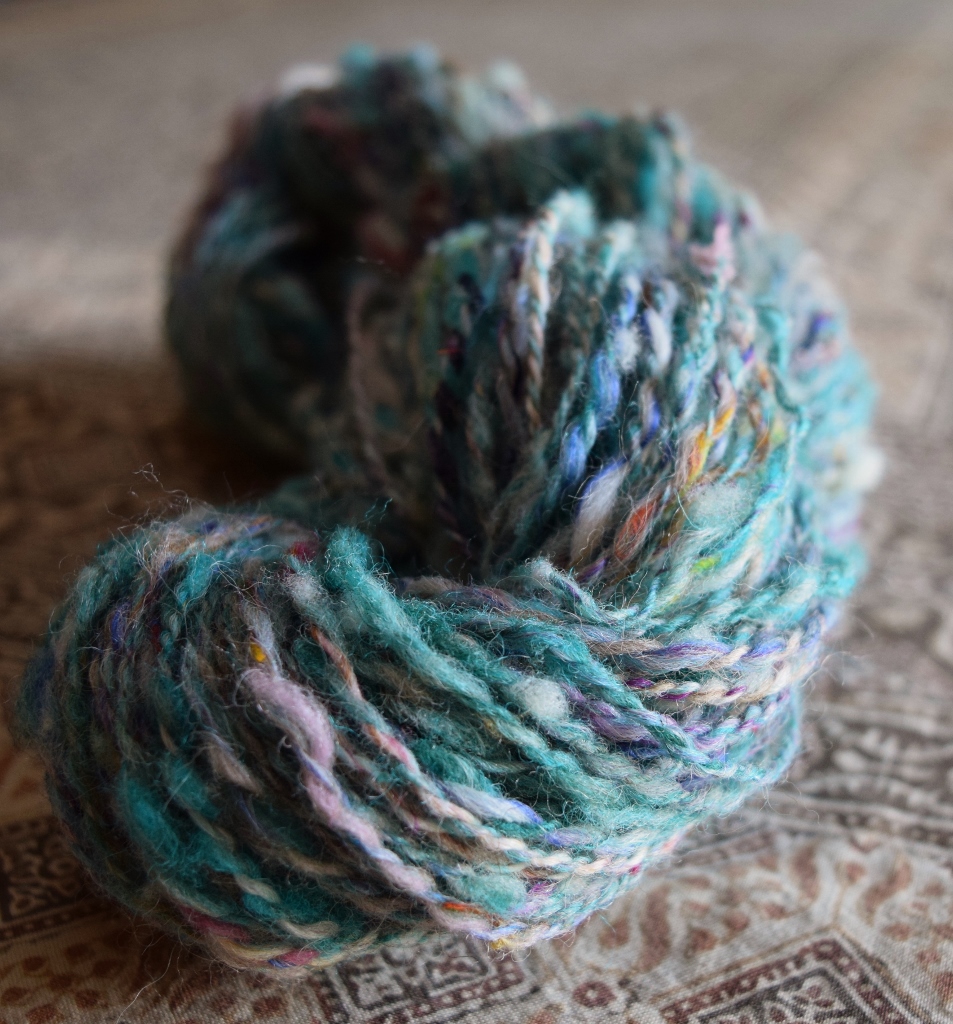
In this post   I show you the blending of fibers for this handspun yarn,

and the recipe I am calling Fiber Blending 1.

jenjoycedesign© blending 5

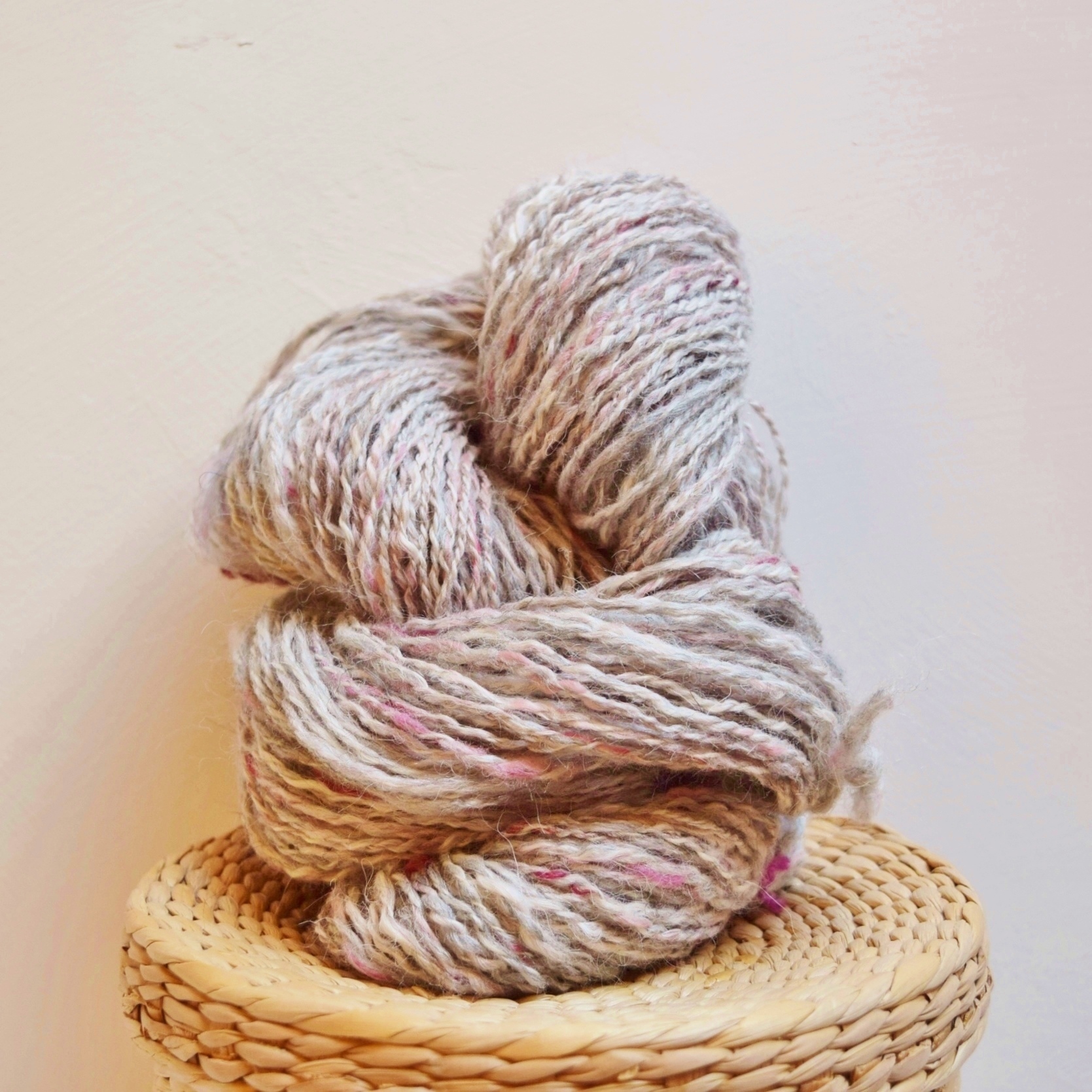
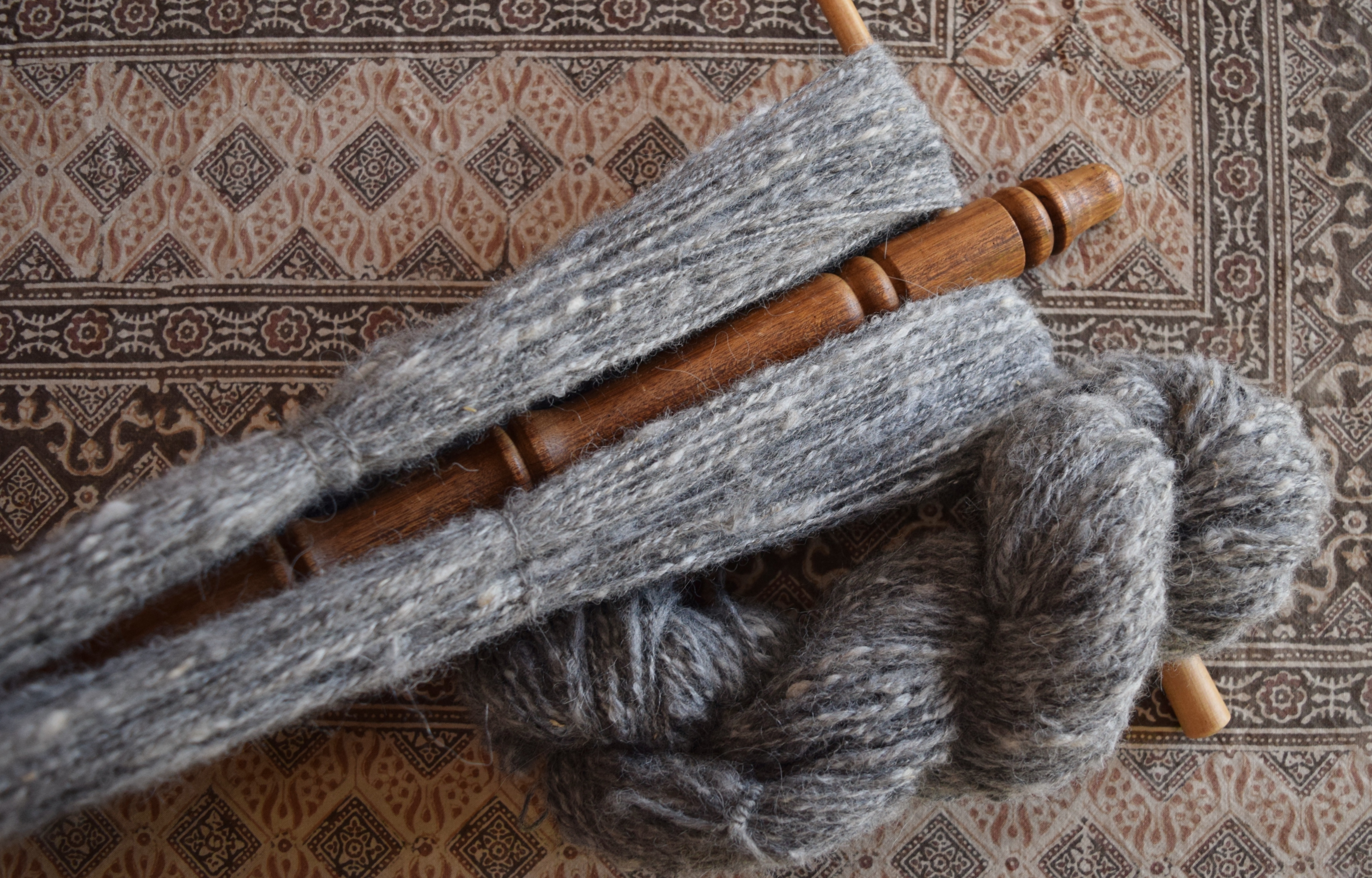
59 grams of yarn; relaxed, slightly slubby, infused with jewel tones.

I’m off to town, see you on the flipside with a more in-depth look at a little trick I discovered while blending the fiber for this yarn!

Tweed Chronicles: Blending Recipe 1

jenjoycedesign© 044

Finally a few hours to play with texture and color!
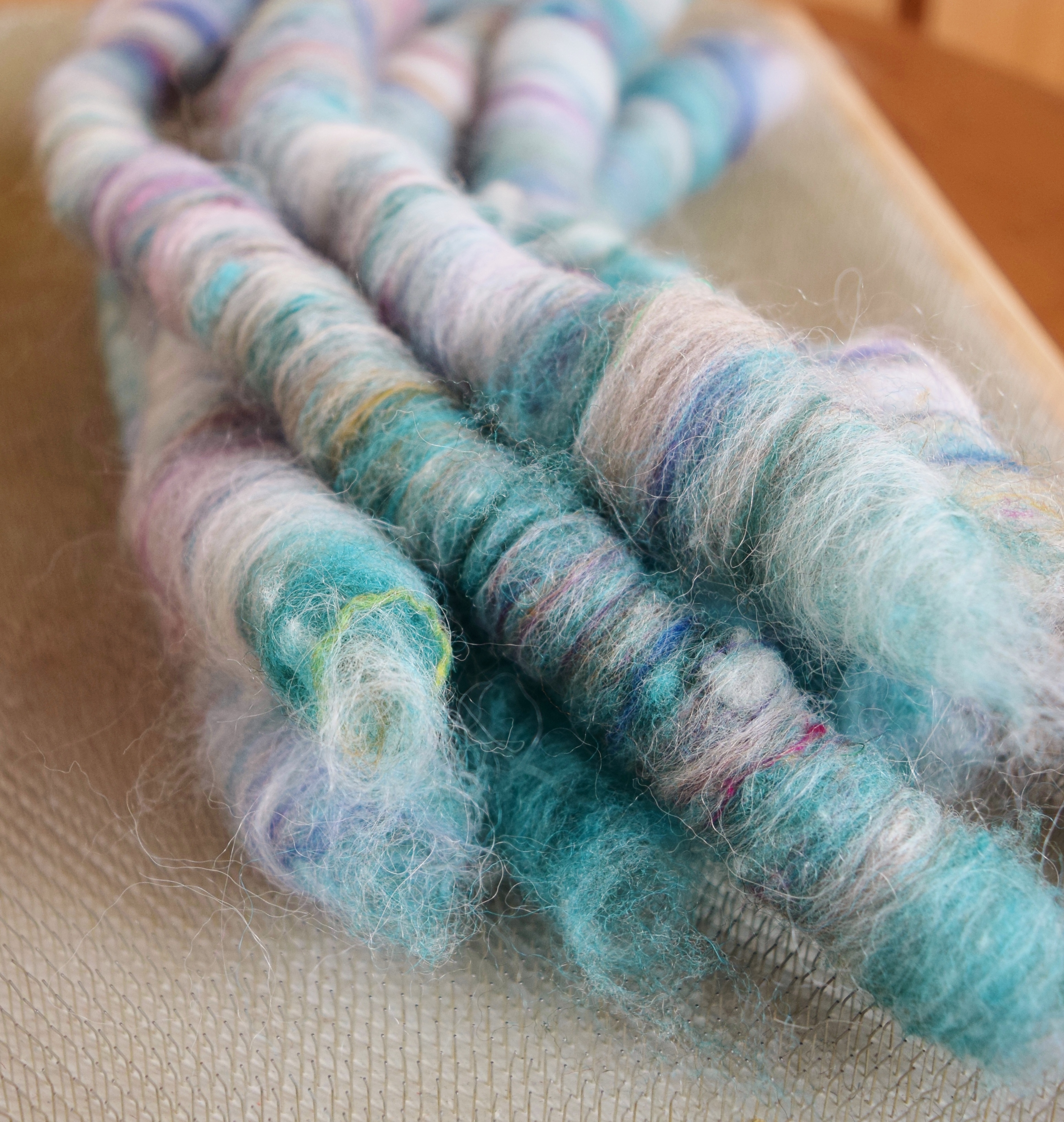
jenjoycedesign©038

 I finally got into spreading color all over those metal carding teeth…
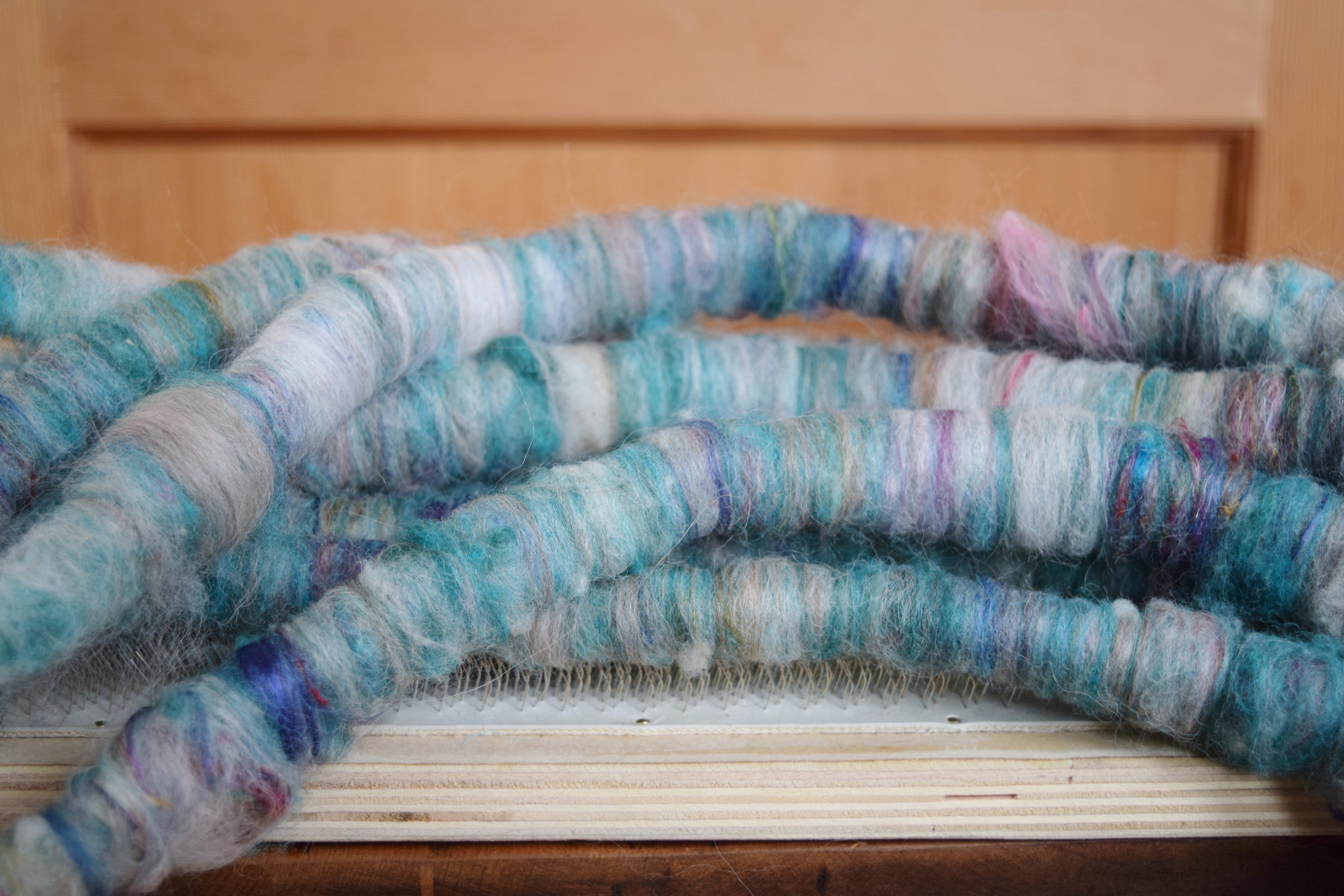
jenjoycedesign©042

Just look at these colors drawn into delicious fiber sausages to feed to my spinning wheel…
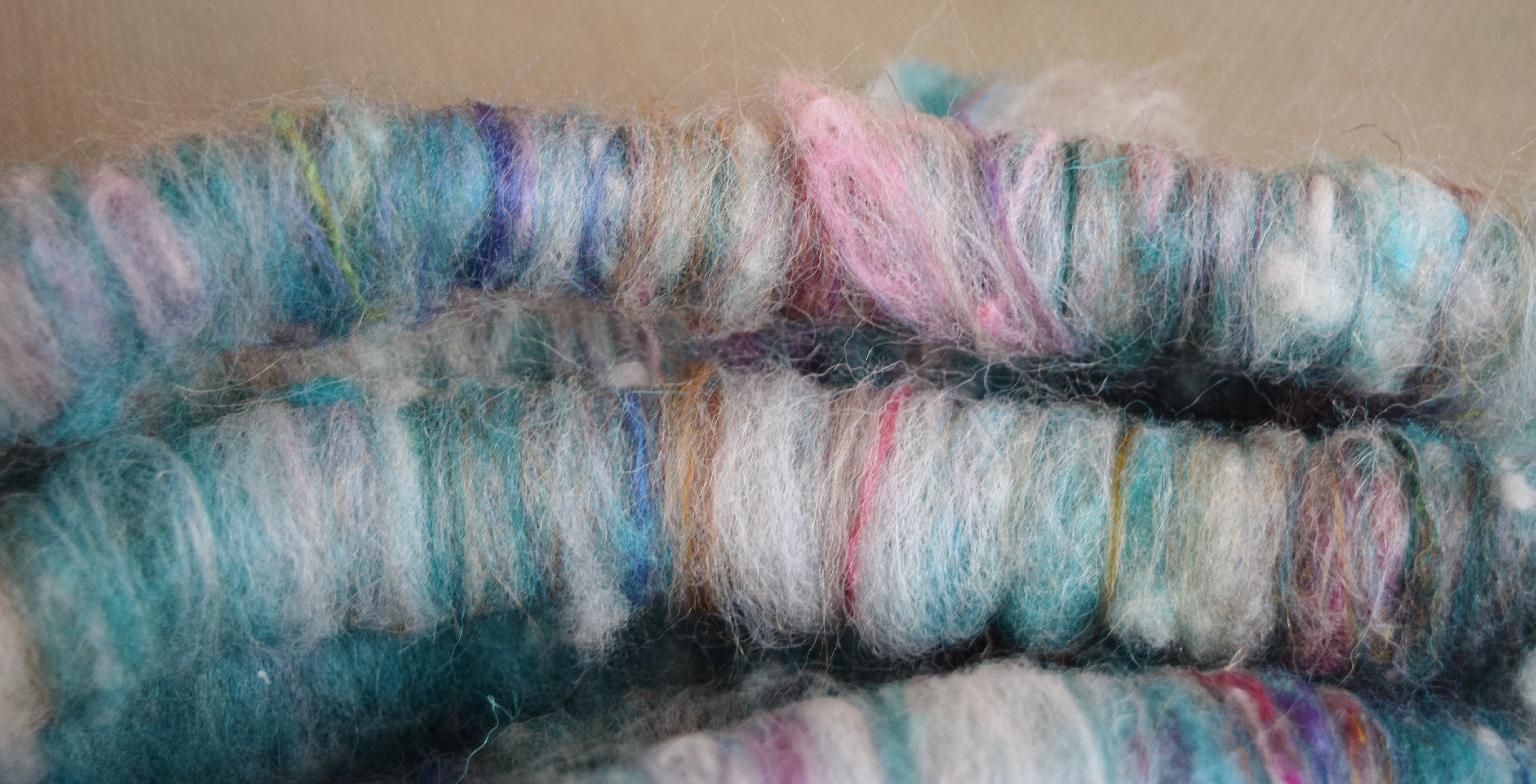
jenjoycedesign©043

Blending boards are an excellent tool to put color in the fiber mix; just little hint of color, or dramatic splashes of color! On the blending board colors can be laid out in stripes along the board then rolled off of the board into a rolag, and then the rolag can be spun from the end and each color will come out of the rolag the same as it was layered on the board, one at a time with some blending between color changes to create a nice transition from one color to the other.

A sort of multiple fiber ‘lasagna’ can be created on a blending board by making very thin layers of different fibers, or thick layers, then repeating the layers until the board’s teeth are full. You can peel off as a batt, pull through a small hole to make roving, or as I like best, to draw out with knitting needles to make into rolags. Because the fibers aren’t mixed, but only layered, a spinner gets to enjoy the little color & texture surprises as they appear.  I have worked out a sort of general recipe I’m calling Fiber Recipe 1:

1.  First, a main fiber, or fiber blend, of longer staple, for it will be the background color that is holding it all together. Think of it as the pasta layer of a lasagna.  In this blend I have an over-dyed teal roving of Shetland mixed dark & light, mixed with the white roving of unknown origin, and I hand mix it together to get a general base mix.  Then carded it on the board to produce a nice base for the bulk of the rolag. Between each addition I comb the fiber into the carding teeth with a paintbrush comb.

2.  Then there is the next layer of fiber & color that I wish to make secondary to the main fiber & color, and which is brushed on maybe half or a quarter as much as the main fiber.  For the secondary fiber its good to use the soft luxury roving, and also a good chance to balance the texture, for instance, if my main fiber is on the coarse side (which it is), I might want my secondary fibers to be ultra soft to make the yarn a little nicer overall. I like to think of this layer as the sauce, which is just as essential as the pasta.  As this was the case, I added secondary layers of  alpaca wool blend (drafted off of some super bulky yarn of alpaca wool mix) and some ultra soft Huacaya white alpaca.

3. These are the colors that I want to peek through, and the use of the color wheel can come in handy. These colors can be tertiary colors to the main or secondary fiber colors, or even opposites, however you want to create a little ‘wow’ in the blend. A texture difference is nice too, unexpected or even bright colors in different staple lengths.  In this blend I layered little splashes of amber & magenta Corriedale roving, then deep blue bamboo (adding a lot of shine with the color), as well as recycled sari silk, and little ‘brushes’ of  Shetland 2py yarn that I unplied and broke into pieces to hold together like a paint brush (more on this discovery of mine a little later). I like to think of these accents as the flavorings.

If I plan to make several hundred grams of the rolags, very precise notes are necessary, and weighing each color and addition and noting in which order I apply, and number of layers.  Two full layers can be achieved before the teeth are full, but today I put down all of the ‘pasta layer’ first in one thick base, then switched between ‘sauce’ & ‘flavorings’ .

Anyway, here is a visual slideshow for you to see what I just did, beginning with the blue & white cloud of hand mixed fiber…


This slideshow requires JavaScript.

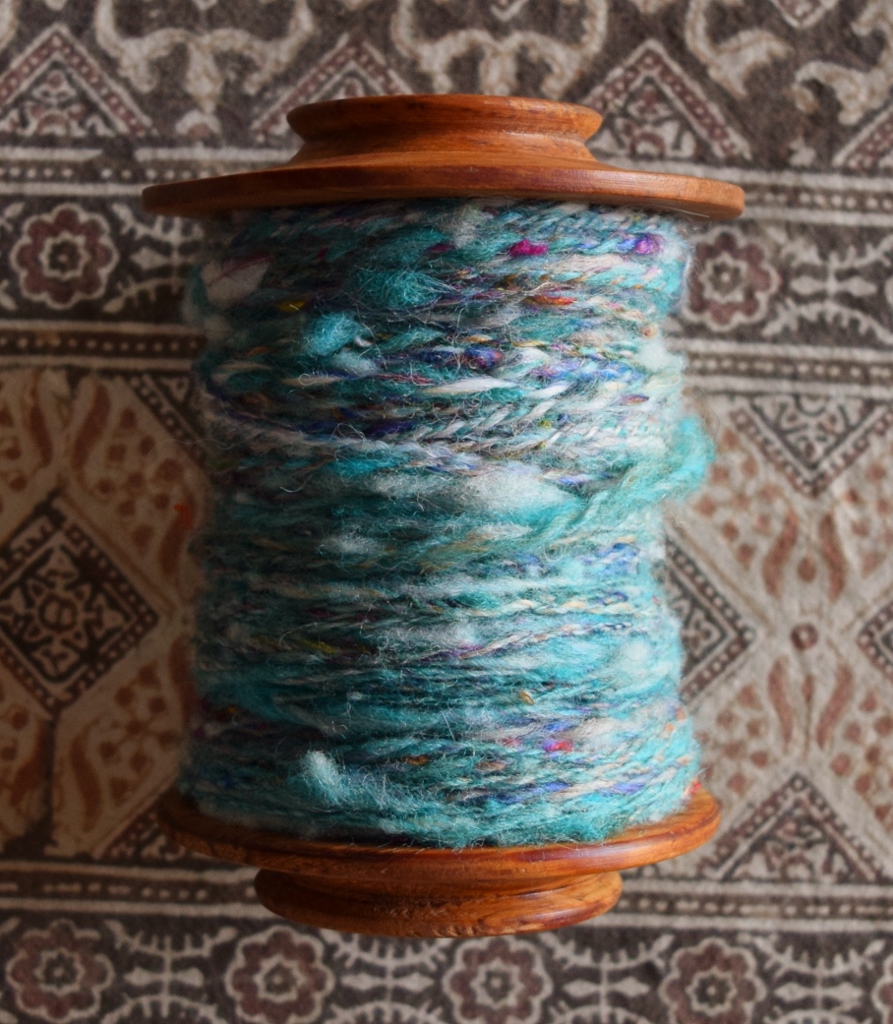
After I drew off all the rolags, I divided them in equal halves for two bobbins. After both bobbins are plied I predict to have about 50-60g skein when I am finished spinning it up, it was a small batch just for the purpose of making this slideshow.

jenjoycedesign©047

I almost think I enjoy creating the rolags more than I do the spinning of them, which is an entirely new art for me!
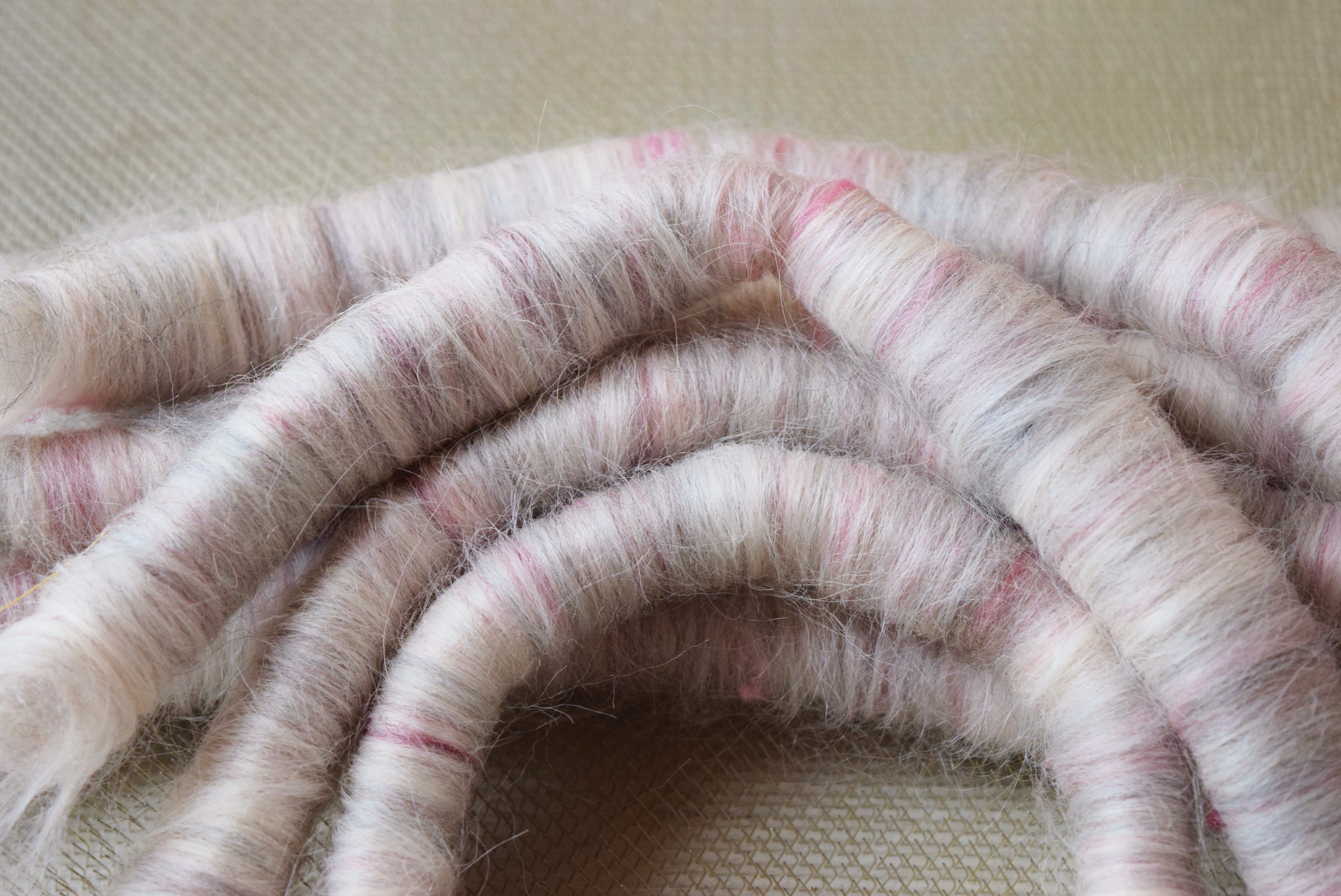
Spun

jenjoycedesign©001

I am experiencing a bit of a renaissance in hand-spinning. I never was that much of an intentional spinner, although I am attempting to be now…. perhaps I’ve grown up a little bit? With this alpaca that I brought out of the recesses of my loft closet, I worked it from raw fleece and  in this post  I show the carding & blending process.  After spinning it up, here I am measuring & weighing the yarn to discover what gauge it is.

001

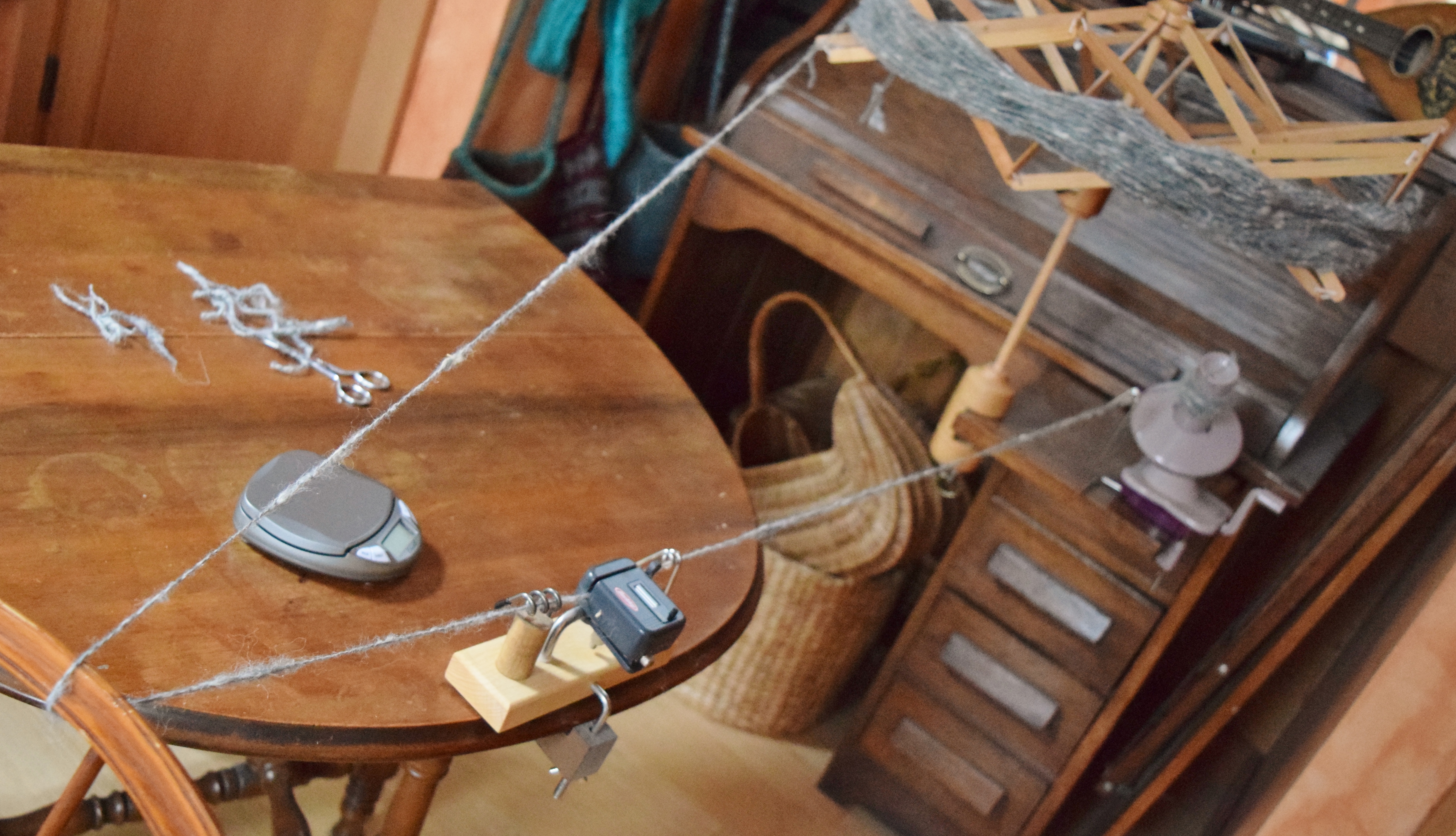
Here is what I do:  I run the yarn through a ‘winding station’, which measures yardage while winding off the skein on to a ball, then weigh the ball, and take notes.

jenjoycedesign© 003

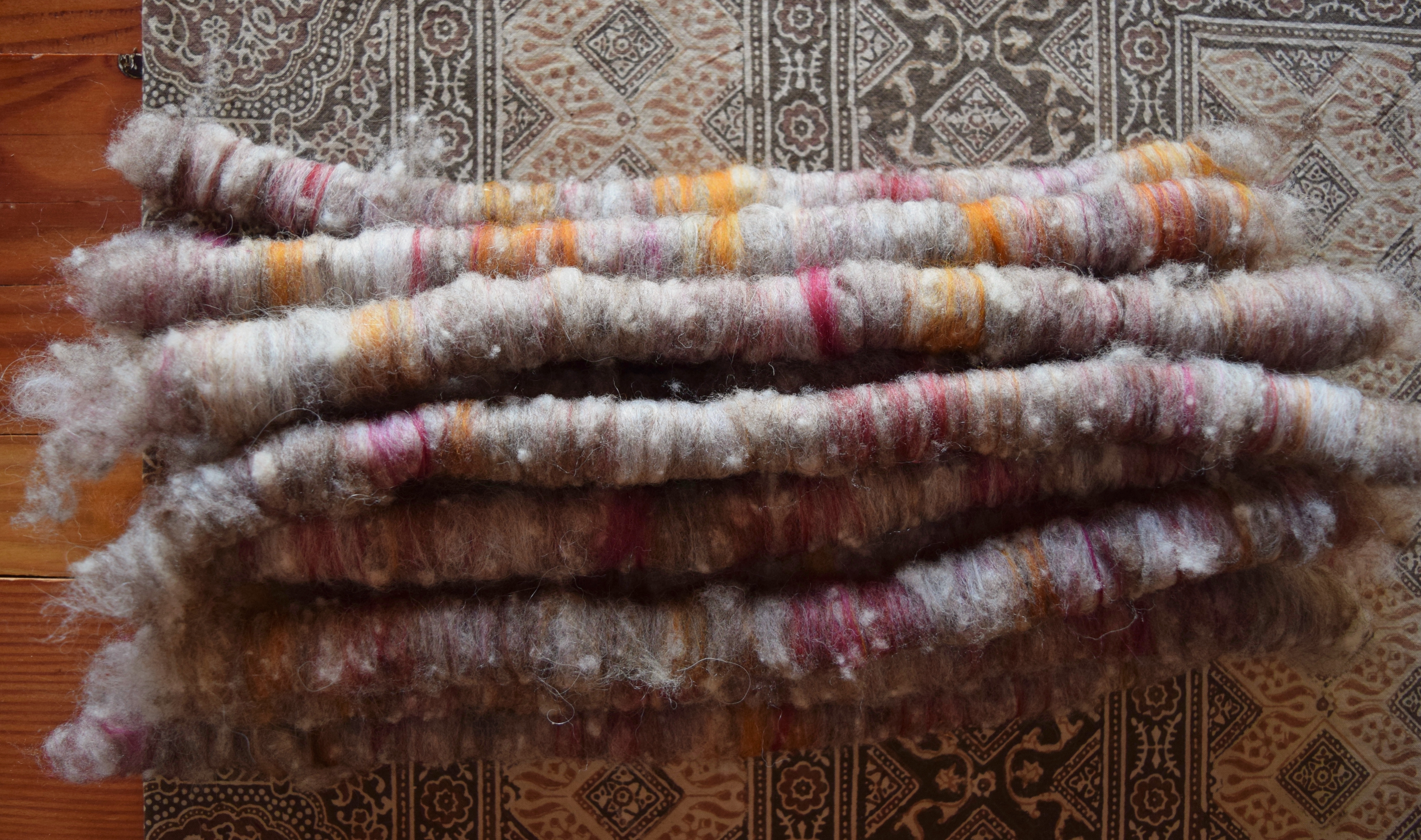
This is about an aran weight. Getting more savvy in substituting hand-spun and I am itching to ‘paint’ again with fiber on my blending board. Recycled sari silk (yes, made from silk cloth of saris), bamboo, rose fiber… the works, and Oh! This was my most recent creation over the weekend, taking some very coarse Lincoln-Corriedale I’ve had for 30 years (from my sheep Hazel, plus another part fleece I have long forgotten where it came) , and blended it up together into a bat of 50/50 dark & white, which the white was extremely slubby (thats having little bits of wool puffs) I used that blend to layer with some ultra nice dyed corriedale roving  I recently bought, in colors amber, mulberry, and ruby, and also a little Huacaya Alpaca , and made tasty little wool sausages….

jenjoycedesign© tweed rolags

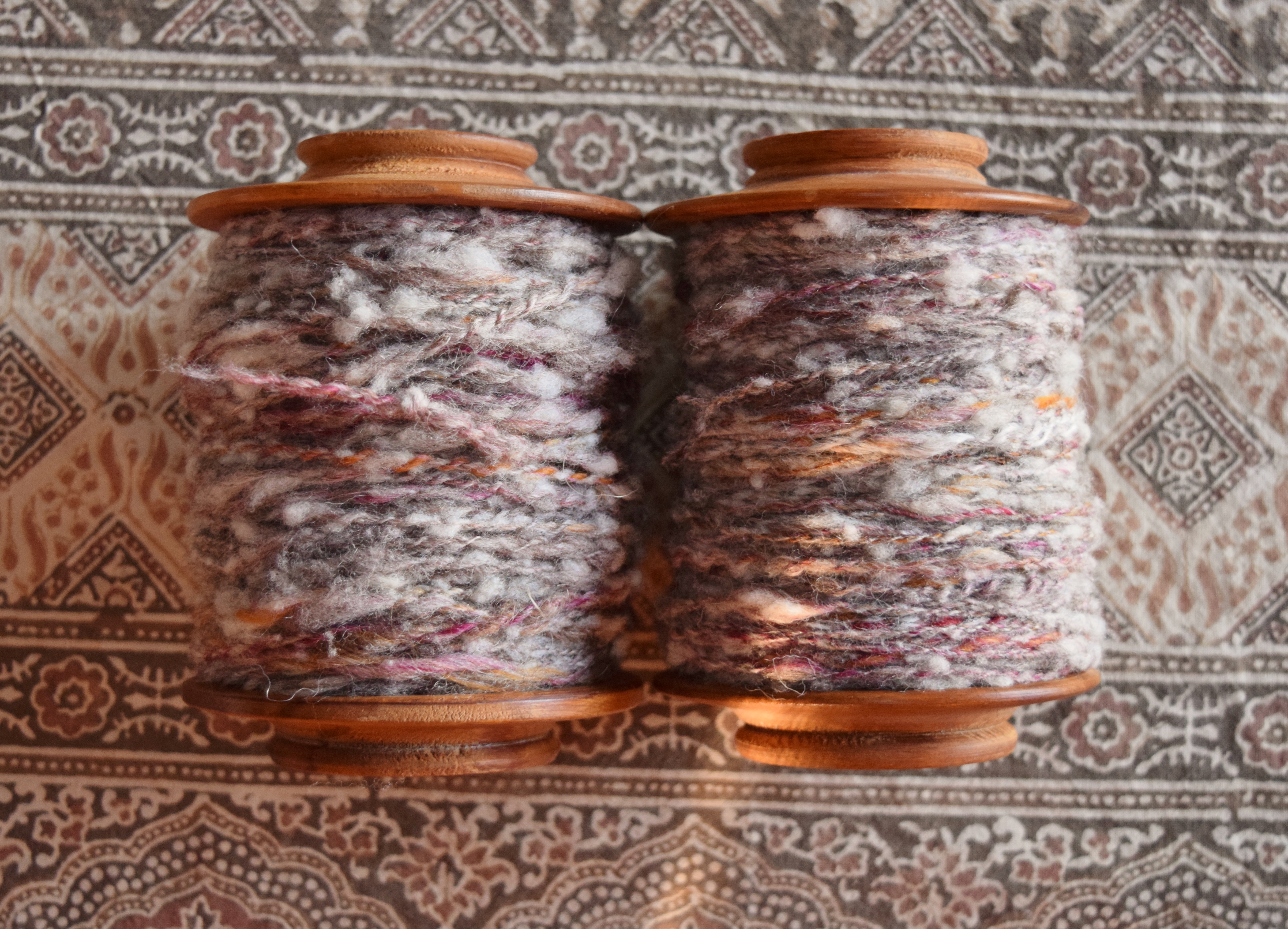
And, over the weekend, here is what I spun up…. slubby, exotic woolen spun blend

jenjoycedesign© 006

jenjoycedesign© 009

Meanwhile, the general news…

Emma is in her last days of having to endure The Cone, for the surgery she had a week ago already (to remove a low-grade sarcoma on her front leg, she will be alright, no reason to be alarmed). My nieces have started school already, Miss Seventeen is a senior this year, and Miss Fourteen is now in 9th grade!  I’m very busy presently working up two patterns to be available in a double download, and prototyped in the hand-spun alpaca!  And we’re having some gorgeous cool foggy mornings at last! Life is good.

Emma in the cone
Emma 2 days after surgery.


Tweed Chronicles: Carding & Blending

jenjoycedesign© rolags

I’ve been lured into somewhat of a trend. The trend is carding & blending boards!  Such a beautiful tool are the ones purchased by Ashford, etc, and I was so excited to buy one, but I resisted knowing that I was perfectly able to make my own. So with Jeff’s help, I did…

005I bought  24″ of  very expensive 12″ carding cloth, but still less expensive than a new 12×12″ board.  We cut some plywood to size, and after a quick glue & nailing down the carding cloth, added a footing to the head, and a handle, and ended up with double the size of the regular blending boards available. Not bad!  I then spent hours practicing on some old weedy raw fleece I had hidden away, found my old carders, and had a go with some alpaca.

jenjoycedesign© carding alpaca

Mixing first by hand, then carding three times on the board,

it eventually looked like this…

jenjoycedesign© carding alpaca 5

Then I drew the 3x carded alpaca back on to the board, caught the tips in between two dowels, then began to pull out, roll, pull out & drafted it rolling into rolags…

jenjoycedesign© making rolags

Eventually I got through all 240 grams of it and made finally into some nifty rolags ready to spin, after a heck of a lot of work …
053
Honestly folks, do you have any idea how much work goes into making a simple 100g ball of yarn from raw fleece?   I’m sure there are some of you out there who do.

Which brings me back to the carding & blending board. I did say that it is a bit of a trend, I mean, just look at the process of making art rolags…

The video shows really what the blending board is all about.  I was actually using it in my above photos as a carding board for raw fleece, now I think I’ll go clean up the weeds and fluff that has spread all about my loft, because I am actually waiting for some combed top roving to show up in the mail.

Its such a strange modern era.  I feel that I have shifted from wanting to create from the roughest and unrefined of raw materials ~~ my old self ~~ into craving the ease of beautiful prepared combed top roving to spin from, or with which to create those beautiful blend rolags ~~ my new self.  I think I have worked something through here, and am considering offering to the wild all that old coarse wool from my earlier spinning days, and face a future of pleasure spinning clean exotic selection of fibers, as there is just so much available now.  I have definitely reaffirmed my respect for those who spin from animal-to-yarn, I just can’t seem to be one to run with the flock anymore, but that is okay.

I do feel the urge to spin yarn again, after a long hiatus.  I am very excited to come back and show off some really artful blended rolags from my plus size blending board, as well as the yarn spun from them!