Tweed Chronicles

jenjoycedesign© spinning tweed

I can’t stay away from the blending board…

jenjoycedesign© colors to blend

 nor can I stop testing my instincts about color,

and layering them ever so finer … and finer …. and even finer…

jenjoycedesign© 1st batt
1st batt, 1st carding

 just to see how the colors will work together.

jenjoycedesign© tweedy 3

Because perhaps I am just ridiculous!

jenjoycedesign© detail
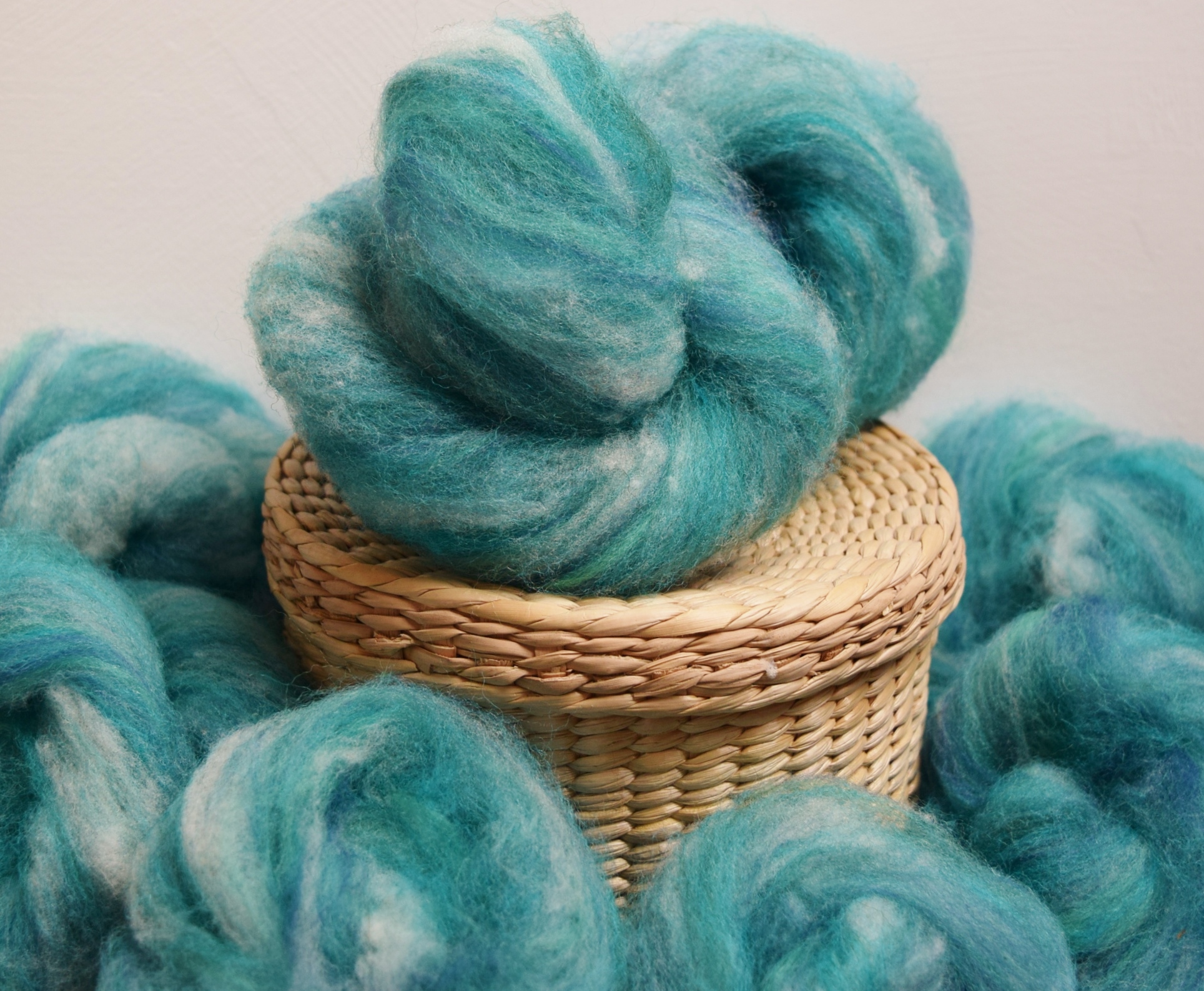
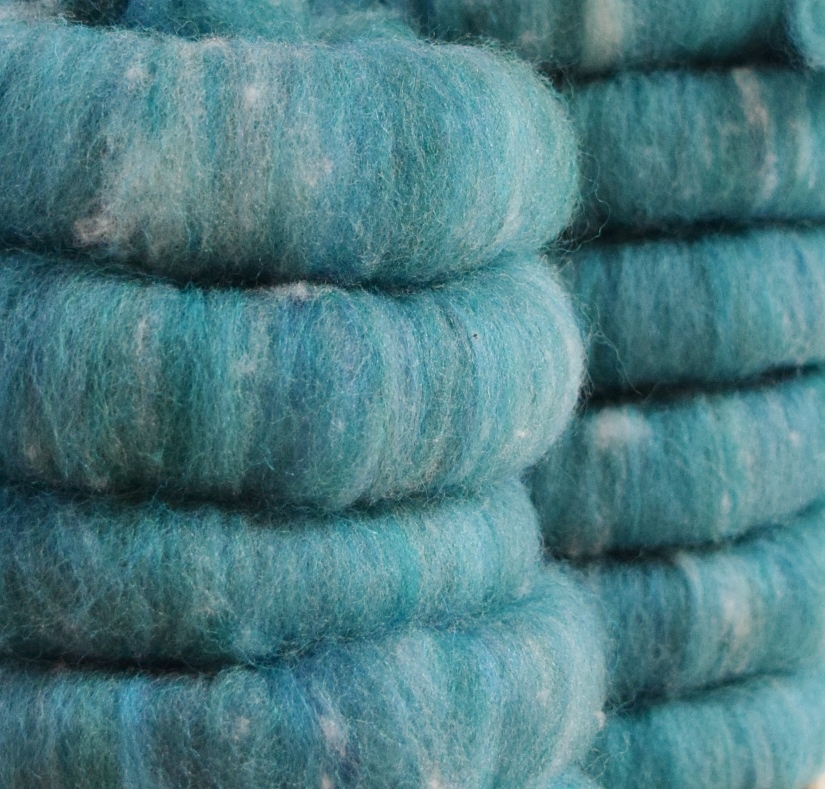
rolags from 2nd batt, second carding, and wonderfully oceanic!

So I have decided to make a new category  ~~  Tweed Chronicles ~~ wherein I can post my tweed yarn making refinements, as I explore both predictable as well as the unpredictable color combinations (maybe especially the unpredictable),  my learned improvements of technique, and so on.

jenjoycedesign© tweed 9

Techy stuff 

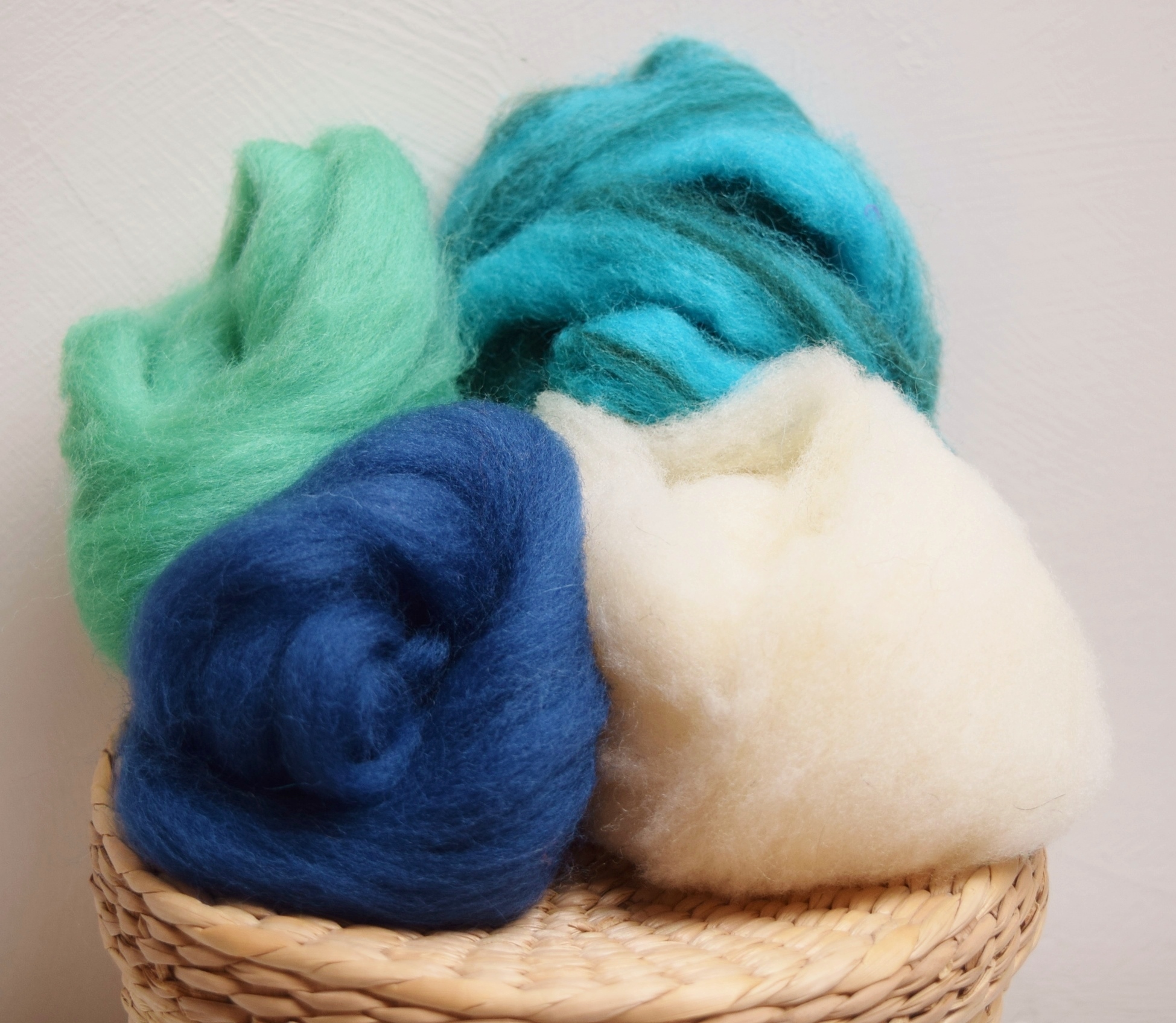
  •  20g of white undyed roving I acquired decades ago, the tweedy “nepps” from the slubby roving are excellent for tweed, 20g of mixed Shetland I over-dyed with color peacock, 10g of Corriedale  aqua, and 10g of Corriedale dark denim.
  • Layered very thinly … I mean really a lot of thin layers… using technique: Blending for tweed simplified. 
  • Lifted batt, layered again a second time.
  • Drew off rolags.
  • Total of only two “cardings”.

♣   ♣   ♣   ♣   ♣

I have found another gem in the “Hands” series I’ve been watching countless times over the last month, while I learn the technique of long-draw tweed spinning on my little wheel, and learn the art of color in fiber.  And because I have always been so deeply inspired from nostalgia, this one is my new favorite.  Enjoy!

Plied Seashells

jenjoycedesign© seashells plied
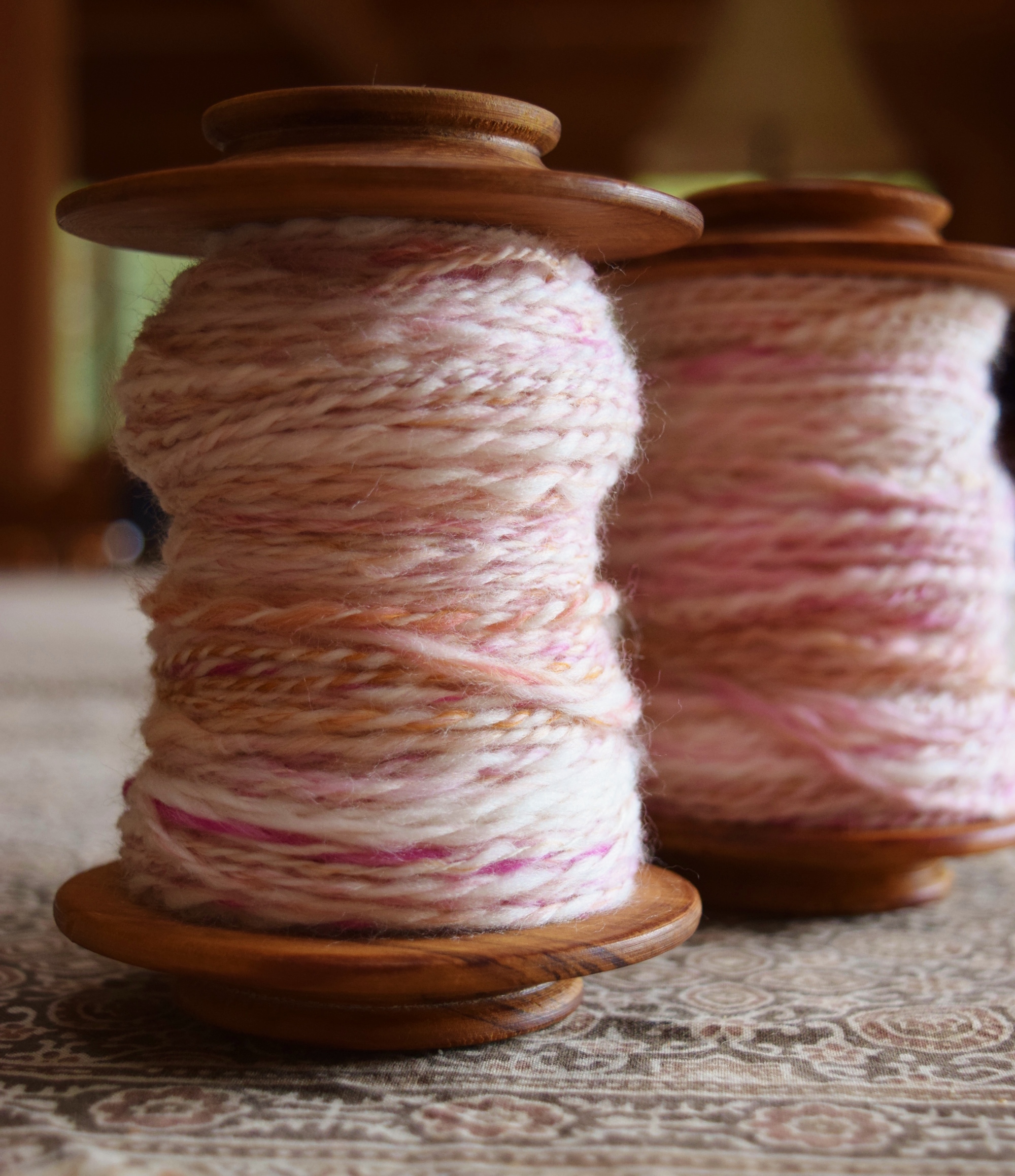
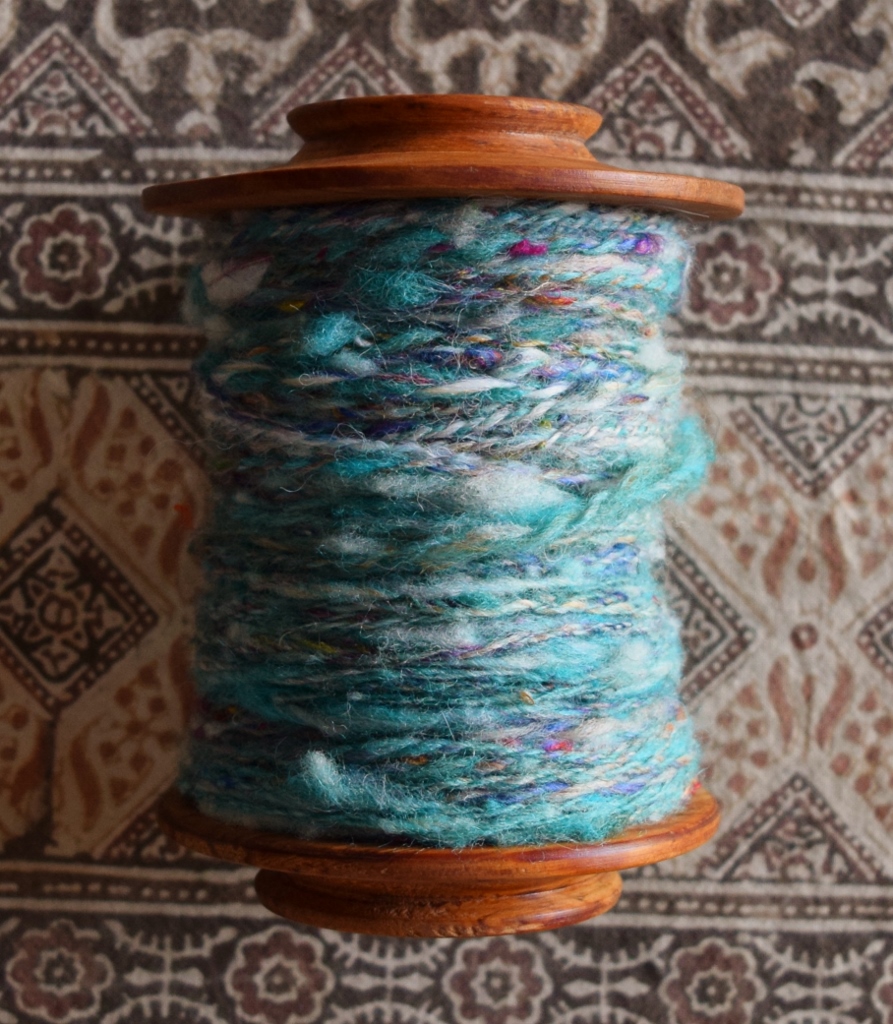
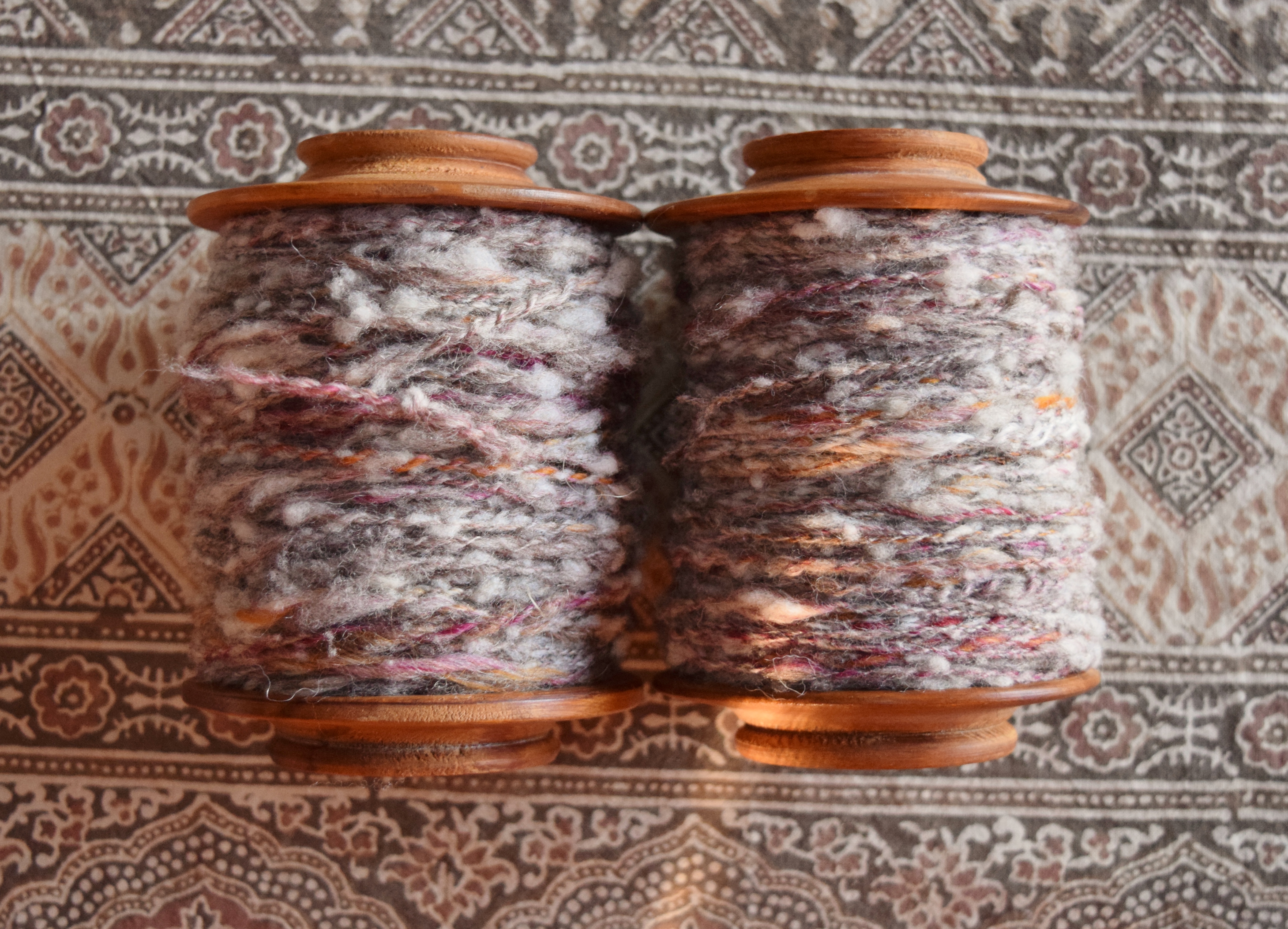
I have plied my seashells yarn singles, aren’t these spools lovely?

jenjoycedesign© seashells plied 2

This is basically a loosely blended micro batch using my blending method I talk about in Blending Recipe 1 – fiber lasagna .

The blending process for the seashells was back in  “The color of seashells” ,   but might be helpful to also see my  notes in  “Spinning Seashells”  .

jenjoycedesign© tweed 4

I am presently busy working on my next blending board experiment, and will post Blending Recipe 2 very soon ~~~  so watch this space!

Voila!

jenjoycedesign© blending 2

Voila!

jenjoycedesign© blending 4

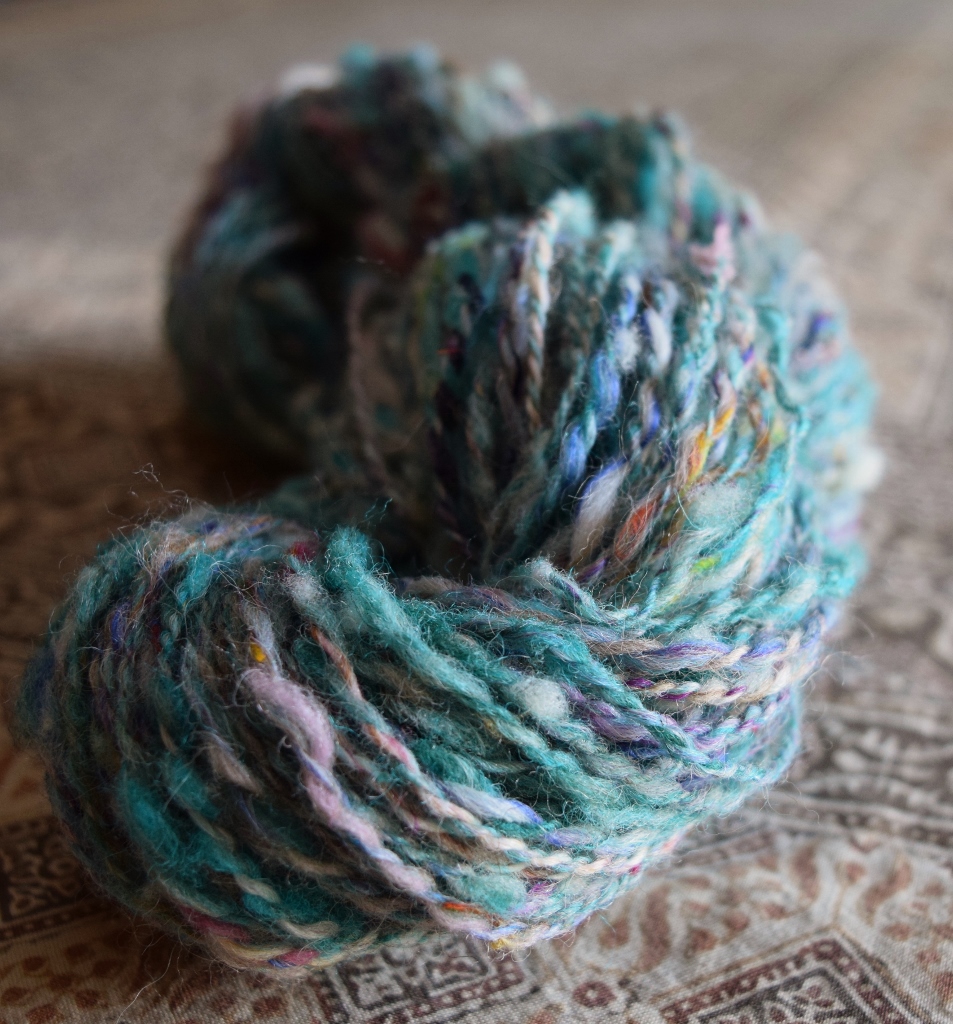
In this post   I show you the blending of fibers for this handspun yarn,

and the recipe I am calling Fiber Blending 1.

jenjoycedesign© blending 5

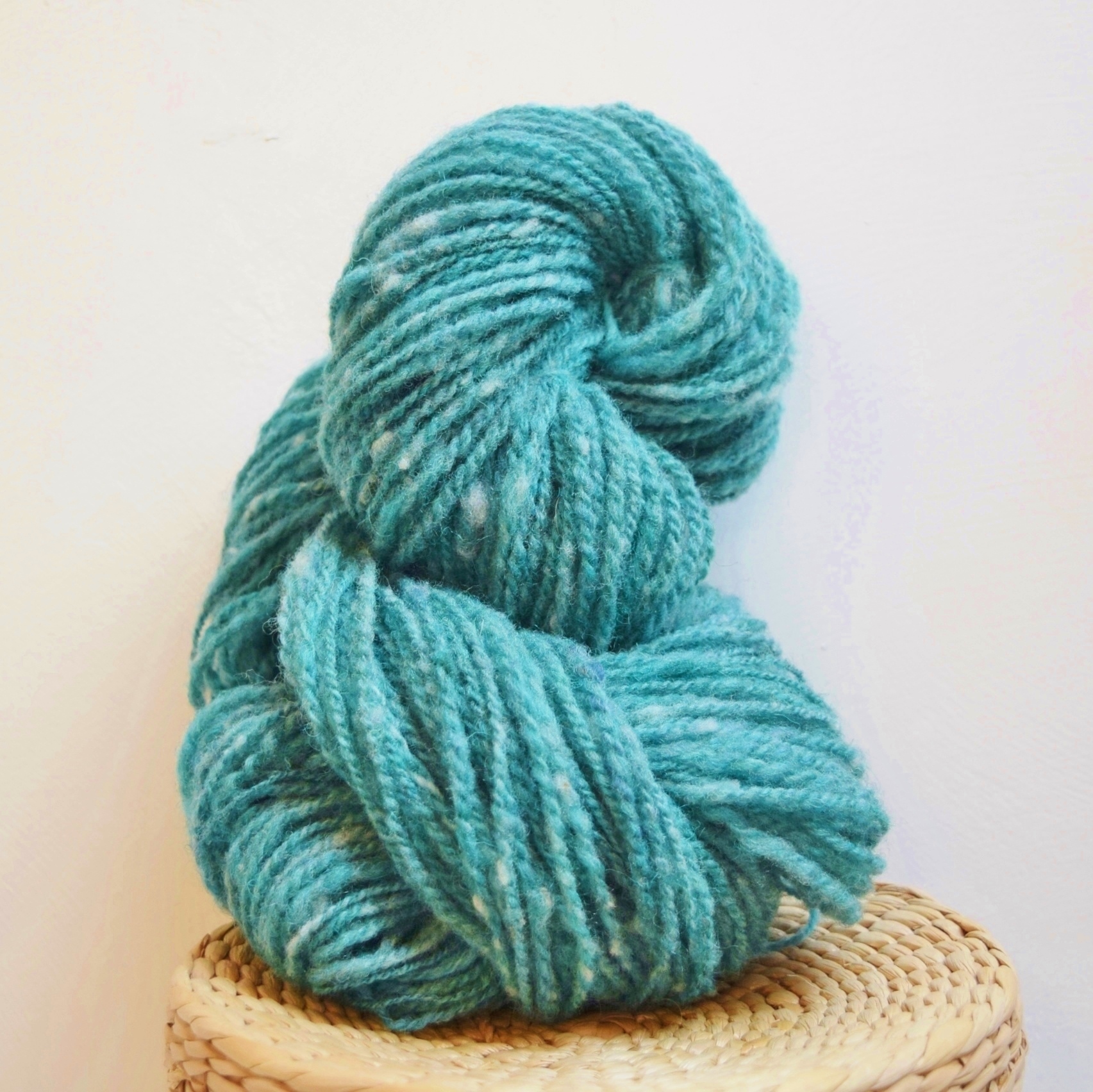
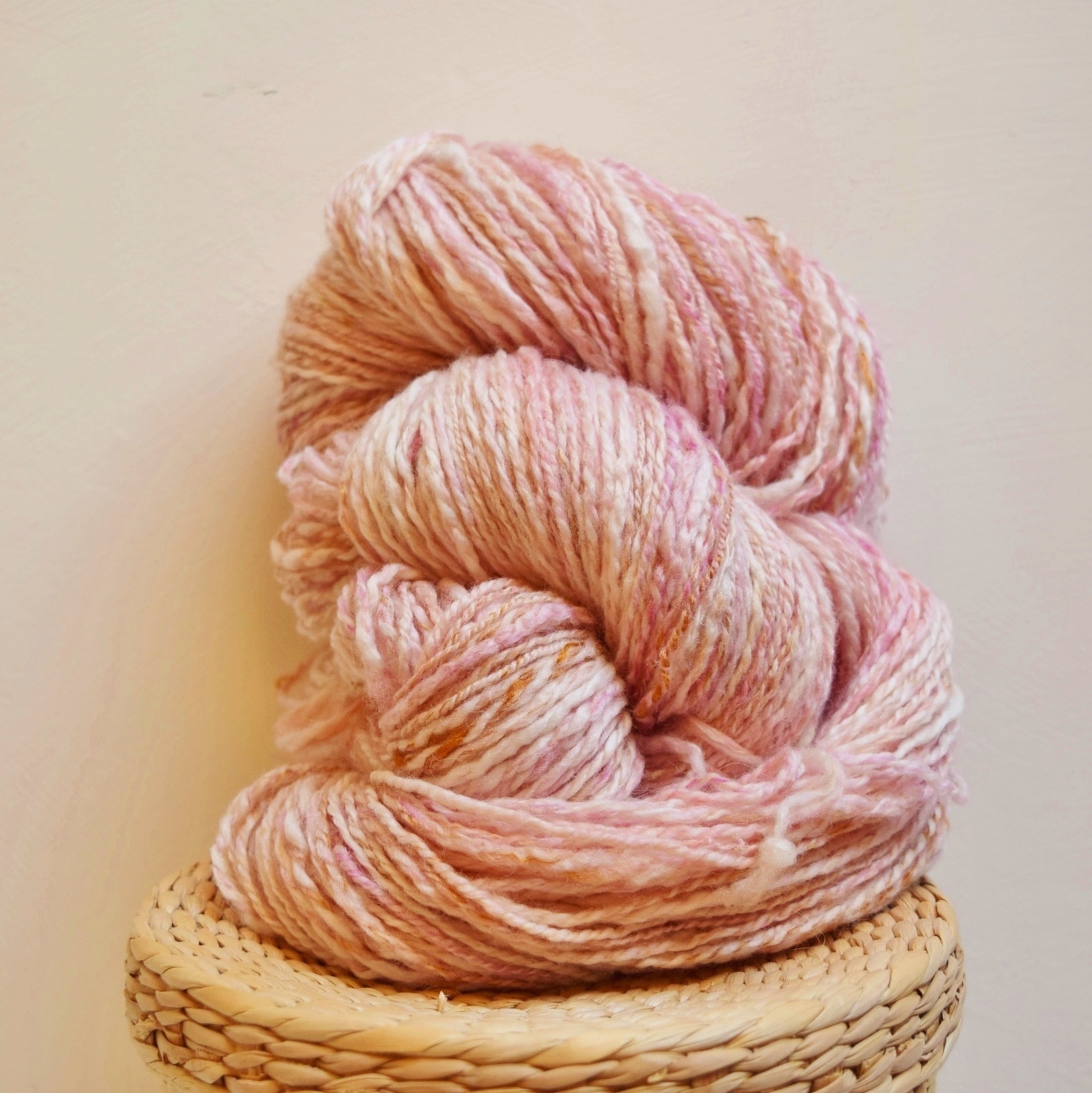
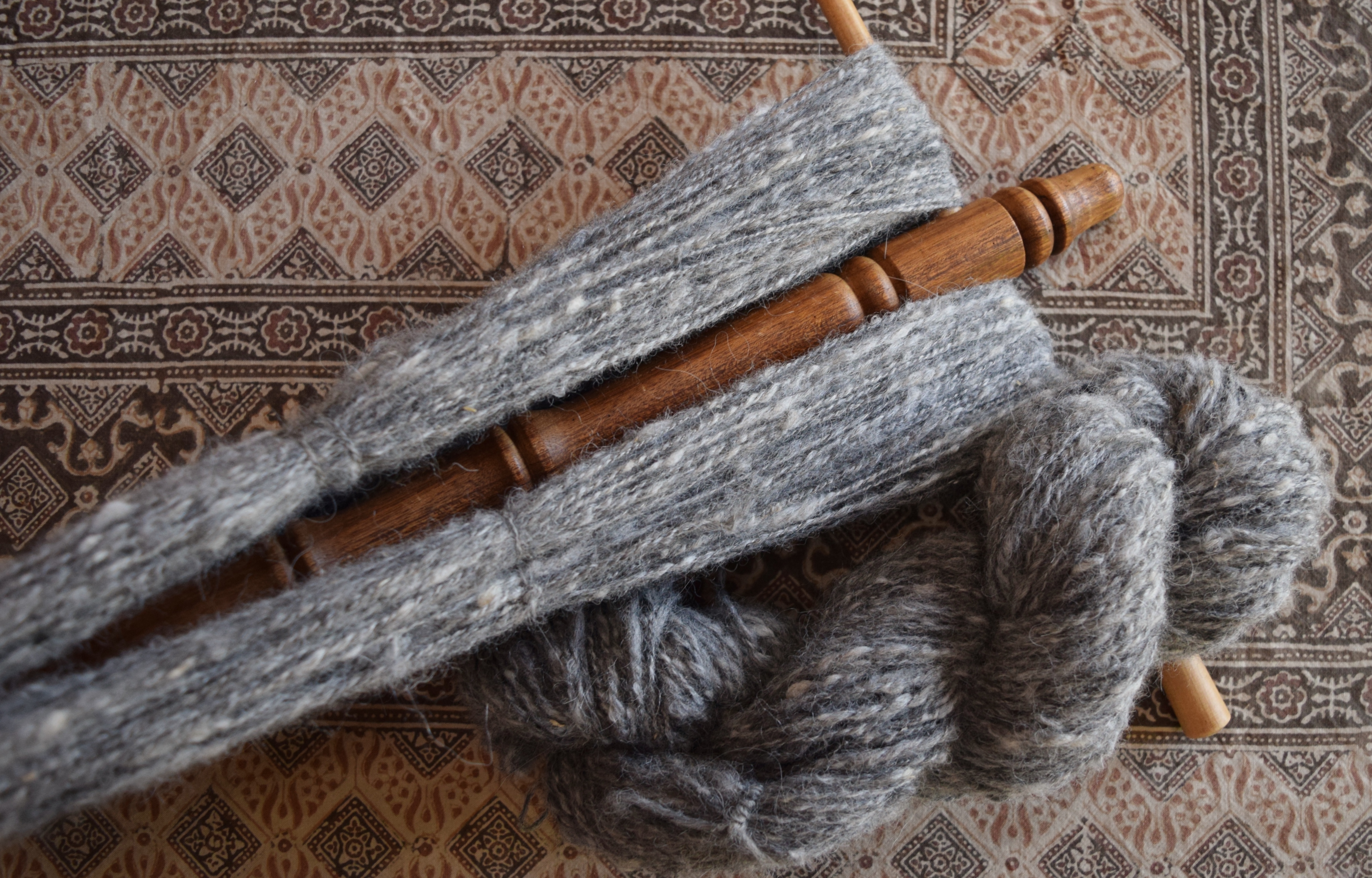
59 grams of yarn; relaxed, slightly slubby, infused with jewel tones.

I’m off to town, see you on the flipside with a more in-depth look at a little trick I discovered while blending the fiber for this yarn!

Tweed Chronicles: Blending Recipe 1

jenjoycedesign© 044

Finally a few hours to play with texture and color!
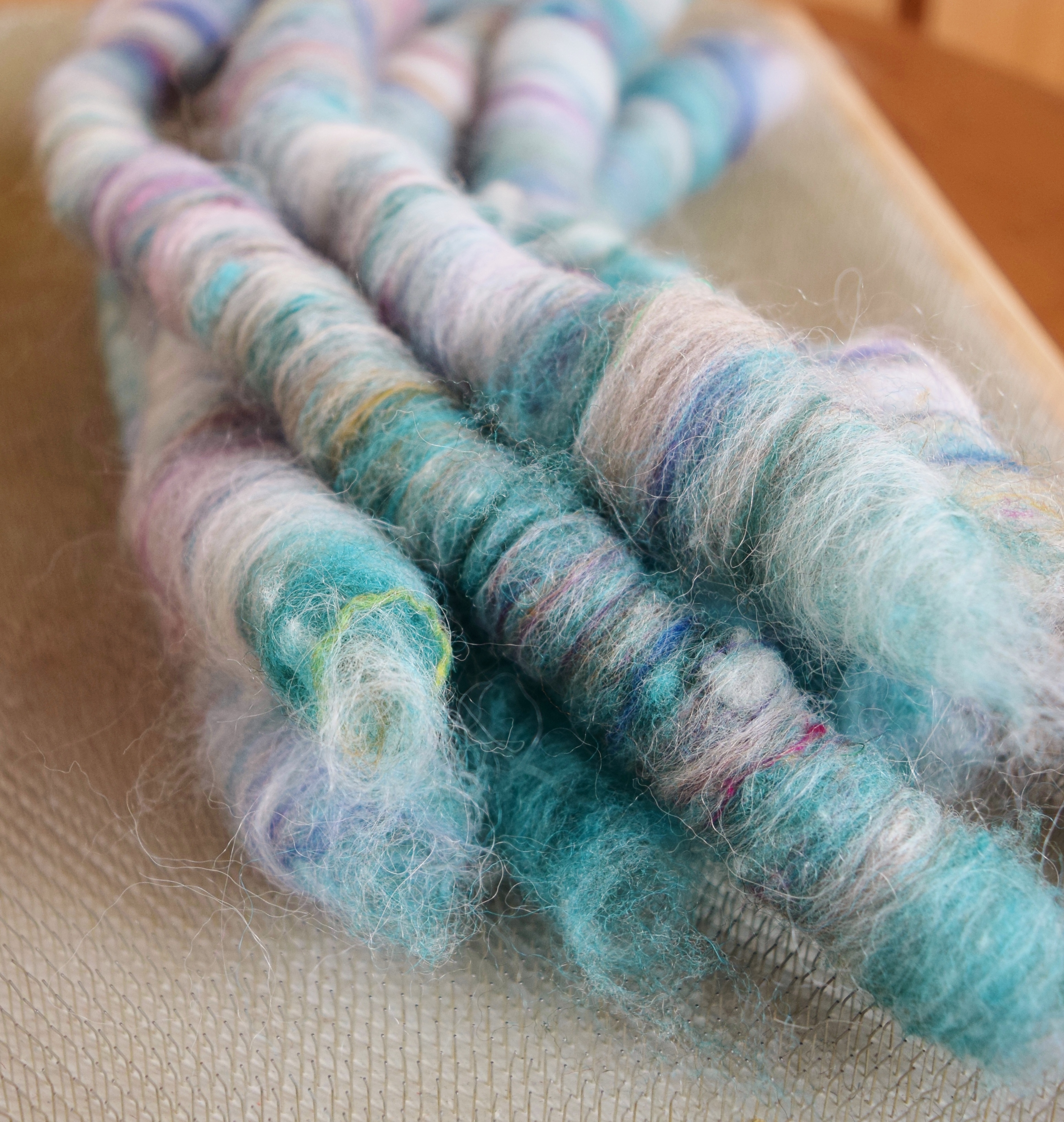
jenjoycedesign©038

 I finally got into spreading color all over those metal carding teeth…
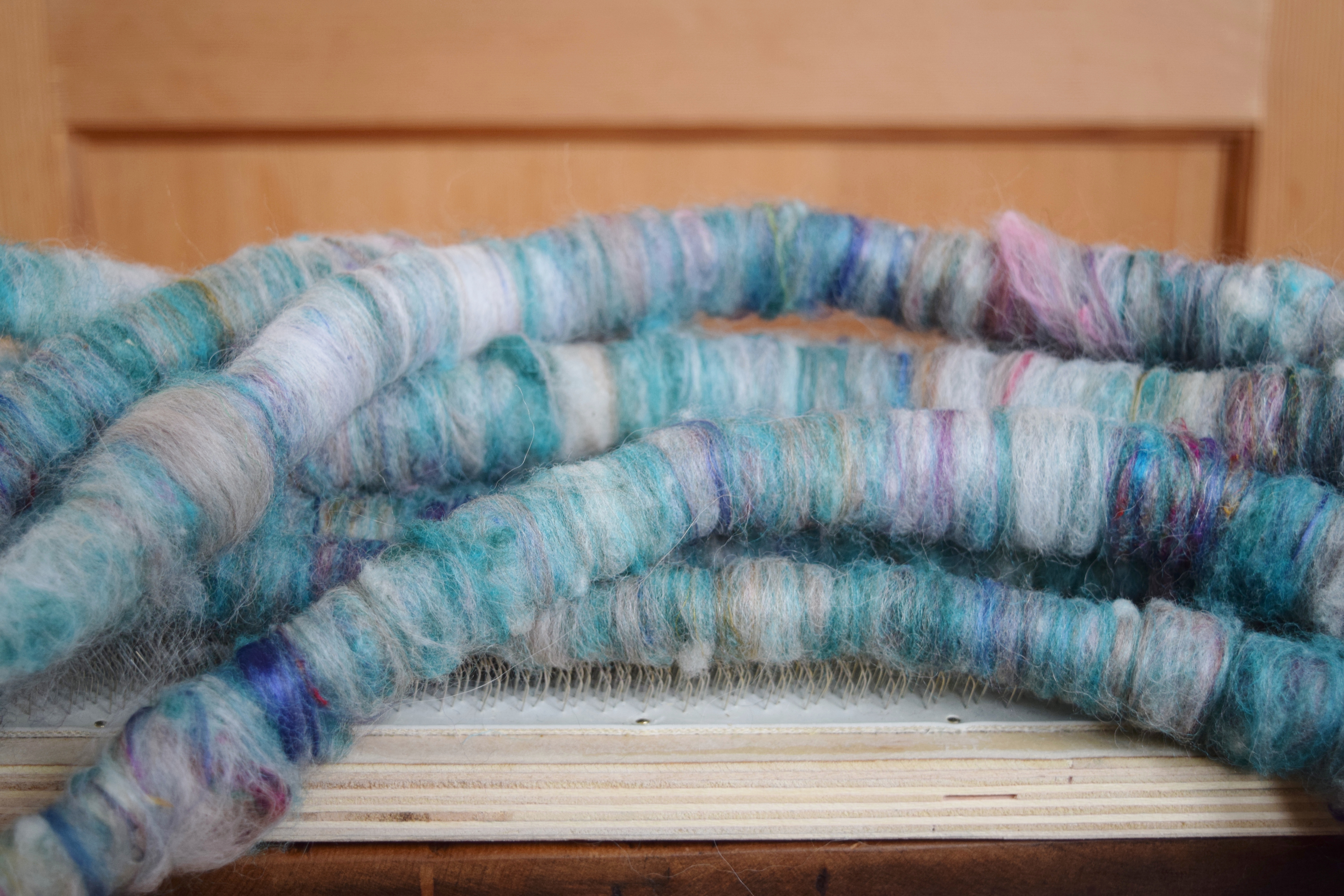
jenjoycedesign©042

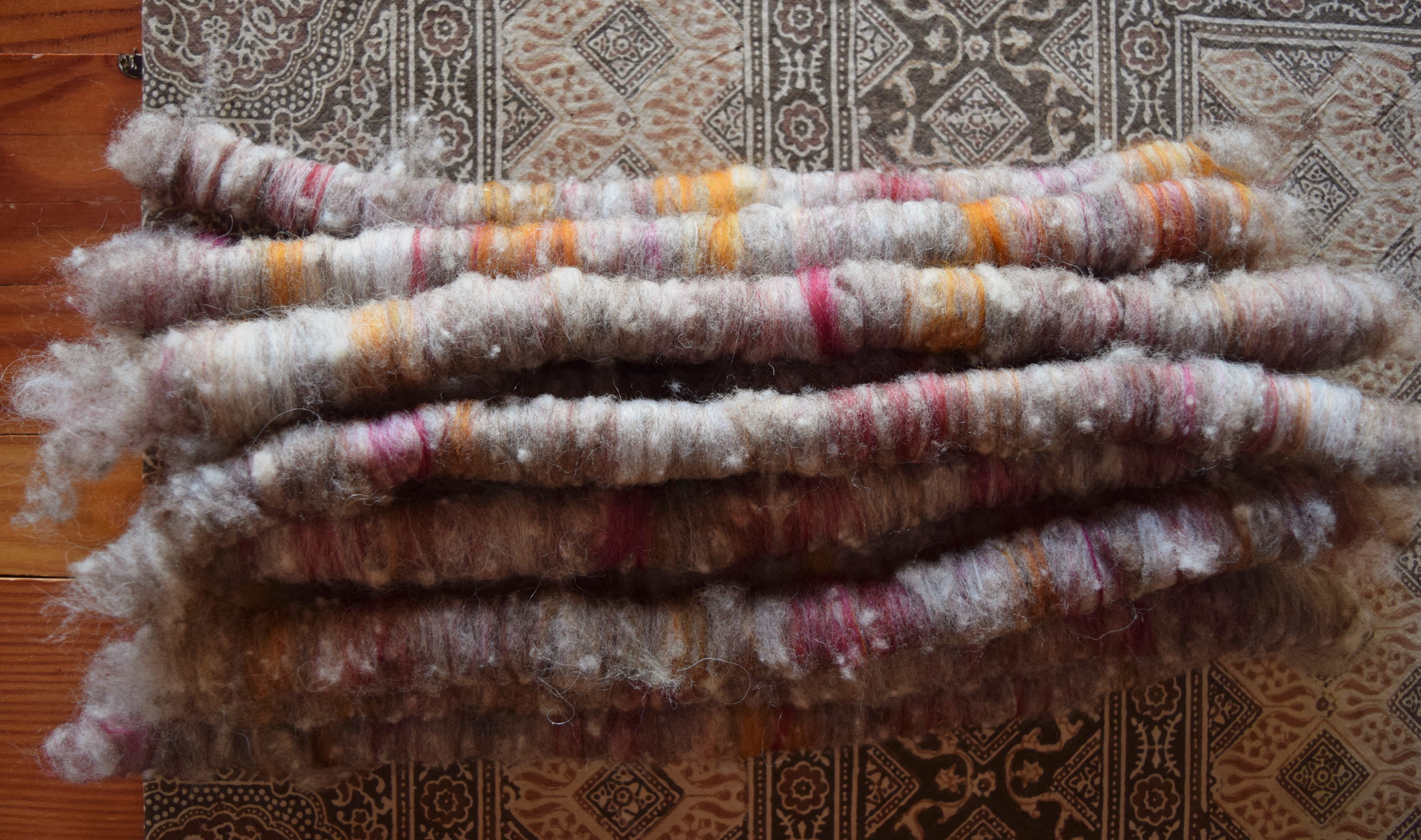
Just look at these colors drawn into delicious fiber sausages to feed to my spinning wheel…
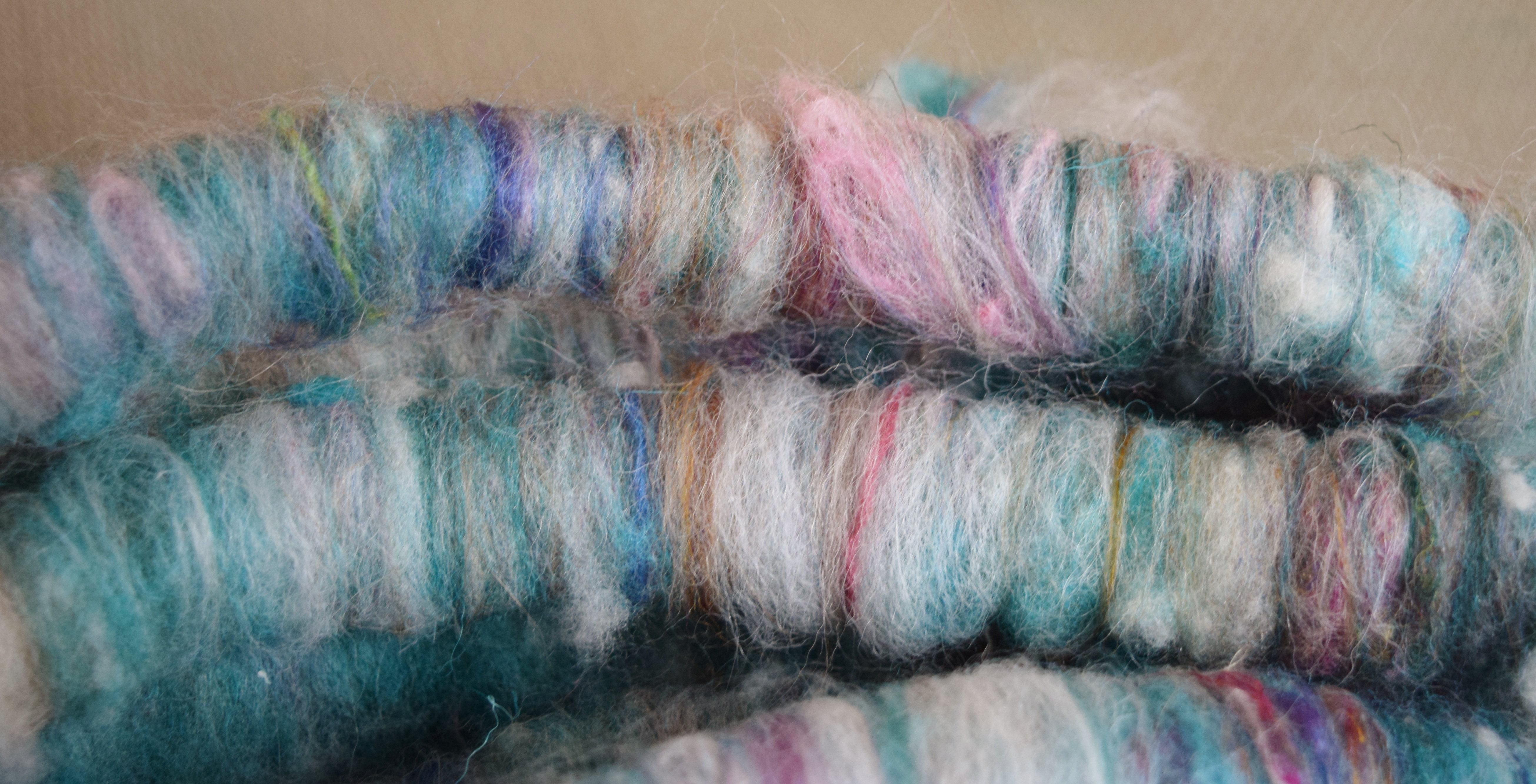
jenjoycedesign©043

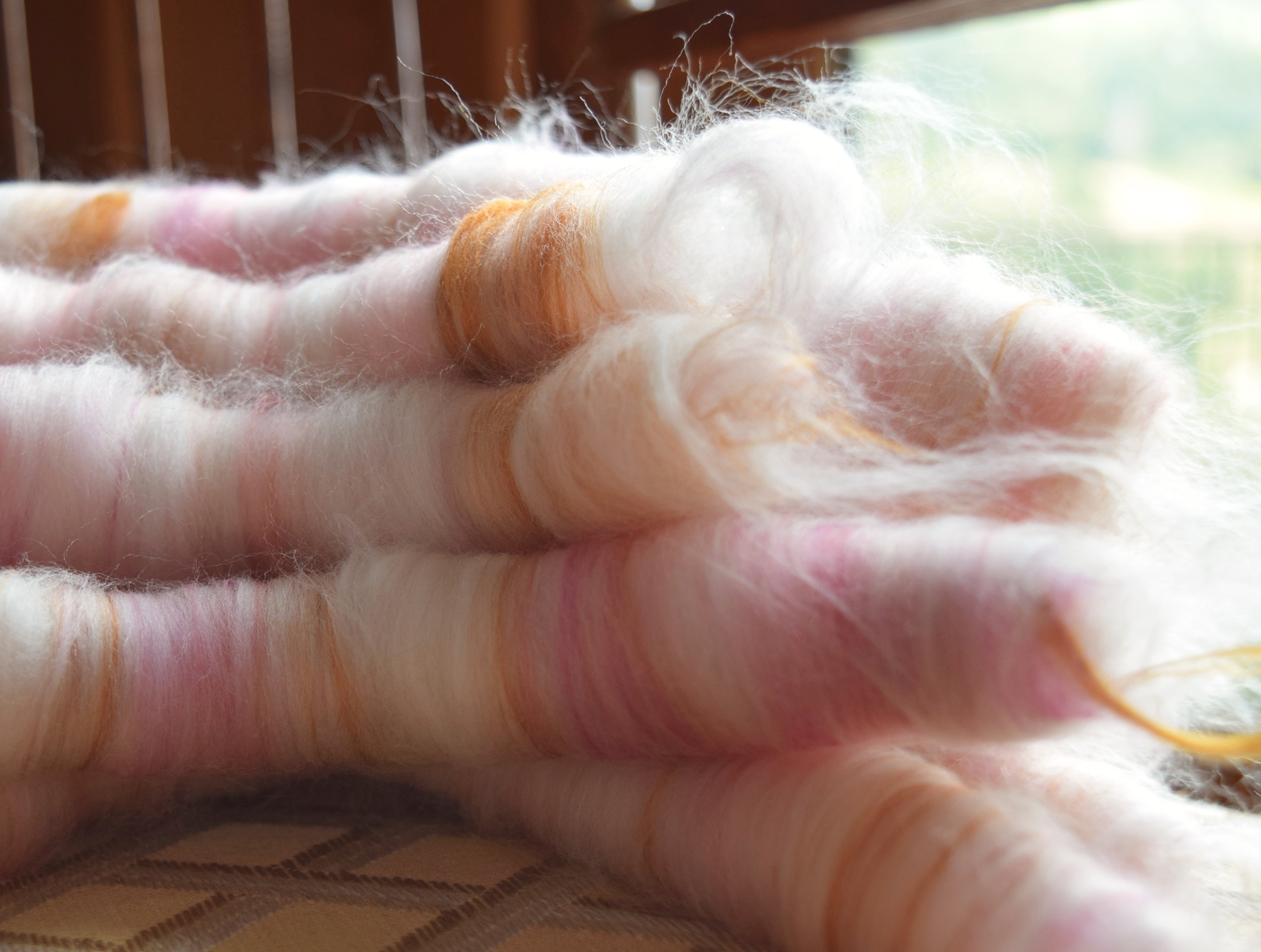
Blending boards are an excellent tool to put color in the fiber mix; just little hint of color, or dramatic splashes of color! On the blending board colors can be laid out in stripes along the board then rolled off of the board into a rolag, and then the rolag can be spun from the end and each color will come out of the rolag the same as it was layered on the board, one at a time with some blending between color changes to create a nice transition from one color to the other.

A sort of multiple fiber ‘lasagna’ can be created on a blending board by making very thin layers of different fibers, or thick layers, then repeating the layers until the board’s teeth are full. You can peel off as a batt, pull through a small hole to make roving, or as I like best, to draw out with knitting needles to make into rolags. Because the fibers aren’t mixed, but only layered, a spinner gets to enjoy the little color & texture surprises as they appear.  I have worked out a sort of general recipe I’m calling Fiber Recipe 1:

1.  First, a main fiber, or fiber blend, of longer staple, for it will be the background color that is holding it all together. Think of it as the pasta layer of a lasagna.  In this blend I have an over-dyed teal roving of Shetland mixed dark & light, mixed with the white roving of unknown origin, and I hand mix it together to get a general base mix.  Then carded it on the board to produce a nice base for the bulk of the rolag. Between each addition I comb the fiber into the carding teeth with a paintbrush comb.

2.  Then there is the next layer of fiber & color that I wish to make secondary to the main fiber & color, and which is brushed on maybe half or a quarter as much as the main fiber.  For the secondary fiber its good to use the soft luxury roving, and also a good chance to balance the texture, for instance, if my main fiber is on the coarse side (which it is), I might want my secondary fibers to be ultra soft to make the yarn a little nicer overall. I like to think of this layer as the sauce, which is just as essential as the pasta.  As this was the case, I added secondary layers of  alpaca wool blend (drafted off of some super bulky yarn of alpaca wool mix) and some ultra soft Huacaya white alpaca.

3. These are the colors that I want to peek through, and the use of the color wheel can come in handy. These colors can be tertiary colors to the main or secondary fiber colors, or even opposites, however you want to create a little ‘wow’ in the blend. A texture difference is nice too, unexpected or even bright colors in different staple lengths.  In this blend I layered little splashes of amber & magenta Corriedale roving, then deep blue bamboo (adding a lot of shine with the color), as well as recycled sari silk, and little ‘brushes’ of  Shetland 2py yarn that I unplied and broke into pieces to hold together like a paint brush (more on this discovery of mine a little later). I like to think of these accents as the flavorings.

If I plan to make several hundred grams of the rolags, very precise notes are necessary, and weighing each color and addition and noting in which order I apply, and number of layers.  Two full layers can be achieved before the teeth are full, but today I put down all of the ‘pasta layer’ first in one thick base, then switched between ‘sauce’ & ‘flavorings’ .

Anyway, here is a visual slideshow for you to see what I just did, beginning with the blue & white cloud of hand mixed fiber…


This slideshow requires JavaScript.

After I drew off all the rolags, I divided them in equal halves for two bobbins. After both bobbins are plied I predict to have about 50-60g skein when I am finished spinning it up, it was a small batch just for the purpose of making this slideshow.

jenjoycedesign©047

I almost think I enjoy creating the rolags more than I do the spinning of them, which is an entirely new art for me!
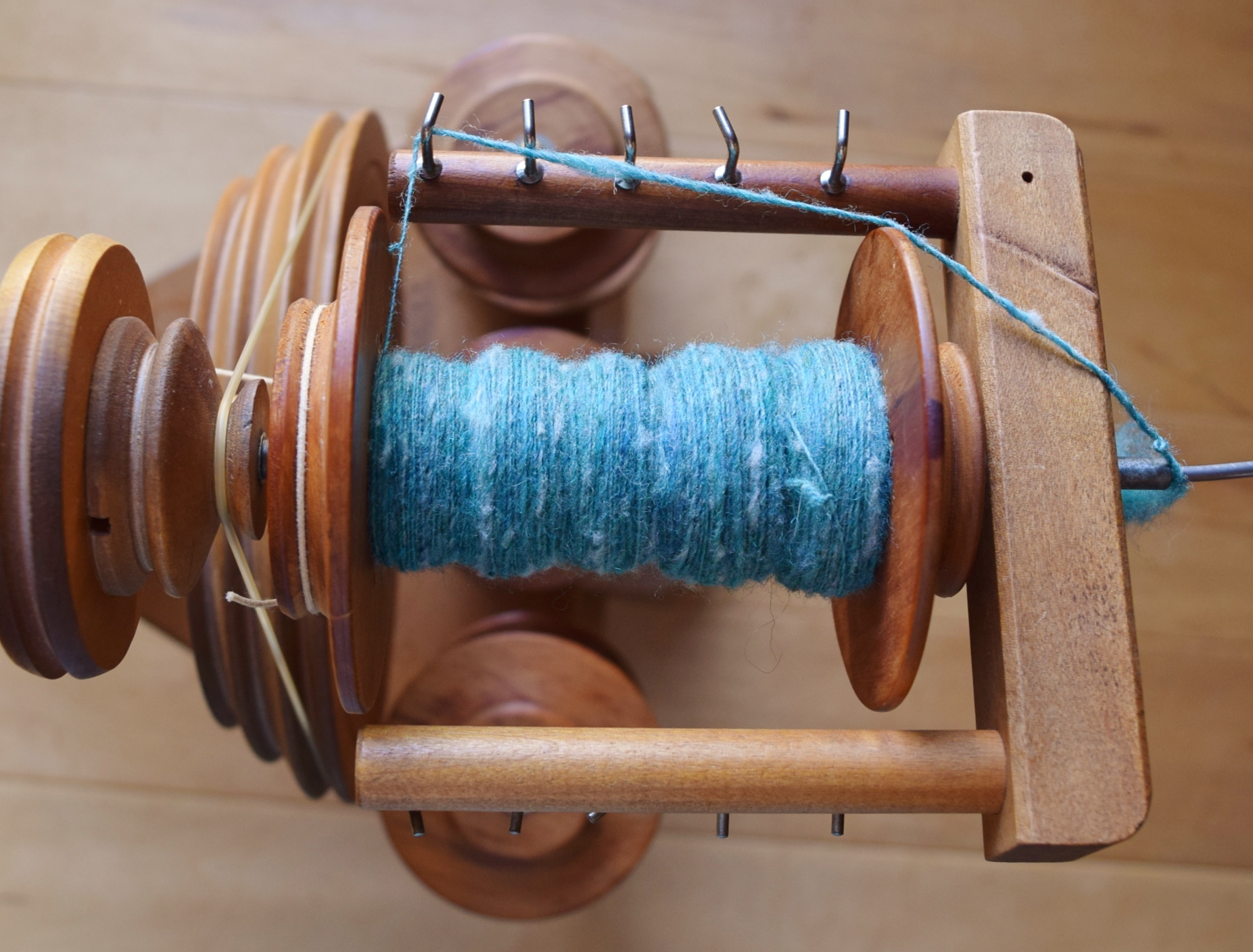
Spun

jenjoycedesign©001

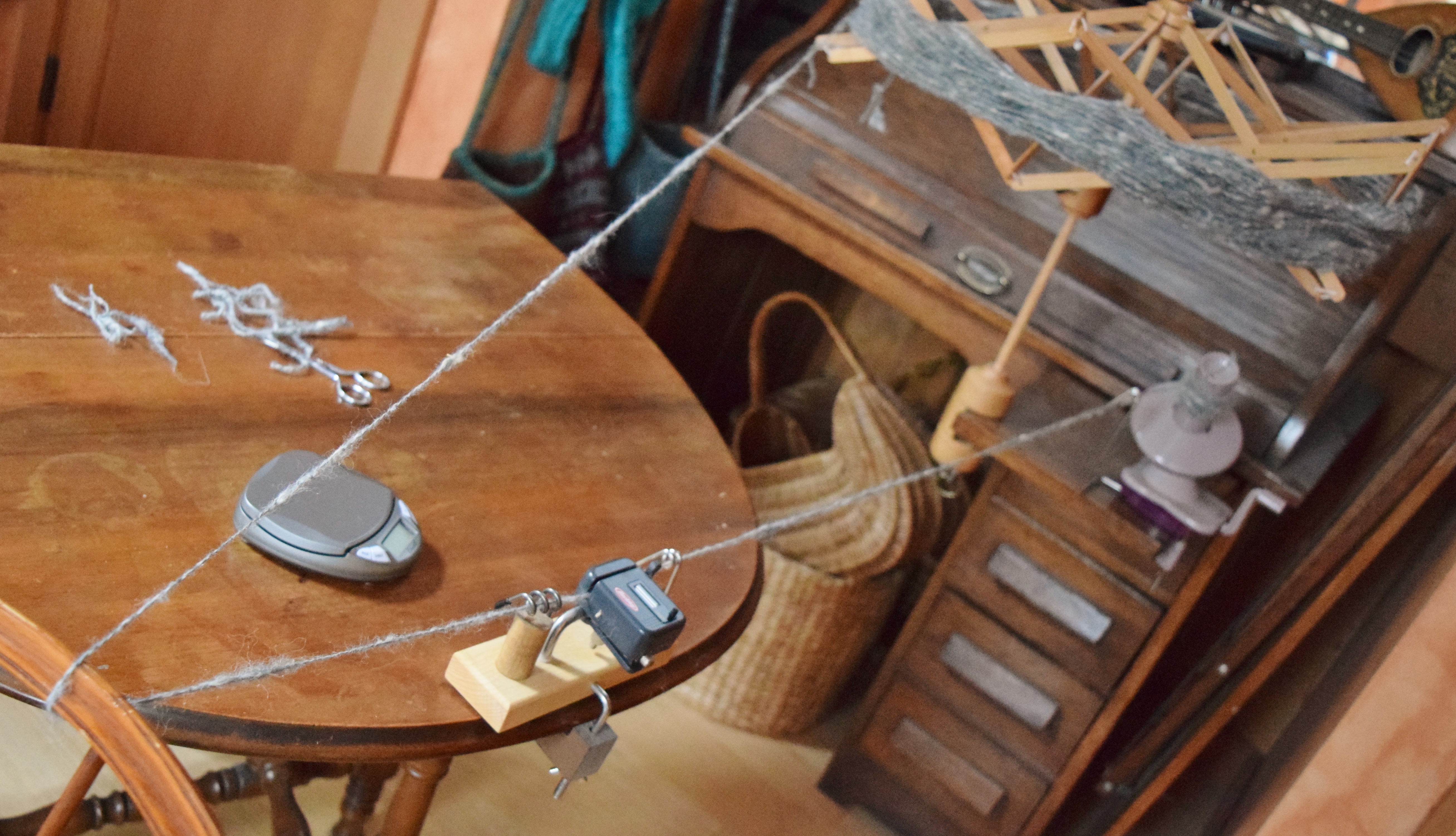
I am experiencing a bit of a renaissance in hand-spinning. I never was that much of an intentional spinner, although I am attempting to be now…. perhaps I’ve grown up a little bit? With this alpaca that I brought out of the recesses of my loft closet, I worked it from raw fleece and  in this post  I show the carding & blending process.  After spinning it up, here I am measuring & weighing the yarn to discover what gauge it is.

001

Here is what I do:  I run the yarn through a ‘winding station’, which measures yardage while winding off the skein on to a ball, then weigh the ball, and take notes.

jenjoycedesign© 003

This is about an aran weight. Getting more savvy in substituting hand-spun and I am itching to ‘paint’ again with fiber on my blending board. Recycled sari silk (yes, made from silk cloth of saris), bamboo, rose fiber… the works, and Oh! This was my most recent creation over the weekend, taking some very coarse Lincoln-Corriedale I’ve had for 30 years (from my sheep Hazel, plus another part fleece I have long forgotten where it came) , and blended it up together into a bat of 50/50 dark & white, which the white was extremely slubby (thats having little bits of wool puffs) I used that blend to layer with some ultra nice dyed corriedale roving  I recently bought, in colors amber, mulberry, and ruby, and also a little Huacaya Alpaca , and made tasty little wool sausages….

jenjoycedesign© tweed rolags

And, over the weekend, here is what I spun up…. slubby, exotic woolen spun blend

jenjoycedesign© 006

jenjoycedesign© 009

Meanwhile, the general news…

Emma is in her last days of having to endure The Cone, for the surgery she had a week ago already (to remove a low-grade sarcoma on her front leg, she will be alright, no reason to be alarmed). My nieces have started school already, Miss Seventeen is a senior this year, and Miss Fourteen is now in 9th grade!  I’m very busy presently working up two patterns to be available in a double download, and prototyped in the hand-spun alpaca!  And we’re having some gorgeous cool foggy mornings at last! Life is good.

Emma in the cone
Emma 2 days after surgery.