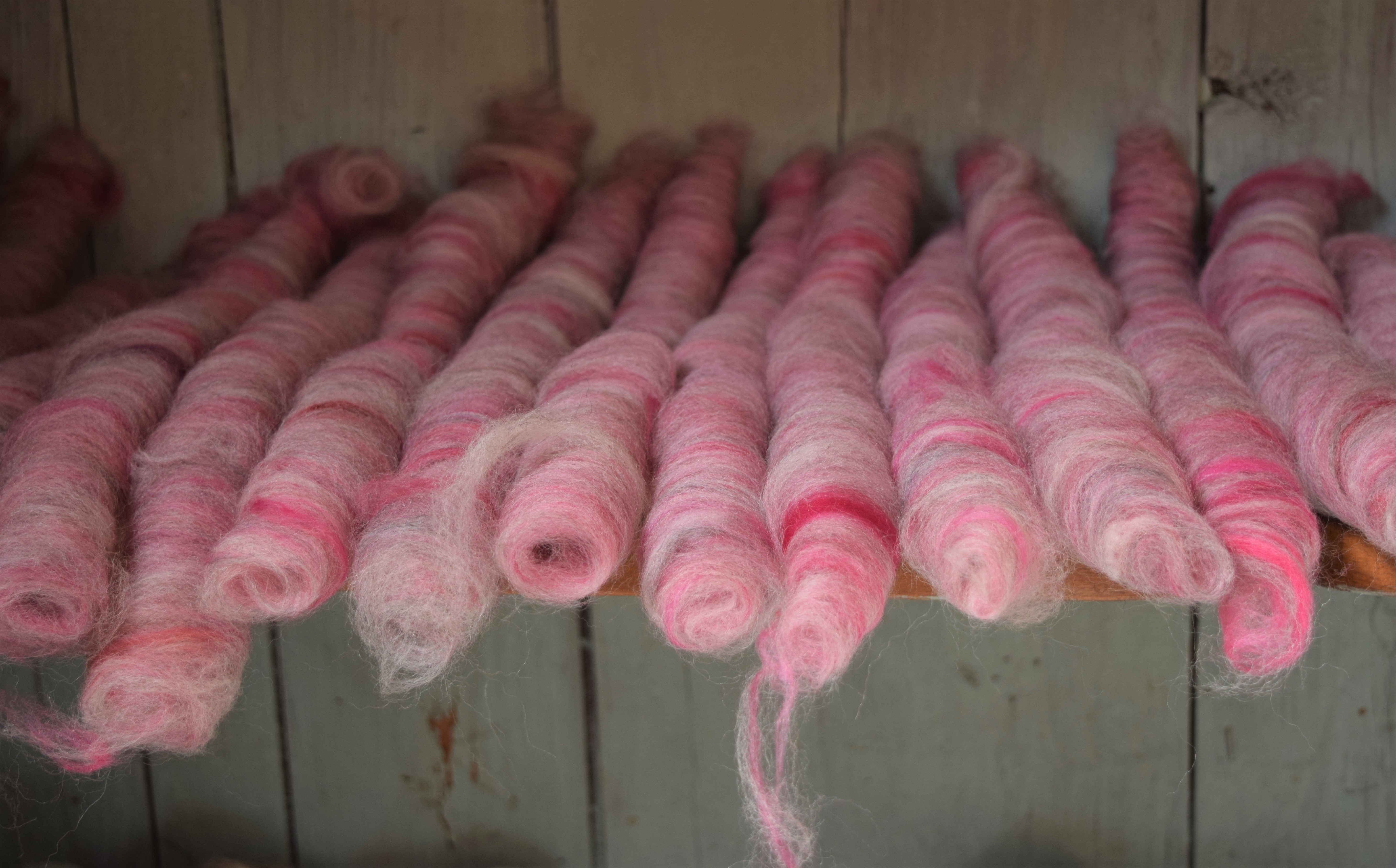
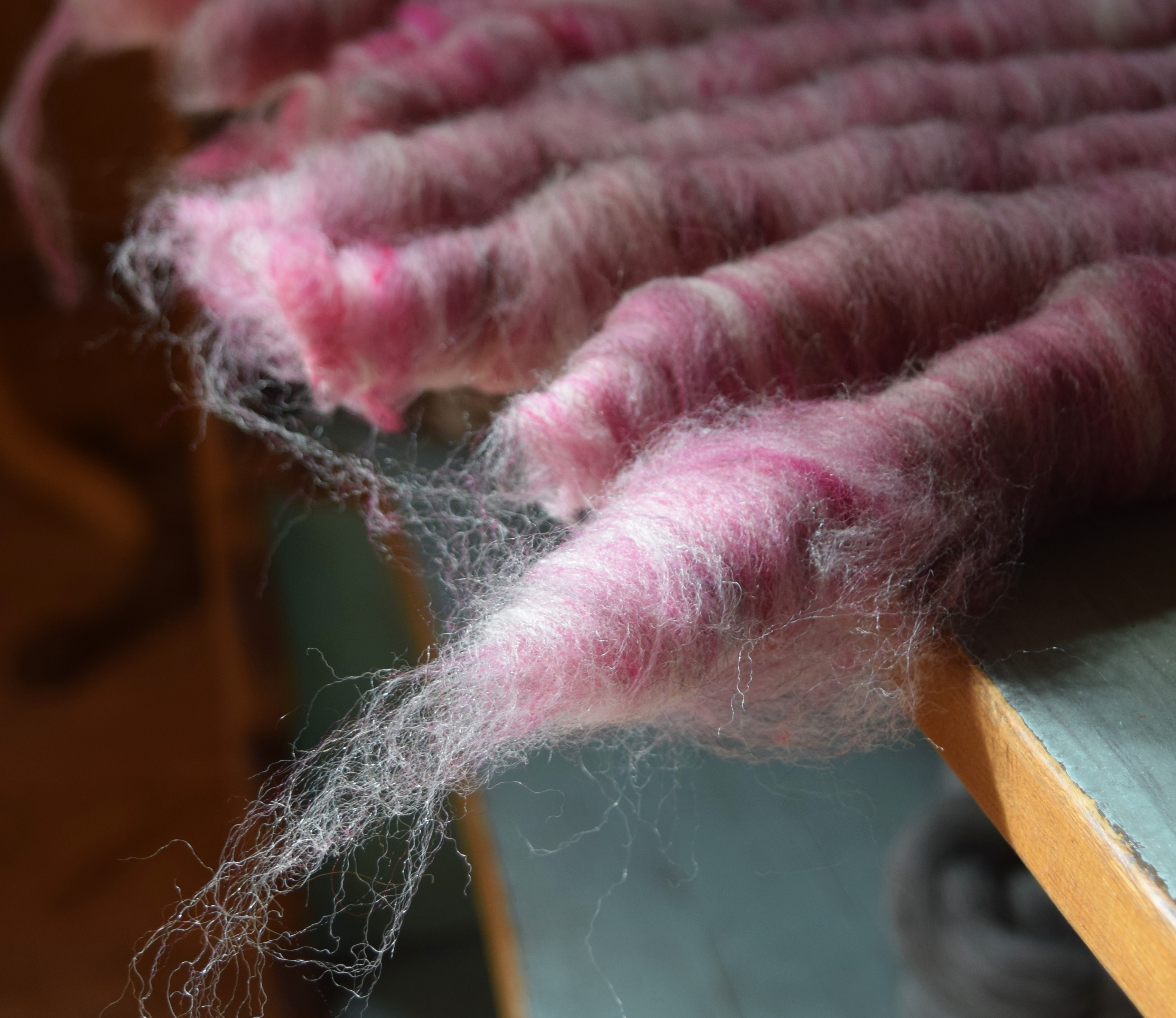
Hey look, nep clouds ! These are premixes from my new hand carders, and will be blended in with a main fiber on blending board next. They can also be spun ” in cloud ” , made into rolags from the hand carders, or can get layered on the blending board to build up a more complex visual texture. I will try a few methods to see what gives the most pleasing results (for me). For ages I have been thinking about how to go about spinning tweed yarn with colorful neps, and how to achieve the affect I want using the yarns I have in my stash. I am rather fixated on designing a yarn which has the characteristic flecks of color that pop in the final spinning, as in the traditional rustic spun from Ireland and British Isles. Anyway, this is a part 1 of a several neppy posts, and as is customary in my Tweed Chronicles. Here’s the techy stuff . . .
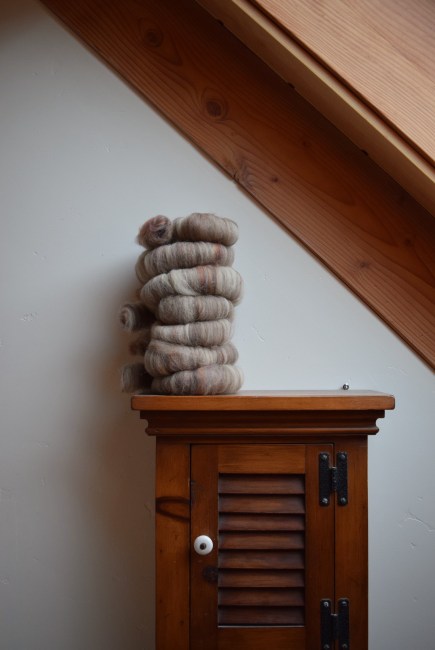
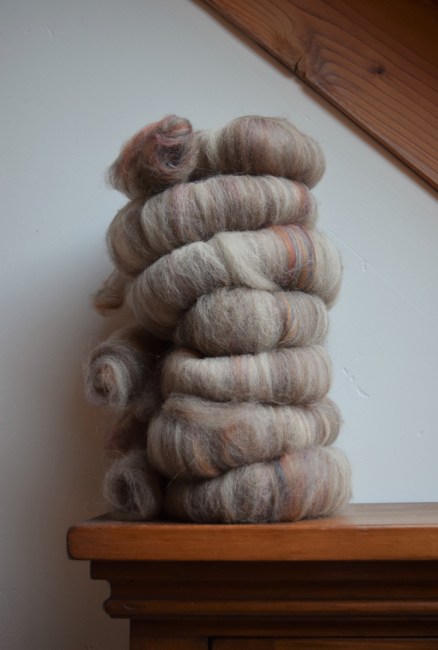
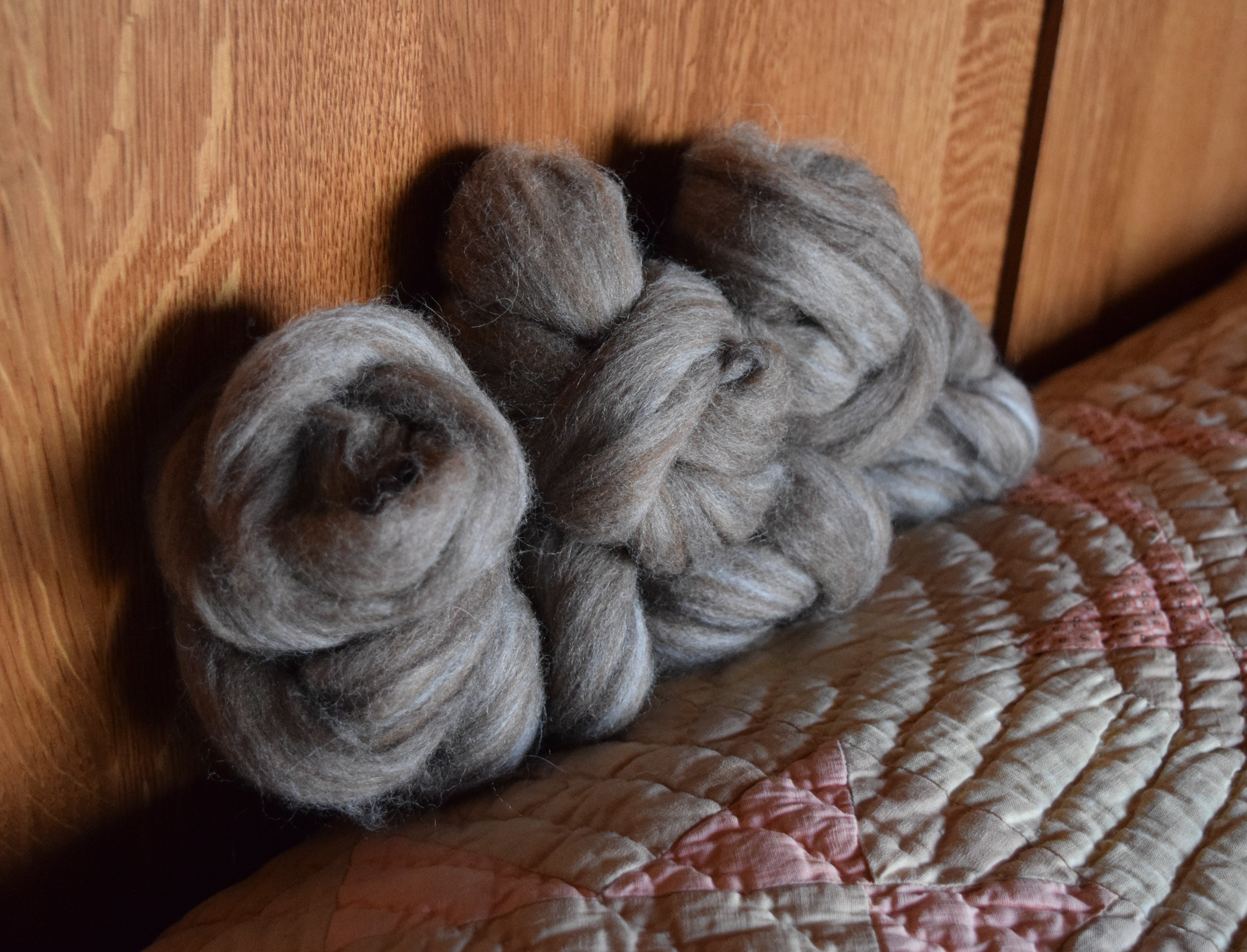
Yesterday I was blending on my blending board in the early morning light, listening to the inauguration on NPR. I had just finished the gloves design and figured I’d dedicate the meditative hours of dawn to prepare for a new spinning project. I am using up some of the mystery roving I received as gifts from spinners a few years ago, and not sure what, just odds & ends, but I figure blending together they would make a lovely 300grams of something beautifully natural looking with a teensy bit of color. I did five 60g batches layered on the blending board, of carefully divided and weighed segments, and got quite a massive pile of rolags! I am very pleased with the results, here now, the next day spinning it.
A select few rolags from the 300g pile.
I have used no particular recipe or technique as I have been documenting in Tweed Chronicles, rather, I just picked out three bags of mystery roving and layered on my blending board. I am attempting to only spin for a project in mind these days, so I scaled the total weight for possibly a vest I would like to have, so in the near future I will post again with finished yarn , and shortly thereafter begin knitting!
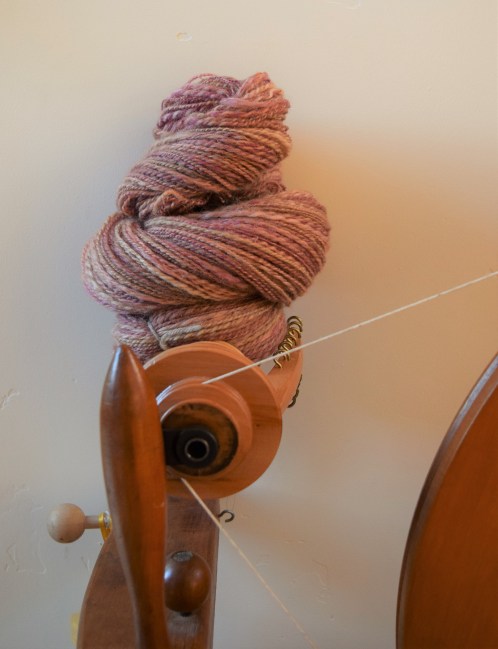
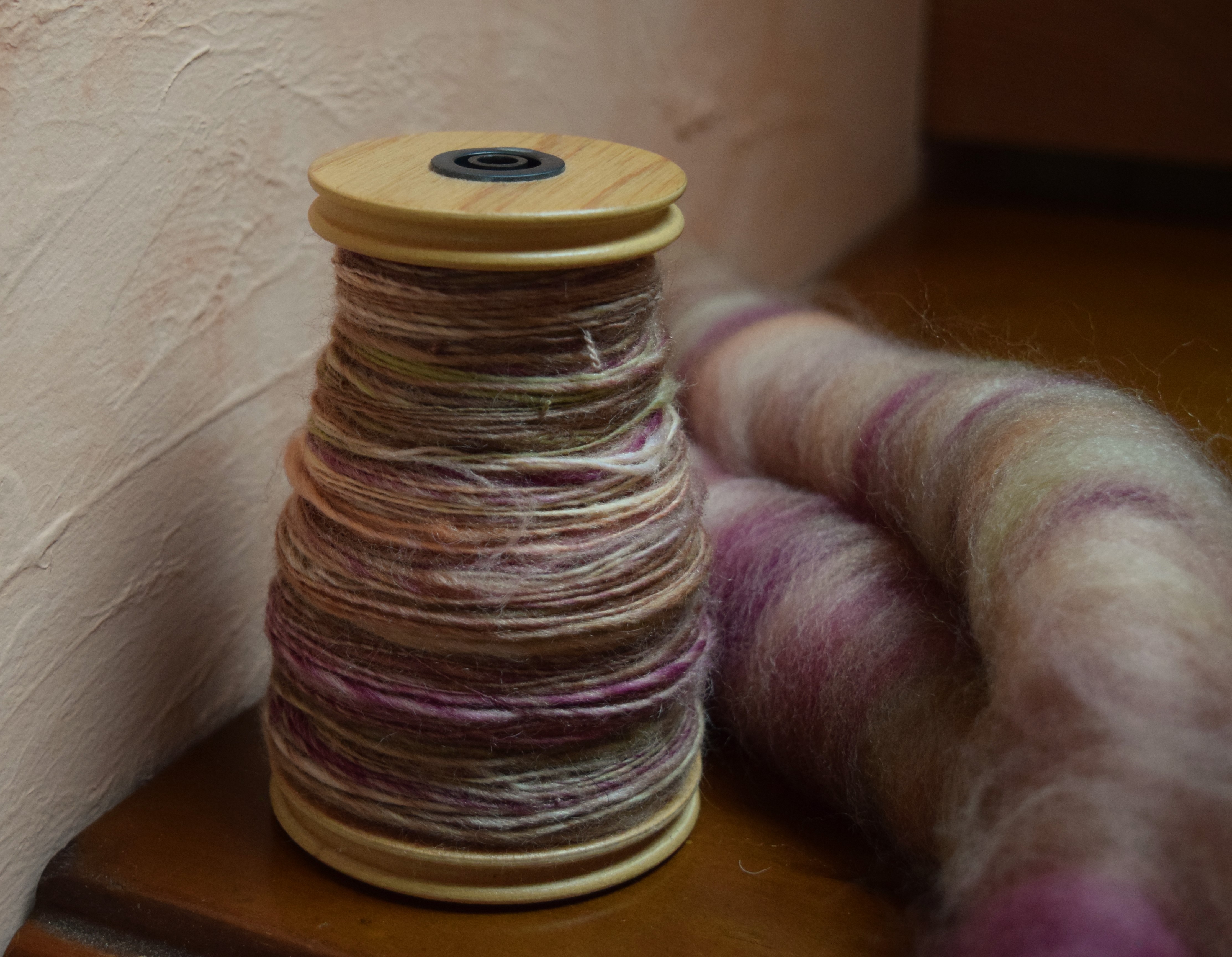
Taking a break from sweater knitting and have enjoyed this short Tweed Chronicles experiment, the Quick Mix. Just as I expected, a slightly more homogenized affect than straight off the roving, resulting in a pinkish brick fired terra cotta shade. Yet still slightly barber-pole , so I do think I could have blended it twice and had a more softer variegation. I am not the greatest spinner on the planet, because I just cant seem to produce consistent super fine singles, and if I do, the yarn often is under spun, so when I ply, I get thick and thin plied. That is okay, thick & thin handspun is a fine normal for me, because I like rustic handspun, however, I don’t like plying underspun yarn, for it breaks so much in the plying. This fiber is superwash Blue-faced Leicester, which is an excellent fiber to make into socks, even if the yarn varies from fine fingering to sport weight. If I knit a toe up format, I can figure gauge while increasing in the toe section I can adjust for the number of sts in the sock as I go. That is my thinking at least. I guess the toe-up sock with gauge substitution chart pattern is inevitable for me and my handspun yarn, so that is what I’m up to, hoping to knit this up from the toes sometime in the next few weeks, into just a plain & simple sock form. I’ll keep posting on this as I go along.
♥ ♥ ♥
Today is a beautiful day out and tomorrow is going to be dumping a lot of rain, so I believe I’ll go out for a walk to the peak, and then settle in to make some progress on eldest nieces’ sweater that I really want to finish. My primary goal presently is to get into good walking shape and so off I go !
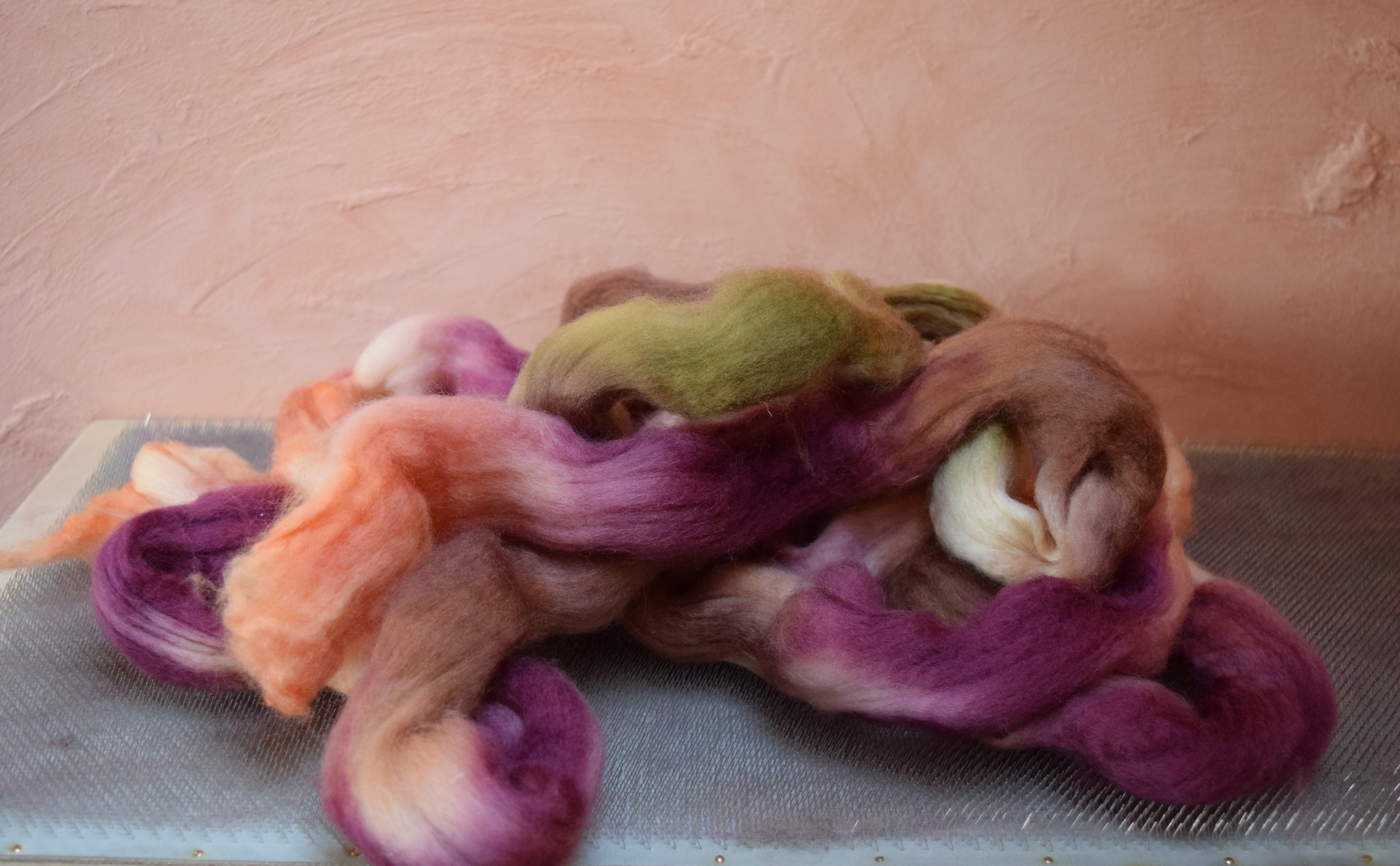
I wanted to try spinning my first ever sock yarn, so I looked in my basket of gifted fiber, and chose some lovely hand-dyed superwash Blue-faced Leicester fiber in beautiful Autumn tones. I wanted to spin this fiber without the barber-pole affect that one often gets when spinning straight from the dyed roving, but a softer and slightly more homogenized result. So you know what that means, I have an excuse to pull out my blending board and do some carding!
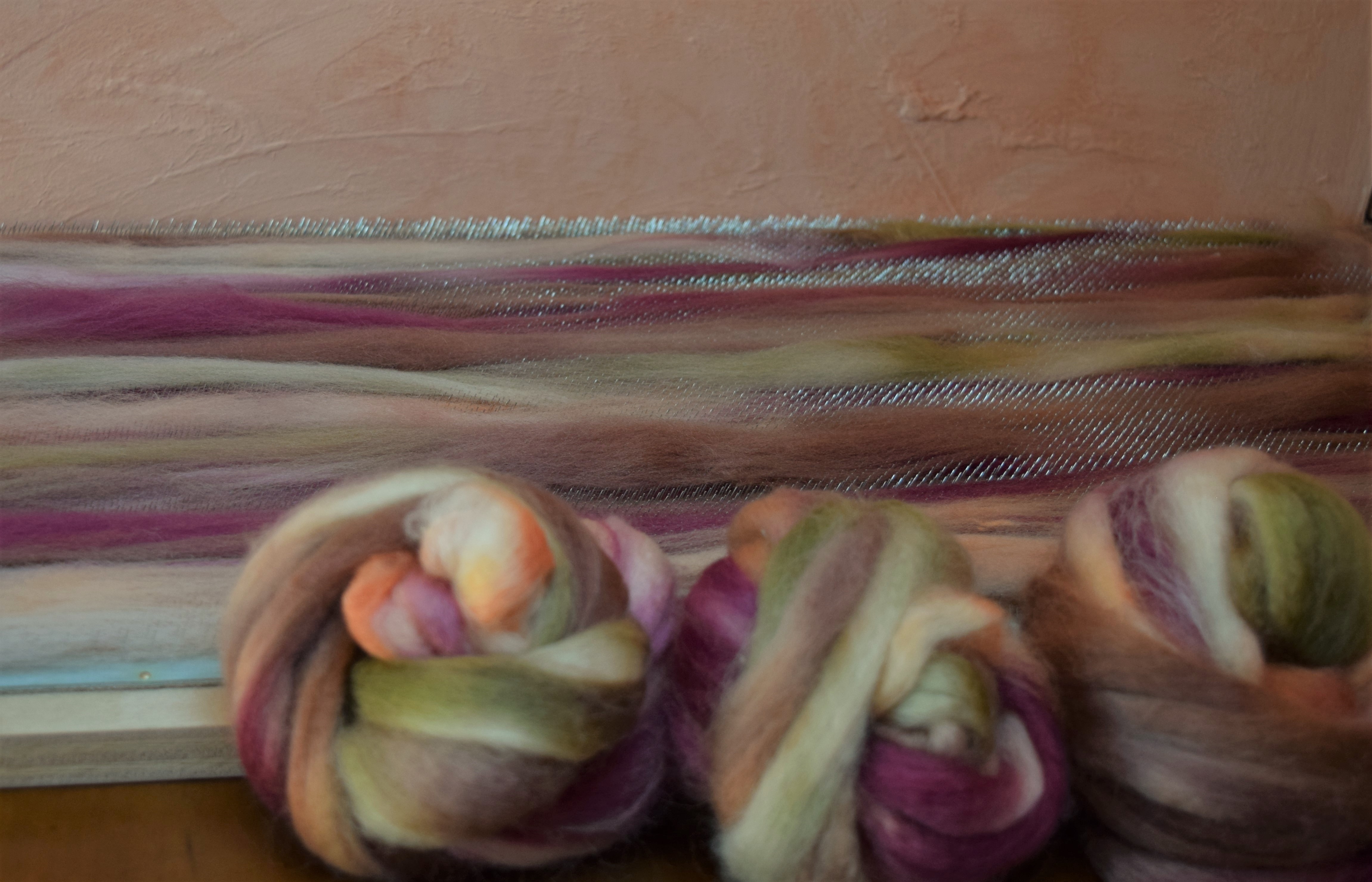
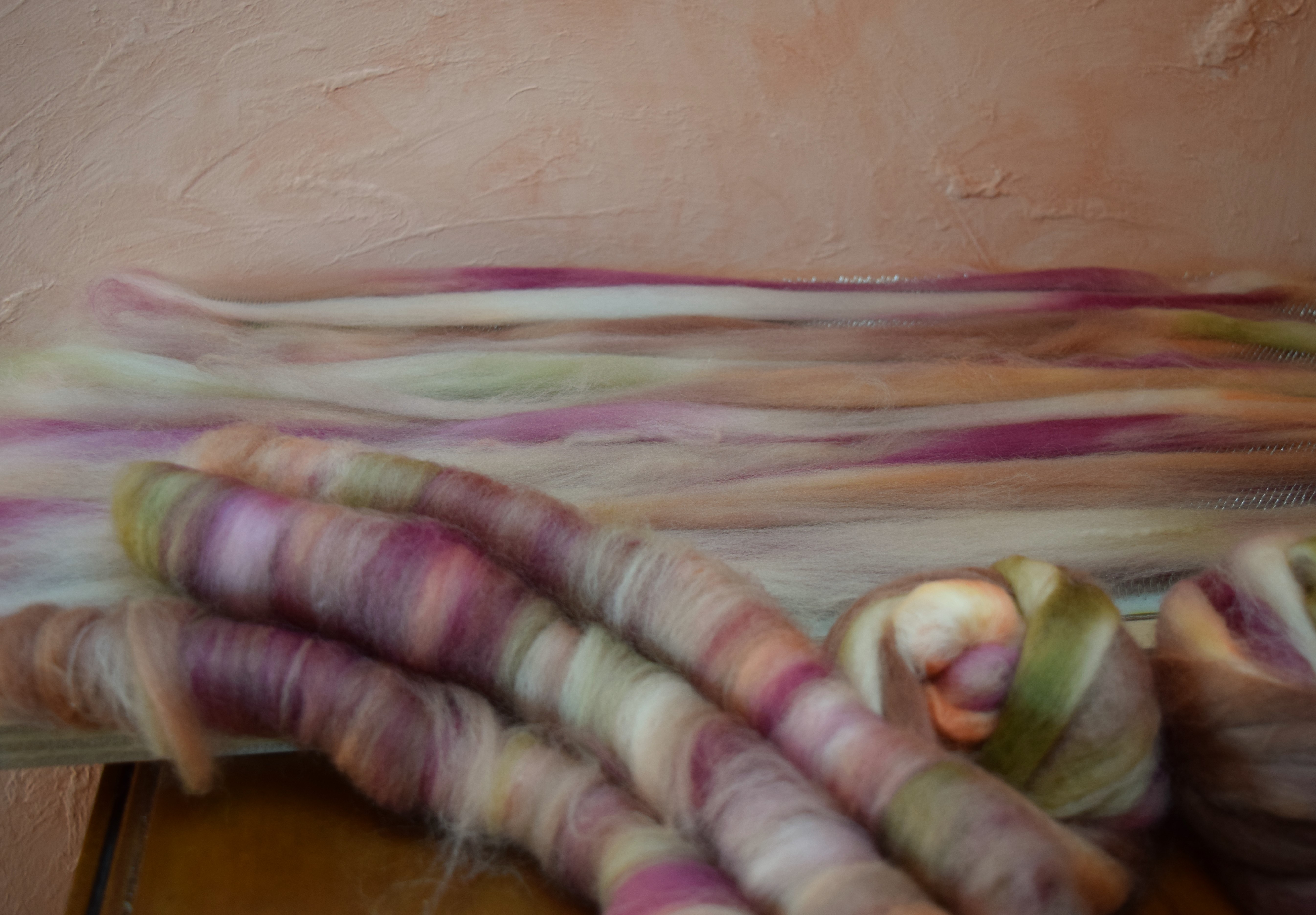
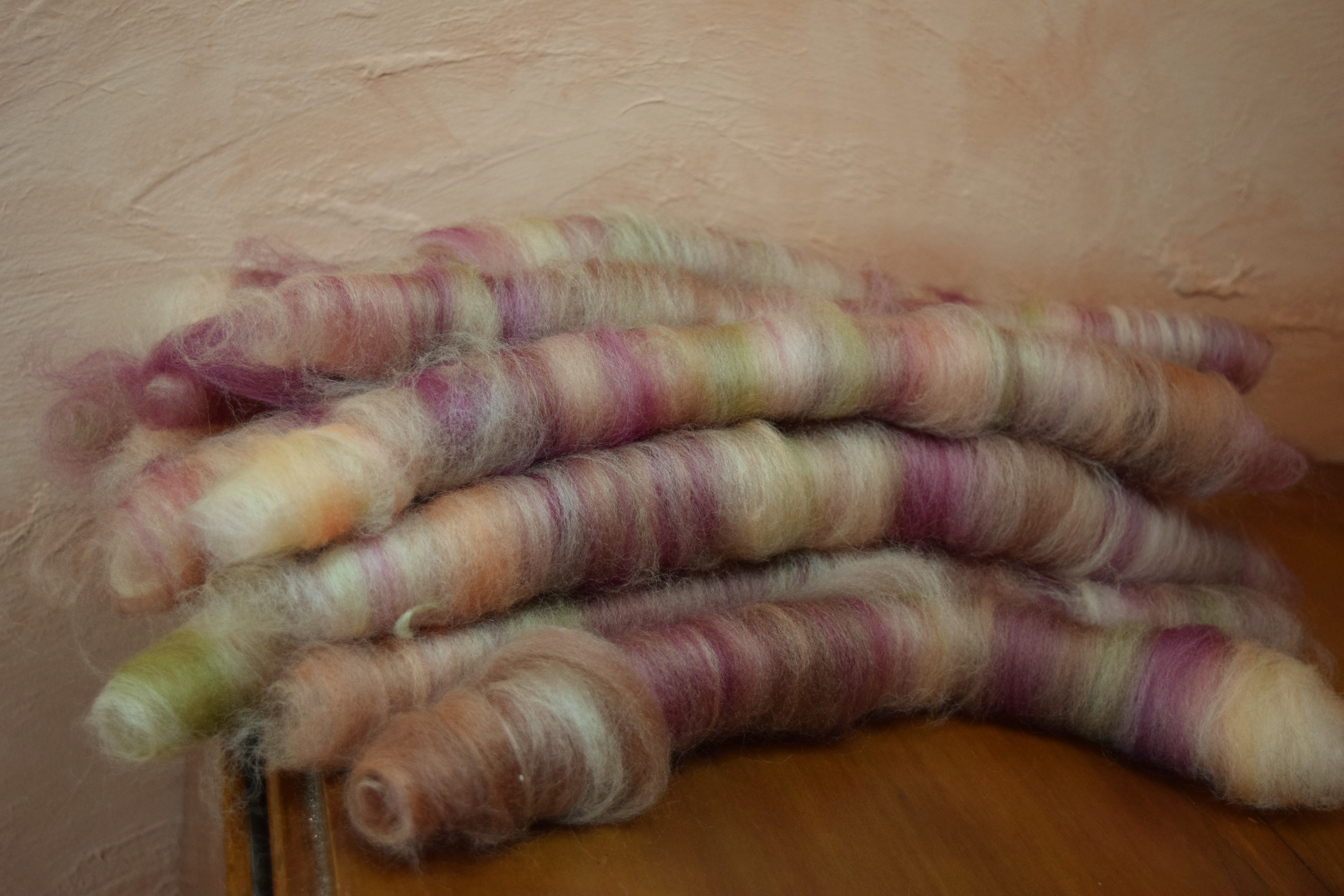
It is much easier to do a quick mix from a dyed braid, than to haul out all my separately dyed colors, and although it is a little less controlled, offers a bit of an element of surprise, and is really just fun, as the colors are all there in the braid. But one must choose the braid wisely, for each time I card the fiber from the braid out on to the teeth of the blending board, the colors fuse more, sometimes dramatically. Sometimes very quickly can depart from vibrant splashes of color into a muddied neutral appearance of one shade, especially if there are any complimentary colors in the braid. Also the colors will blend even more after plying the singles. So this time I am only going to fill up the teeth on the board just once, and draw off the rolags to spin. And here is what I did …
(click 1st image to go to slideshow)
♣ ♣ ♣
Techy stuff …
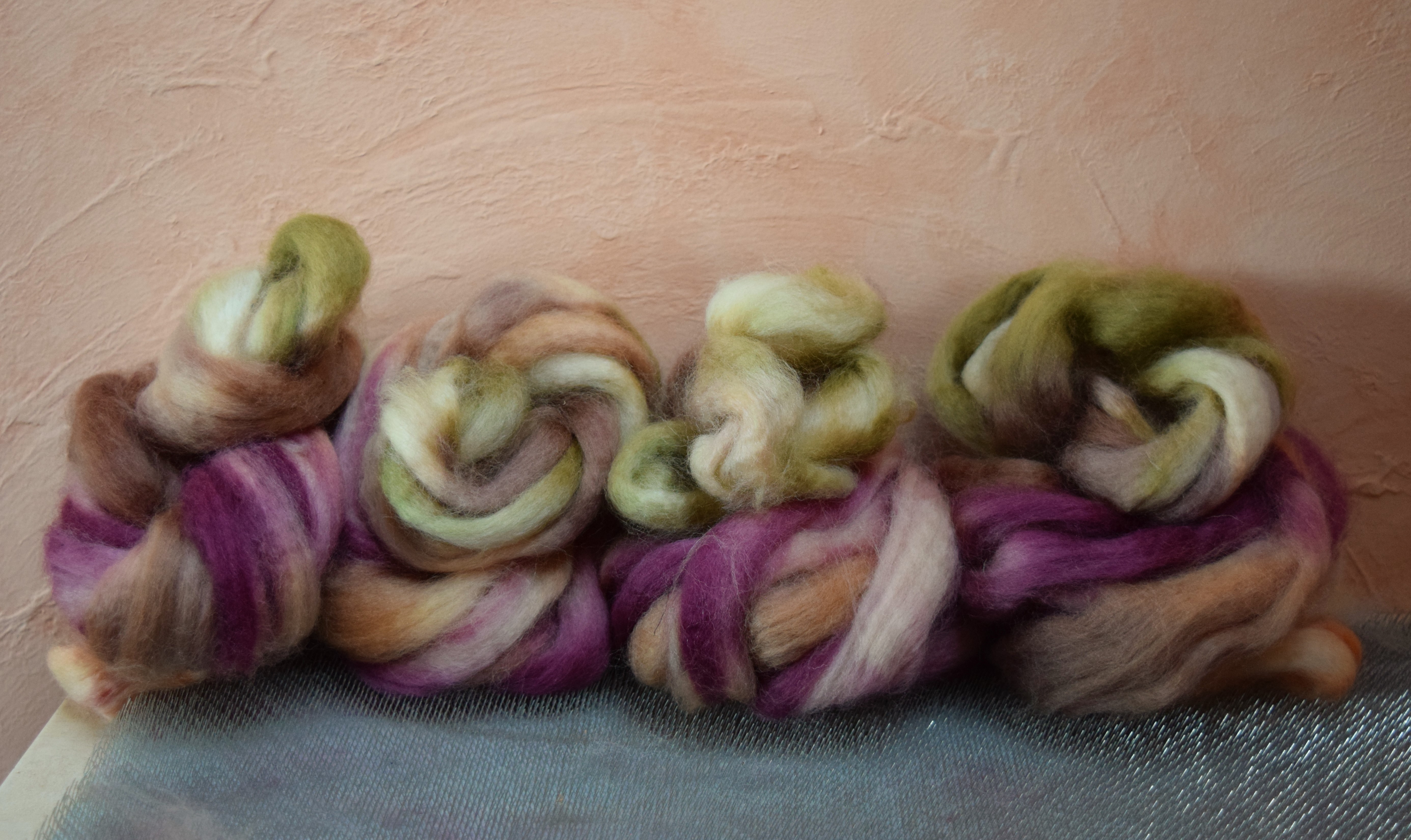
My extra long blending board holds a lot of fiber, but to play it safe, I made 4 batts approx. the same. I have 100 grams of fiber, and I want to get four 25 gram batts, drawing off 3 fluffy rolags each to spin.
First I divided the braid length-wize into half, then each half into half, so I can get 4 lengths in the same dyed sequence.
When layering on the board, I started all four batts with the same end, and layer up in the same way, basically repeating every motion four times.
Watch this space for my plied finished yarn and sock project, which I am guessing will end up a rather muted colorway, close to a shade of terra cotta. See all posts in Tweed Chronicles
What I would do differently next time:
Given that one 100g braid could be done in two batts on my extra long blending board (24″ x 12″) which can hold comfortably 50 grams of fiber I would have not bothered to split the the braid into four lengths, but only two, and fill the teeth closer to capacity twice, drawing off more rolags each time. This would have had the same affect but much faster, and when I think of the whole theme of this post ” the Quick Mix” it makes more sense. However, with a conventional smaller blending board 12″ x 12″ to 18″ , four times would probably be better, as I’ve demonstrated above.
I am more than half way through my fiber preparation, and I am really happy to say that I have made a breakthrough with the blending board! In the last two years I have been doing a lot of fiber blending experiments but it seems recently I’ve noticed my results are overly compact rolags, so much that spinning has been difficult. I couldn’t even see why I ever decided trying to spin from the rolag method or why I thought it was better.
Backstory: If you see my post from August 2017 “Woolen or Worsted?” , I muse a little bit about the preparation of the wool & that I noticed how it affects the end result of the yarn. Whether taken off the blending board in one big batt, and pulling apart into smaller sections, or using a ” diz ” to gather a continuous roving from your carded fiber, or like I am doing here, making rolags around two dowels from off the blending board, in a perfect world, a spinner should try all ways I would think. I am aiming for a bouncy airy “woolen” spun yarn, and why I’m practicing spinning from rolags.
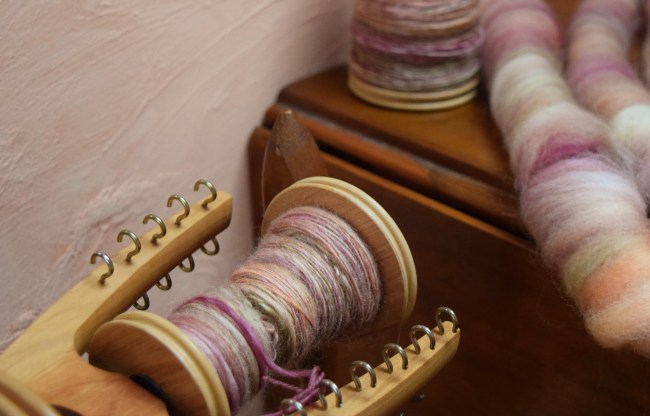
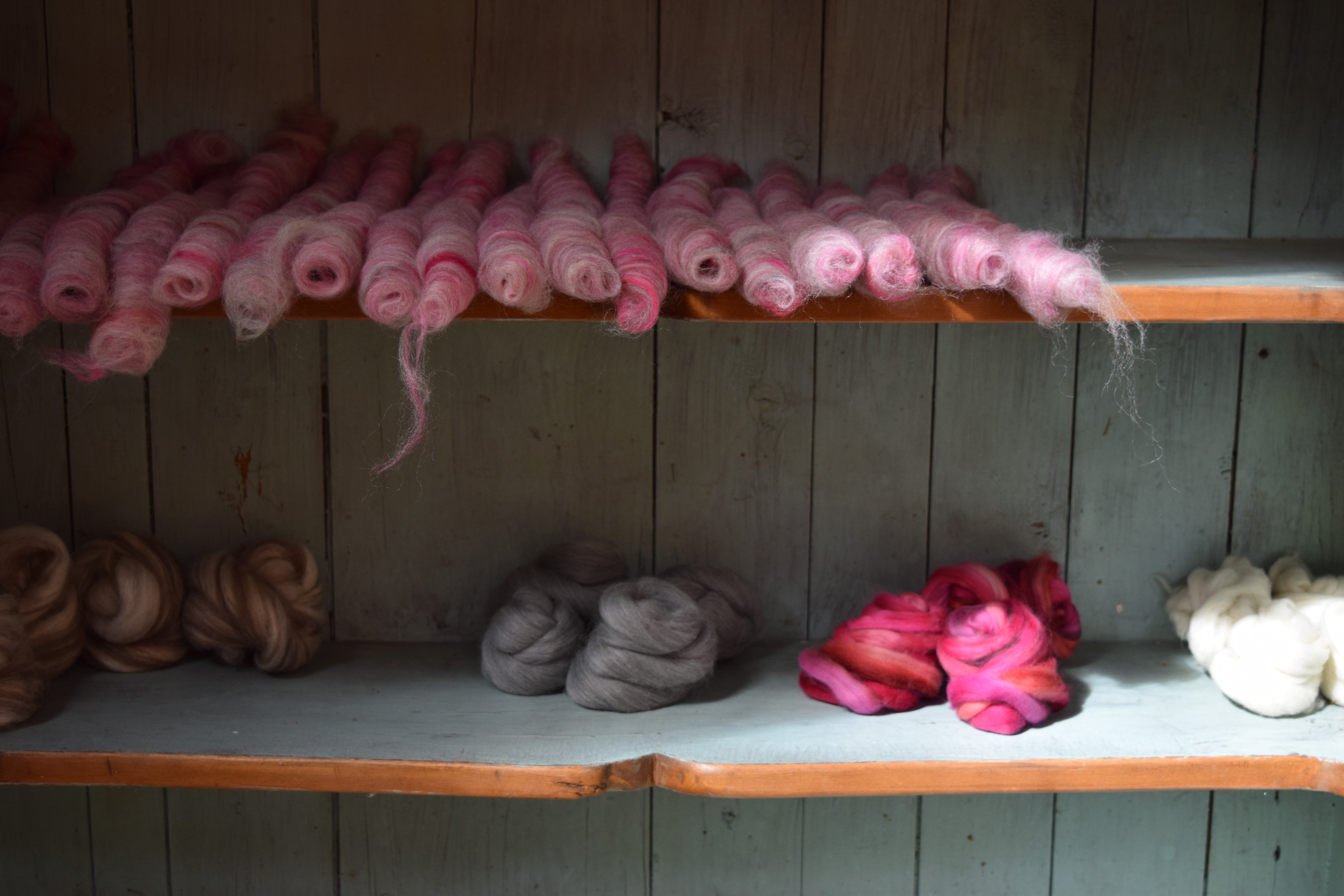
After the first 50g color test of my 500 gram project of English Rose Tweed blend, I realized I may have a technique error. I remember back in my first blending projects , especially this one, blended with super fine & fluffy ingredients, and how light & airy the rolags were, and so very easy to spin. So I tried a change with this batch; I lifted more and pulled over the teeth less. That’s it! Just more lifting when rolling the fiber around the dowels ( I use slick aluminum needles) to make the rolags, and less pulling, and that took a lot of friction out of the process. I guess my technique had morphed without my thinking about it, and over time I was working the rolags with a massive amount more friction. Well I had a big ” duh ” moment, and now I am conscious of this I am getting fluffy frothy whipped woolly confections again, to spin later. Later that is, when I’m through blending all of the rest of the carefully measured ingredients to English Rose Tweed. Committing to the long-haul of a big project is something I haven’t done in a long long time. This is work I tell you! But just look at these beauties….









 I am more than half way through my fiber preparation, and I am really happy to say that I have made a breakthrough with the blending board! In the last two years I have