Rug No.2

It has come. The summer in its scorching moods and light saturated glaring afternoons, where the heat is reason to be out in the early mornings just to get a breath of fresh air, to water the plants, fill the birdbaths, and take Juno for a scamper. Then it is back inside, to stay busy beneath the posts and beams of the house, sheltering in. The solstice has already long passed, the days are shortening already, at a dizzying rate, it will soon be Autumn again, and each year older I become, the pages of my calendar flip faster than I can write anything down… the days, near empty boxes on pages turning… and my blog goes quiet for weeks upon weeks now. My focus has been elsewhere, and for a long time. I feel this morning though, as I have woken not only to a new day, but a new clarity, a new trust in myself.

In the new year I put together the Brooklyn 4-shaft table loom, and I finally began to weave very fine narrow cloth, satisfying a craving that goes beyond reason, lost to its gravitational pull, I was sure it was me married to fine linen weaving for the rest of time (Cloth No.4) . Even though everything, and in all directions, is part of the creative experience, adventuring so far out in one direction, before recentering and then again drifting off in another direction, like a pendulum. I wonder, is this the way of the artist? I am longing for a mid-summer reset at center. I confess, there are times I’m just too embarrassed to post about yet another diversion, that I have become more quiet, unsure of my impulses, I seek the stillness, worried that as soon as I put it into words, the words already begin to change inwardly.

Soon we will (finally) be putting in the finish floor for our rebuilt home (but not too soon, hopes Juno), and in a bit of anticipatory celebration I have decided to weave rugs. Lots of them? Reminiscing in the archives to November of 2024, I had recently woven my first sakiori from torn cloth, and then completed my first floor rug, feeling certain these were to be the first of a huge series where I would refine my technique. But I had not woven another until now. Reconstructing worn clothes into bit of improvisational rag weaving of sakiori cloth and rugs, while at the same time weaving fine cloth requiring intense focus, should keep me on my toes for the remainder of the summer!
♣   Weaving Notes  ♣

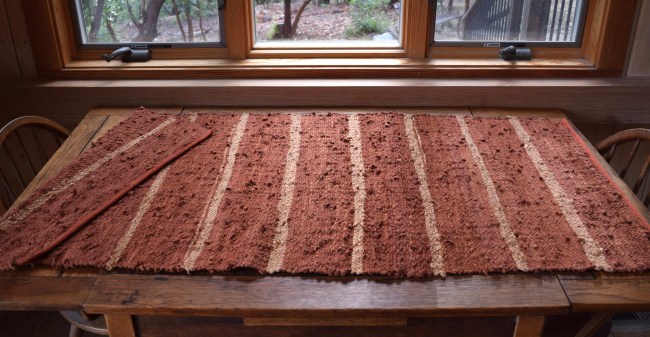
I wove a third of the rug with no particular pattern in mind but to make stripes, which I think was maybe a bit cliche. I did however, make intentional “mistakes”, laying down a few colors out of sequence, and making some stripes fatter than others, going for that folk art appearance. The effect was perfectly achieved when the faded areas of the fabrics, from drying on the clothes line inside-out in the sun, over time create a variegation of color, sought-after in folk textiles.

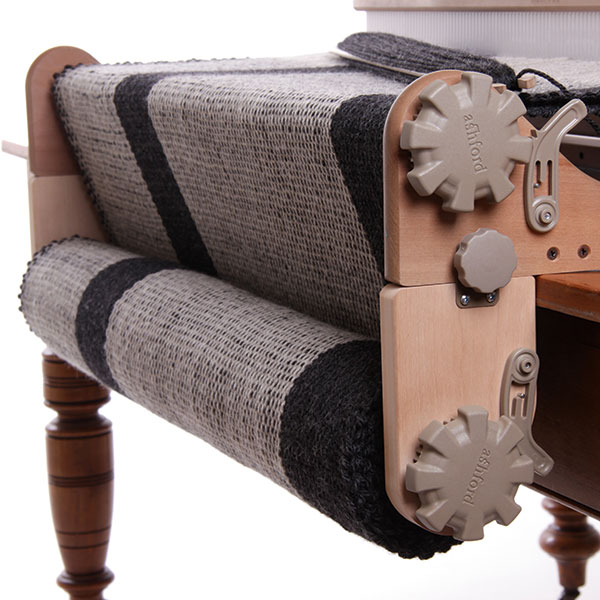
Oh, and it is definitely worth mentioning that weaving a rug on a rigid heddle loom needs a bit of specialized extras — specifically a weighted beater to really pack down the weft (the plastic reed is only to change sheds, not to beat anything) , and in my opinion the Ashford Freedom Roller is essential for the bulk that builds up in no time on the cloth beam.

The actual weaving notes are minimal for this project, as I was improvising through the whole thing, and not taking notes. Here is what I remember…

  • Yarn: Warp: 8/4 cotton warp yarn from Maurice Brassard, in color Rouille. Weft: Linen strips cut from many pairs of 100% linen pants, ranging from 1/2″ to 1-1/2″ , creating a thick-and-thin appearance, from spiral cutting up from the hem of the legs, over side seams and patches, going with the rustic nubby effect.
  • Loom: Ashford 32″ Rigid Heddle Loom with Freedom Roller attachment.
  • Warping method:  Direct warp method, double threading from back apron rod, through front to peg = 110″ , which was a rough guess to be more than long enough to use up all the terracotta linen strips. Wound on to back beam and finally threaded 1 in each hole and 1 in each slot. Tied off on to front apron rod for weaving.
  • Number of warp ends: Approx 182
  • Reed: 12.5 dent, but threaded every other hole/slot to create 6.25 dents per inch.
  • Width in reed: approx. 29″
  • Selvedges: Used a temple to keep width in reed.
  • Finished:  I didn’t want fringes, so I planned to hem. Wove the first and last 2″ woven in warp thread, packed down with weighted beater created weft-faced, stitched a rolled hem. I should have woven first 3 inches and packed down tight with weighted beater like I had at the last 2″. Measures 29″ wide by 66″ long unwashed.
  • What I will do differently next time: Cut the strips 1″ consistently, weave the warp thread header longer and pack down with fork for a tightly woven rolled hem. I will make a very minimal weavers angle when laying in the weft, for fear I was too dramatic with this one. Also, I really think for linen rags, I would like to use linen warp.

g(love)

I have just finished another pair of gloves from my new pattern collection and let me tell you, these are completely addictive ( and I must cast on for another immediately! ) This pattern collection is great for using up stash of many weights (gauge substitution for gloves from light worsted to very fine fingering weight) , this short cuffed pair was knit from dk weight, and used less than 40g of yarn. It was once a sock that never had its sock-mate knit, what they call “second sock syndrome” . . . so I put the lonely sock out of its misery.
Pattern: Drawer Full of Winter.

Yarn: Rowan Felted Tweed dk – color “Watery”

Ravelry details: HERE

All posts in this series

Artful Patches

jenjoycedesign©014

These days when I take a needle & thread to mend,

I attempt to do something artful.

jenjoycedesign©004

Becoming intimately involved with warp & weft in the fabric of something that you wear on your skin is beautiful,

and maybe even a little bit essential.

It is such a novelty these days it seems,  to have any skills at all in mending.

jenjoycedesign©002

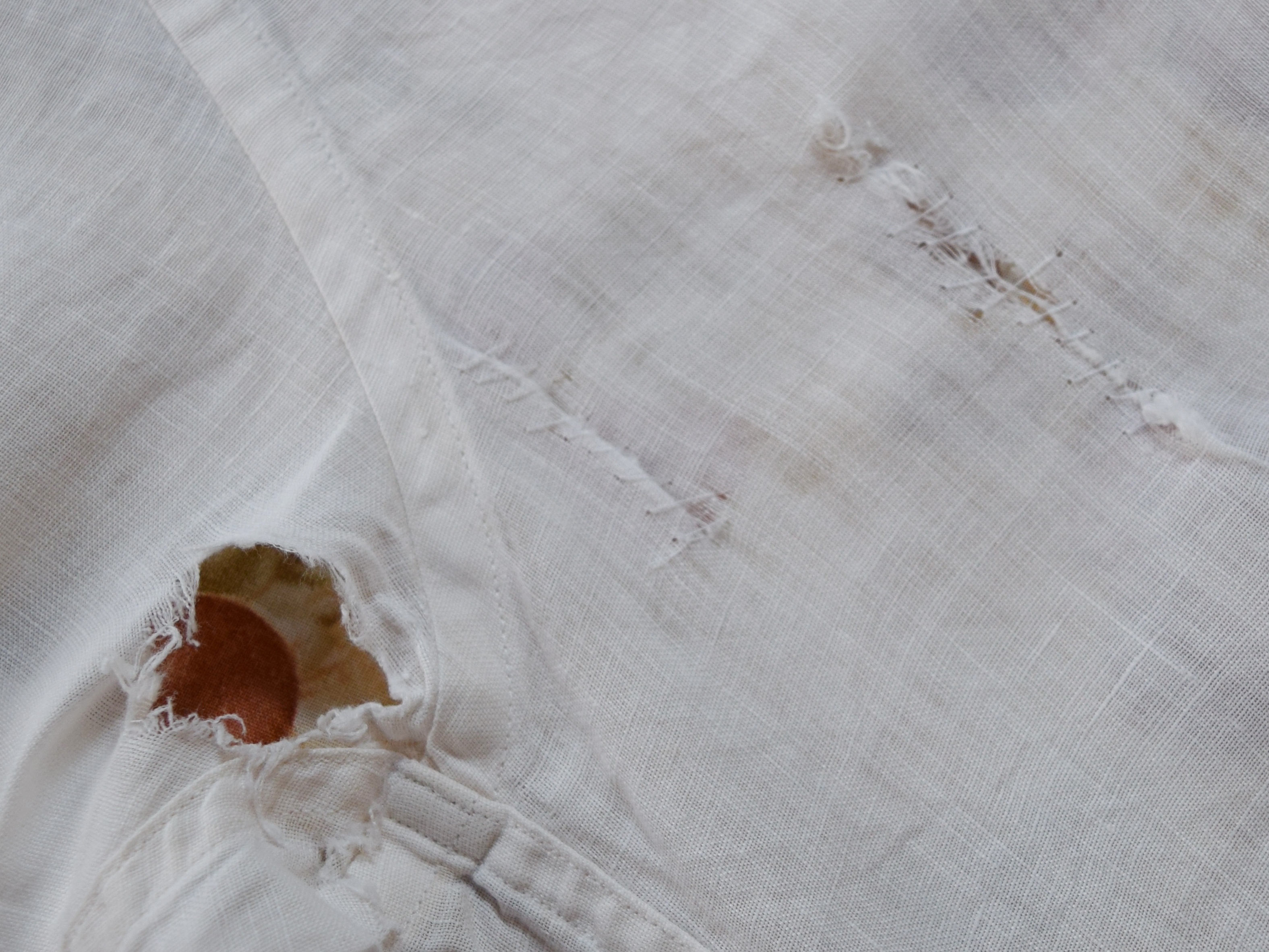
Do you recall this  linen shirt make-over from nearly two years ago?  You might recognize the collar re-do,  and already I have nearly worn a hole in the linen,  and this is just a fun patch job of it, although the white-on-white is not really easy to see the detail, especially in this early morning light.

I have a second shirt I’m patching here,  that is full of holes, and I am using it to practice my new ‘quilt patching’ technique.

Here is what I do:

  1. Whip stitch hole shut, aligning grain of warp & weft  threads as much as possible.
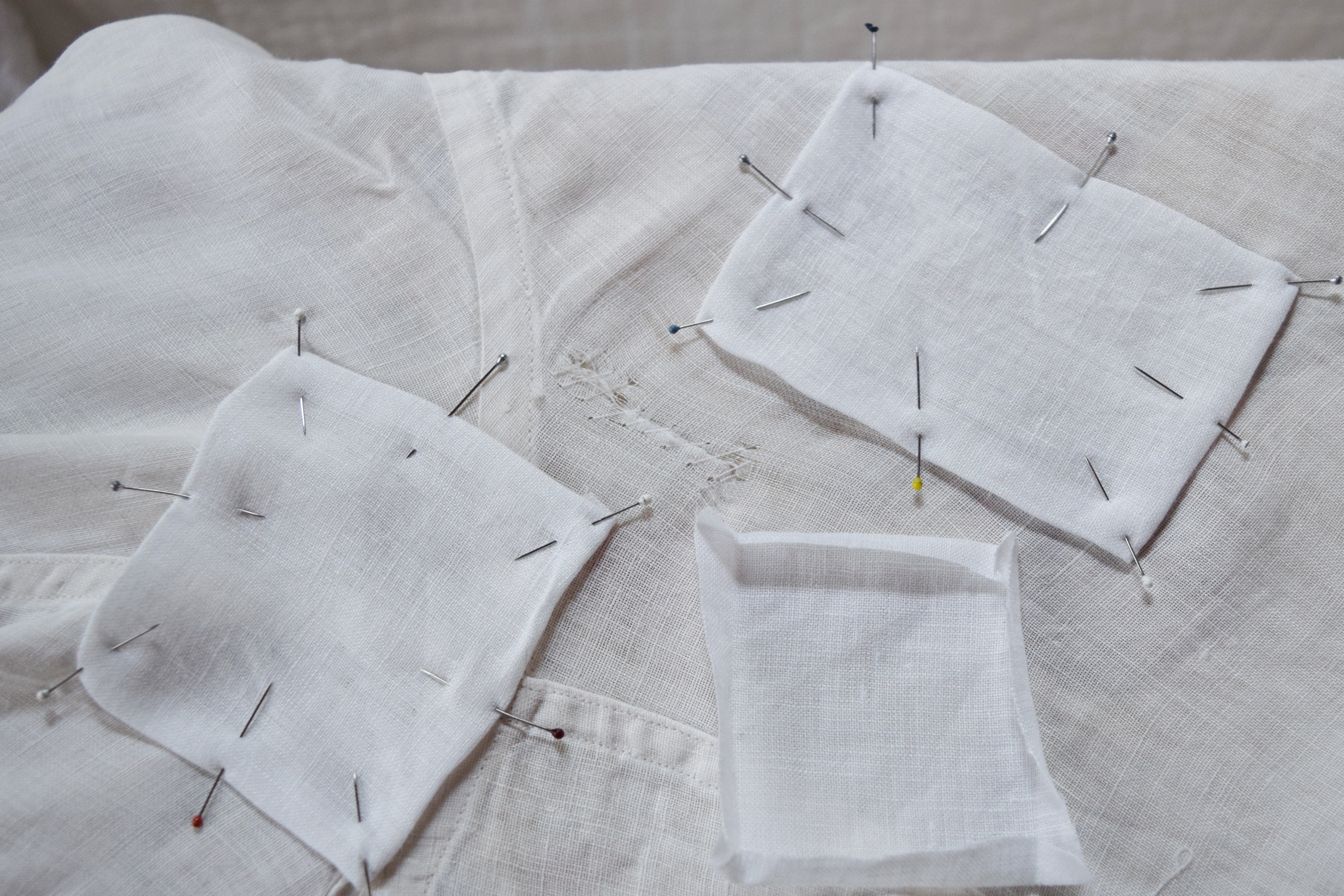
  2. Cut squares of new fabric on the grain, big enough to fold back up to 1/4 inch hem on all edges.
  3. Iron all edges to fold in, and pin to garment with care to aligning grain of fabric with both garment and patch.
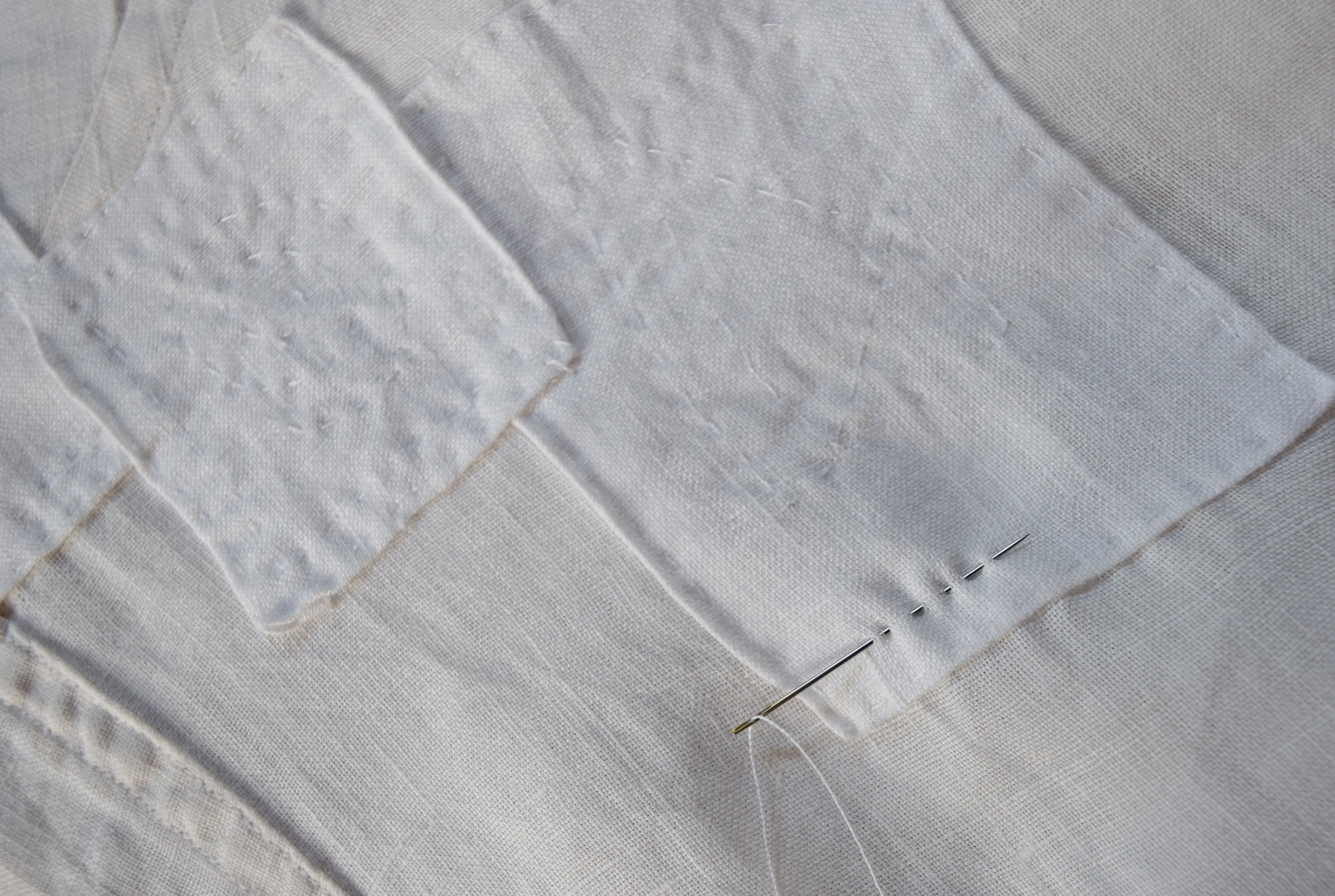
  4. With a simple running stitch, sew as close to edge as possible, then again, artfully fill in the patch with shapes, ‘quilting’ the patch against garment, which improves wear of patch as well as looks good. Almost as if you stuck on squares to quilt for the pure craft of it!

Quite a hash of patches, but it makes the shirt all that much more of a treat to wear again!

jenjoycedesign©017

Just in case you’re curious, you can see all posts “New From Old”  HERE (including this one, but scroll down!)  This category has grown over the years, sharing  artful mending & upcycling that I have done, where even I go deep into the warp & weft and try my hand at difficult weave darning.

I hope you try the quilted patch on one of your holey shirts, and see how useful as well as lovely a simple running stitch can be!

jenjoycedesign©012

new from old

jenjoycedesign001

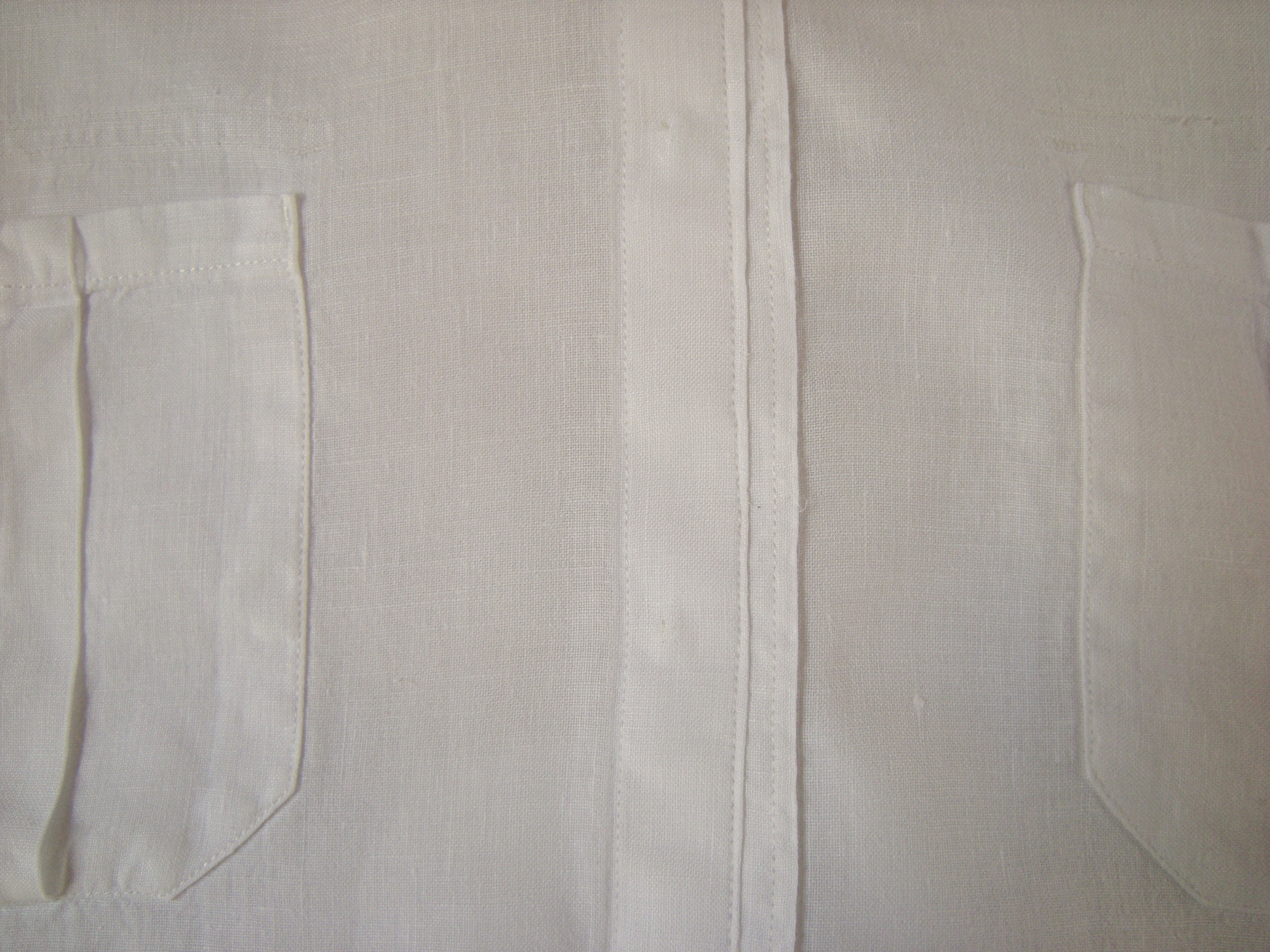
I just took scissors to another thrift shop mens linen shirt, and made it into a loose draping toss-over shirt with the original cuff placket still showing after I cut off the cuff.

jenjoycedesign

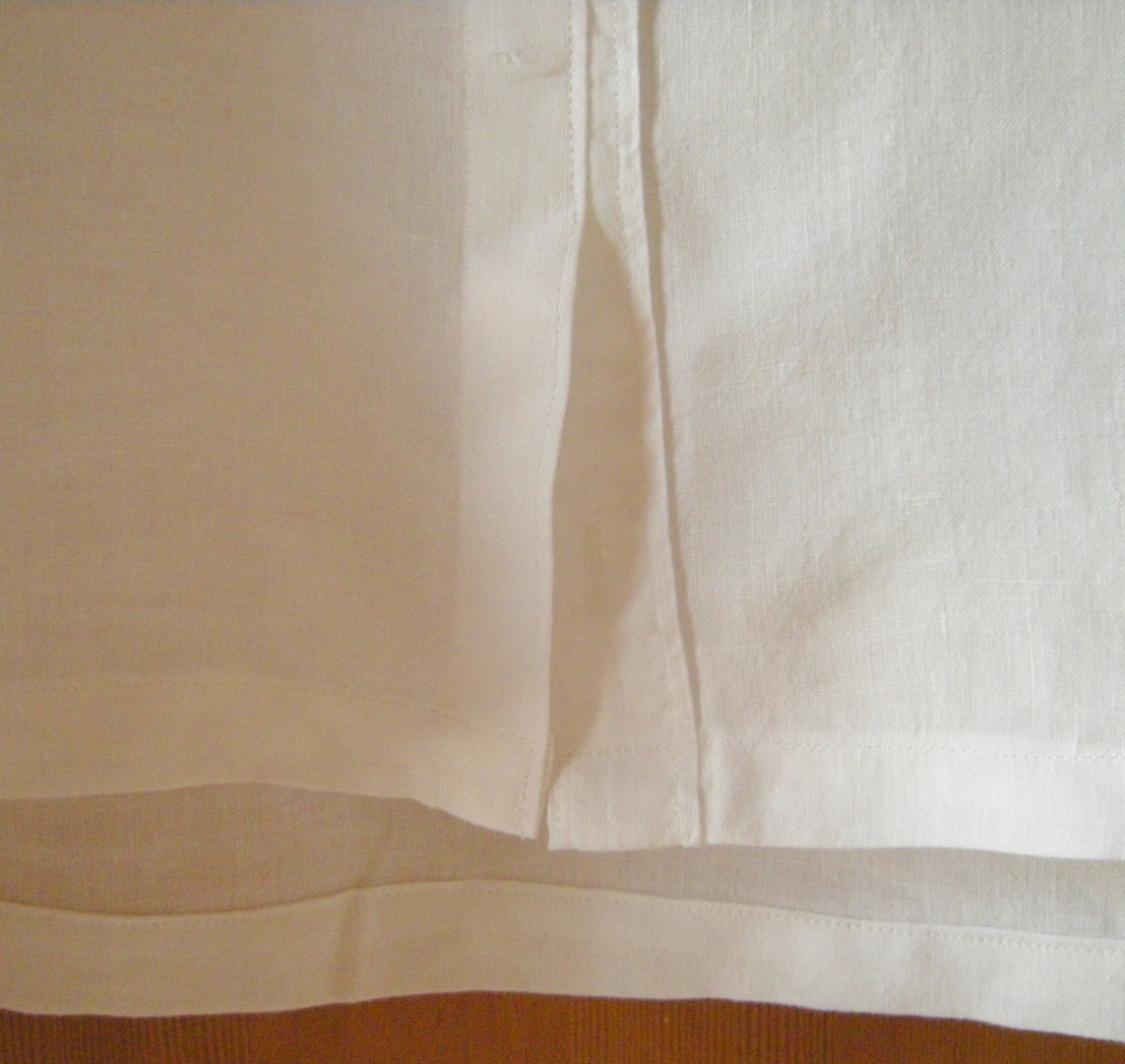
I simply cut off the sleeves about 1-1/2″ longer than I want, made a pleat, and then pressed it all into a half-inch hemmed cuff.

This time I tried popping off all the buttons on the button bands and simply sew’d the button band over the button-hole band, because as I don’t ordinarily iron, and loath gaping button bands in front, and at the bust-line especially.  Its kind of funky an interesting detail,but worth the experiment.

002

And I left a little open at the bottom.

jenjoycedesign-detail2

I was thinking I’d go over it with shell buttons and just sew them on for the faux affect, but then I will wait & decide later, for some shirts are nice to have just pure linen.

The learning curve on this one was,  1. never buy a shirt with front pocket flaps thinking they’re easy to take off (the seam ripping was torturous and long). Although the holes from the previous stitches show now, they’ll go away in the next few washings. Or maybe never.

006

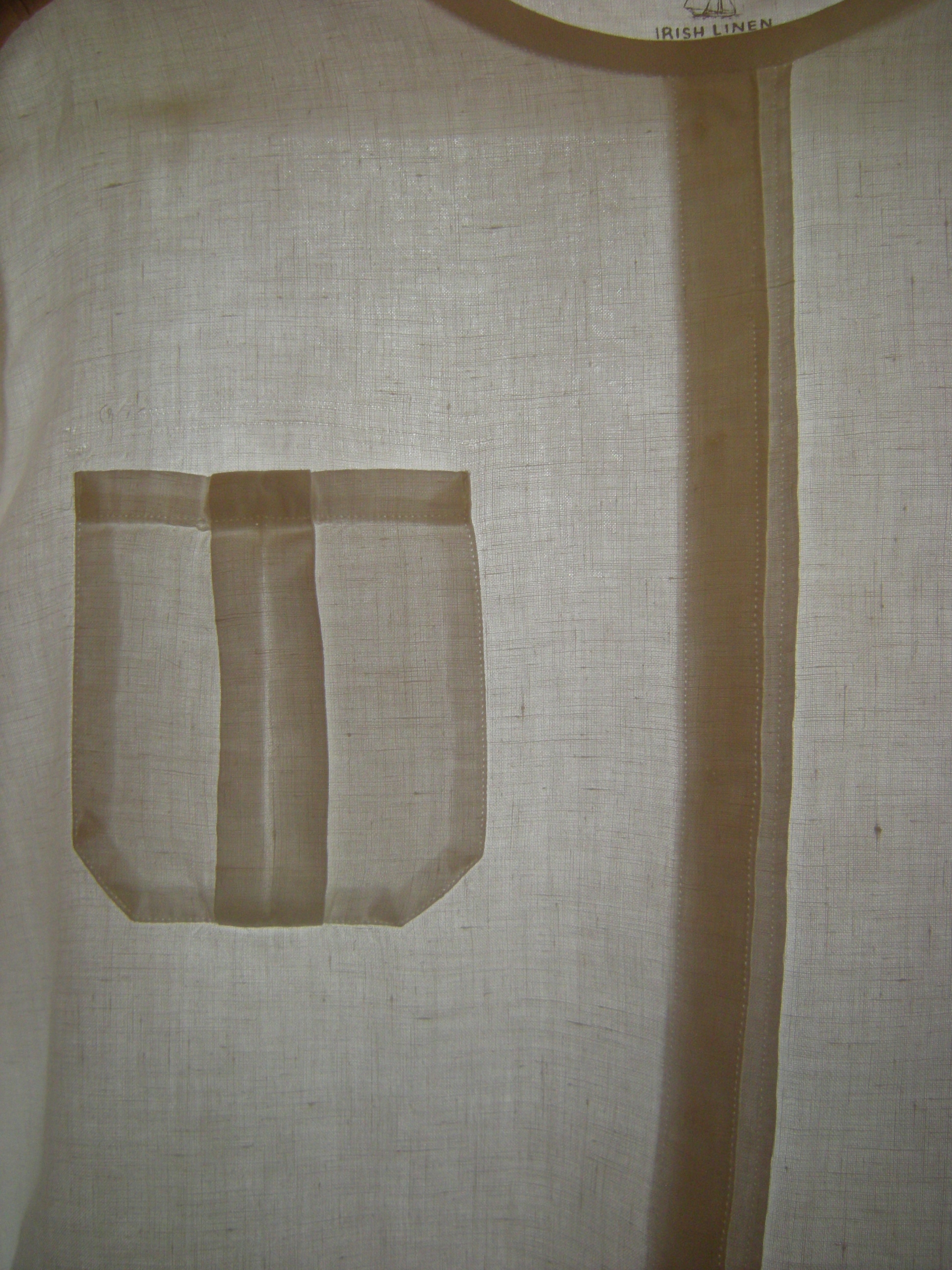
And  2. custom bias tape rocks!     With the same kind of fabric, and it can be made easily.  (This I had to use some linen from my stash, as it must be on the bias), but it is a great way to finish a neckline which is curving, for one really doesn’t want a ripply rolled hem like I did on this one.  This is the little bias tape tool (admittedly I don’t really know what that swiveling part on it is for)… pull the fabric through and iron and neaten the folds to the middle as it comes out~~ voila!

009

Then I simply sewed the raw edge of the neckline to it and folded it on the inside to sew down.  Simple, tidy, and sews up so professional looking.  I found a good video tutorial on how to make bias tape here

I didn’t have enough cut from the length to make the usual front insert or cuffs, so this is an experiment of how I can change the look minimally.

002

The nicest thing about white linen is the transparency so visible when held up against light. The warp and weft of flax threads speak a language I can understand, sort of  like the neat pleats and double-folded hems are sharing with me their secrets, all which make the shirt feel crisp and just a little bit like a veiled treasure.

004

I’ve been on a trend lately of simple collarless shirts, for in cool weather they just invite a nice lace cowl, and I am slowly acquiring quite a few of those, more recently craving to cast on with some fine flax lace yarn.

To see all of my New From Old projects, click HERE.

And lastly, is it my imagination or are most of my photos in this post really fuzzy?

Another really nice shirt.

jenjoycedesign©003

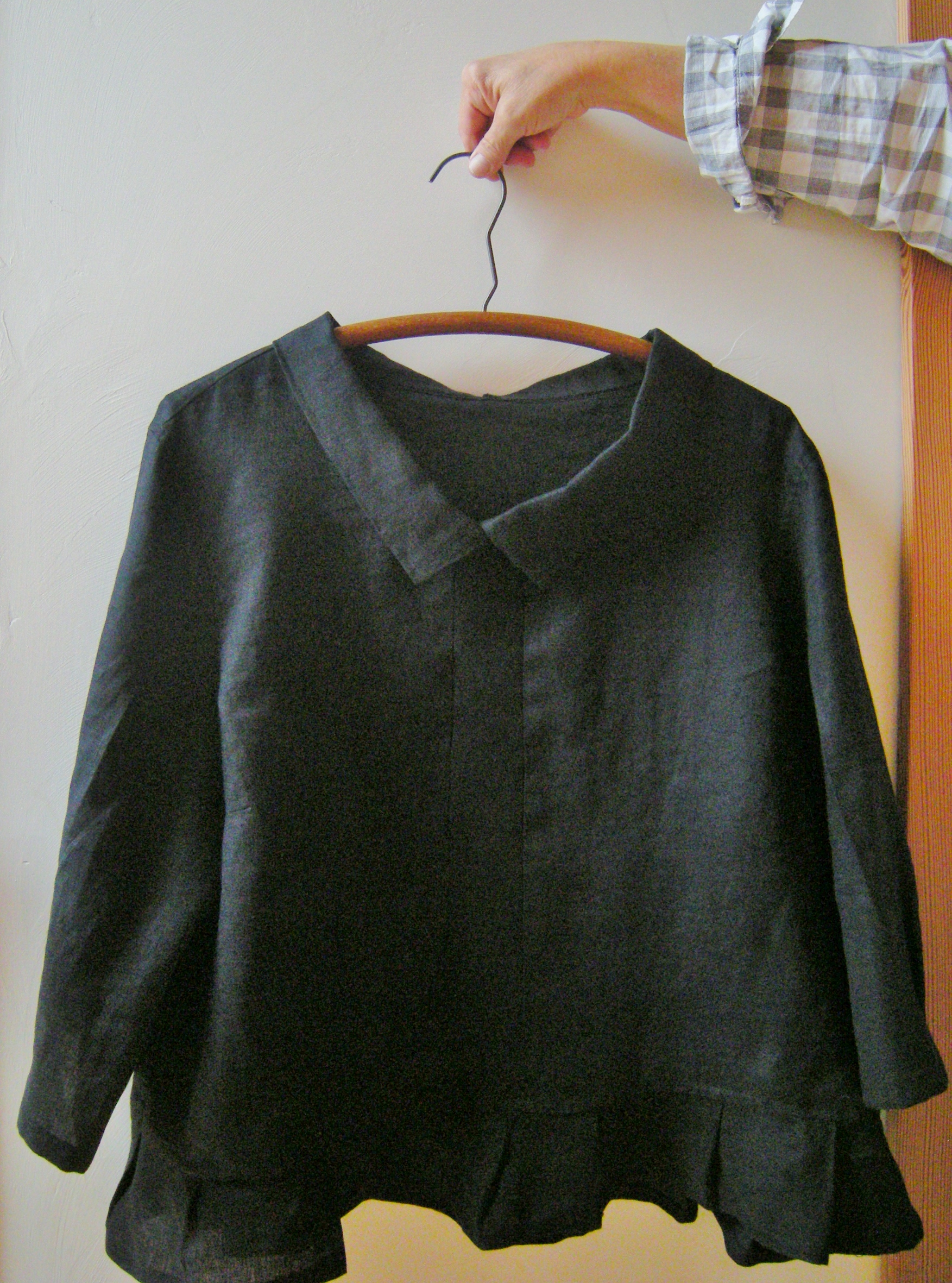
Okay, I’m on a roll, I fall asleep dreaming about taking scissors to over-sized and hardly worn shirts, and refashioning them into one-of-a-kind personalized shirts.   The original, a Talbots brand women’s tunic, in gorgeous jet black in lightweight Irish linen, found at a thrift shop somewhere for a few dollars.

jenjoycedesign© before Talbots Irish Linen Tunic

Refashioned into what is becoming my signature look, a boxy throw-over style inspired by my favorite brand FLAX,   with practical as well as flirty finishes…

007 (2)

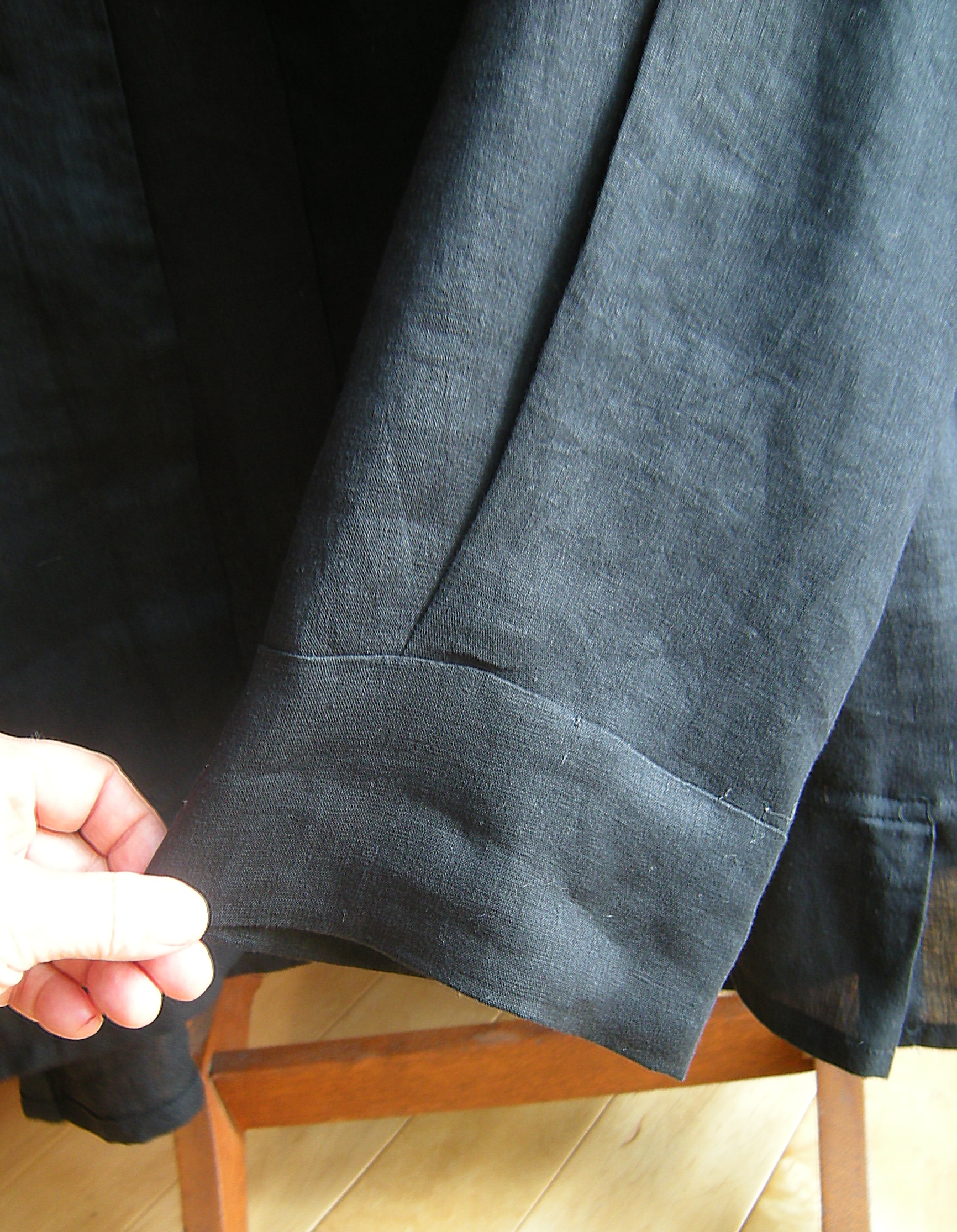
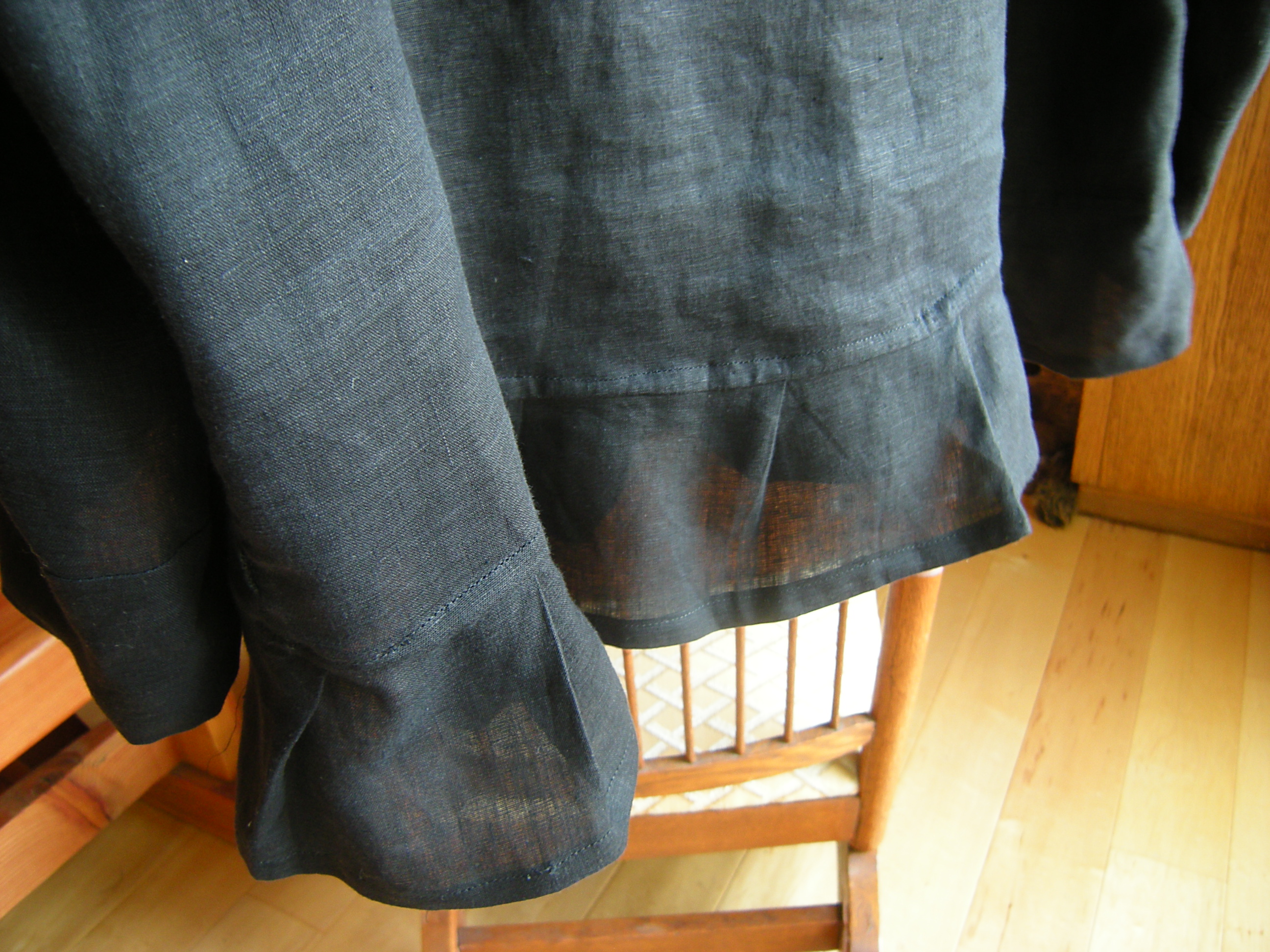
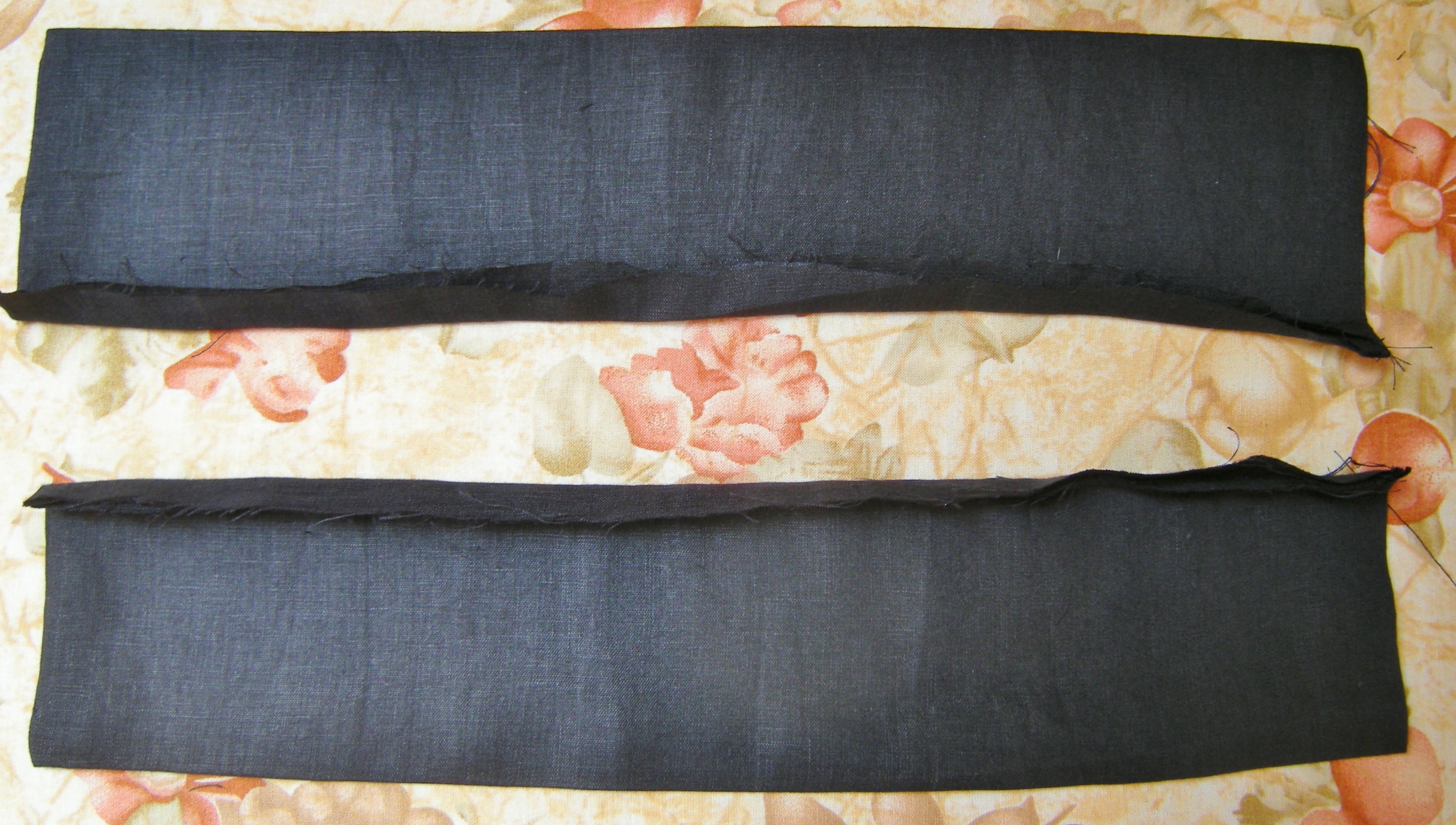
This style collar is hand-sewn inside of the edge of plain neckline hem, then folded over to make a very nice look.  However, after I added the decorative length to the bottom, I felt that the sleeves were too short and I wanted to use those rectangular pieces in the end for cuffs, so I undid the collar and reworked the pieces into wide faced cuffs able to be folded up, with a single wide  pleat into the sleeve.

jenjoycedesign©008

jenjoycedesign©004

I had a lot of length to work with , cut it in half widthwise, and from those  I made;   1. the insert down the middle, having taken out the button placket,  and  2. with left over pieces I sewed together into one piece , then worked to fit shirt body  with narrow little pleats spaced out and pinned around 16 times around circumference (intentionally not too neat) to fit the bottom hem. Result is a slight charming skirty edging…I suppose this is officially called a ‘peplum’ finish.

jenjoycedesign©006

 Having decided not to cut off the existing narrow hem of the neckline, after cutting off the button bands, I just made a hemmed piece over the insert.

05

A very funky little bit, but that sort of detail is what makes each shirt one-of-a-kind, in that I must improvise with what little sleeve and body length I cut off. You will find this to be true also,  when you begin to take scissors to old shirts to make new shirts.

More thoughts  on the collar…

008

The really nifty thing is that collars are like shirt accessories, as are buttons, a separate collar piece hand-stitched to the inside makes a dashing old-fashioned finish, in white, blue plaid, or whatever, ( especially including some old lace ones I have ~~thanks Sorcha!) .  Just switch them out like they did in the bygone era, for both women’s dress and men’s shirt collars in those days were meant to be replaced per occasion or just when worn out. Collars and cuffs took the beating of the wear, and were often replaced (as I learned from Morrie ~ thanks!)


Anyway, there was no shaping involved in this type of collar, nor was there a collar stand, I just whip-stitched two rectangular pieces and they folded over making their own stand. (I actually moved them around, and tried on basted before stitching them on secure.

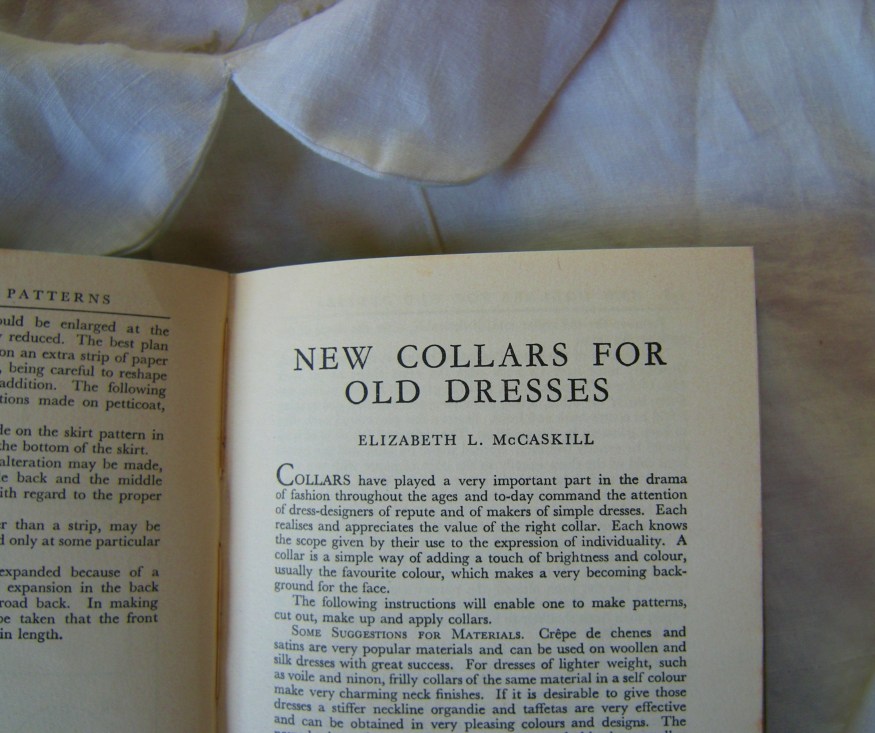
Its always a bit of a gamble and some shirts just are ruined, but after doing it a few times, you’ll be surprised to find how easy it is. Much easier than sewing a whole garment from cut yardage, and far less spendy in many cases.  By the way, if & when I make or find the perfect collar for this shirt, I will post it.   If you can find this book by Odhams Press (dated 1930’s)  there’s a chapter called ‘New Collars for Old Dresses’ and I highly recommend learning this old-fashioned skill of refashioning.

There was some discussion in the last post  about making big brother/sisters outgrown shirts into refashioned ones for little brother/sister. I don’t have any kids clothes around, but would love to hear from any of you out there who are keen to try.

That about wraps it up for refashioning of  Shirt Two, and now I ought to be knitting Autumn Sweaters.

See all posts New From Old , including my tips on what I have done ~~ HERE