A blending hybrid…

jenjoycedesign© handmix & carded rolags 1
I am deeply immersed in fiber and color mixing with fiber.
jenjoycedesign© 1
More like obsessed!

This study of tweed & color is finally starting to take a direction.

It all began a few months ago when I was discovering one after another of old mill videos, and longing to make tweed yarn by my own hand, and without the colossal expense of a drum carder.  I talk about it back in a mid-summer post.  Since I  made myself a blending board, I can’t leave it alone, and so naturally I’d be inventing my own blending recipes which I am merrily posting quite feverishly lately, and I am progressing quite rapidly to understanding tweeded color in yarn.
jenjoycedesign© 3

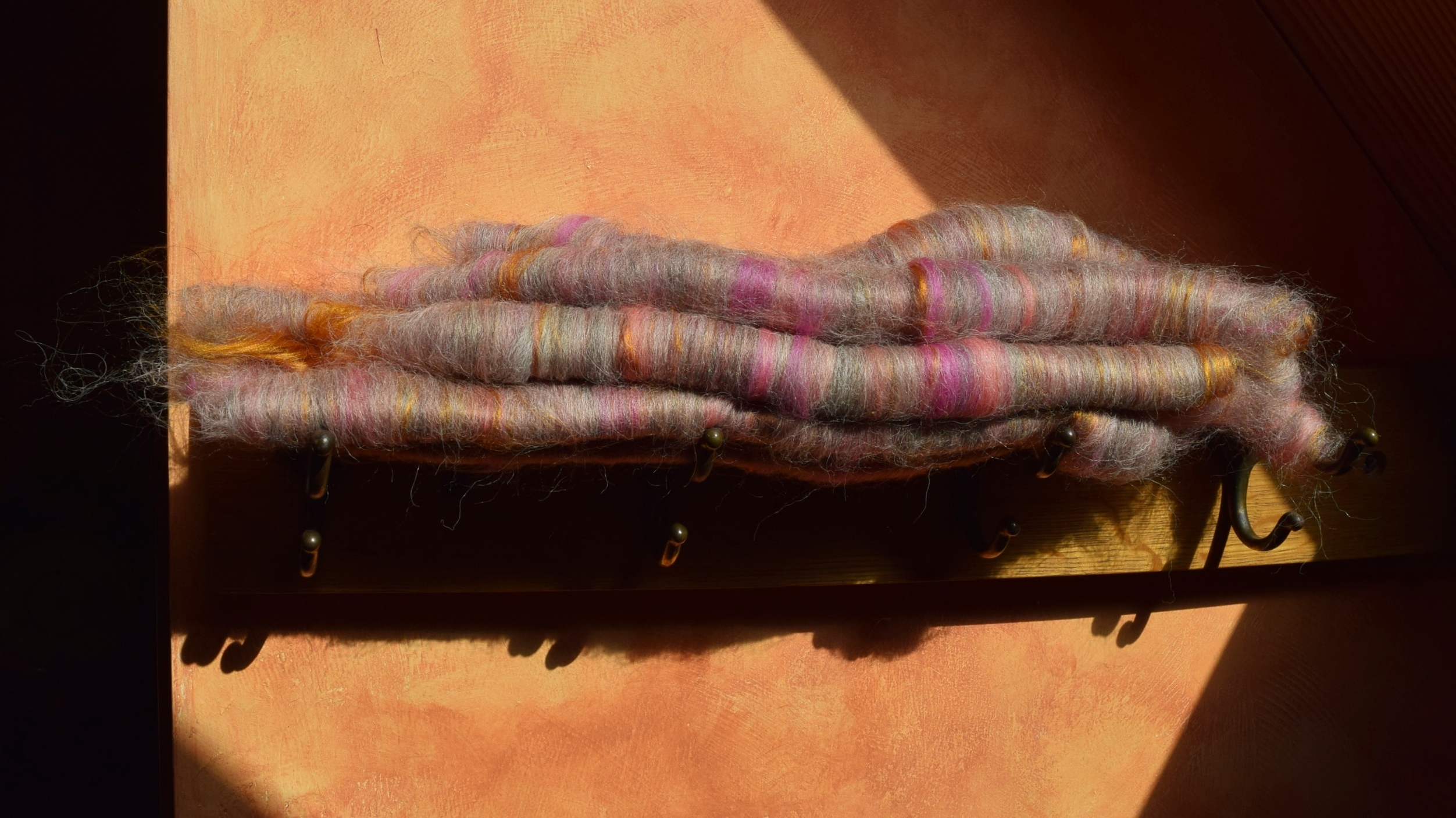
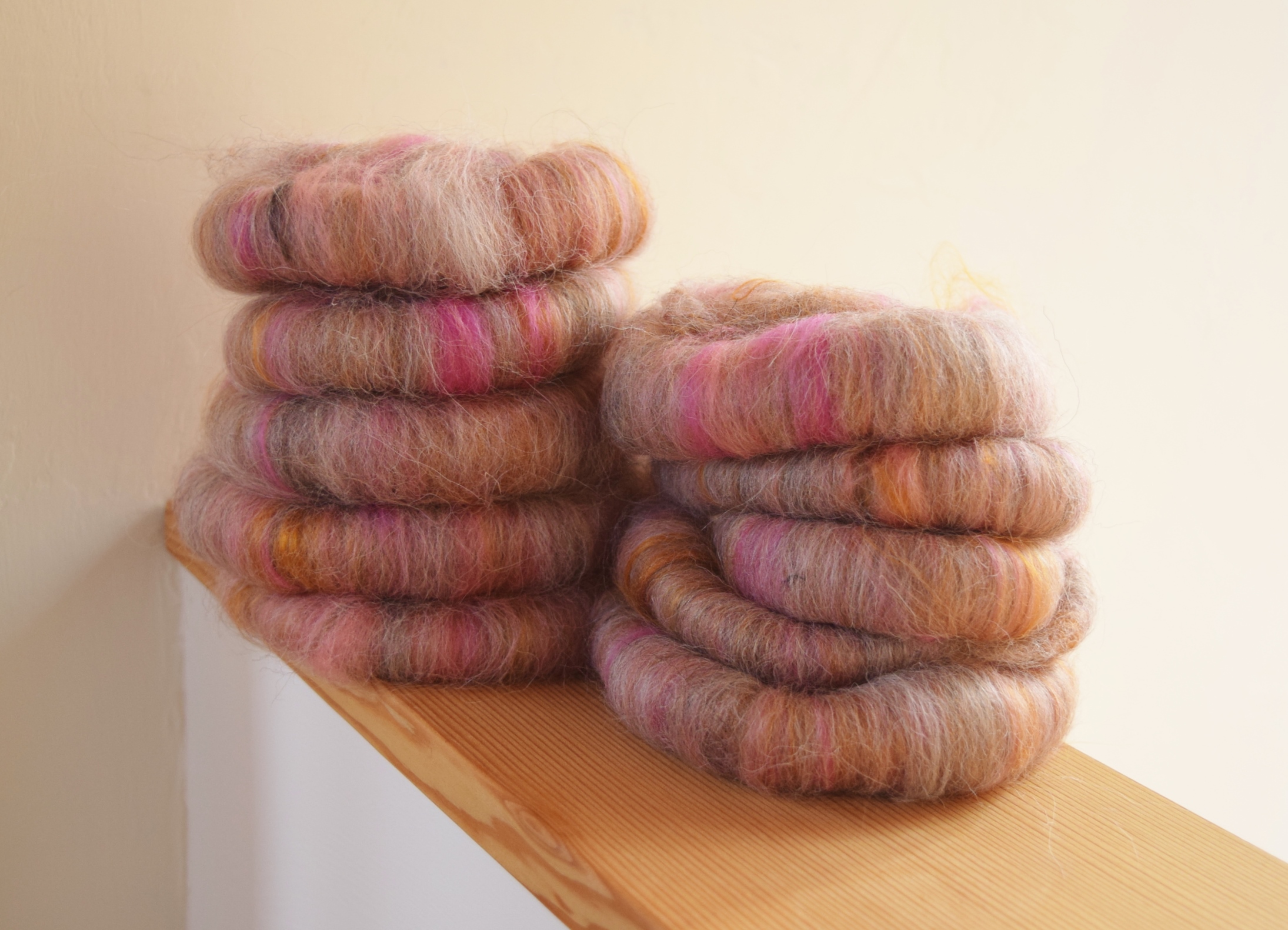
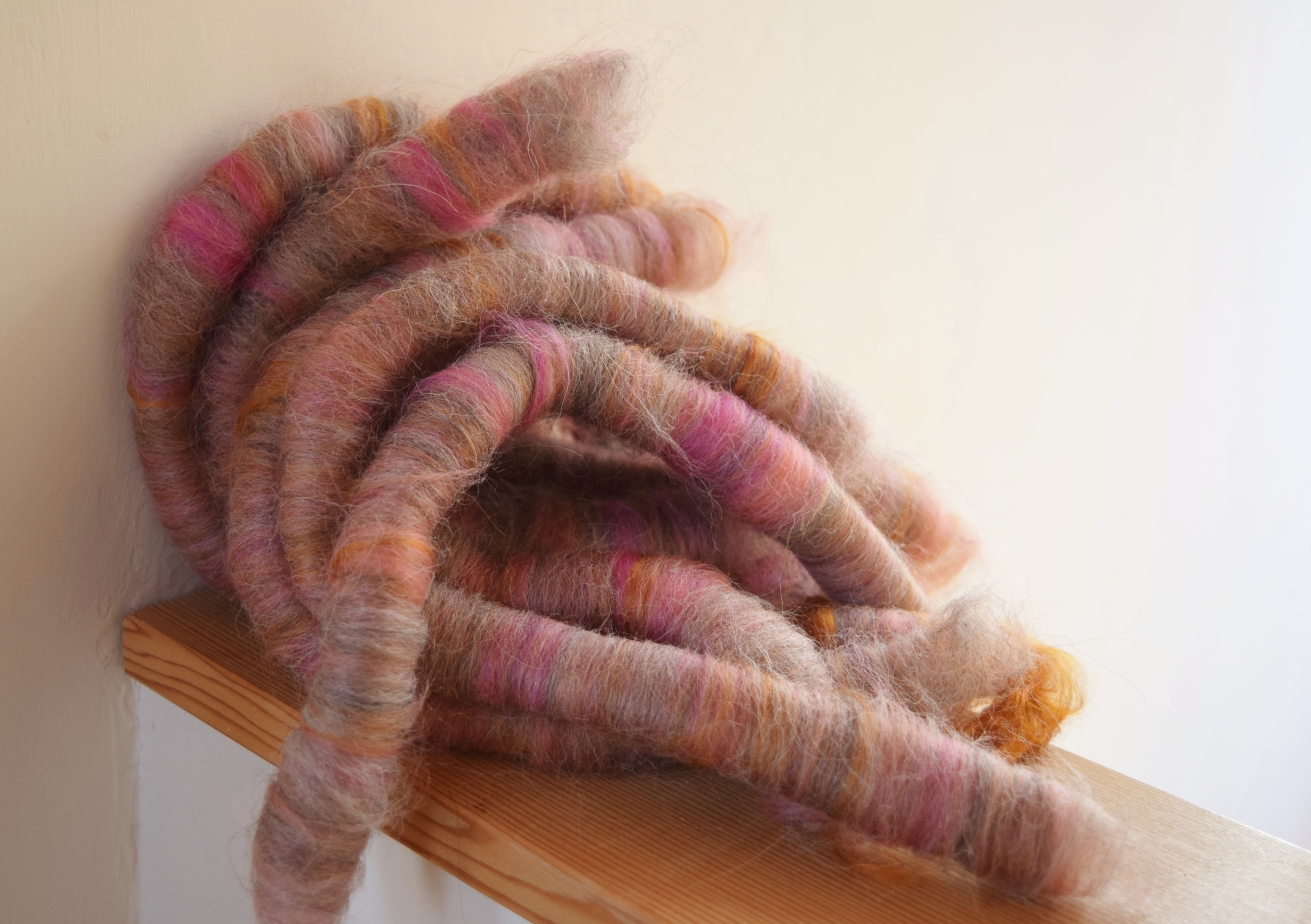
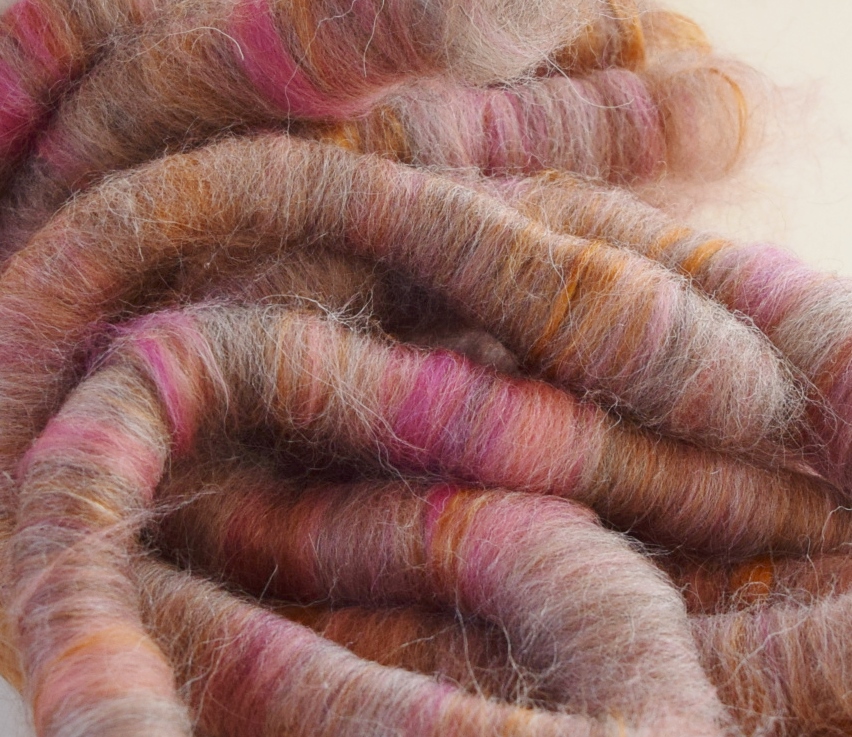
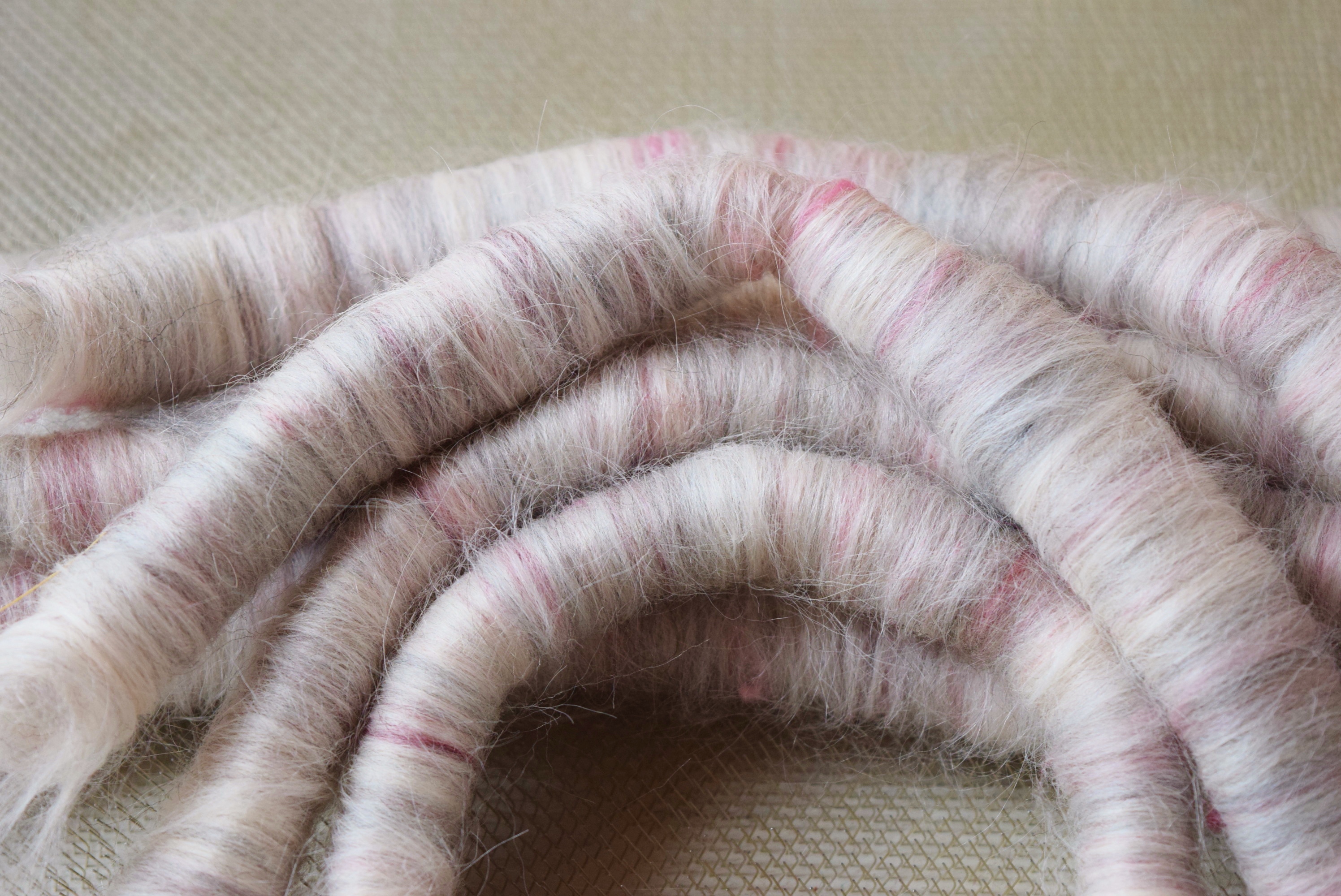
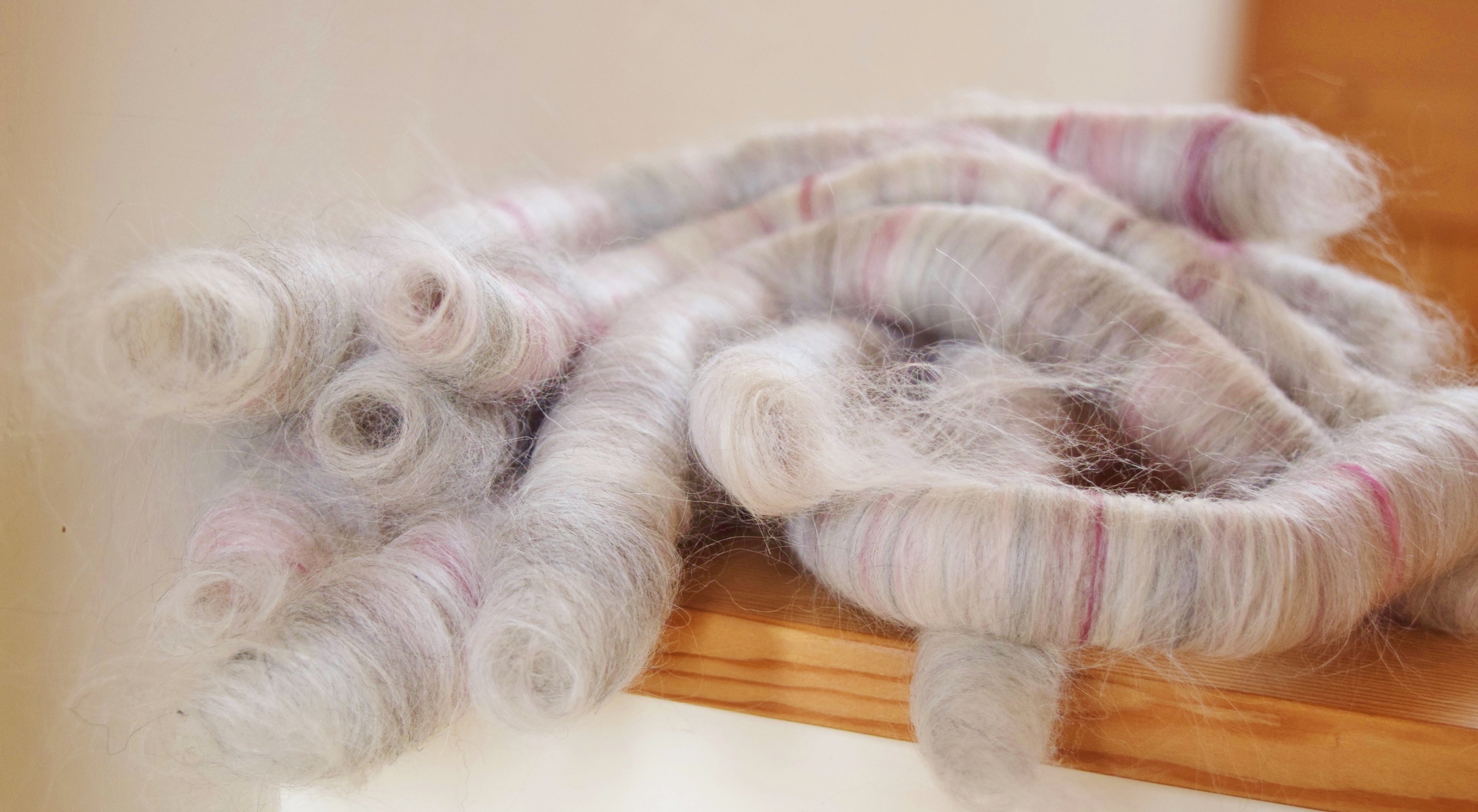
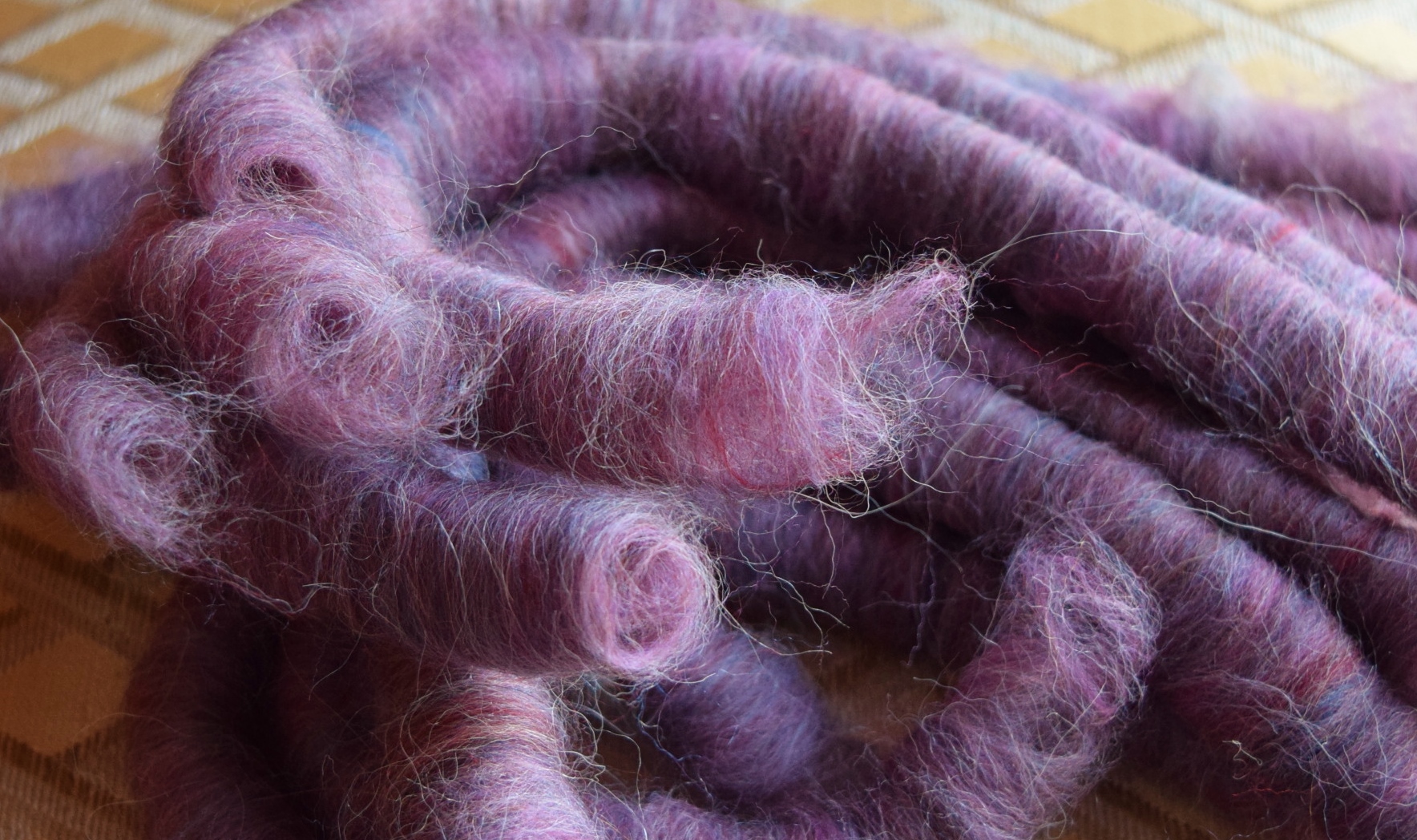
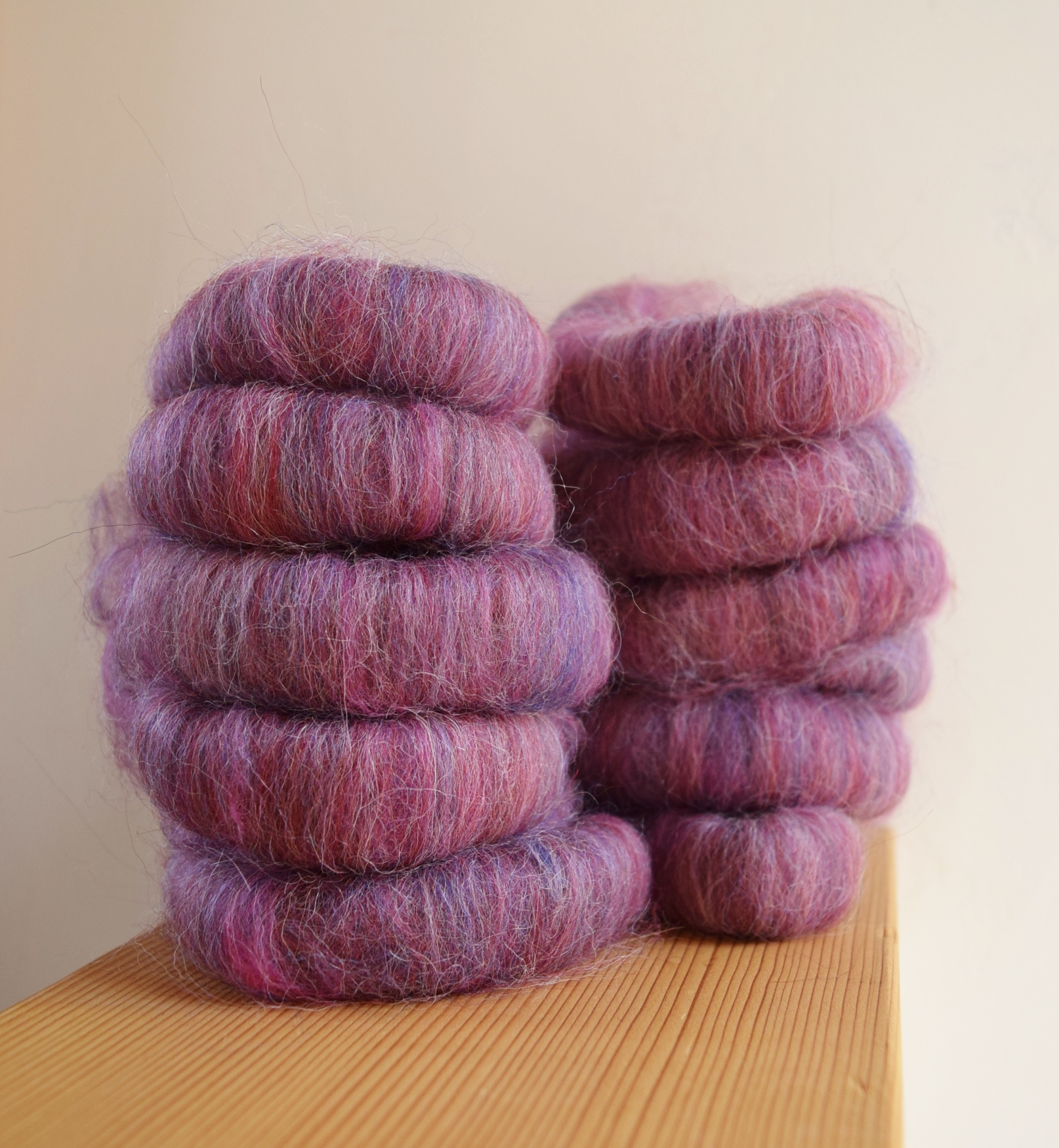
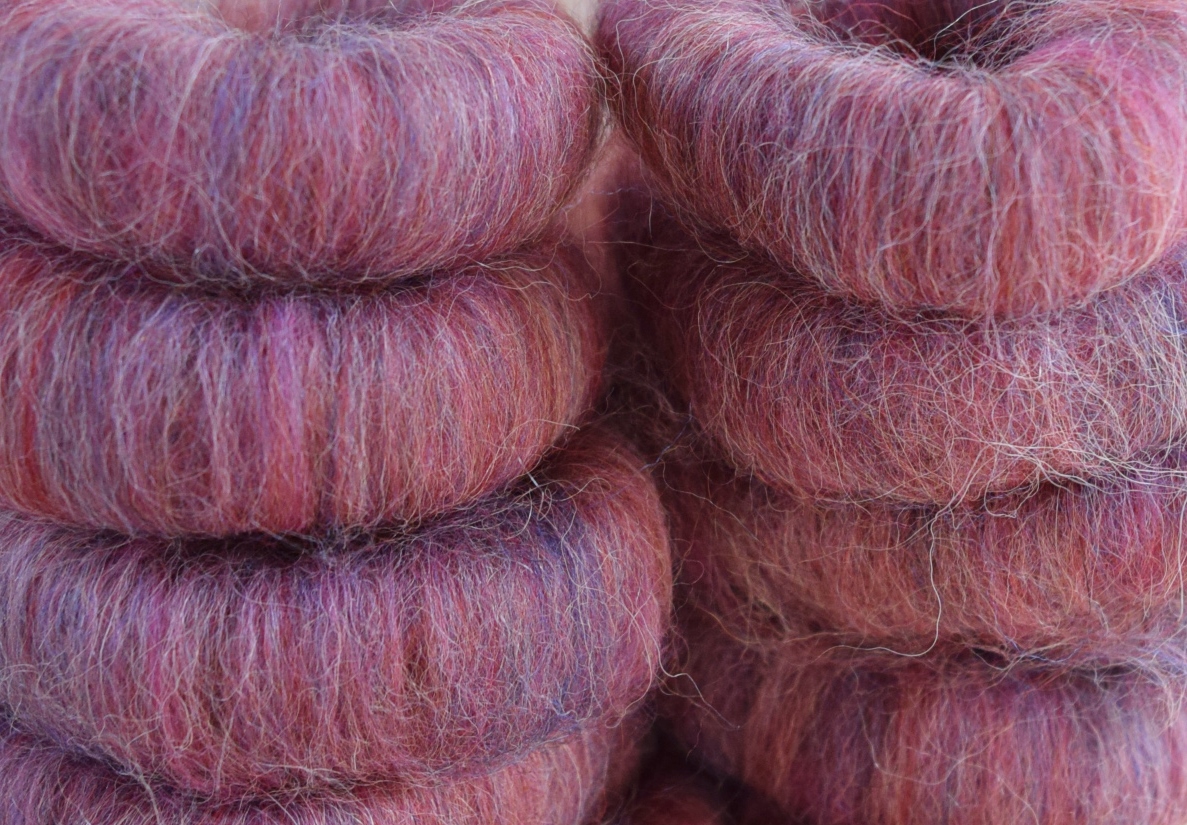
Okay, so these plum wool sausages are the most recent experiment, a hybrid actually, wherein I am including hand-mixing and also a bit of carding,  with hand carders against my blending board, just like a flat rendition of a drum carder.  You don’t need to use hand carders, you can use a wire tooth pet brush too.

((Actually, a bit of a spoiler, but next blending experiment I will only card, and using only the blending board without a hand carder, and in doing so I realize that doing both the hand mix and carding in the same is overkill. ))
036

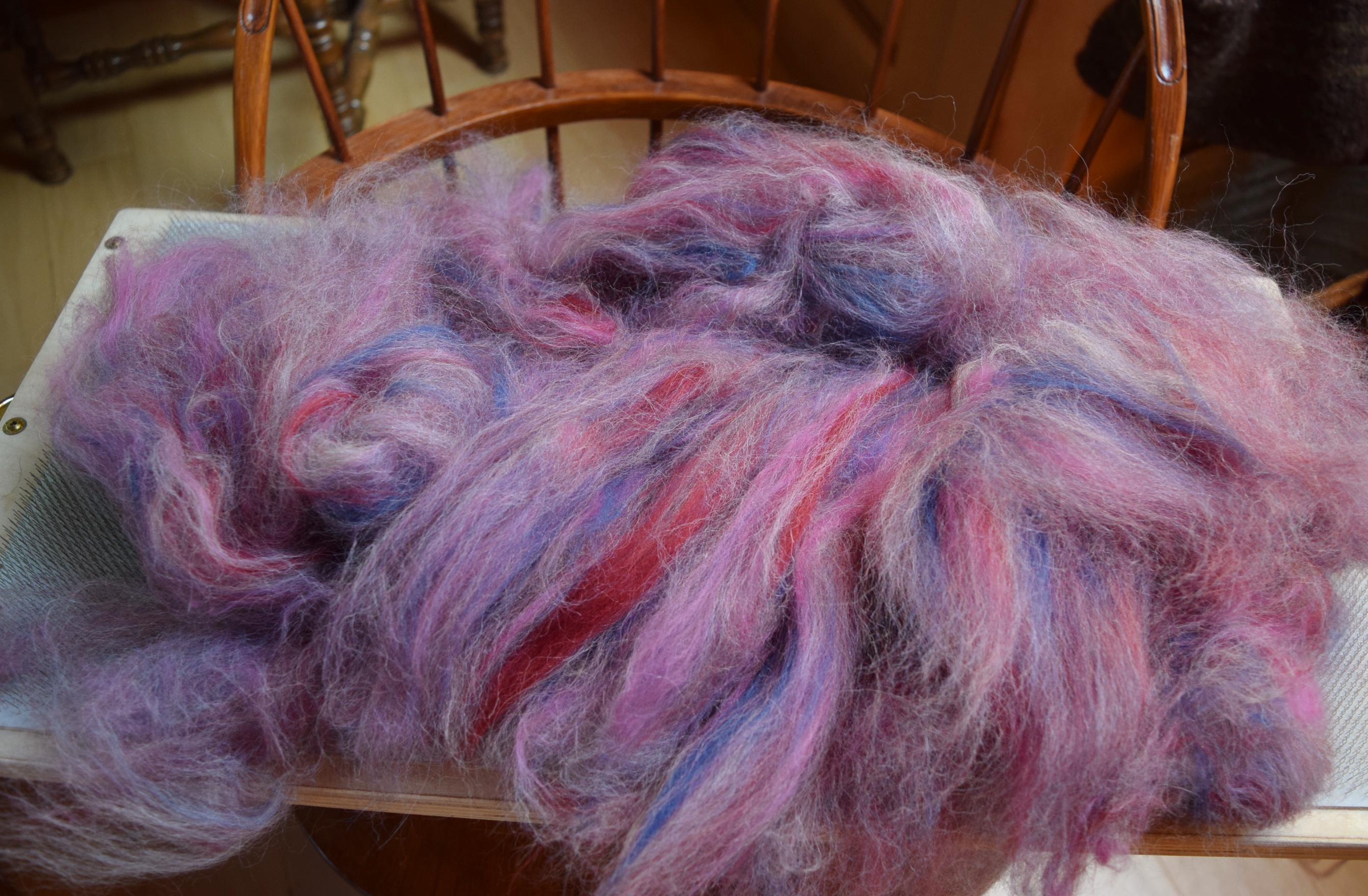
This big beautiful batt of once carded fiber, gets loaded back on for a second finer mix, and then the final mix gets drawn off into rolags.

And then I’ve begun to spin….

jenjoycedesign© 4

For the best homogenization of color, I feel that I need to steer away from varying fiber textures, so this is all wool & alpaca, no bamboo or silk, because I want no clumping up of fibers if possible in this finer tweed color mix, with solid colors still coming out in hints , but no color splashing.

Here is the final result of this fiber blending recipe, although the camera is not catching the spectrum of colors well, they’ve hazed into a nice grey plum pudding!
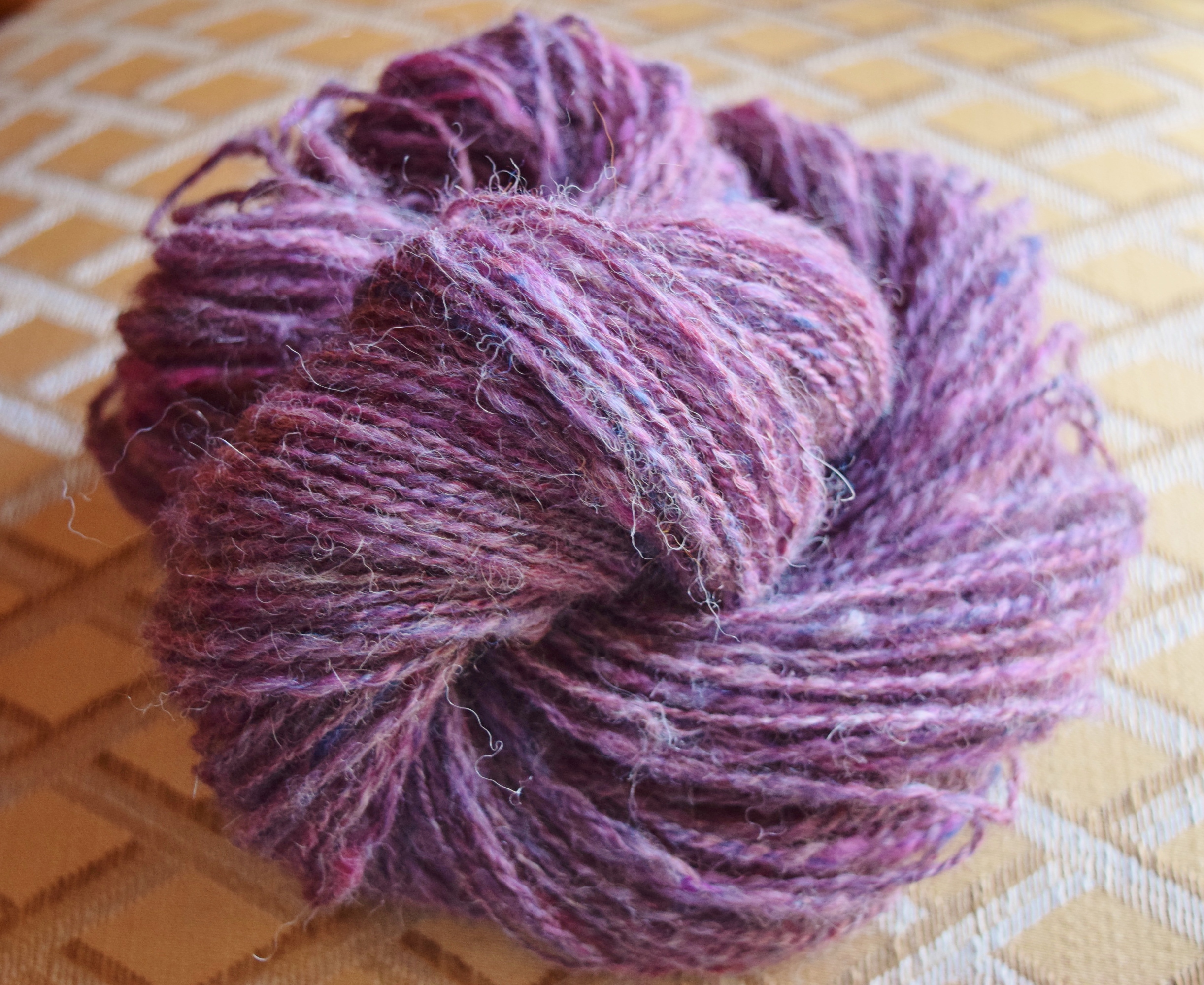
jenjoycedesign© hand-mix plied

Fibers used in this micro batch are: grey baby alpaca, blue Corriedale, red Corriedale, and fuscia Merino.  Here is what I am doing , as illustrated by a photo slideshow at the bottom of the post.

  1. Portion out the fiber you would like to mix, weighing if possible.
    Divide into smaller manageable piles to mix by hand.
  2. One at a time, mix fibers in the smaller piles by hand, holding each end and firmly pulling fiber apart. Repeat as desired — I did this about 10 times each, but you can do more or less.
  3. Fill teeth of blending board with hand-mixed fiber.
  4. With hand carder, card wool and then pull off of carders.
  5. Repeat until all fiber has been carded, and lift off batt of remaining fiber on blending boad.
  6. Fill teeth with carded fiber,  combing between applications to fill teeth as much as possible.
  7. Draw fiber out into rolags!

For all posts on my Fiber Blending Recipes HERE

Here’s the show!
This slideshow requires JavaScript.


Tweed Chronicles: Fiber Blending Recipe 2, The Hand Mix

jenjoycedesign© handmix only rolags 1

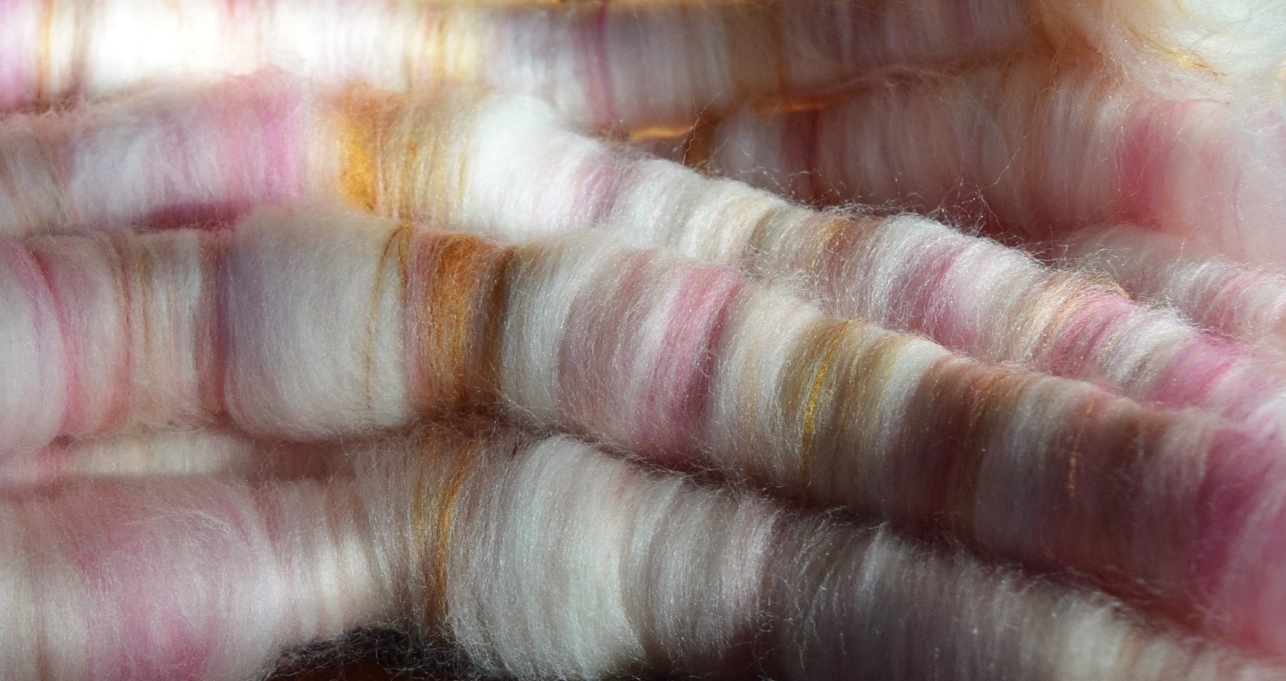
This is my first experiment in hand-mixing the fiber before it gets loaded into the blending board to draw out into rolags.  Going for a slightly more tweeded affect, I blend the fibers more — by hand — so the colors begin to haze into each other a little bit.

jenjoycedesign© handmix & carded rolags 4

One thing, when using a blend of different types of fiber, adding shimmering slippery bamboo for instance, the odd fiber tends to clump up, which is desirable for a loose mix. Its a little more blended than the fiber lasagna, but not as blended as if it were carded.

jenjoycedesign© handmix & carded rolags 2

Solid colors still coming out in stray untamed splashes…

jenjoycedesign© handmix & carded rolags 3

Fibers used in this micro batch are: grey Corriedale, grey baby alpaca, fuscia solid Merino, salmon solid Merino, topaz bamboo.  Here is what I am doing , as illustrated by a photo slideshow at the bottom of the post.

  1. Portion out the fiber I want to mix, weighing if possible.
  2. Divide into smaller manageable piles to mix by hand.
  3. One at a time, mix fibers in the smaller piles by hand, holding each end and firmly pulling fiber apart. Repeat as desired — I did this about 10 times each, but it can be more or less.
  4. Fill teeth of blending board with hand-mixed fiber.
  5. Draw fiber out into rolags!

This method is pretty loosely mixed, but still more homogenized than my Blending Recipe 1 – fiber lasagna.   Splotches of color still are varied and add color explosions to the spinning.  And here it is spun up…

jenjoycedesign© spun hand-mix

Spinning has a way of hazing together the colors more than the rolags show, quite a bit in the spinning of the singles, and even more after plying two singles together. I  have to keep this in mind when I make the rolags, knowing the spun result will play the colors down far less dramatically.

jenjoycedesign© spun hand-mix 2

Almost a disappointment, although I hate to admit, after careful ‘painting’ of the colors and all the work hand mixing, to have the colors melt into each other so much. Again, one learns for the result, how to prepare the fiber. For big splashes, I prefer the fiber lasagna, and for fine splashes, the hand mix.

And next will be my experiment with a combination hand-mix & carding, for a far more color integrated tweedy result, so watch this space!

And now for the show!

This slideshow requires JavaScript.

Tweed Chronicles: The color of sea shells…


jenjoycedesign© sea shell rolags

I am back at my fiber blending board, trying out more fiber mixing!

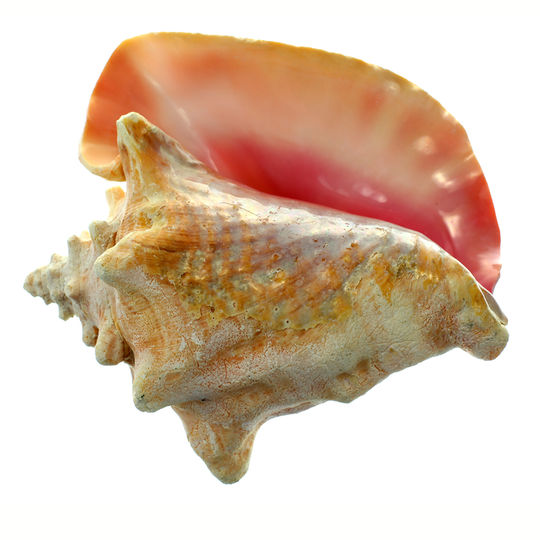
I am striving to achieve the colors in shells, particular the conch shells like these…
10417943_2

I believe it to be a color match success!

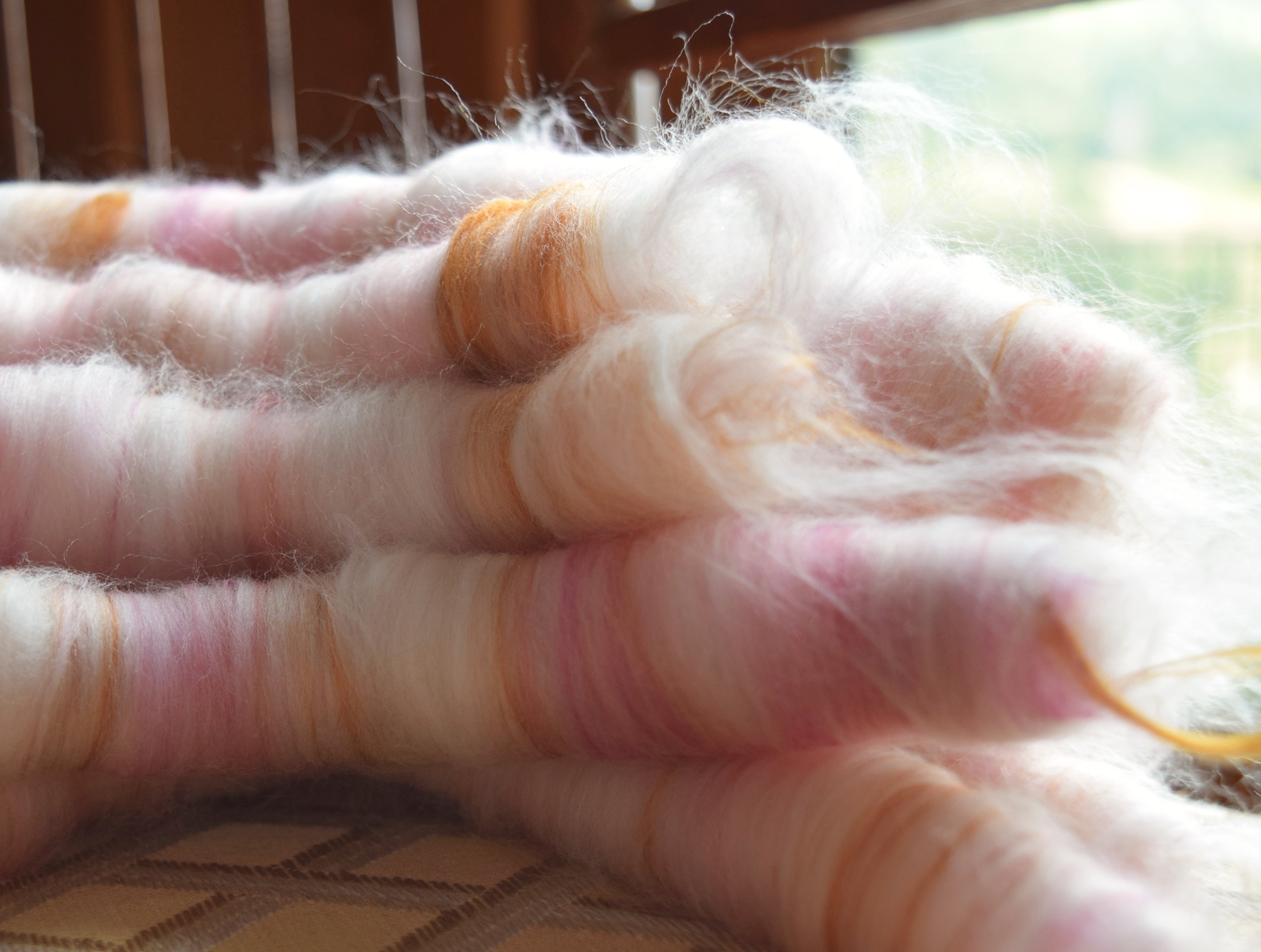
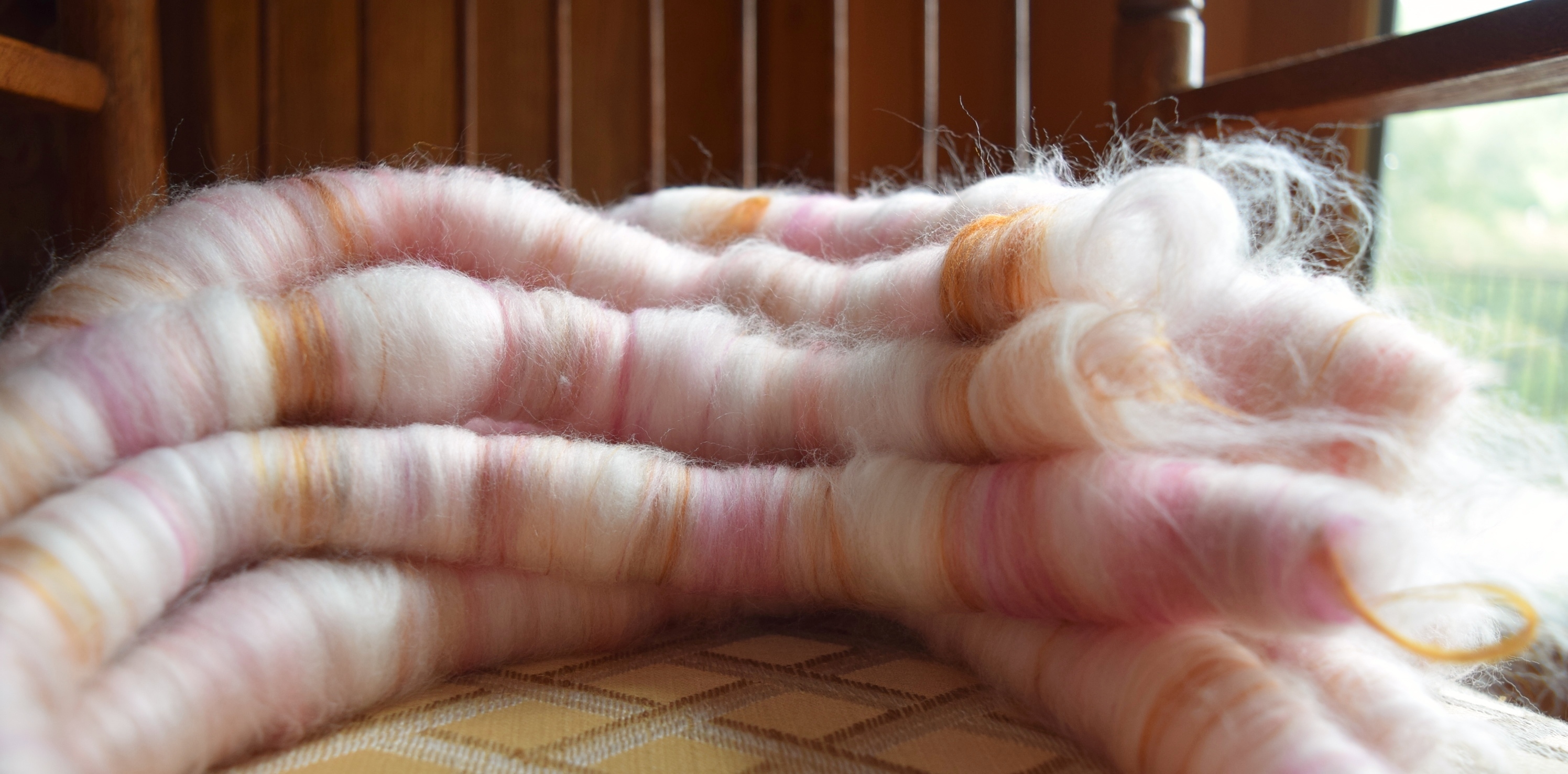
jenjoycedesign© conch shell rolags

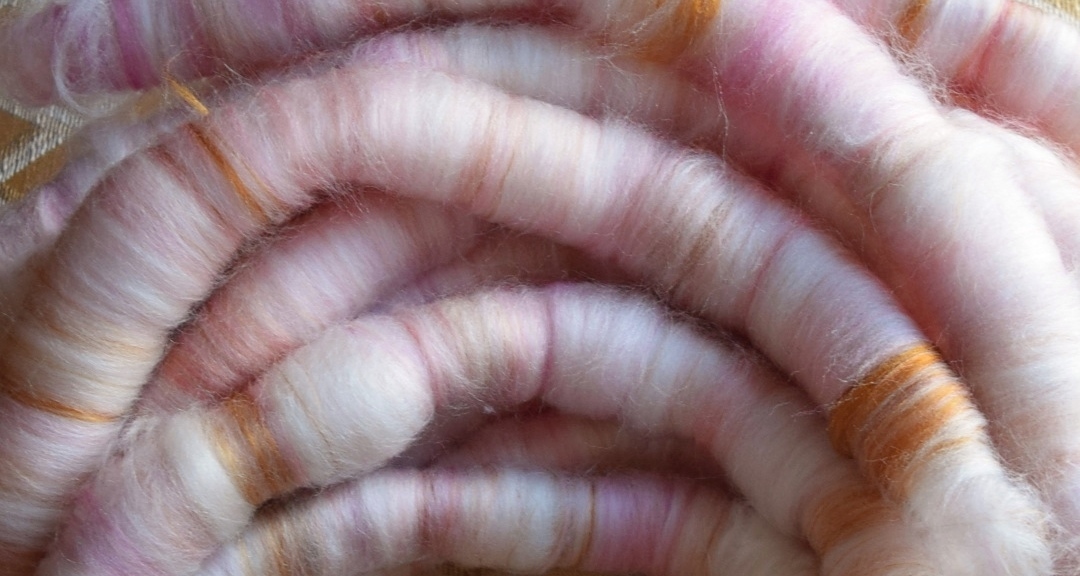
All the colors in the shell, these rolags are wonderful colorways for a future spin.

jenjoycedesign© seashell rolags 3

The end whorls of soft downy ultrafine merino are a lovely woolly confection!

jenjoycedesign© seashell rolags 2

The white base fiber is Ultrafine Merino top, and I swear, it is almost exactly like the suri alpaca that I have, extremely soft & silky!

jenjoycedesign©

I like to change fiber texture in the layers, between base fiber and secondary colors, so the salmon & fushcia pinks are a different grade of Merino top, and the shimmering gold is bamboo. Okay, here’s the show!

This slideshow requires JavaScript.

Main Fiber = Paradise Fibers Ultrafine Merino Top (white); layered between everything.

Secondary Fibers = Paradise Fibers Solid Merino Top; layered thinly, salmon first, then fuscia.

Accent Fiber= Paradise Fibers Bamboo Top (topaz); layered last, in scant stripes.

Two repeats of sequence.

Tweed Chronicles: A fiber blending color trick….

031

Gorgeous pearlescence like beach shells…

jenjoycedesign© pearlescence.JPG

Made from nice combed top roving,  so there’ll be no bumps and slubby bits in this batch, and the amazing thing is that all the color in these rolags are from combing tips of stash yarn!

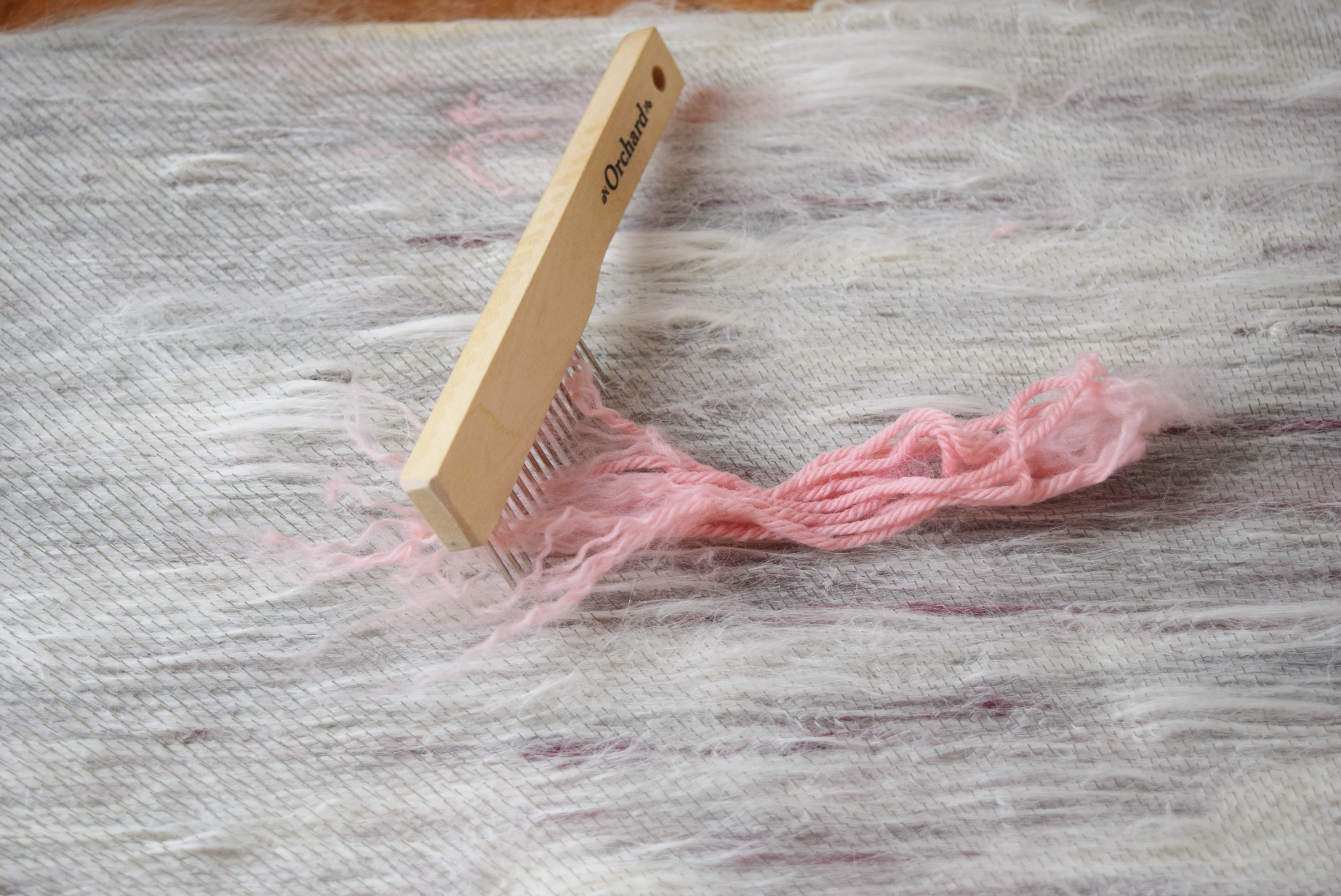
During my last blending post, I discovered a “yarn brush” technique, and having invented this for myself, I feel like I should explain how I do it.  From doing a few times I think it is easiest to to cut a handful of the yarn, in lengths about 4 to 6 inches, loop around and hold the ‘brush’ firmly in the middle. I am using my paintbrush comb, but you can use hand carders or a fine tooth comb, and comb the ends of the yarn to loosen up and fray the plies, which then you can then push into the carding teeth…

jenjoycedesign© yarn combing

I’ve found that most of the looser plied fluffy yarns, like some Berocco  Inca Tweed I had handy, work best, and certainly any of the single ply yarns work beautifully without the combing the tip, they just brush off into the carding cloth easily.  In the slideshow, if you hold your mouse over the images, the text will explain what I’m doing.

jenjoycedesign© tweed 3

Okay,  here’s the show!


This slideshow requires JavaScript.

Voila!

jenjoycedesign© blending 2

Voila!

jenjoycedesign© blending 4

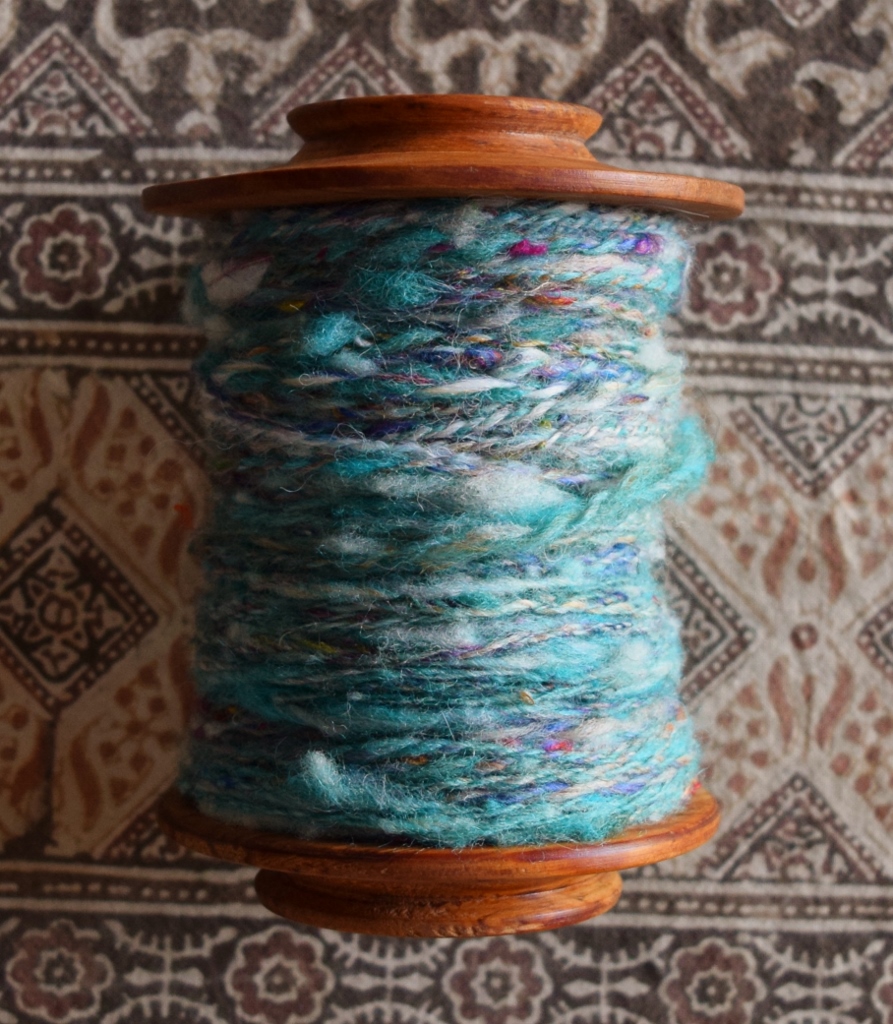
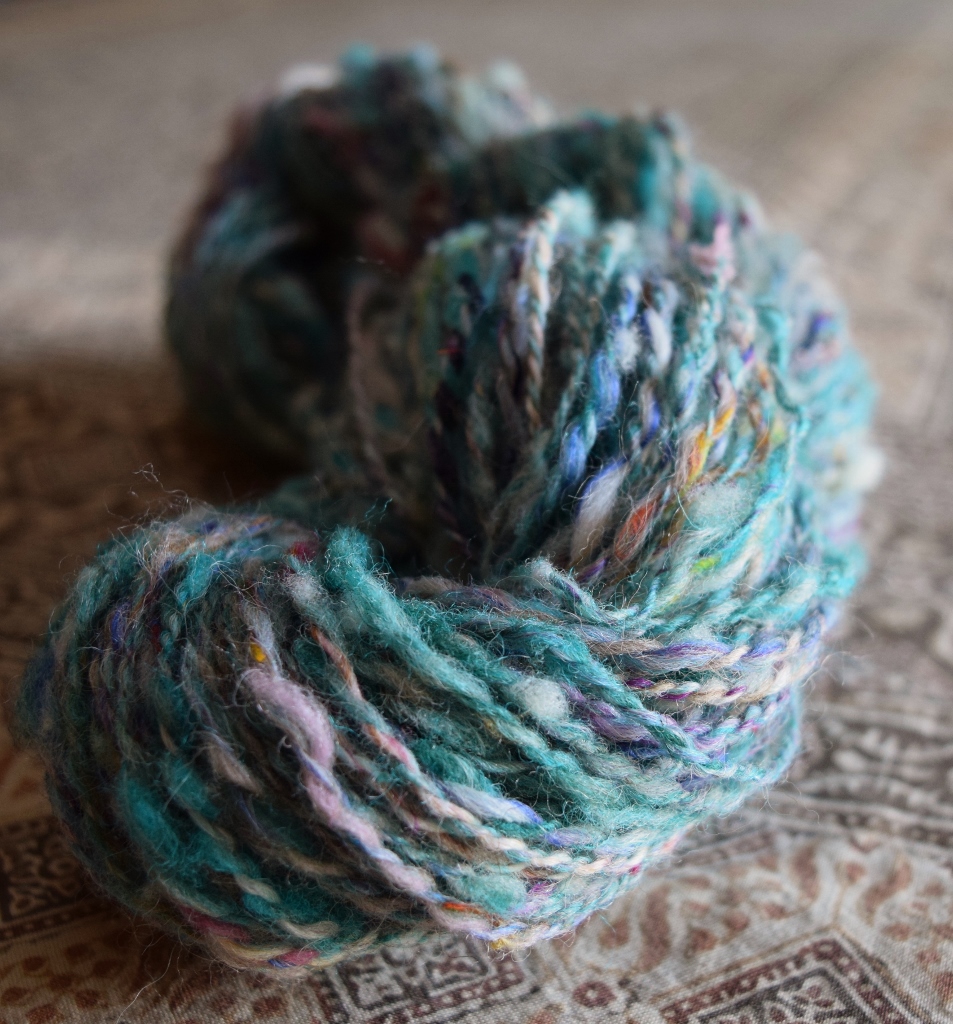
In this post   I show you the blending of fibers for this handspun yarn,

and the recipe I am calling Fiber Blending 1.

jenjoycedesign© blending 5

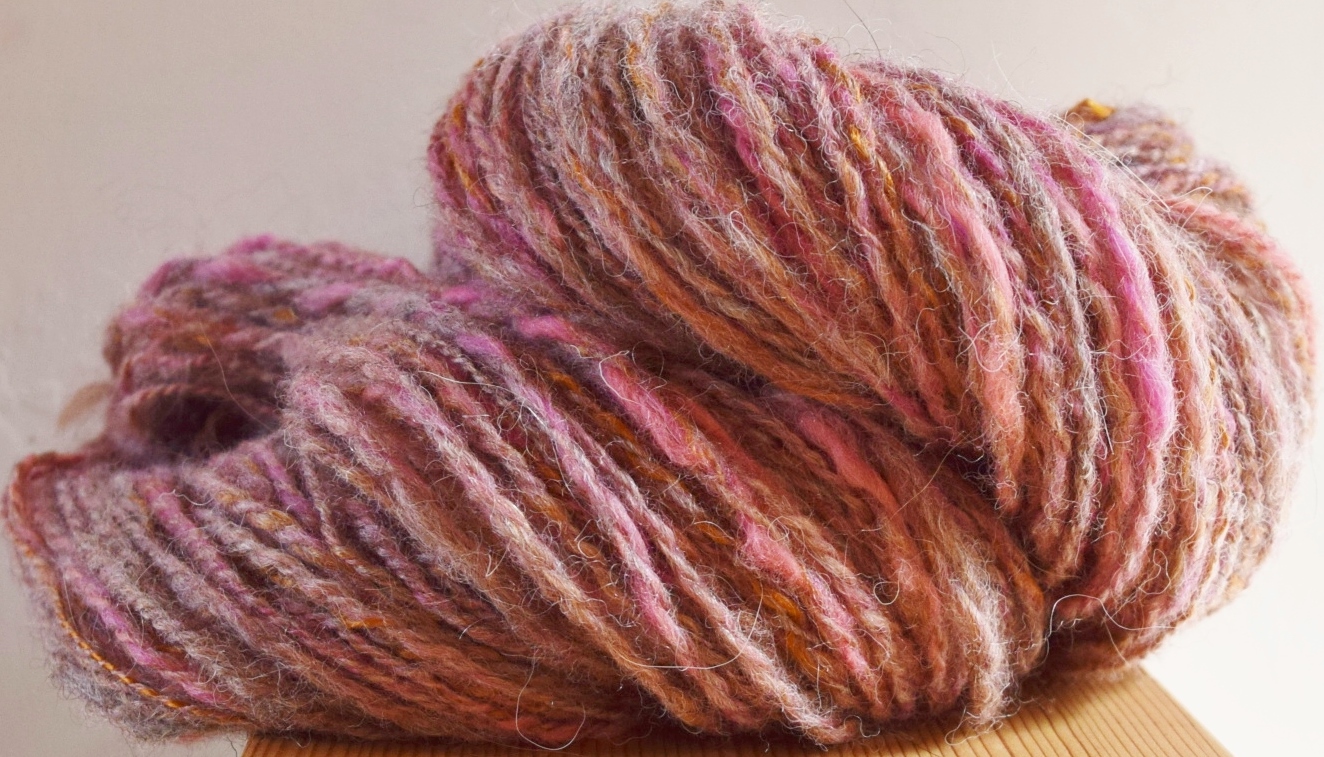
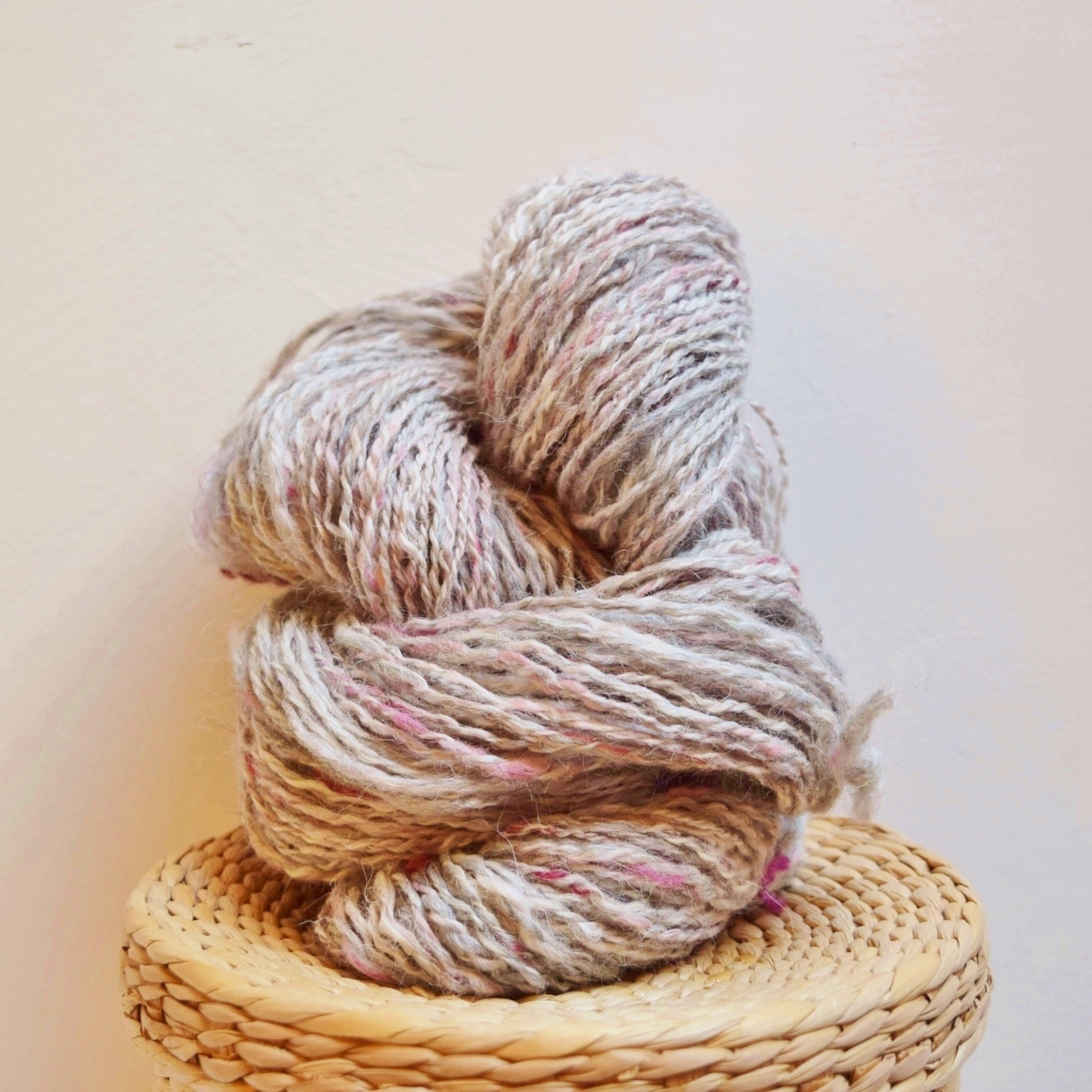
59 grams of yarn; relaxed, slightly slubby, infused with jewel tones.

I’m off to town, see you on the flipside with a more in-depth look at a little trick I discovered while blending the fiber for this yarn!