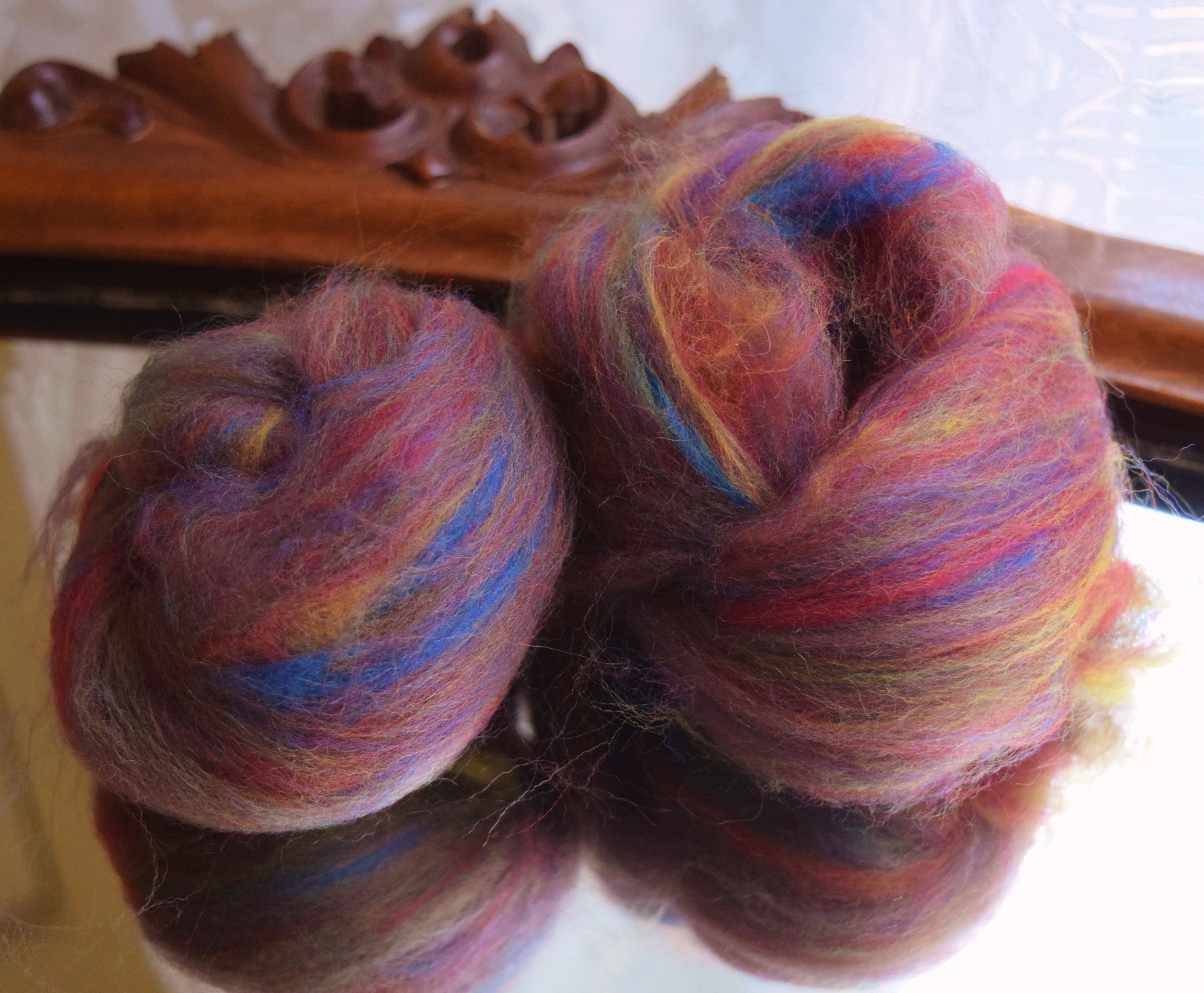
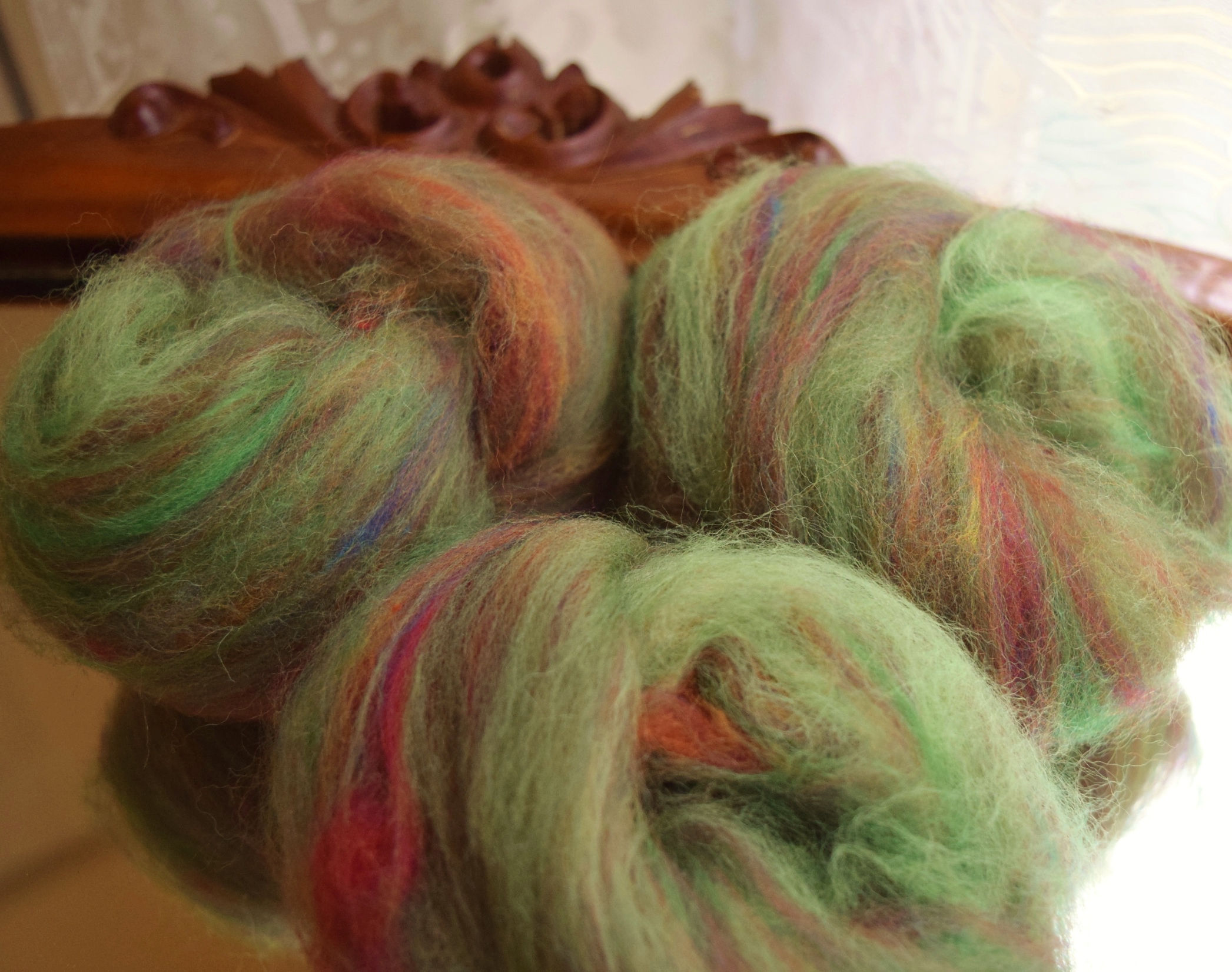
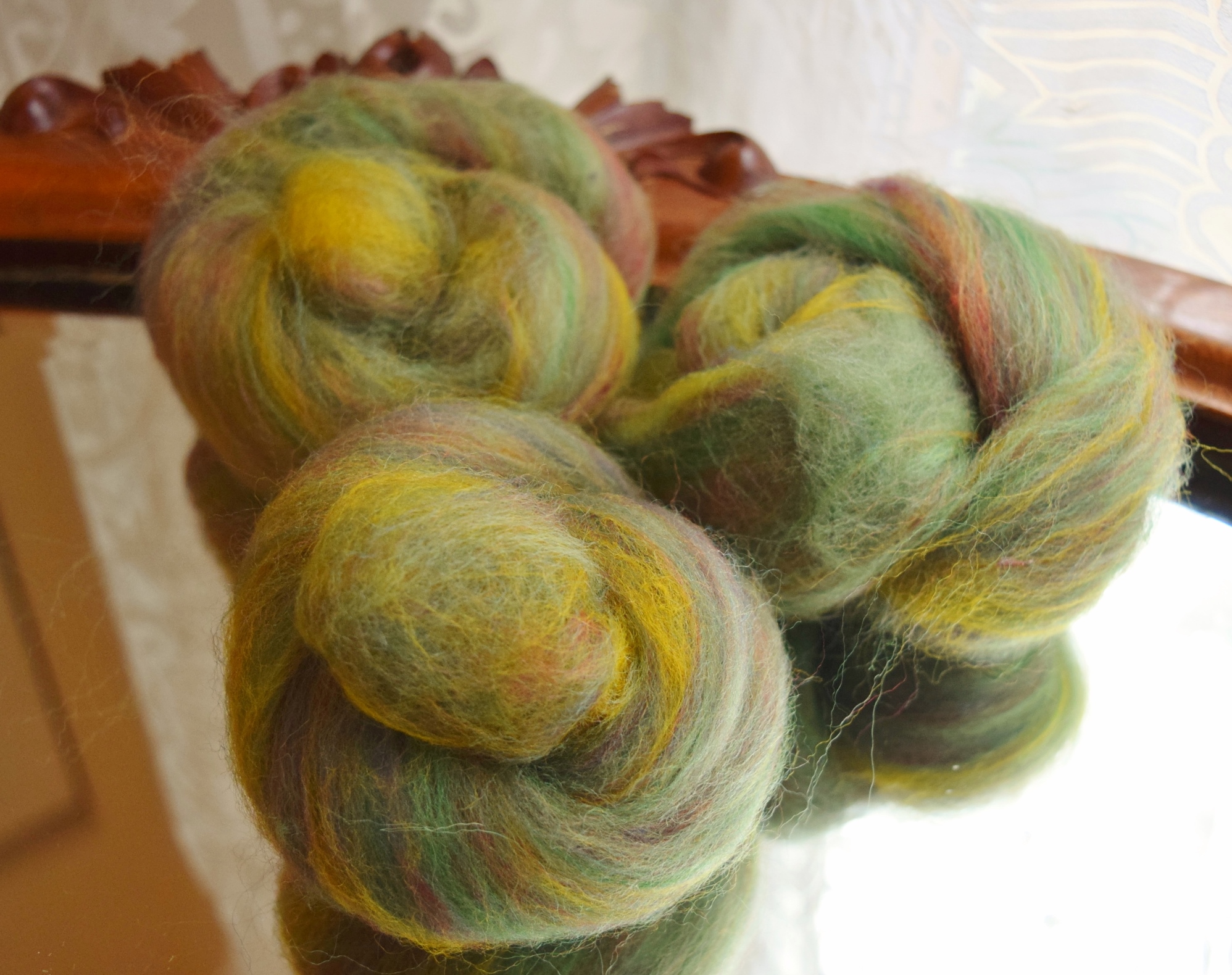
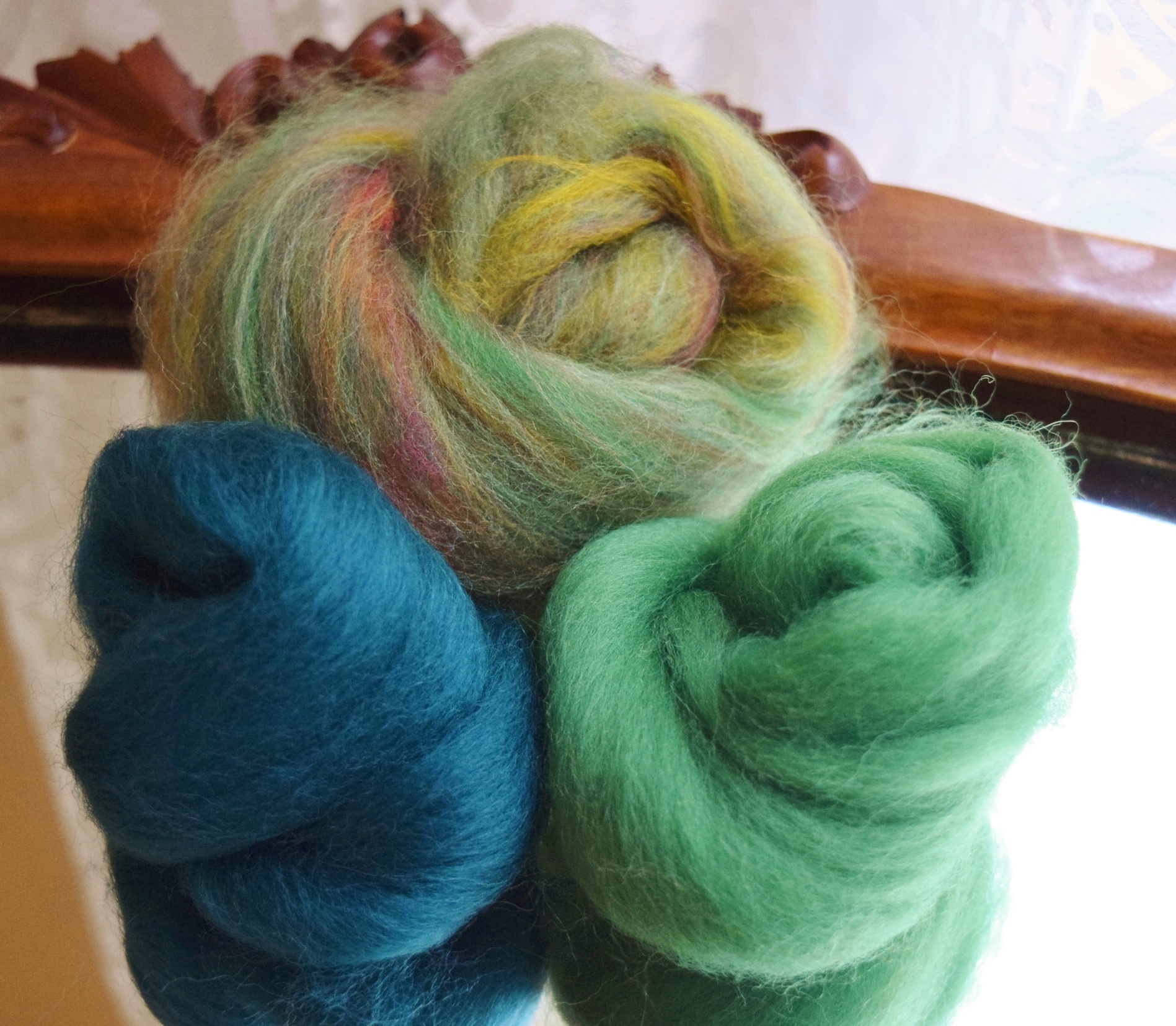
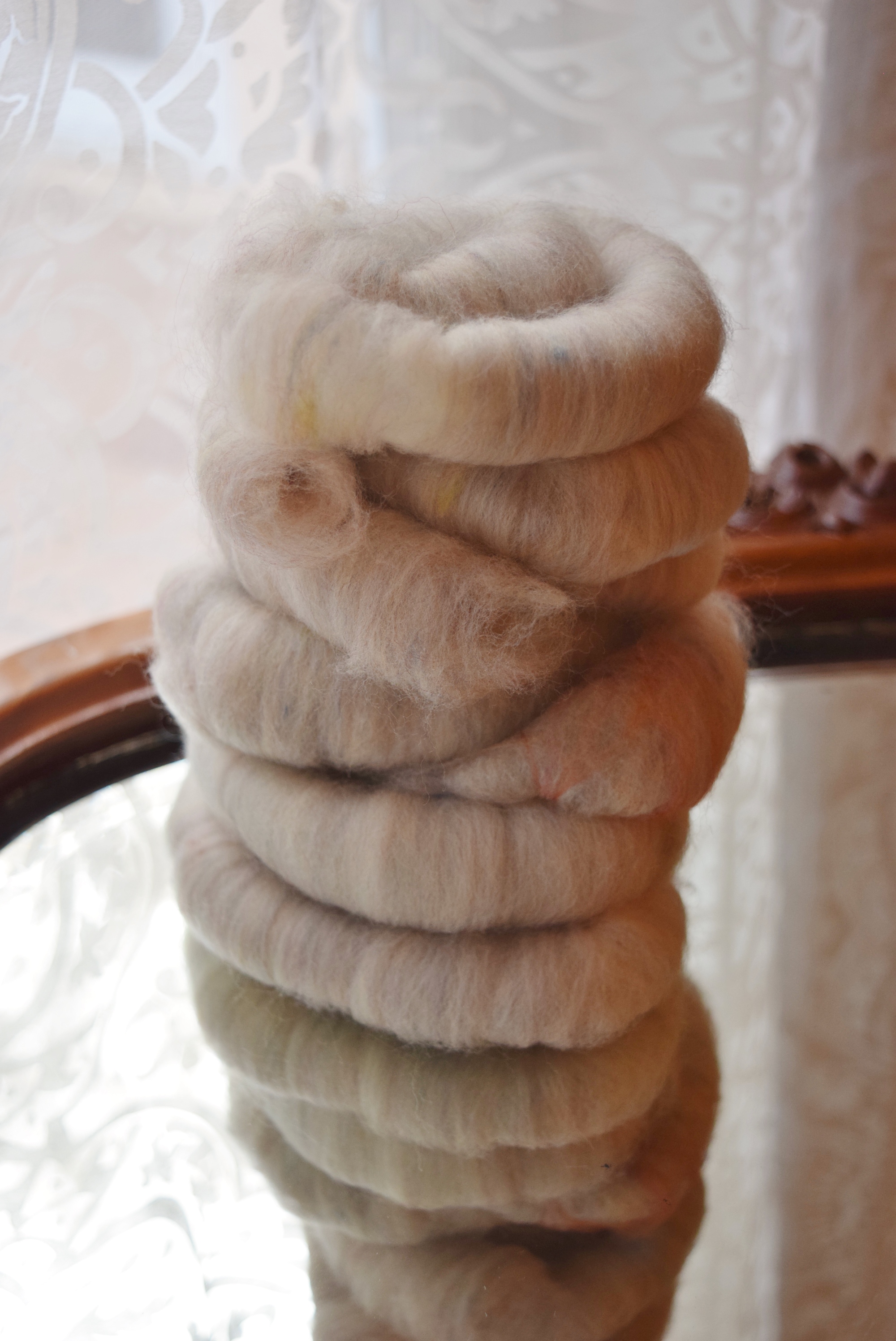
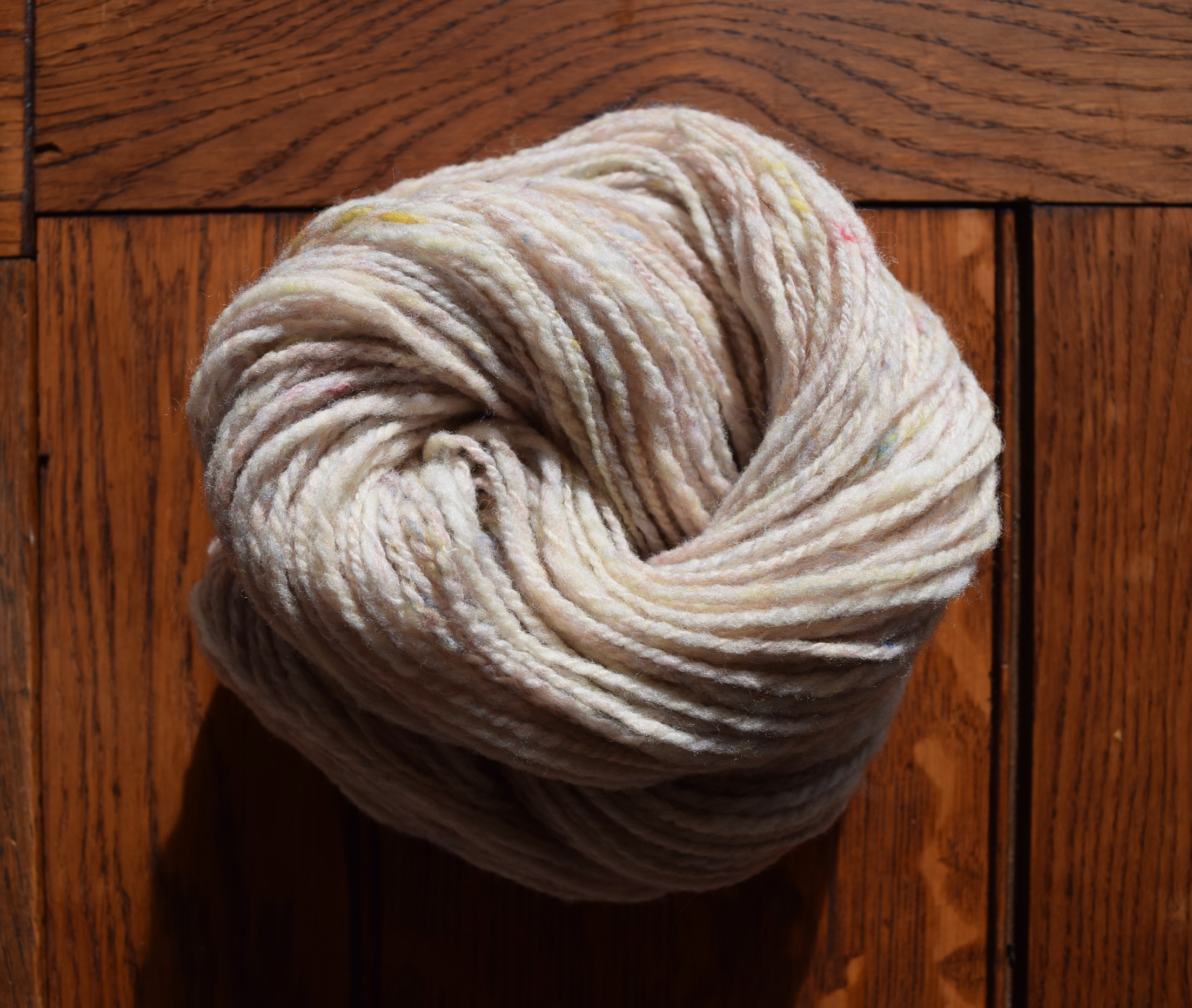
Tweed Chronicles: The color of moss…

photo from archives: Knitting In Nature

Moss is the most complicated color in nature that I can think of.  Here in the mountains of Northern California, it is dormant through the dry season (most of the year if not half) during which it shrivels and turns an olive green to brown color. When the rains come, it is fat full of water, it glistens with nearly neon golden tips and has every shade of green present, plus a few other colors in there too …

jenjoycedesign©moss-dripping
photo from archives: Fog & Moss

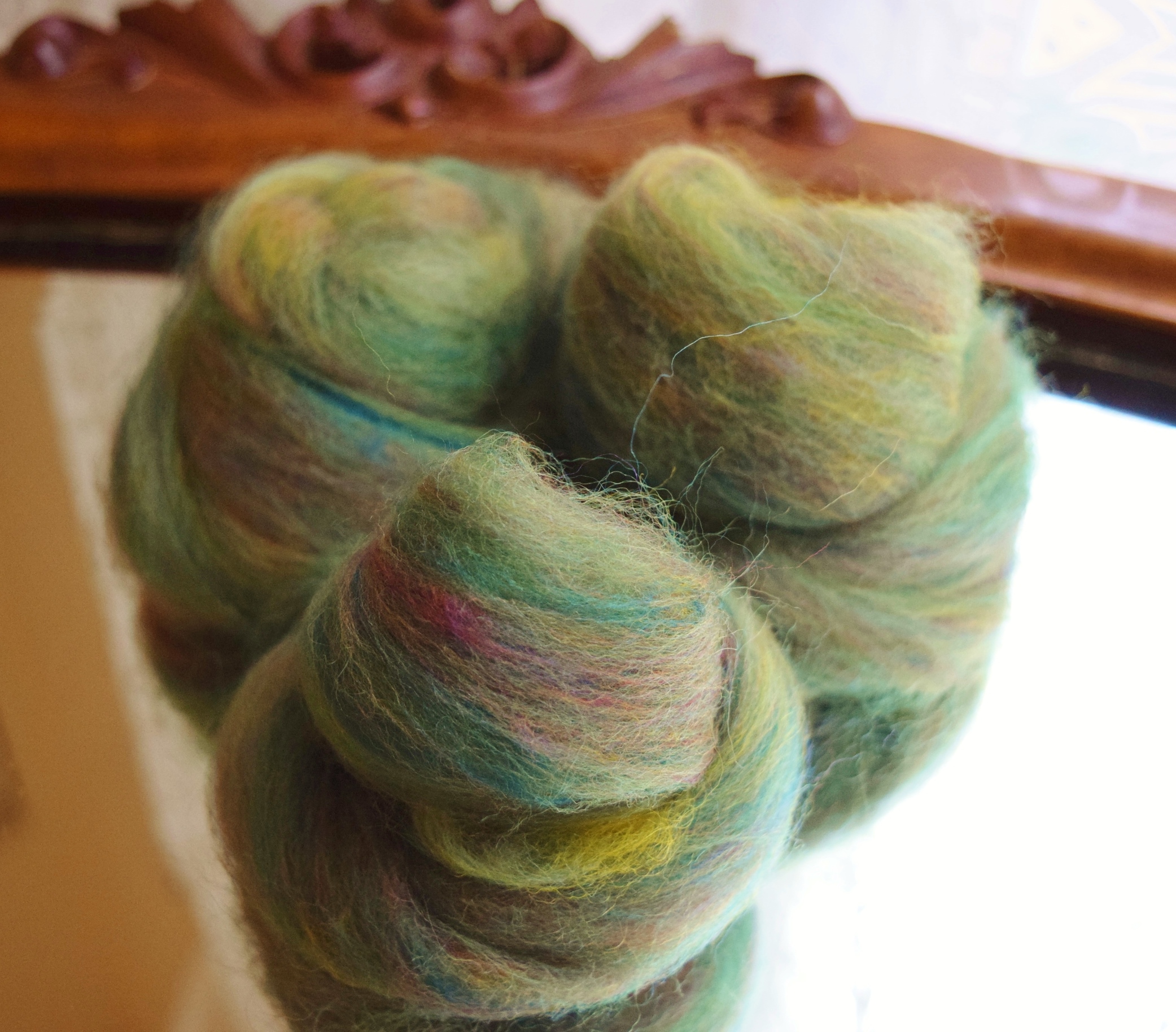
I could never really quite figure out if real moss in nature is a warm or cool green, so I figure I’d just layer and layer and layer the colors until it seemed right,  improvising as I went along …
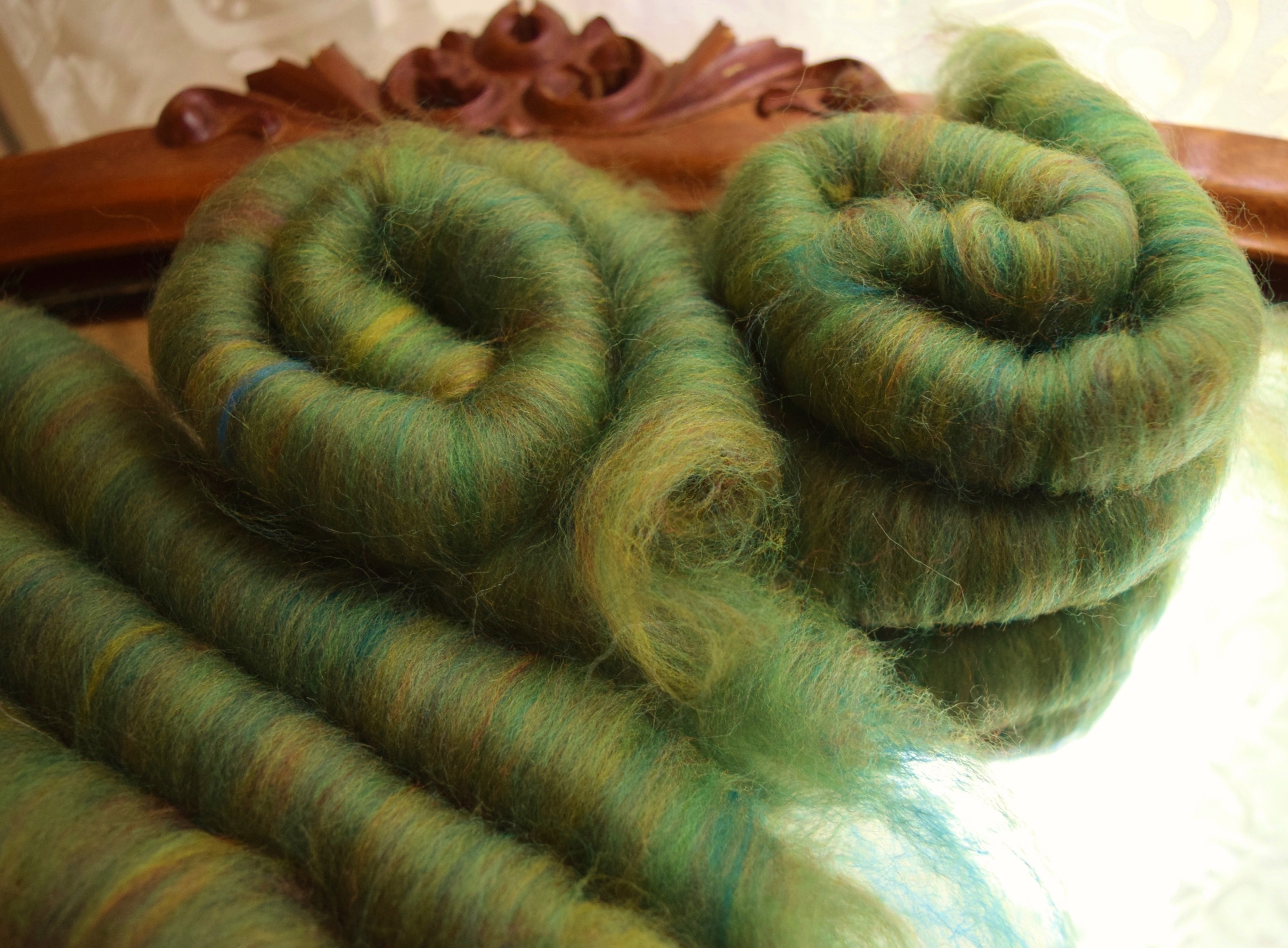
jenjoycedesign© moss rolags!

which spun up to be as complex of a green in yarn form as I thought it should be …
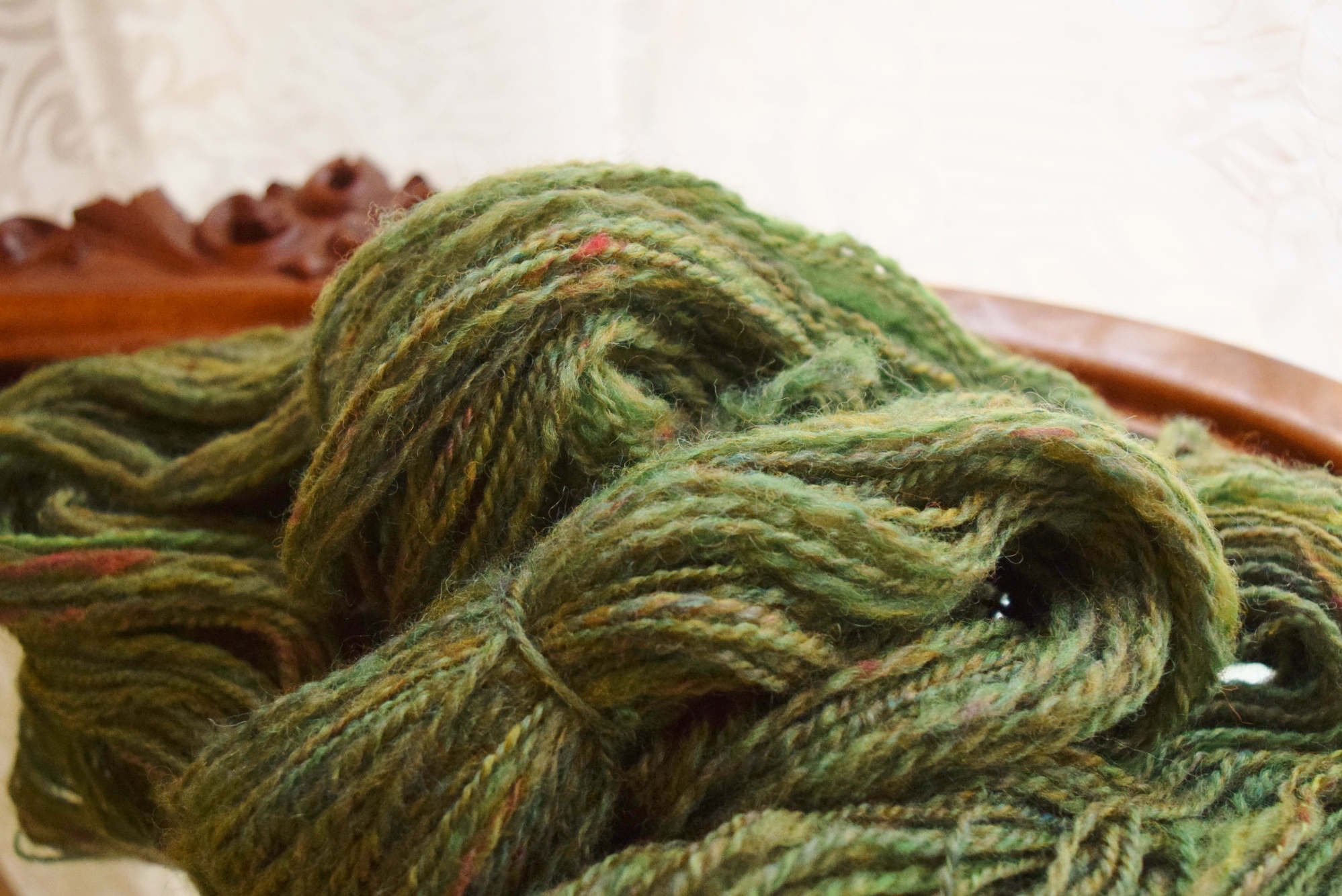
jenjoycedesign© moss 3

but I do think in hindsight I should have added more dark green, which I didn’t have any of,  so if I did, I would have added in the greens.

Anyway, this is how I did my ” moss “…

♣     ♣     ♣

Techy stuff for Moss…

  • Lift color saturated neutral batt, layer alternately with 5g each of grass green, leaf green, and olive green. 
  • Lift batt, layer alternately again with 5g each of grass green and mustard yellow.
  • Lift batt, layer alternately again with 5g each of grass green and mallard teal. (I think next time I will blend in more Mallard teal, perhaps along with the yellow in previous step).
  • Layer again on blending board and draw off rolags.
  • Improvement for next time: Add more mallard (teal) with yellow,  as well as a dark green.
  • Colorway blend:  ” Moss” .
  • See ALL color blending experiments & recipes archived in Tweed Chronicles


Tweed Chronicles: Geological 3

jenjoycedesignc2a9eroded-waterway
photos in archives: Long Shadows Of January

Last and lightest color in my geological series is the ash layer from volcanic eruptions, and which show up a couple of feet down, seen mostly where there is water erosion in the ditches along side of some of the vineyard roads next door …
jenjoycedesignc2a9eroded-layers-of-ash
It is a stripey design of very light grey  to medium grey, depending whether it is wet or dry,  so “Ash” perfectly names the light grey color in my Geological colorways.

jenjoycedesign© ash rolags

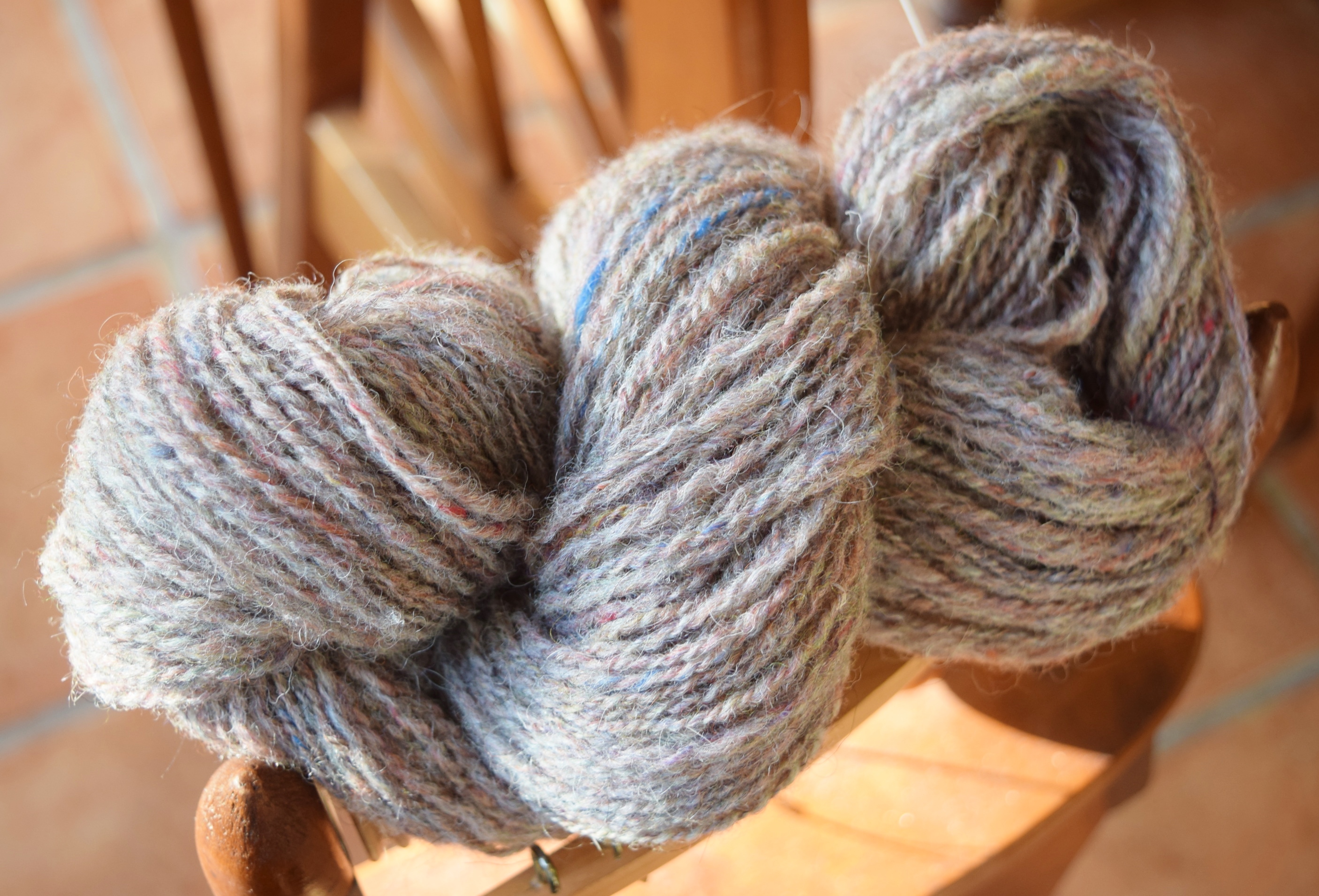
The bulk of the color is silver — natural grey and natural white fleece —  so the range from a warm silver to a cool medium grey is up to the mood, and a thing which invites a lot of personal touch.

jenjoycedesign© rolags 2

In my three geological colors of  dark Shale,  medium Sandstone, and now light Ash, either natural grey or natural brown can be blended with natural white for the rock tones, because the distinguishing difference is dark-to-light variation more than it is color hue.

jenjoycedesign© 004

The other distinguishing feature of geological colors is that I’m using undyed natural colors for the all-over color, with a splash of the color-saturated neutral showing …

jenjoycedesign© 006

…   which by the way,   the  “color saturated neutral” (primary and/or secondary triad mix)  is the unifying element of ALL of my tweedy colorways !

Next time I will use less ratio of the color-saturated neutral, because when one is blending a light wool , like paint, the proportion of pigment actually is very little.  Also next time I will use more white in the mix to make the all-over color a lighter silver (noted below).   But for the sake of documenting my experiment, here’s what I did…

♣     ♣     ♣

Techy stuff for Ash…

  • Began with Primary & Secondary Neutral recipe using approx 2.5g each of green, purple, and orange  AND  blue, red, and yellow, (or alternately 5g each of primary or secondary triad colors) blended thoroughly on blending board (see Blending For Tweed Simplified) , lift batt, set aside.
  • Layer 15g natural white with 15g natural grey,  lift batt. (Note: For lighter grey, blend more white, less grey)
  • Layer color-saturated neutral batt with white/grey batt alternately.
  • Lift batt, and for lighter grey layer again with 15g more white.
  • draw off rolags.
  • Colorway blend:  ” Ash” .
  • See ALL color blending experiments & recipes archived in Tweed Chronicles


Tweed Chronicles: Manzanita Blossom

photo from archives:  A Storm On The Way

The blossoms of the Arctostaphylos (manzanita) on the ridge trail of the mountain ~~ one with pink flowers, and one with white ~~ are the first blossoms arriving in winter!

pink blooming manzanita

Nestled side by side on the ridge, the two varieties are perfectly complimenting of each other, and as fragrant as they are breathtaking in beauty.

white blooming manzanita

((You can read more about the manzanita in this post ))

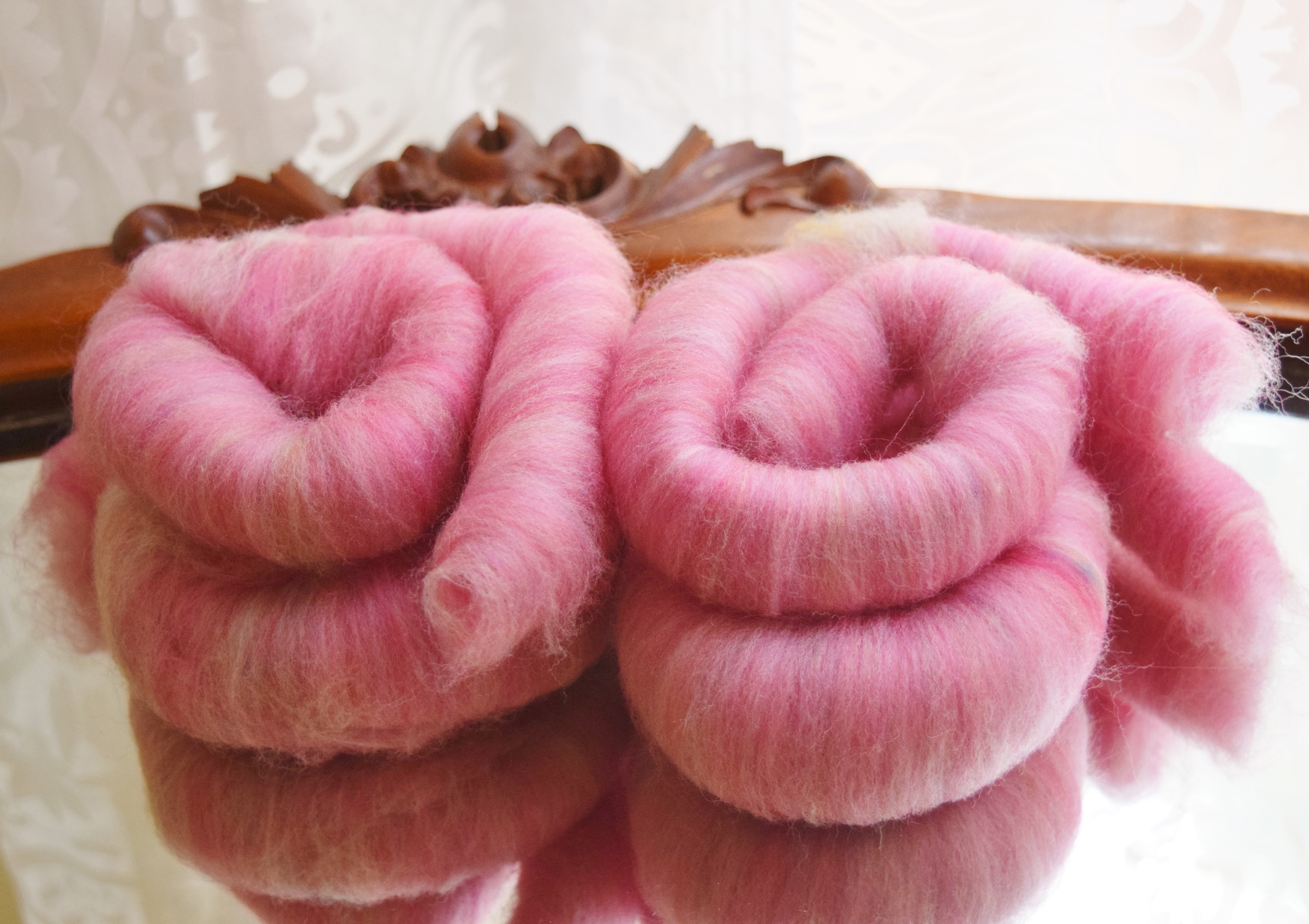
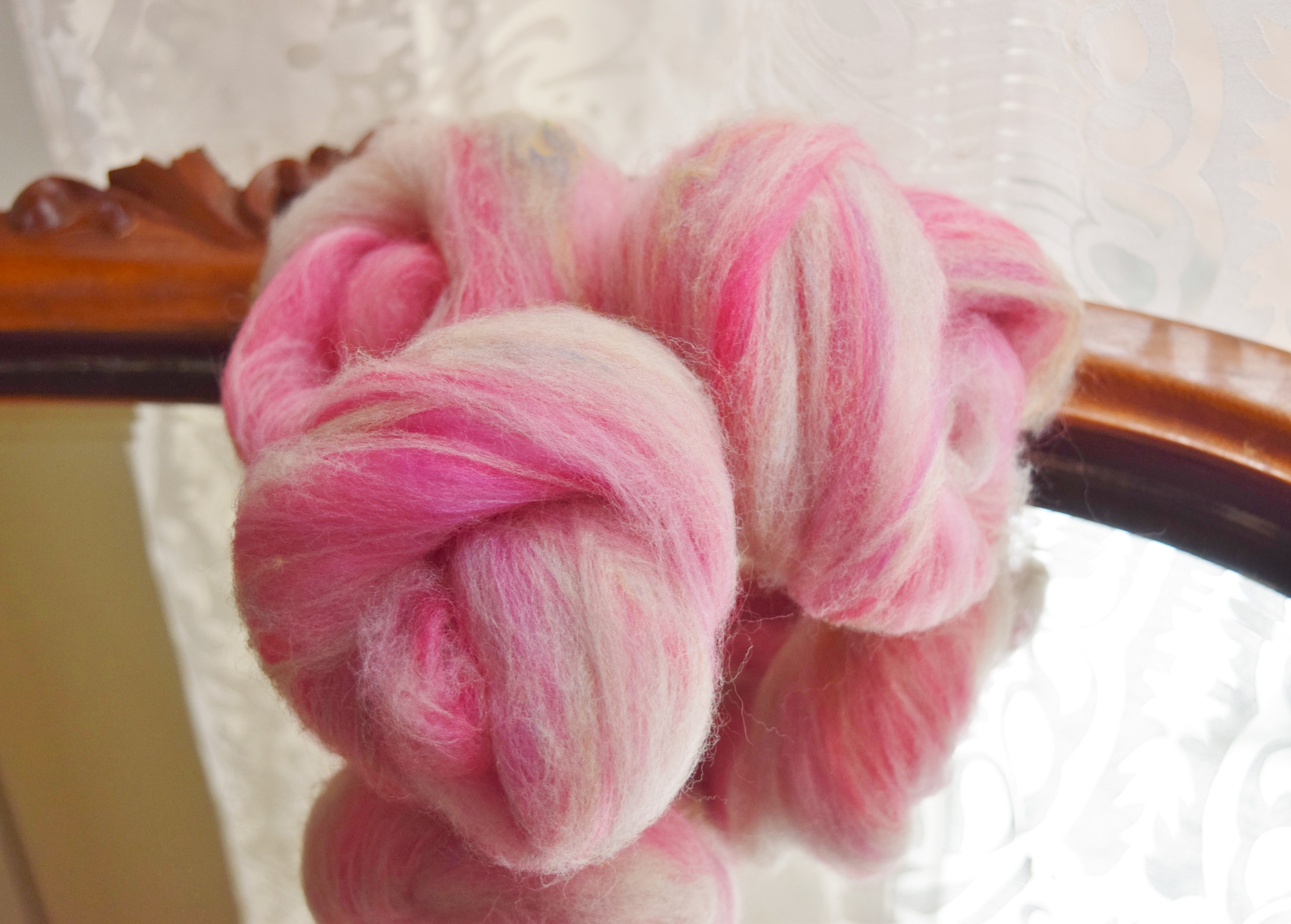
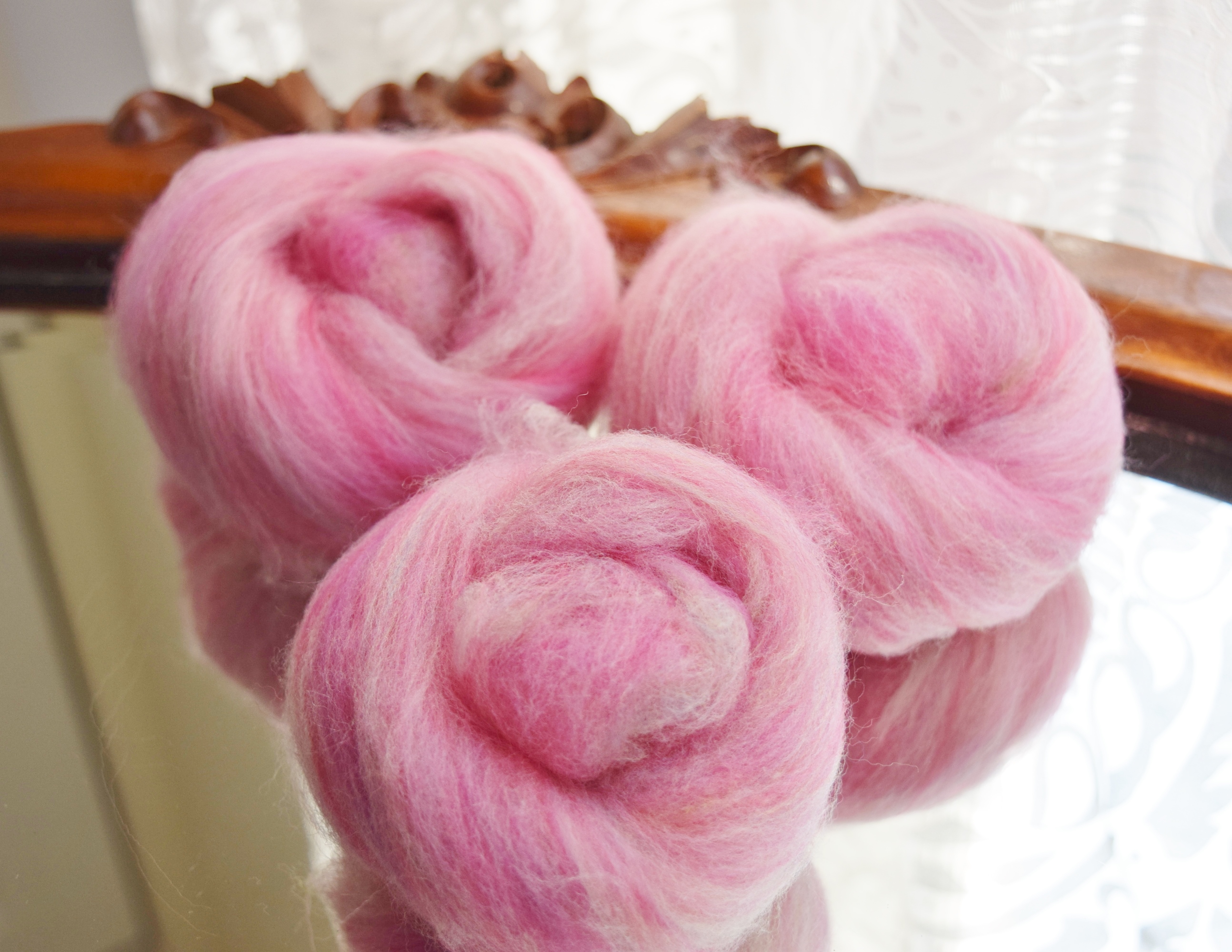
Now looking at my latest tweed yarn colorway:  “manzanita blossom” …  it will be a pink, with a just a dusting of white.

jenjoycedesign© rolags

A blush of pink against rocky volcanic landscape is one of the most beautiful things in the mountain landscape, and I do think I found just the right shade ( although I wished I put a tiny bit more white in the last blending layer) …

jenjoycedesign© spun manzanita

A shy pink.

A pink which is the color of mid winter … pale and fresh.

jenjoycedesign© spun1

There in the pink is the saturated neutral too.

jenjoycedesign© spun

Now, let me show you how I do it…

♣     ♣     ♣

Techy stuff for Manzanita (pink)…

  •  Color Saturated Neutral recipe for approx 5g each of primary triad of blue, red, and yellow:  Blended thoroughly on blending board with 15g of white as many times as necessary to fully homogenize…

jenjoycedesign© primary neautral + white

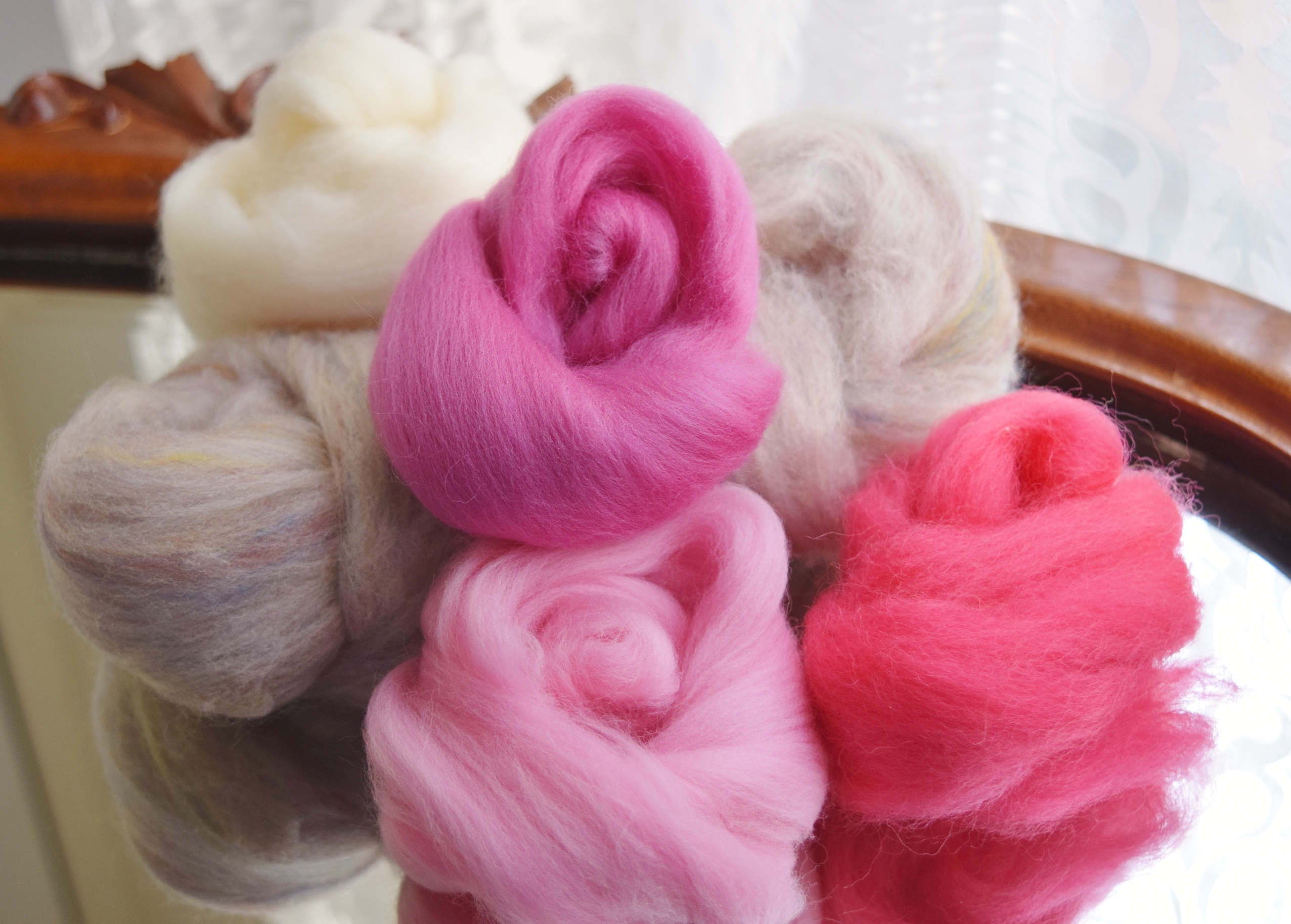
  • With neutral-white mix, layer alternately with 5g each of Fuscia, Rose, and Flamingo Pinks, and 5-10g more white  (see Blending For Tweed Simplified)

jenjoycedesign© add pinks and white

  •  Lift batt, and layer again twice more.  (Note to improve: try last layering with another 5g white. to get more white ‘streaking’)
  • Draw off rolags.
  • Colorway blend:  “Manzanita blossom” .
  • See ALL color blending experiments & recipes archived in Tweed Chronicles


Tweed Chronicles: Clover

jenjoycedesign© wild-red-clover
photo in archives: A Walk Among Wildflowers

There is absolutely nothing that I can think of as red in the wild landscape as the crimson clover which grows abundant in the meadows nearby on the mountain, the meadows where Emma and I have walked countless times, and forefront of my mind when I think of a name for the colorway of red. Wild, herbaceous gobs of crimson, are the trifolium incarnatum  flowers.

jenjoycedesign© red clover rolags

Crimson is the color I am trying to grasp.

jenjoycedesign© red clover spinning

It needs a little improvement for next time (perhaps more red)

jenjoycedesign© red clover spun 2

But this is it ~~~  my crimson clover .

jenjoycedesign© red clover spun

I am looking forward to six months from now when the wildflowers will hopefully have returned from the burned topsoil, as the grass has already … shy little green sprouts everywhere !  Tomorrow morning is the winter solstice, and I am glad to see it finally come, and to see pass my huge disappointment of  once favored ( oh how fickle of a season) Autumn.    Winter come, o’ please be gentle, cast your sleepy spell on the landscape, and clean up the blackened death from the wildfire, soften it with rain and bring back the wildflowers and the moss, so that the landscape may wake anew with spring growth, restored and resilient and colorful.    Autumn,  to you I bid good bye.

♣     ♣     ♣

Techy stuff for Red Clover…

  • Lift neutral batt, layer alternately with 5g each of ruby red and rose pink.
  • Lift batt, layer alternately with 5g (or more) of red.
  • Draw off rolags.
  • Colorway blend:  “Red Clover” .
  • See ALL color blending experiments & recipes archived in Tweed Chronicles


Tweed Chronicles: The color of fog …

March's entrance
photo from archives: Shades Of Fog

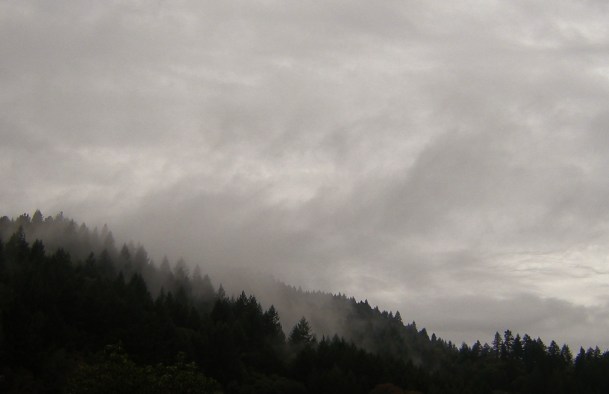
Fog is a huge part of life on the mountain, for me, and I just love the fog show …

jenjoycedesign© fog Jan 2015
fog in January, 2015

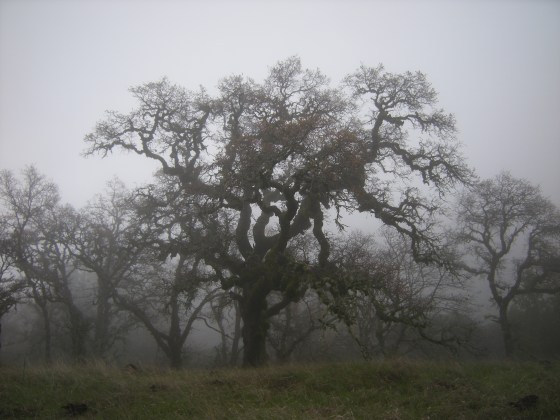
I love to watch it pour over the ridge from the Pacific, fluid and volatile, and into the valley,  or splashing up from it.  I also love it just thickly hovering about …

jenjoycedesign©blue oaks in fog
photo from archives:  Foggy

So naturally, my next tweed endeavor must capture the color of fog !

jenjoycedesign© fog white

It is my basic white,  well,  a near white, where like fog, you see faint color of images behind …


Just a tiny bit of the color-saturated neutral to start, then blended several times with increasing amount of white wool, so you’ll see flecks of blue, red and yellow upon close inspection.

jenjoycedesign© 018

I really am enjoying developing a personal hand-spun color palette, and see no end to my combing wool in different combinations, racing obsessively from blending board to the spinning wheel, grabbing my camera to photograph, wash, dry, wind on swift, photogragh again …

jenjoycedesign© fog 5

… then on to the next !

♣     ♣     ♣

Techy stuff for Fog (white)…

  •  Color Saturated Neutral recipe for approx 10-15% base, primary triad of blue, red, and yellow:  Blended thoroughly on blending board.   Note: for a more dramatic tweed, with gobs of color splashing through, blend only once , then continue.
  • Starting with white, layer alternately with neutral (see Blending For Tweed Simplified)
  •  Lift batt, divide as needed and layer again and again with more white, repeatedly fully hemogenized, more or fewer times until white/neutral values balance as desired.
  • Draw off rolags.
  • Colorway blend:  “Fog” .
  • See ALL color blending experiments & recipes archived in Tweed Chronicles