Tweed Chronicles: The color of moss…

photo from archives: Knitting In Nature

Moss is the most complicated color in nature that I can think of.  Here in the mountains of Northern California, it is dormant through the dry season (most of the year if not half) during which it shrivels and turns an olive green to brown color. When the rains come, it is fat full of water, it glistens with nearly neon golden tips and has every shade of green present, plus a few other colors in there too …

jenjoycedesign©moss-dripping

photo from archives: Fog & Moss

I could never really quite figure out if real moss in nature is a warm or cool green, so I figure I’d just layer and layer and layer the colors until it seemed right,  improvising as I went along …

jenjoycedesign© moss rolags!

which spun up to be as complex of a green in yarn form as I thought it should be …

jenjoycedesign© moss 3

but I do think in hindsight I should have added more dark green, which I didn’t have any of,  so if I did, I would have added in the greens.

Anyway, this is how I did my ” moss “…

♣     ♣     ♣

Techy stuff for Moss…

  • Lift color saturated neutral batt, layer alternately with 5g each of grass green, leaf green, and olive green. 
  • Lift batt, layer alternately again with 5g each of grass green and mustard yellow.
  • Lift batt, layer alternately again with 5g each of grass green and mallard teal. (I think next time I will blend in more Mallard teal, perhaps along with the yellow in previous step).
  • Layer again on blending board and draw off rolags.
  • Improvement for next time: Add more mallard (teal) with yellow,  as well as a dark green.
  • Colorway blend:  ” Moss” .
  • See ALL color blending experiments & recipes archived in Tweed Chronicles


Tweed Chronicles: Geological 3

jenjoycedesignc2a9eroded-waterway

photos in archives: Long Shadows Of January

Last and lightest color in my geological series is the ash layer from volcanic eruptions, and which show up a couple of feet down, seen mostly where there is water erosion in the ditches along side of some of the vineyard roads next door …
jenjoycedesignc2a9eroded-layers-of-ash
It is a stripey design of very light grey  to medium grey, depending whether it is wet or dry,  so “Ash” perfectly names the light grey color in my Geological colorways.

jenjoycedesign© ash rolags

The bulk of the color is silver — natural grey and natural white fleece —  so the range from a warm silver to a cool medium grey is up to the mood, and a thing which invites a lot of personal touch.

jenjoycedesign© rolags 2

In my three geological colors of  dark Shale,  medium Sandstone, and now light Ash, either natural grey or natural brown can be blended with natural white for the rock tones, because the distinguishing difference is dark-to-light variation more than it is color hue.

jenjoycedesign© 004

The other distinguishing feature of geological colors is that I’m using undyed natural colors for the all-over color, with a splash of the color-saturated neutral showing …

jenjoycedesign© 006

…   which by the way,   the  “color saturated neutral” (primary and/or secondary triad mix)  is the unifying element of ALL of my tweedy colorways !

Next time I will use less ratio of the color-saturated neutral, because when one is blending a light wool , like paint, the proportion of pigment actually is very little.  Also next time I will use more white in the mix to make the all-over color a lighter silver (noted below).   But for the sake of documenting my experiment, here’s what I did…

♣     ♣     ♣

Techy stuff for Ash…

  • Began with Primary & Secondary Neutral recipe using approx 2.5g each of green, purple, and orange  AND  blue, red, and yellow, (or alternately 5g each of primary or secondary triad colors) blended thoroughly on blending board (see Blending For Tweed Simplified) , lift batt, set aside.
  • Layer 15g natural white with 15g natural grey,  lift batt. (Note: For lighter grey, blend more white, less grey)
  • Layer color-saturated neutral batt with white/grey batt alternately.
  • Lift batt, and for lighter grey layer again with 15g more white.
  • draw off rolags.
  • Colorway blend:  ” Ash” .
  • See ALL color blending experiments & recipes archived in Tweed Chronicles


Tweed Chronicles: Manzanita Blossom

photo from archives:  A Storm On The Way

The blossoms of the Arctostaphylos (manzanita) on the ridge trail of the mountain ~~ one with pink flowers, and one with white ~~ are the first blossoms arriving in winter!

pink blooming manzanita

pink blooming manzanita

Nestled side by side on the ridge, the two varieties are perfectly complimenting of each other, and as fragrant as they are breathtaking in beauty.

white blooming manzanita

white blooming manzanita

((You can read more about the manzanita in this post ))

Now looking at my latest tweed yarn colorway:  “manzanita blossom” …  it will be a pink, with a just a dusting of white.

jenjoycedesign© rolags

A blush of pink against rocky volcanic landscape is one of the most beautiful things in the mountain landscape, and I do think I found just the right shade ( although I wished I put a tiny bit more white in the last blending layer) …

jenjoycedesign© spun manzanita

A shy pink.

A pink which is the color of mid winter … pale and fresh.

jenjoycedesign© spun1

There in the pink is the saturated neutral too.

jenjoycedesign© spun

Now, let me show you how I do it…

♣     ♣     ♣

Techy stuff for Manzanita (pink)…

  •  Color Saturated Neutral recipe for approx 5g each of primary triad of blue, red, and yellow:  Blended thoroughly on blending board with 15g of white as many times as necessary to fully homogenize…

jenjoycedesign© primary neautral + white

  • With neutral-white mix, layer alternately with 5g each of Fuscia, Rose, and Flamingo Pinks, and 5-10g more white  (see Blending For Tweed Simplified)

jenjoycedesign© add pinks and white

  •  Lift batt, and layer again twice more.  (Note to improve: try last layering with another 5g white. to get more white ‘streaking’)
  • Draw off rolags.
  • Colorway blend:  “Manzanita blossom” .
  • See ALL color blending experiments & recipes archived in Tweed Chronicles


Tweed Chronicles: Clover

jenjoycedesign© wild-red-clover

photo in archives: A Walk Among Wildflowers

There is absolutely nothing that I can think of as red in the wild landscape as the crimson clover which grows abundant in the meadows nearby on the mountain, the meadows where Emma and I have walked countless times, and forefront of my mind when I think of a name for the colorway of red. Wild, herbaceous gobs of crimson, are the trifolium incarnatum  flowers.

jenjoycedesign© red clover rolags

Crimson is the color I am trying to grasp.

jenjoycedesign© red clover spinning

It needs a little improvement for next time (perhaps more red)

jenjoycedesign© red clover spun 2

But this is it ~~~  my crimson clover .

jenjoycedesign© red clover spun

I am looking forward to six months from now when the wildflowers will hopefully have returned from the burned topsoil, as the grass has already … shy little green sprouts everywhere !  Tomorrow morning is the winter solstice, and I am glad to see it finally come, and to see pass my huge disappointment of  once favored ( oh how fickle of a season) Autumn.    Winter come, o’ please be gentle, cast your sleepy spell on the landscape, and clean up the blackened death from the wildfire, soften it with rain and bring back the wildflowers and the moss, so that the landscape may wake anew with spring growth, restored and resilient and colorful.    Autumn,  to you I bid good bye.

♣     ♣     ♣

Techy stuff for Red Clover…

  • Lift neutral batt, layer alternately with 5g each of ruby red and rose pink.
  • Lift batt, layer alternately with 5g (or more) of red.
  • Draw off rolags.
  • Colorway blend:  “Red Clover” .
  • See ALL color blending experiments & recipes archived in Tweed Chronicles


Tweed Chronicles: The color of fog …

March's entrance

photo from archives: Shades Of Fog

Fog is a huge part of life on the mountain, for me, and I just love the fog show …

jenjoycedesign© fog Jan 2015

fog in January, 2015

I love to watch it pour over the ridge from the Pacific, fluid and volatile, and into the valley,  or splashing up from it.  I also love it just thickly hovering about …

jenjoycedesign©blue oaks in fog

photo from archives:  Foggy

So naturally, my next tweed endeavor must capture the color of fog !

jenjoycedesign© fog white

It is my basic white,  well,  a near white, where like fog, you see faint color of images behind …


Just a tiny bit of the color-saturated neutral to start, then blended several times with increasing amount of white wool, so you’ll see flecks of blue, red and yellow upon close inspection.

jenjoycedesign© 018

I really am enjoying developing a personal hand-spun color palette, and see no end to my combing wool in different combinations, racing obsessively from blending board to the spinning wheel, grabbing my camera to photograph, wash, dry, wind on swift, photogragh again …

jenjoycedesign© fog 5

… then on to the next !

♣     ♣     ♣

Techy stuff for Fog (white)…

  •  Color Saturated Neutral recipe for approx 10-15% base, primary triad of blue, red, and yellow:  Blended thoroughly on blending board.   Note: for a more dramatic tweed, with gobs of color splashing through, blend only once , then continue.
  • Starting with white, layer alternately with neutral (see Blending For Tweed Simplified)
  •  Lift batt, divide as needed and layer again and again with more white, repeatedly fully hemogenized, more or fewer times until white/neutral values balance as desired.
  • Draw off rolags.
  • Colorway blend:  “Fog” .
  • See ALL color blending experiments & recipes archived in Tweed Chronicles

Tweed Chronicles: Madrone

(photo from archives Whisper In The Woods)

What I miss most right now,  are the madrones , Arbutus Menziesii, a unique kind of tree native to the California Coast and mountain ranges, with an interesting rusty orange bark that sheds in papery sheets…

Madrones have an indescribable color if ever you were to witness, it turning at first shed a bright green, which changes in a matter of days to a greyish orange, then to browner rust.

by the window

( photo from archives…  Gone Wild)

Among the madrones is a wonderful place to be;  hidden,  enchanting,  and ever-so-quiet, and kept company right outside of the window where I loved to write, knit, or spin.    I have tried to capture my madrones, blending color after color,  overdoing the layers, but eventually I think I found close to the indescribable.  A bit too much orange I think, but I have made notes of how to improve my next blending experiment.

♣     ♣     ♣

Meanwhile Emma seems to be perfectly happy in her new napping places…

Emma

I take her up nearly everyday to the woods, the place where the house was ~~ will be again~~ (which is as of last weekend a nice freshly excavated dirt area) , and she loves to sniff the air while riding in the back of the car with the windows down, and bark at the cows or horses she see’s along the way. I spoil her a lot these days, and we love our trip up the mountain to the ‘house’ …  we meander as before, and I am knit-walking again!

♣     ♣     ♣

Techy stuff  for Madrone …

  • Added 10g each of cinnamon, rose, and amber, layered again.
  • Lift batt, and layered again.  Too pink,  so decided to add 5g  of amber.
  • Not brown enough, so added 5g Hazelnut, and layered to have a bit of brown streaking in the spin.
  • Drew off rolags.
  • Colorway of blend “Madrone”
  • Note of improvement:  Next time more red instead of the amber step, and more brown on last blend.
  • See ALL color blending experiments & recipes archived in Tweed Chroniclesjenjoycedesign©woods


Tweed Chronicles: Wild Flax

jenjoycedesign© spinning by a window

Spinning by a window  …
jenjoycedesign© spinning Wild Flaxlight flooding in to  unwind my shadowy worries.

jenjoycedesign© 010

I cast my mind to a warm landscape of wild flax …

 hoping to find the colors of the flowers in the wool blend …

jenjoycedesign© 019

I have been doing a lot of fiber blending,  and a little spinning too, which is for now easing me slowly back into creative mood ( and am so grateful to “L” for the gift of a beautiful Ashford Traditional spinning wheel!)

jenjoycedesign© spun

Wild Flax; Linum perenne var. lewisii , Lewis Flax, blue flax or prairie flax, seen on the roadside along Mt Veeder road in July, and sometimes early August. Not the domestic farmed species for linen, but just one of the common beautiful wild flowers of Napa Valley that we all call “ wild flax “.

In closing,  FEMA clean-up crews have been working rapidly in Napa & Sonoma counties since the wildfire of October, and by the end of December, maybe a clean slate for us? Impossible to forecast the rebuilding ahead,  for now I find the cozy window here my joy of the afternoon.

♣     ♣     ♣

Techy stuff  for my Wild Flax Blue …

  •  2 g each of primary colors (6g tot) , for a base of color-saturated neutral ,  see this post; blend thoroughly on blending board 3 times Total 6g.    Note: for a more dramatic tweed, with gobs of color splashing through, blend only once , then continue.
  • 6g cornflower blue, layer very thinly one color at a time, with neutral base. Tot 12g.
  • Lift batt, layered again with 2g each of white, light green, teal. Tot 18g.

( I was trying to get more blended base, with a ‘dusting’ of brilliant blue on the last blend…)

  • Lift batt, and layered again with 2g  of cornflower blue. Tot 20g.
  • Drew off rolags.
  • Colorway of blend “Wild Flax Blue”
  • See ALL color blending experiments & recipes archived in Tweed Chronicles

Tweed Chronicles: Color Saturated Neutral

jenjoycedesign© spun
I have successfully made a color saturated neutral.

Nested in a mountain of other neutral tones, you don’t see it right away,

   but look at where I started …

jenjoycedesign© primary & secondary mix
Primary and secondary colors all in exact equal amounts …

carded three times on the blending board  …

then drawn out into tasty wool sausages !
jenjoycedesign© rolags

If you check out my Primary triad blend here ,  I’ll say that the secondary triad blend experiment was much the same, nearly indistinguishable from the primary , and theoretically should be the same for any color triad on the color wheel .  Tertiary triads too, and lighter values of the triads; as light blue for blue, pink for red, aqua for teal, peach for orange, etc.

In this experiment,  I used two triads together ;  primary + secondary ,  for my ultimate color-saturated neutral, and I must say this blend was really fun to spin … the colors are all there. 

jenjoycedesign© spun detail

I’ve got my color-saturated-neutral base recipe, a base for my own color palette of ‘slightly earthy heathers’ , as I’ve never been drawn to vivid hues when buying yarns.  From a color-saturated neutral I can base everything, light or dark, and with color intensity varying.  I’m looking forward to developing more recipes ~~ watch this space!

♣     ♣     ♣

Techy stuff …

  • Equal amounts of each of primary: red, yellow, and blue , and/or secondary: purple, orange and green.
  • Layered very thinly one color at a time, alternately.  I mean really a lot of thin layers … using  this technique,
  • Lifted batt, layered again, total of three times.
  • Drew off rolags.
  • Colorway blend:  “Color Saturated Neutral” .
  • See ALL color blending experiments & recipes archived in Tweed Chronicles


Tweed Chronicles: The color of sea grass.

Pacific-coast-grass

I am deep into the study of color saturated neutrals.

jenjoycedesign© rolags 4

What is a color saturated neutral? Well, when I blend equal amounts of the primary colors together, the affect is at first glance, a seemingly dull clay color ,  as I posted previously about HERE.

In this experiment I added to the primary triad mix, one secondary color – green,    integrating all of the colors on the blending board with this technique ,  bringing the whole color balance leaning a little bit toward the green … a weathered sea grass green.

jenjoycedesign© primaries + green

primary colors + 1 secondary (green)

jenjoycedesign© first batt

first blended batt

jenjoycedesign© second batt

second blended batt

I then added some un-dyed natural white to give it some texture and depth.

jenjoycedesign© third batt + white

third blended batt, adding white

Colorway reminds me of the pampas grasses which grow along the Pacific coast.

jenjoycedesign© 004

While enjoying some spinning on my Ashford Traditional wheel (( a resonating gratitude to  “L” who wishes not to be mentioned ))   I have decided that perhaps Tweed Chronicles is a new love which causes only happiness …

jenjoycedesign© spun 3

And the studying of color is making me look deeper into the surface,  and imagine how the colors are found the same way in nature.

Next I am pairing primaries with secondaries, and finding super color saturation in what is an alarmingly gorgeous & complex neutral. Watch this space!

♣     ♣     ♣

Techy stuff …

  •  5g each of (near primary) red, yellow, and blue — plus green,  merino roving = 20g.
  • Layered very thinly one color at a time, alternately.  using this technique: Blending for tweed simplified
  • Lifted batt, layered again, total of three times. Lifted bat, and sectioned into strips of about 3.
  • With 15g white cormo roving, divided into 3 sections.
  • Layered very thinly white, then color blend, alternately.
  • Lifted batt, and layered again, loosely.
  • Drew off rolags.
  • I’m naming this colorway blend ” Pacific Coast Grass ” .
  • See ALL color blending experiments & recipes archived in Tweed Chronicles


Tweed Chronicles: Color

jenjoycedesign© tweed1

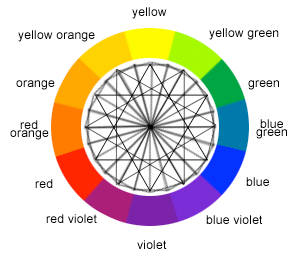
Back into Tweed Chronicles I have found once again rhythm in myself, perhaps a melody too. I have been thinking about the color wheel, and the basics I learned decades ago, and so I am applying it now to natural fiber ~~~ easy enough!

jenjoycedesign© tweed4

In fact, my whole color blending Tweed Chronicles has little to do with wool breeds and fibers,  almost nothing to do with spinning technique ( I am only a fair spinner)  …  but nearly all pure color theory, and blending technique.   I am a colorist perhaps, above all.

jenjoycedesign© tweed5

I am merely attempting to relive the high points of discovery that must have happened with folk centuries ago in the tweed mills, of a bygone era. I am all about the bygone era I think, feeling that deep tap root into human creativity that runs timeless and wild.

jenjoycedesign© tweed spun

Putting the primary colors together in a kind of color triad, is something that normally I would never do, for I am not in the least fond of primary colors, or even secondary.  But the complex blends of colors are made of of the basic colors, and so I am working with the  primaries & secondaries in a tweed experiment that I hope works just as I am conceiving it in my mind, as I lose myself to sleep at night, dreaming the magic of heathered tones.

jenjoycedesign© tweed spun 3 detail

The best time of day is when the sun shines through the window bright enough to bring to life the best work of my imagination. Couple that with a delicious cup of coffee, and who would want anything more of the morning?

jenjoycedesign© tweed7

Well now, its off to the charity shops to see if I can find some good chairs!   Aside from this recent color blending euphoria, I am feeling a bit too tender and not wanting to cooperate with the holidays this year.   Scotty, beam me to January.

♣     ♣     ♣

Techy stuff of what I did …

  •  5g each of (near primary) red, yellow, and blue dyed merino roving = 15g.
  • Layered on blending board very thinly one color at a time, alternately.  I mean really a lot of thin layers … using technique Blending for tweed simplified.
  • Lifted batt, layered again a second time, then a third. Lifted bat, and sectioned into strips of about 5 or 6.
  • With 15g white cormo roving, divided in as many sections as the color blend.
  • Layered very thinly white, then color blend, alternately.
  • Lifted batt, and layered again twice.
  • Drew off rolags.
  • I’m naming this colorway blend ” Primary Triad + white”.
  • See ALL color blending experiments & recipes archived in Tweed Chronicles

Lingering question of the day:  Which one of you generous people sent me all of the Cormo wool? Was it Laurie? Rose? Adele? Lynette? (I am so sorry I lost track, but I’ve been rather hollow in my head!) From the bottom of my heart~~ thank you~~ it is absolutely dreamy!!!!

Tweed Chronicles: nine skeins

Nine tweed experiments.

Okay, I have now edited in the finished spun skeins into their respective posts, starting the last one Tweed Chronicles.  Not all of these experiments yielded great results, but I had a colossal learning curve, and I am pleased to see that my most recent is indeed my best…

jenjoycedesign© tweed

With these two as close seconds…

jenjoycedesign© tweed2

But my spinning wheel and blending board are put away as I must get to work and finish up my nieces sweaters, while pondering my next Autumnal obsession immediately thereafter!

Tweed Chronicles

jenjoycedesign© spinning tweed

I can’t stay away from the blending board…

jenjoycedesign© colors to blend

 nor can I stop testing my instincts about color,

and layering them ever so finer … and finer …. and even finer…

jenjoycedesign© 1st batt

1st batt, 1st carding

 just to see how the colors will work together.

jenjoycedesign© tweedy 3

Because perhaps I am just ridiculous!

jenjoycedesign© detail

rolags from 2nd batt, second carding, and wonderfully oceanic!

So I have decided to make a new category  ~~  Tweed Chronicles ~~ wherein I can post my tweed yarn making refinements, as I explore both predictable as well as the unpredictable color combinations (maybe especially the unpredictable),  my learned improvements of technique, and so on.

jenjoycedesign© tweed 9

Techy stuff 

  •  20g of white undyed roving I acquired decades ago, the tweedy “nepps” from the slubby roving are excellent for tweed, 20g of mixed Shetland I over-dyed with color peacock, 10g of Corriedale  aqua, and 10g of Corriedale dark denim.
  • Layered very thinly … I mean really a lot of thin layers… using technique: Blending for tweed simplified. 
  • Lifted batt, layered again a second time.
  • Drew off rolags.
  • Total of only two “cardings”.

♣   ♣   ♣   ♣   ♣

I have found another gem in the “Hands” series I’ve been watching countless times over the last month, while I learn the technique of long-draw tweed spinning on my little wheel, and learn the art of color in fiber.  And because I have always been so deeply inspired from nostalgia, this one is my new favorite.  Enjoy!

Plied Seashells

jenjoycedesign© seashells plied
I have plied my seashells yarn singles, aren’t these spools lovely?

jenjoycedesign© seashells plied 2

This is basically a loosely blended micro batch using my blending method I talk about in Blending Recipe 1 – fiber lasagna .

The blending process for the seashells was back in  “The color of seashells” ,   but might be helpful to also see my  notes in  “Spinning Seashells”  .

jenjoycedesign© tweed 4

I am presently busy working on my next blending board experiment, and will post Blending Recipe 2 very soon ~~~  so watch this space!

Spinning seashells…

jenjoycedesign© spinning seashells

This fiber “Optim Ultrafine Merino” is just so luxurious, and in a way, effortless to spin, yet really takes some practice.  I posted the blending recipe the other day when I made the rolags “the color of seashells”  , I remark  how the fiber base Merino Ultrafine is incredibly downy soft, and fine….

jenjoycedesign© seashell detail

But let me tell you, it is slippery and not easy to manage without breaking it a lot while spinning, that is , until you get the hang of it.   I am practicing sort of three new things at once; long draw drafting from rolags, fixed my wheel so it can go high speed, and also spinning this new gorgeous slippery fiber.

jenjoycedesign© seashell rolags 2

This woolly confection is inspiring me to put up a shop on Yarnings just to sell a few little luxury ultra-handmade things ~~~ knitted things that I’ve knit from yarn I’ve spun from art rolags I blended on my super nice blending board that I made, and in my own designs of course.  A little too much in all directions, yes, I’ll agree, but oh boy these tasty wool sausages are sweet nectar to my eyes, and deserve as much publicity as I can muster up!

jenjoycedesign© seashell rolags 3

Life is good and Autumn is near!