cioccolato con nocciole

I have been doing experiments in chocolate, because I’m so in love with the taste of hazelnuts and chocolate, as the Italian invention gianduja, but this is my own rustic variation of it. I will tell you quite personally and revealing, the tastes that belong together, cioccolato con nocciole e caffè (chocolate with hazelnuts and coffee) , in the afternoon satisfies a deep and intimate craving from within me, so I strive on to perfect it. The real gianduja is made quite differently, with but I aspire to first find a balance of milk chocolate that is barely sweet, and by adding finely ground hazelnut paste gives it another dimension, soft and velvety, so mild, so meant to be accompanied by a little cup of rich coffee ~~ really, the finest pleasure of a moment!

♣   Cooking Notes  ♣

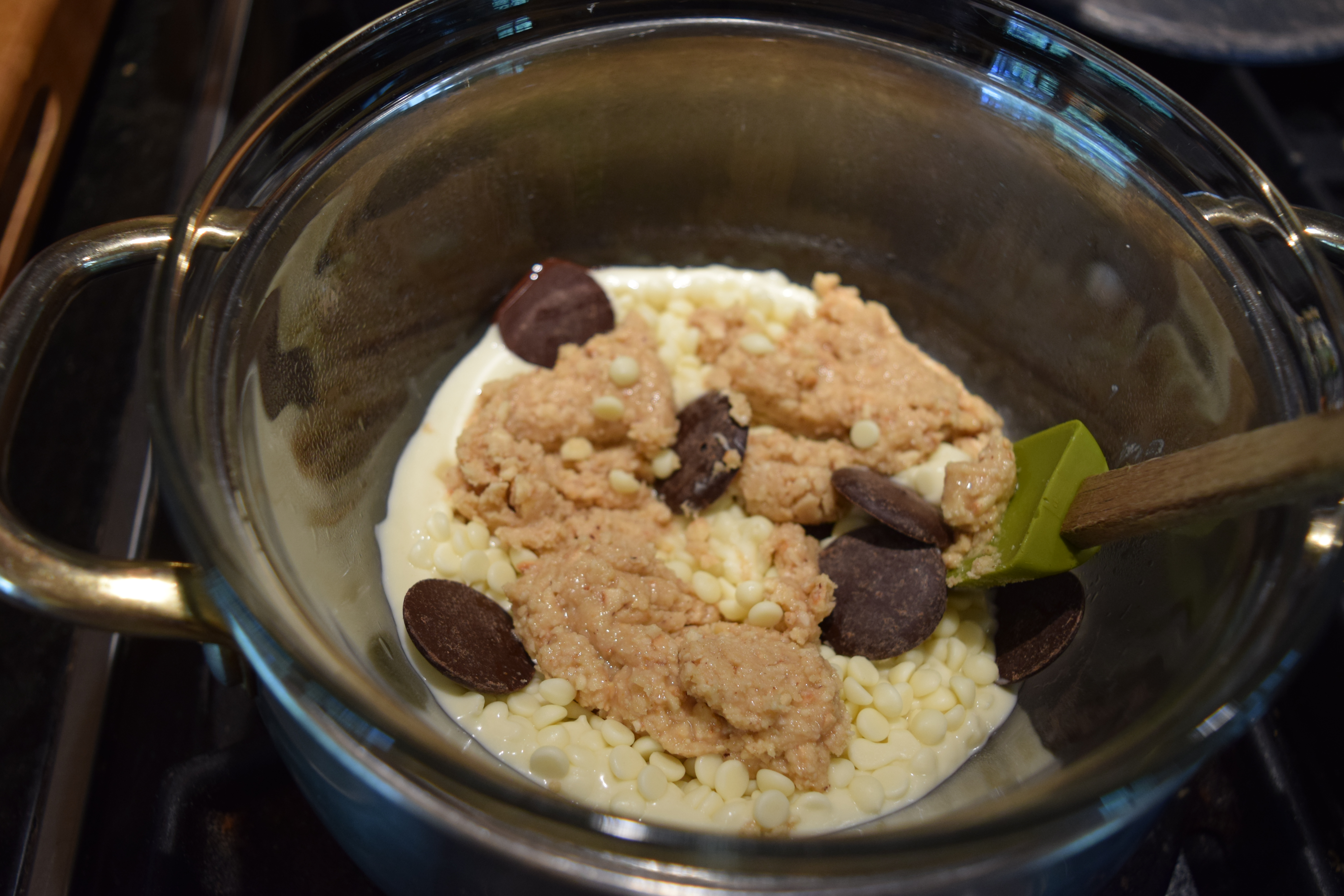
  • In a mortar and pestle I ground toasted hazelnuts — it took a while and I could have ground the paste longer, refining it much more by releasing the oils out of the nut solids better, but impatience won over, and I sacrificed my nut paste too early to the melting chocolate.
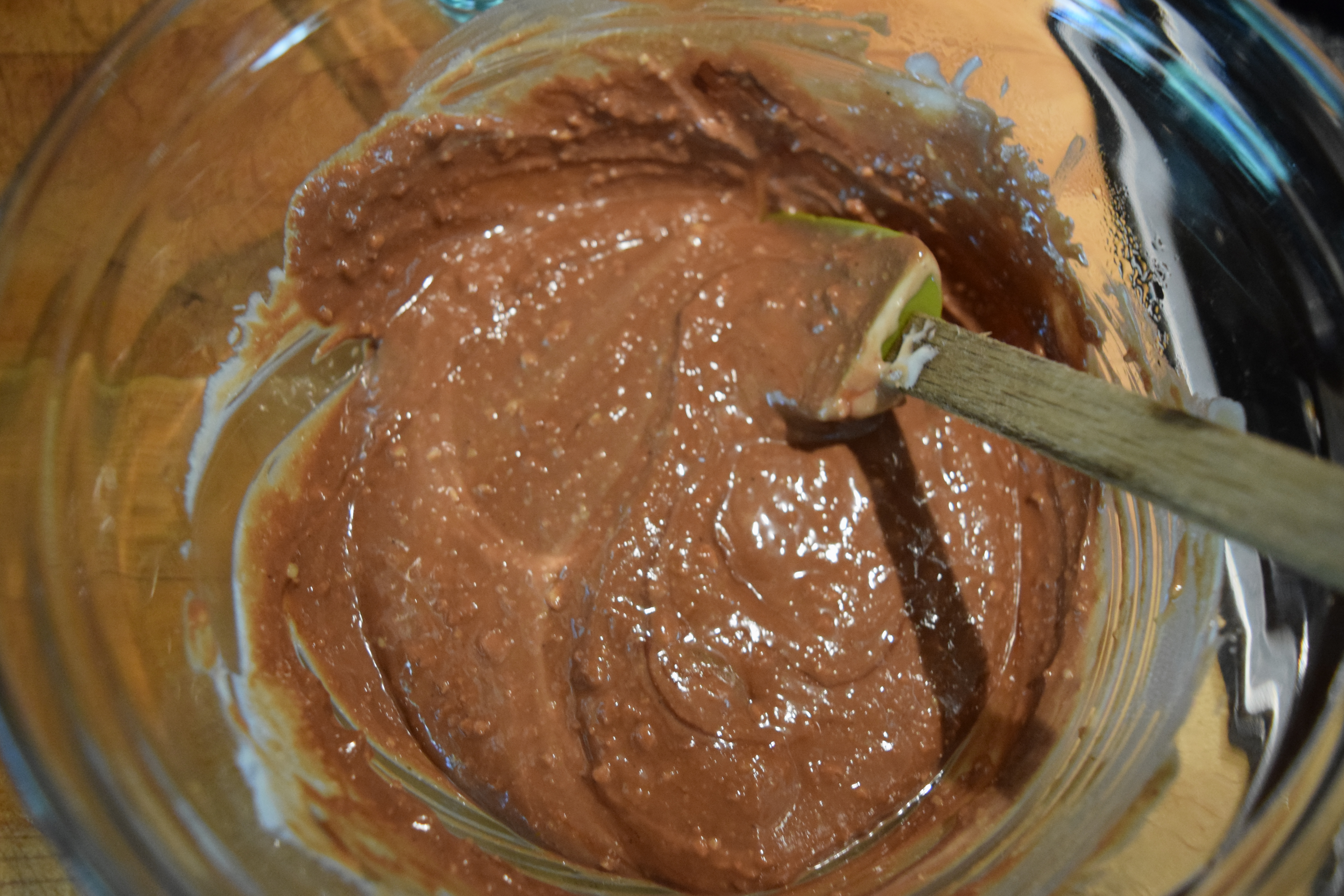
  • My chocolate mix is an easy method to get a barely sweet milk chocolate, without having to purchase a conching machine to mix the separate basic ingredients (like cacao powder, milk powder, cocoa butter, etc) But instead I blend pure white chocolate (with cocoa butter, not palm oil) and unsweetened cacao paste wafers, melted in a bowl over barely simmering water. 
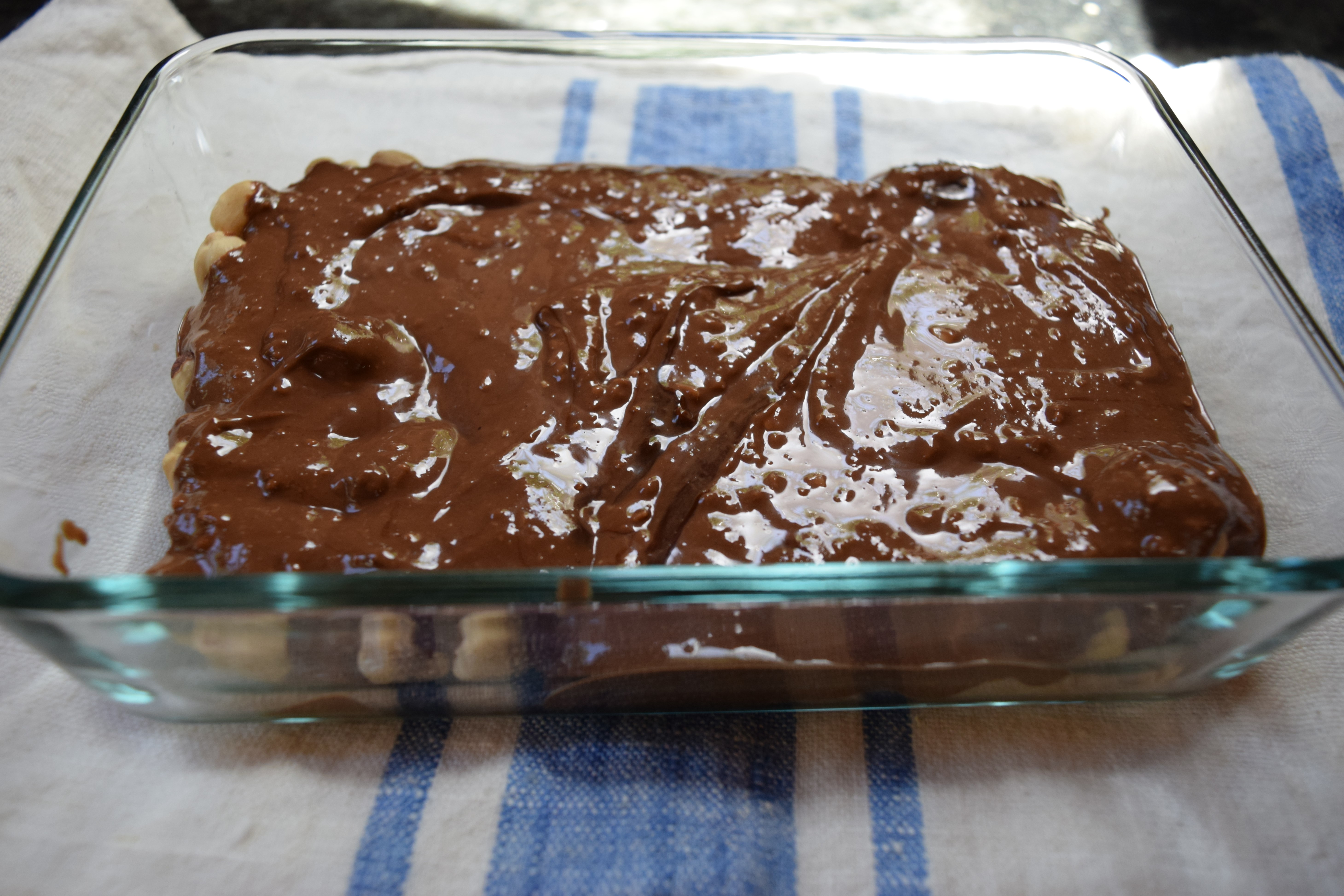
  • I wasn’t sure about the chocolate’s ability to solidify after mixing in such an amount of hazelnut paste, so I poured it over a bed of whole hazelnuts to give it marvelous success anyway, a soft bite into a load of crunchy hazelnuts! I just keep the broken pieces of the hazelnut chocolate in a jar in the freezer which is great at least in the summertime.
  • I will be refining my gianduja further along, perhaps molding it into classic gianduiotti shapes, we’ll just have to see where it takes me. (( click 1st image to go to slideshow ))

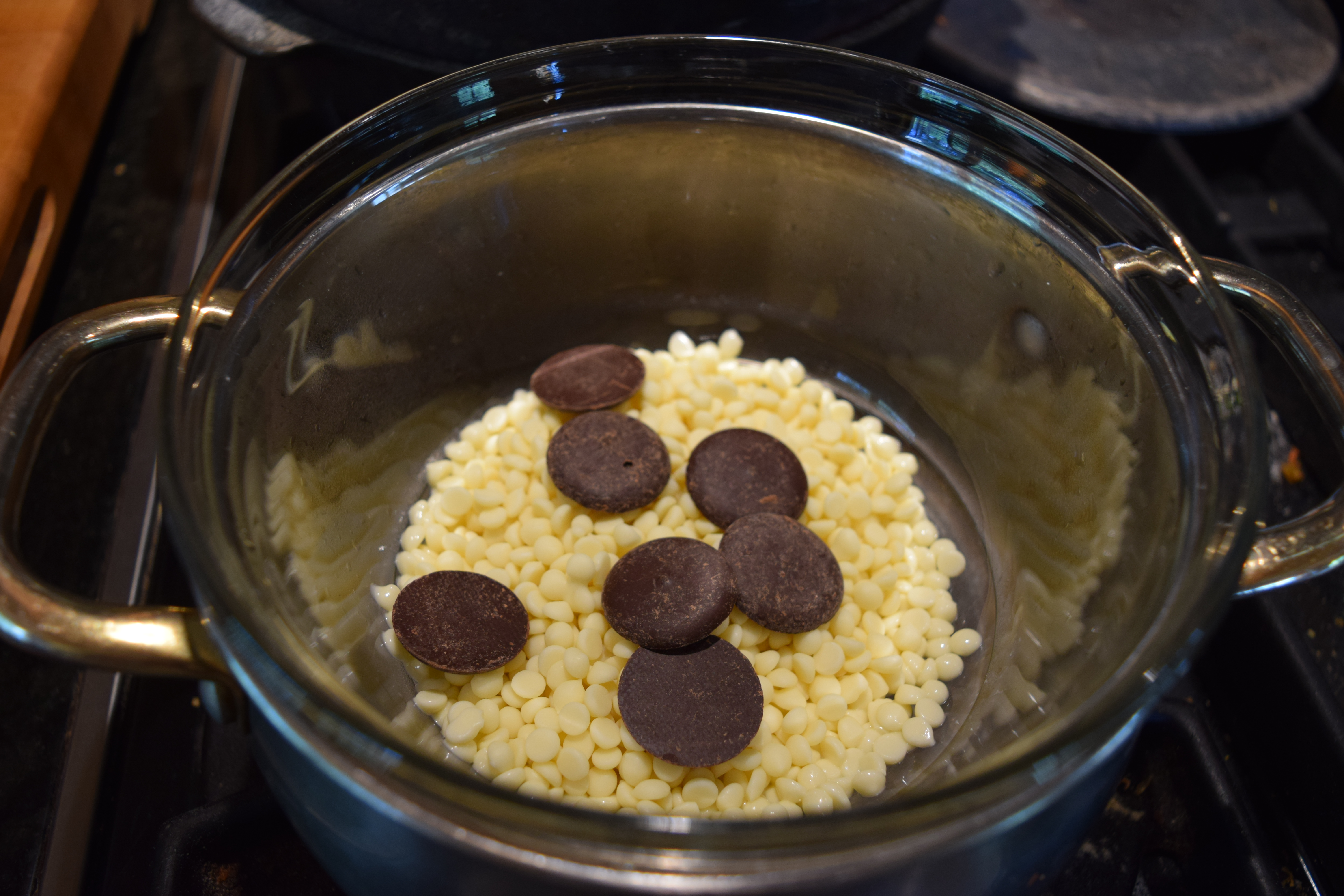
Thought I’d post this one too , just the milk chocolate mix without hazelnut paste mixed in, poured over the toasted hazelnuts, mixed in the dish a little before cooling and breaking up . . .

.

Walktober, and tastes from the kitchen…

Walking almost every day this October, and trying to increase distance too. But who says life has got to be so hard? With all the walking I’m doing, I’m really upping my culinary skills; baking bread constantly, experimenting making wonderful things, things I have never done before . . . such as making ricotta, then making ravioli with it, or even put it into icecream. Focusing on the old-fashioned way of things, like toasting hazelnuts then grinding into a paste with mortar & pestle, (then making into icecream). Oh, on the subject of icecream, I learned recently a trick from my Argentine friend, how to make their national favorite dulce de leche! The Argentines simply boil a can of unopened sweetened condensed milk for a couple of hours, and it cooks in the can and magically turns into thick caramel sauce! Of course, I mix that with about 2 cups of whole milk, and 2 cups of cream, then churn freeze into an absolutely delicious and very rich Dulce De Leche icecream. So, like I said, lots of treats to balance out all of the walking. . . this is definitely turning into my favorite month of the year all over again.

apricot harvest

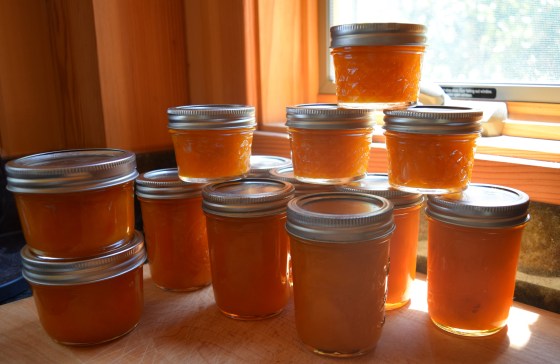
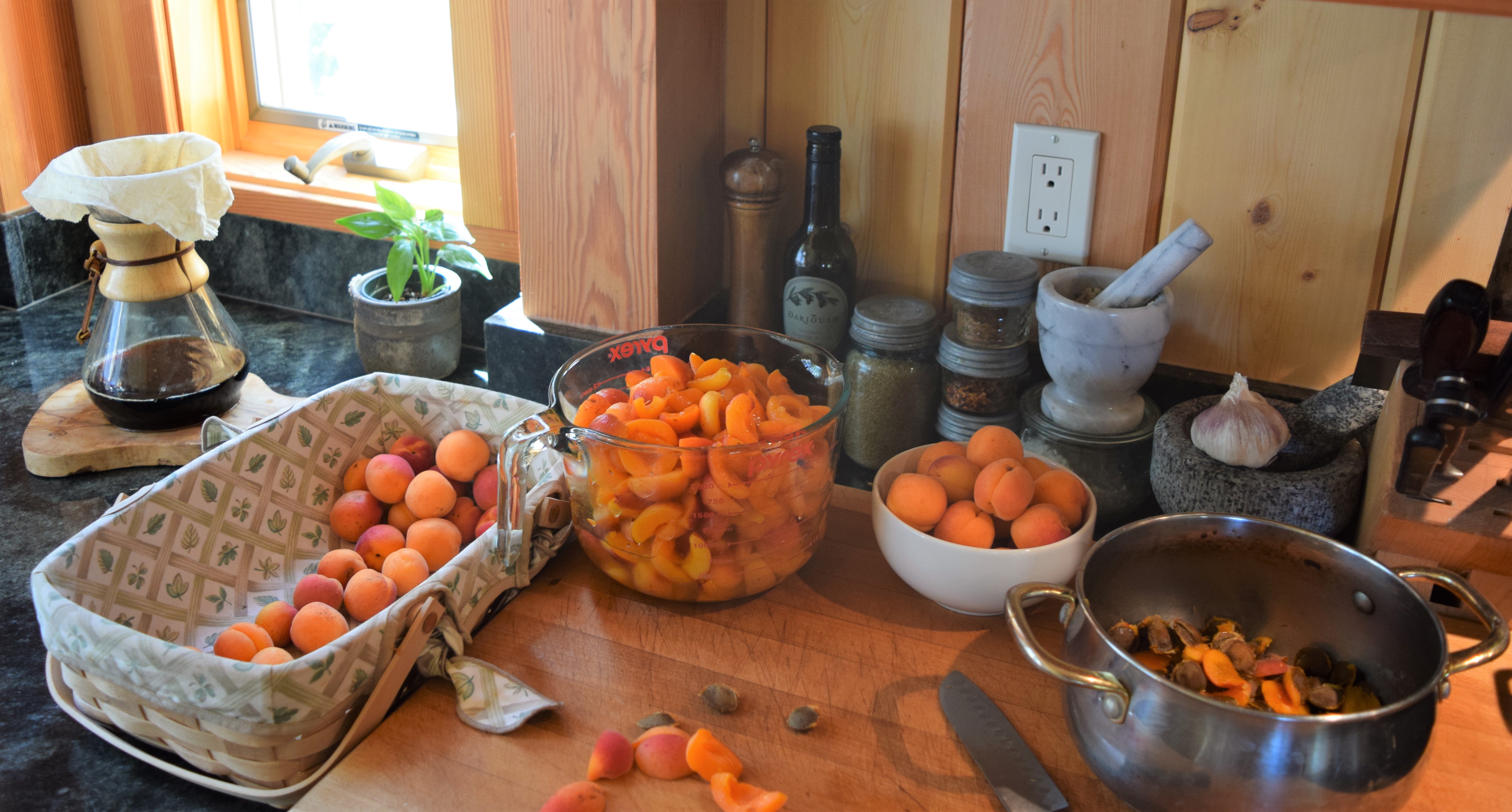
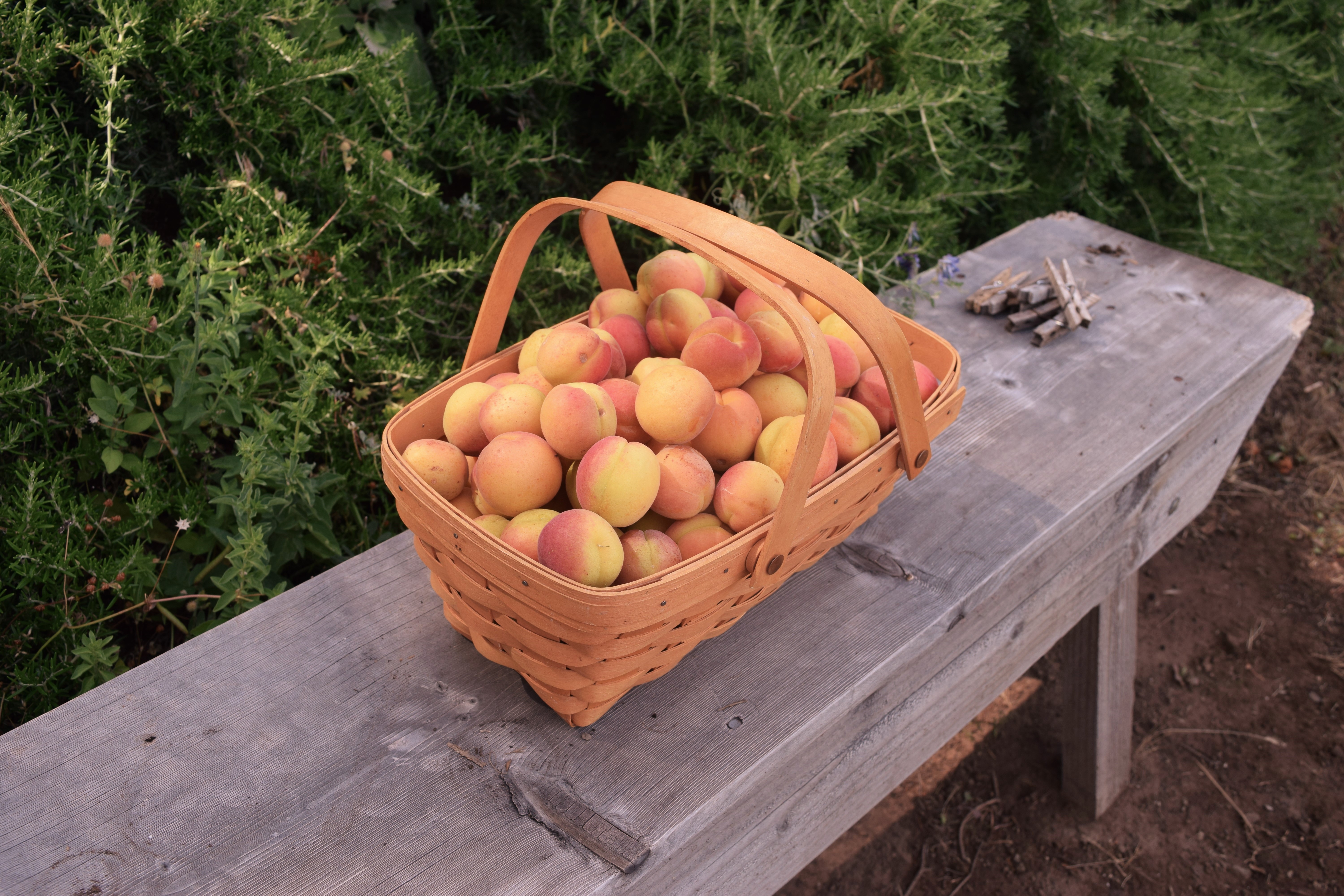
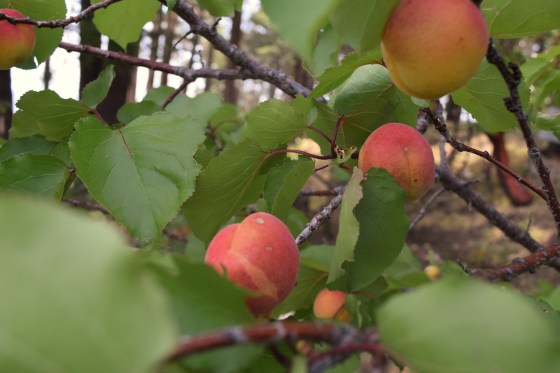
Its June and our young apricot tree is having its first plentiful harvest! Actually, the first apricot tree from which I made apricot jam posted summer solstice 2013 was sadly was killed off by a huge mountain gopher a couple of years after that post, so we then made a wire lining in the hole and planted a second tree a few months before the wildfire, spring of 2017. It was a miracle the fruit trees in our garden did not burn in the wildfire, probably because of the moisture from watering within the garden fence. Now five years later the miracle apricot tree finally gave a bumper crop of fruit, and I picked it all early before the birds got to them. As they all ripened deliciously on the kitchen counter I’ve eaten them one after another, so this morning I decided to make a big batch of jam with the last of them, so enticing! My favorite fruit really, the humble apricot preserved in a jar to last through a year of special occasions, hopefully until next year’s harvest. Somehow I doubt they’ll last half that long.

Just now I’m hearing the lids popping as the vacuum seals in the jam jars, making me happy anticipating buttered toast from my home-made bread slathered with my home-made apricot jam, and resolved to enjoying the remaining Spring days with the solstice a week away!

And everyone knows how I love the very old botanical illustrations, especially by my favorite botanical artist Pierre-Joseph Redouté . . .

botanical illustration of Abricot-Peche, P.J. Redouté , 1835

rose notes . . .

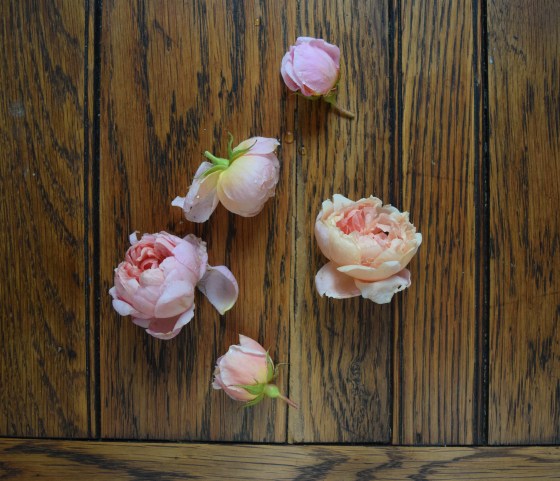
One of my rose bushes has so many blossoms on it this Spring, heavy cupped peach colored blossoms so fragrant. It is an English climbing rose I planted in the garden for Emma’s fourteenth birthday, when we were living in the tiny house while our house was being rebuilt. I am a real fan of highly fragrant roses, loving particularly the varietals with fruity scent, because when I pick a small jar of them and bring into the house, they just fill the room with a fragrant natural beauty. And this afternoon I made myself a rose “soda” and drank it while calculating notes for a future rose-themed sweater design. After picking a few blossoms it occurred to me to try to steep the petals in sugar syrup, making a rose syrup. And it doesn’t take long at all, really just a few hours, for its now the late afternoon, and I’m enjoying the most unusual refreshing drink, with delicious rose floral notes. Here’s how I made rose syrup, which you can just mix with sparkling water and have a winner drink:

  1. Pluck petals off of a couple of roses, and place fresh petals in a pyrex liquid measure.
  2. Boil up a small amount of simple syrup, equal parts water to sugar, enough to cover the petals.
  3. Pour over petals and let steep for a couple of hours, after which you’ll really begin to taste the rose infusion, which always surprises me.
  4. Pour through fine sieve into a jar or bottle, and store in the fridge (into one of the bottles I put some dried rose petals too)

Bread success!

I have discovered a new way of baking rustic country loaves, and inspired to study more the method with a long-rise from what I’ve just learned to be called a “biga”. I don’t use starters anymore as I don’t trust my expensive organic flour with, when what I only really want is a fresh, delicate and sweet aroma. Those loaves from my sour-starter were never good, and yet I wanted to persist, and never before recently tried the pre-ferment dough, where one begins the starter the night before using a scant two pinches of yeast, letting slowly rise all during the night, and the next day early one begins in earnest to make the dough, rise, shape and bake! So last night right before cooking dinner, I quickly mixed the few small ingredients with the handle of a spoon, covered with a dish, tucked it away and this morning I did the rest; the proofing and baking. Lacking experience and confidence that comes from baking this bread a hundred times, I can say that this loaf is too pale, definitely not baked dark enough, but next loaves will be!

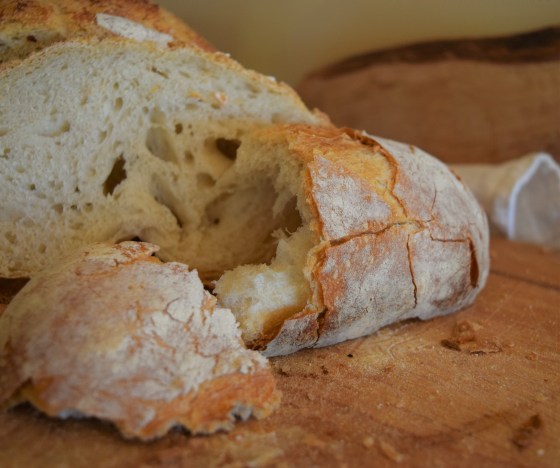
A crackly crust that is not tough, but delicate, and a lovely fluffy and light interior texture that smells fresh and so sweet.

I’m one of those bread lovers who when presented with a lovely loaf of well-browned rustic loaf with crags and crevasses of crust, I like to just tear off a piece, and experience the texture from how the bread gives way. I based this loaf combining my own bread baking experience with a recipe from a used book I acquired post-wildfire era, called “The Italian Baker” 1985 which I obsessively started reading last weekend, but also I found an excellent no-knead dutch-oven method from youtube which was colossally helpful and very easy to follow.

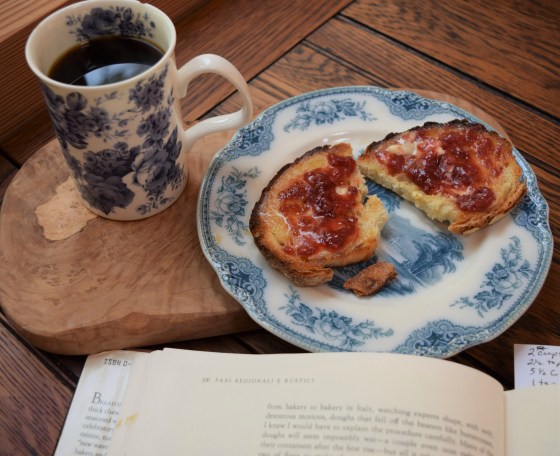
Baking yeast breads with a pre-ferment biga is going to change my way of baking forever, especially as in recent months I’ve been longing for ritual, and ritual in bread baking is something I feel I’ve been on the path towards for decades, but only now have arrived at my straight and narrow, and this will be hopefully only the first of many more bready posts I predict, for in this loaf I have found real success. And now about twenty hours after making the biga, I’m enjoying my absolute all-time favorite snack — toast with gobs of salted butter, and for a rare treat I just happened to have some strawberry jam I made the other day!